A traumatic, eight and a half years and twenty-seven adjournments long ordeal has come to a disappointing end with the Ernakulam Principal Sessions Court finally delivering a verdict in the 2017 Kerala actor sexual assault case. Involving the Malaylam actor Dileep among nine others in the abduction and rape of a famous Malaylam, Tamil and Kannada-language based film actress in a moving vehicle, this is one of the longest and most closely anticipated judgment in the country’s legal and cinematic history.
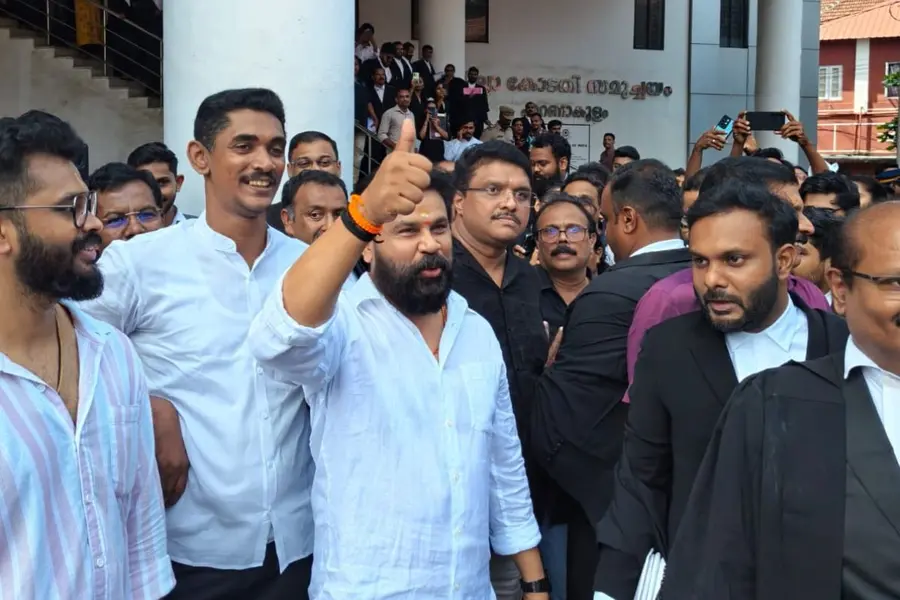
The trial began in the year 2018 and Principal Sessions Judge Honey M Varghese delivered convictions to 1 to 6 but Dileep was acquitted. The punishment will be pronounced on December 12.
What is of particular significance is the available evidence against the actor that significantly implicated his active involvement in the heinous crime and the unprecedented delay in delivering the verdict even with its high-profile nature. It certainly questions the state machinery’s ability to provide support, accountability and most importantly timely and just resolution to all stakeholders involved.
History repeats in moving vehicles
Seventeen years ago the name, ‘Nirbhaya‘ (meaning fearless) was immortalised in this country for reasons not at all celebratory. A twenty-three year old medical student was brutally raped in a moving bus and left on the roadside with her unconcious male friend by six men in the capital city of Delhi. Unfortunately, the case survived eight years, longer than the victim who succumbed to her injuries just two weeks after the incident.
The case marked a turning point, triggering the administration to question the utopia of a rigorous criminal justice system created by an ancient and highly patriarchal Indian Penal Code, 1860. But while legal reforms followed in parts with the Criminal Law (Amendment) Act, 2013, the trial unearthed major structural faults in the law and order apparatus.
There are striking similarities between this case and the present.
- In both the cases, the crime was committed in a moving vehicle, which is disturbingly in public.
- The proceedings captured the nation’s attention, triggering widespread shock, outrage and demand for a swift response. The media has played a persistent role in scrutinising the procedures and focusing on the power dynamics in the film industry.
- Reforms came in before the final verdict. For example, the 2013 amendment and enactment several laws addressing workplace and gender-based discrimination and violence in the Nirbhaya case. The 2017 incident led to the formation of the Justice Hema Committee on demand by the Malayalam cinema advocacy group, Women in Cinema Collective (WCC).
- Judgement was protracted over eight years involving multiple summons, appeals, dismissals, adjournments and in the process, one of the accused died by suicide. While, in the Nirbhaya case, the bus driver Ram Singh died, in this case just last month, the third accused, B. Manikandan, attempts suicide. He was detained for creating nuisance under the influence of alcohol but he survived.
- Four convicts were executed in 2020 holding the crime as a “rarest of rare”, and in this case six have been held guilty but the punishment is yet to be pronounced.
In the present case, the prosecution noted how the evidence was, “more shocking than that of the infamous Nirbhaya gang-rape case.” It is difficult to determine what is more disturbing; history repeating itself in such a manner or comparison of one brutality with the other to emphasise on the need for immediate action.
Victim’s endless ordeal did not end: A Timeline
Though actor Dileep is most prominently associated with this case, he is only the eighth accused. The man in question is N.S. Sunil, also known as ‘Pulsar Suni’, who served as an undertrial prisoner for seven years until September 2024. He was let go in strict bail conditions considering long incarceration and an inconclusive trial. He is charged with raping the actress and filming the heinous act. Dileep was detained for ninety days for having allegedly conspired, orchestrated and kidnapped the survivor out of personal animosity. According to the prosecution, the survivor had informed his wife of his extra-marital affair which motivated him to execute the crime.
According to the prosecution’s submissions, on February 17, 2017 the survivor was travelling from Thrissur to Ernakulam in an SUV driven by Martin who allegedly informed Pulsar Suni about the car’s location and a fake accident was plotted by the accused to kidnap her. Manikandan and Vijeesh were also in the vehicle when it crashed with the survivor’s SUV. After this, Martin left the car as Manikandan and Vijeesh abetted the rape committed and taped by Suni in a moving vehicle. It was alleged that Dileep conspired with Pulsar Suni to humiliate the survivor and suggested filming the tape of the sexual assault in exchange for ₹1.5 crore.
It was in June 2017, a letter was sent by Pulsar Suni to Dileep saying that he had not betrayed him but blamed him for not arranging a lawyer and demanded money. Dileep denied this and rather claimed that the survivor and Pulsar Suni were friends. He was questioned by a Special Investigation Team (SIT) for thirteen hours and arrested on July 10, 2017. The ‘Avalkoppam’ or ‘We Stand With Her’ campaign by WCC brought focus on the film industry’s bigotry with many supporting Dileep.
In January of 2018 Dileep approached the court demanding a copy of the tapes to watch and prove that he was innocent. The Angamaly Magistrate court rejected this plea and the trial was shifted to the Ernakulum District Sessions Court. In June, he moved to the Kerala High Court asking the Central Bureau of Information (CBI) to take over the case and till December he made multiple pleas to access the videotapes. When rejected by the High Court, he approached the Supreme Court. In the meanwhile, the Kerala Government had filed an affidavit flagging the risk over mishandling the footage which could violate the survivor’s right to privacy and dignity.
In 2019, the survivor requested for an in-camera trial and a female judge and Sessions Court judge, Justice Honey M Varghese was appointed by the state government. She also requested the Supreme Court to not provide Dileep the visuals which was finally granted when he was refused the access in November. However, he and his lawyers had been previously allowed to watch the tapes multiple times.
Finally, the trial began on 30 January 2020 but the witnesses, who had reported about Dileep’s anger towards the survivor, started turning hostile. In 2021, filmmaker Balachandrakumar alleged to have seen Pulsar Suni at Dileep’s residence and accused them of watching the visuals of the sexual assault at his Aluva residence with others. He released audio clips one of which had a man’s voice saying that the five investigative officers will be dealt with. Based on this, a case was filed against Dileep for conspiring to harm investigating officers.
In 2022, another set of call recordings indicated that the visuals were watched by Dileep and his lawyers more than the permitted times as they were able to write a detailed note on it. Major concerns were raised about the visuals being available outside the premises of the court. This was confirmed in 2024 when a probe found three people who had illegally accessed the memory cards as it traveled between different courts. The survivor approached the High Court, but her plea for an SIT probe was turned down.
The trial was halted on two occasions. Once, when the victim requested higher courts to provide a substitute judicial officer and again due to COVID-19 pandemic induced lockdown. In August 2024, the Kerala High Court’s mandate to release the Hema Committee report, made under the direction of Justice K Hema with former actor Sharada, and retired IAS officer K.B. Valsala Kumari, led to a redacted version being released by the state government. Many women came forward with stories of sexual exploitation by domineering men in the film industry. An SIT was formed to investigate multiple cases of ‘casting couch’ exploitation, gender inequality and sexual misconduct.
Balachandrakumar passed away in December, 2024 and investigations got delayed by another year. The in-camera trial rounded up 261 witnesses, many of whom were prominent personalities in the film industry and ran into 1700 documents. The trial finally concluded in February 2025 but hearings continued.
The judgment delivered on the 8th of December has held six accused in the case N.S. Sunil, alias ‘Pulsur Suni’, Martin Antony, B. Manikandan, V. P. Vijeesh, H. Salim alias Vadiwal Salim and Pradeep as guilty of the charges of various offences under the Indian Penal Code (1860) such as gang rape, criminal conspiracy, outraging the modesty of a woman, wrongful confinement, use of criminal force, destruction of evidence, taking and distributing obscene images, and the Information Technology Act. Dileep faced additional charges of destroying the evidence.
The seventh accused Charlie Thomas was accused of harbouring some of the accused after the crime and the charge against the ninth accused, Sanil Kumar alias Mestri Sanil, was that he conspired with Pulsur Sunil in jail to extort money by threatening Dileep.
The fifteenth accused Sarath, is a friend of Dileep and he was tried for the alleged offence of handing over and destroying the alleged video footage. Six accused turned approvers in the case.
The Infamy of Stardom
‘Janapriya Nayakam’, people’s favourite hero is what Dileep Kumar is popularly regarded as amongst his fans. Having starred in over a hundred movies and deeply credited for his charm and comedic timing, when the news of his alleged involvement in the 2017 case broke the audience was left perplexed. The News Minute’s recent YouTube video aptly catches the dilemma of having to choose between the Art and the Artist.
A career downturn began soon after and the audience opened their eyes to the inherent misogyny, patriarchal themes and objectification. When the art is itself a part of the problem, can the artist be separated from it? Cinema is not a reflection from a prism of society. It refracts what is reflected and the blame is not alone borne by the Malayalam Film industry.
Globally, actors have tried to distance themselves from the controversial characters that they have played, justifying its fictional nature. However, films that revolve around the negative nature of the protagonist, where they are not the villain rather, “shaped by circumstances”, do not send the message that the trope is problematic. The distinction between good humour and absurdity is lost in comedy films where, “I’m a joking”, is the justification for poor storytelling. Moreover, film production, consumption and distribution goes beyond just one person. Beginning from the crew to the audience and subsequent generations, it is a group project with disbalanced individual contributions and results.
This case and the judgment delivered on 8th December, 2025 raises a serious need to reevaluate not only the criminal justice delivery system but also the Indian film industry, power politics and survivor rehabilitation beyond the guarantees of the verdict. Exceptional to this case is also the visual record of the crime initially preserved only in the memory card as the phone could not be accessed and it has been accessed by multiple persons, in official authority and otherwise, making it incredibly difficult to prevent a breach of confidentiality. For the survivor, the tribulations shall continue, fearing both the possibility of the footage being leaked and Dileep being allowed to walk free.
About the author(s)

Second year student of Media Studies at CHRIST (Deemed to be University), BRC, Bangalore. A trained Kathak dancer, theatre artist and political nerd.