From prehistory to pre-colonial archives, the column explores rituals, symbols, and stories that refused to die. Rooted in feminist research and lived memory, this is not just about recovery, but reclamation. What was lost? What survives? And what do we owe the women who dared to leave us signs, symbols, and scripts?
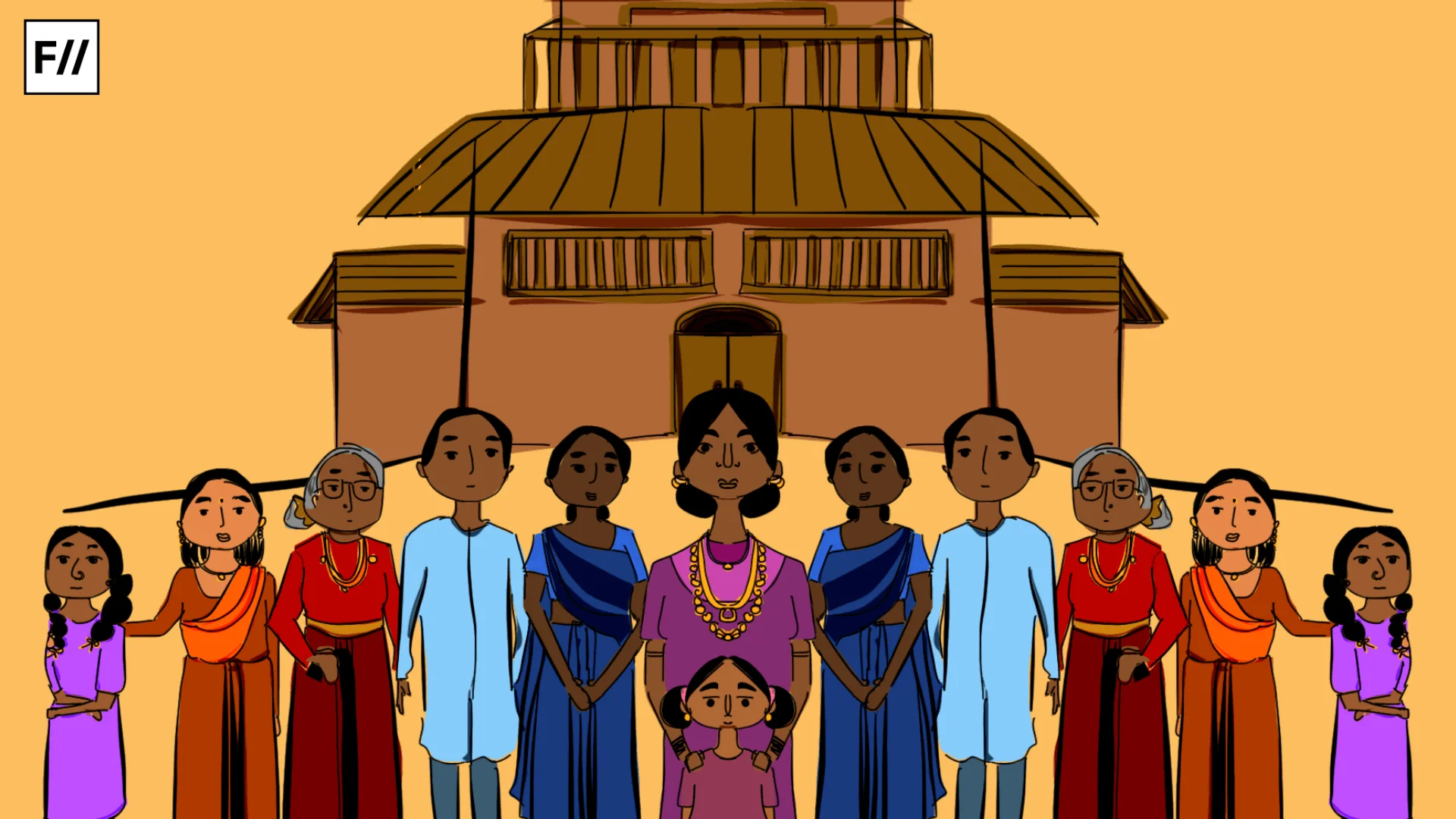
In a house in the East Khasi Hills of Meghalaya, there is a grandmother who is sitting on the floor while thinking of her family’s past as she speaks. Her story is not written down, but it is visible in her gestures and the way she taps the floor of the land owned by her family. In the Khasi traditions, memory is passed on from mother to daughter and is preserved in the very land that they own. But this story carries another truth about a century of colonial rule that tried to disrupt the matrilineal system in place by replacing it with foreign patriarchal and Christian traditions. This raises an important question: what forms of knowledge did we actually lose when colonisers and empires chose to ignore stories that were passed down through women?
The colonial need for patriarchal control
Colonial rule has a fixed idea of what a proper society should look like. This meant the house revolved around a male figure. The property was passed down from father to son. Indigenous cultures were matrilineal and flexible in their way of understanding what gender is. Colonisers did not see this as a way of life but rather a problem that needed to be fixed.
Decolonial feminist María Lugones describes this as colonality of gender. This is where indigenous systems were forcibly replaced by rigid Western patriarchy. For empires like the British Empire, this was moral and religious. Their way of governance usually required clear lines of inheritance, taxation, and authority. Matrilineal societies complicate that.
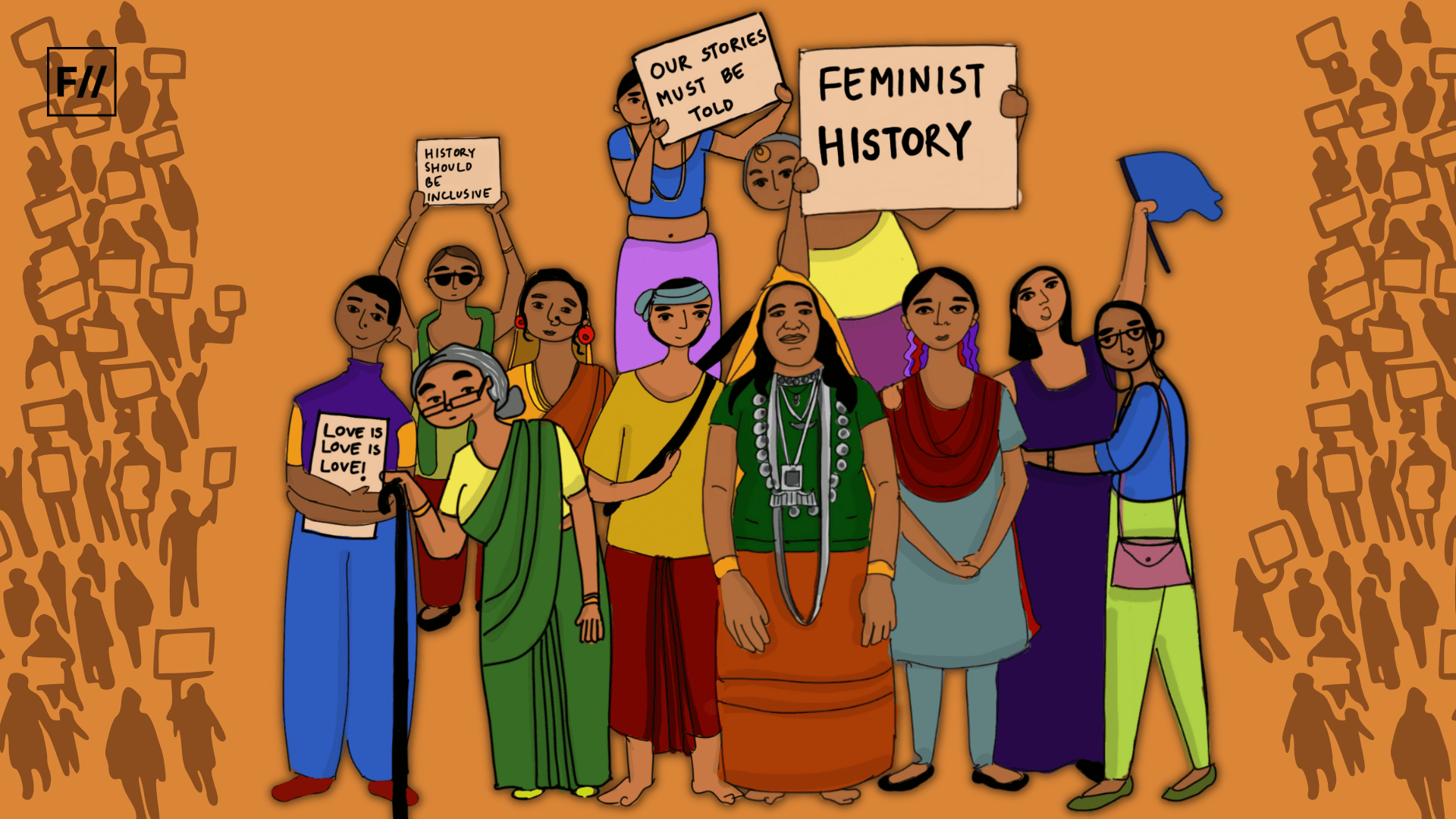
Anthropologist and historian Ann Laura Stoler tells us that colonial power operated through ‘regimes of knowledge‘ that decided whose authority actually counted and whose did not. The role of indigenous women was sacred. They were custodians of memory, land, and community. This was not only overlooked by the Britishers but slowly weakened. This can be seen as a form of epistemic violence which doesn’t consist of a single act of erasure but usually involves the quiet removal of entire systems of understanding the world.
The Khasi matriline
Matriliny is not just a tradition among the Khasi people of Mangalya. It is the way of living and shapes everything. Children inherit the clan name of their mother. The youngest daughter, who is called the ka khadduh, becomes the keeper of the ancestral land. For them, land was not just property to hoard but something to protect and pass on very carefully. Maternal uncles (Kni) play a key role where authority is shared.
It is important to note that while Khasi women were caretakers of land, they never held sole ownership, as the land is collectively owned by the maternal family, clan or the community. Scholar Raphael Warjri has said ‘The British manipulated the Khasi matrilineal system to suit their economic and political interests… By giving more privileges to women in property matters, they weakened the traditional role of the maternal uncle, who played a key role in the affairs of the clan.’
Matriliny was mistaken as female dominance or superiority. These misinterpretations had grave consequences as disputes over land sometimes still surface today.
When British officials arrived, they played a significant role in weakening their tradition. There are scholars like Raphael Warjri who talk about how colonial practices reshaped the Khasi line. There were changes to land and administration that weakened the role of the maternal uncle. Matriliny was mistaken as female dominance or superiority. These misinterpretations had grave consequences as disputes over land sometimes still surface today. ‘Centuries have passed but even today, legal battles over inheritance rights frequently reflect these colonial distortions rather than true Khasi traditions,‘ he added.
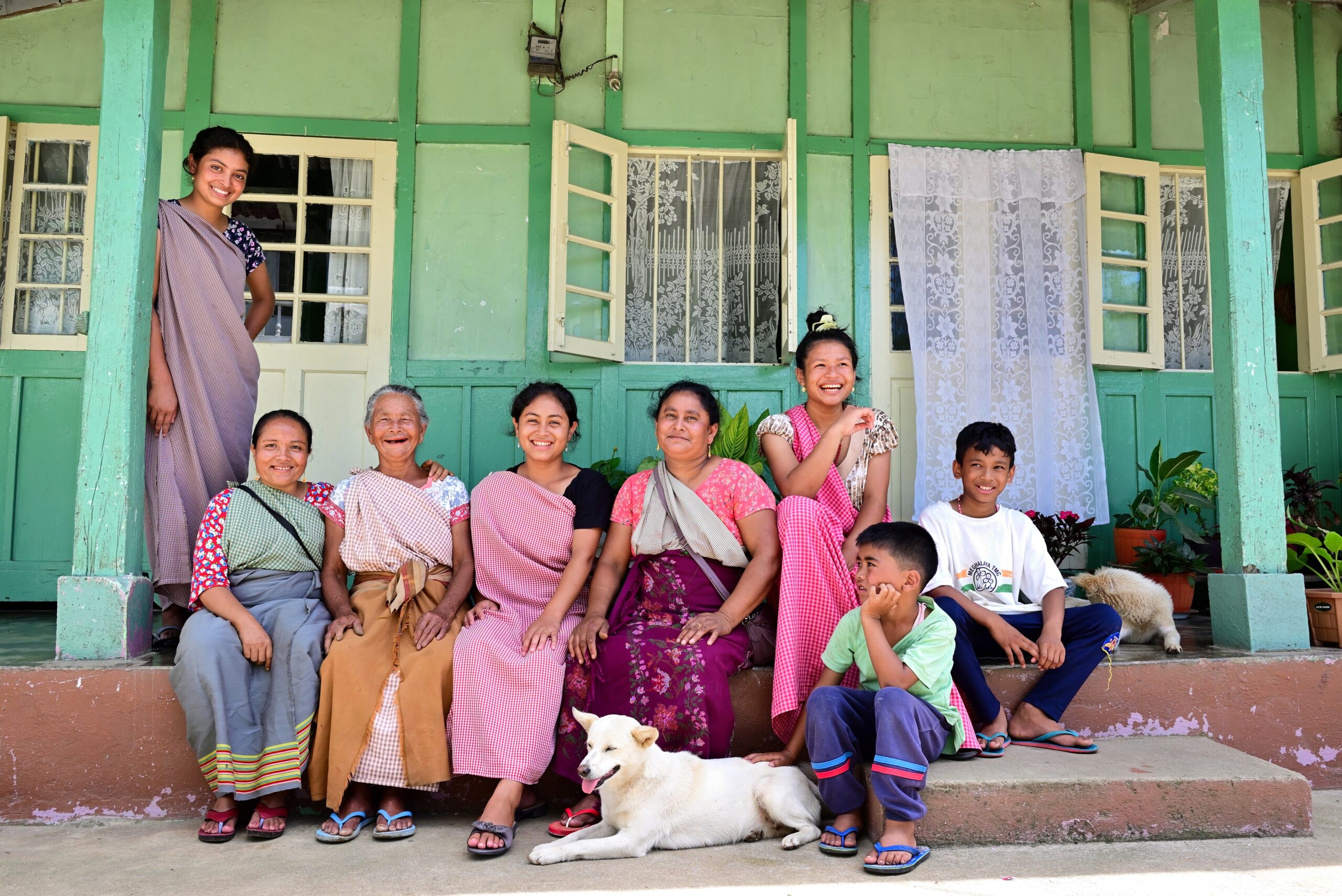
Colonisations have reshaped many indigenous and sacred practices across the world to comply with the Europen idea of patriarchy and what they thought was right. Sadly, the Khasi experience was not an isolated incident, as what happened in Meghalaya would repeat in other regions of the world.
The Igbo women’s institutions of Nigeria
In pre-colonial southern Nigeria, there was the Igbo society, which was organised around a dual-sex system of governance. There was not a single ruler or authority. Instead, power was shared across communities with men and women participating through different groups. There was an important institution of women, which was called the umuada. They were the ‘daughters of the lineage‘ and played an important role in the Igbo society. They helped in resolving conflicts and stepped in when tensions escalated. Besides this, women had traditional forms of protest, such as “sitting on a man”. This was a collective practice that used song, dance, and public shaming to discipline wrongdoing.
Colonial rule impacted this system. The Britishers had appointed men as warrant chiefs to govern communities across the southeastern regions. This arrangement was very different from what Igbo society had earlier, as men and women in Igbo had parallel forms of authority. This excluded them from formal politics altogether. Besides this, colonial policies also began to affect them directly, including attempts to impose taxes on women’s income. As a result, there was Aba Women’s Riots of 1929, also called the Women’s War.
Besides this, colonial policies also began to affect them directly, including attempts to impose taxes on women’s income. As a result, there was Aba Women’s Riots of 1929, also called the Women’s War.
Here as well, women used a traditional form of protest, “sitting on a man”, where all-night song and dance were used to ridicule and shame officials, force resignations, and assert authority. In just two months, some 25,000 women marched on courts, raided stores, and freed prisoners.
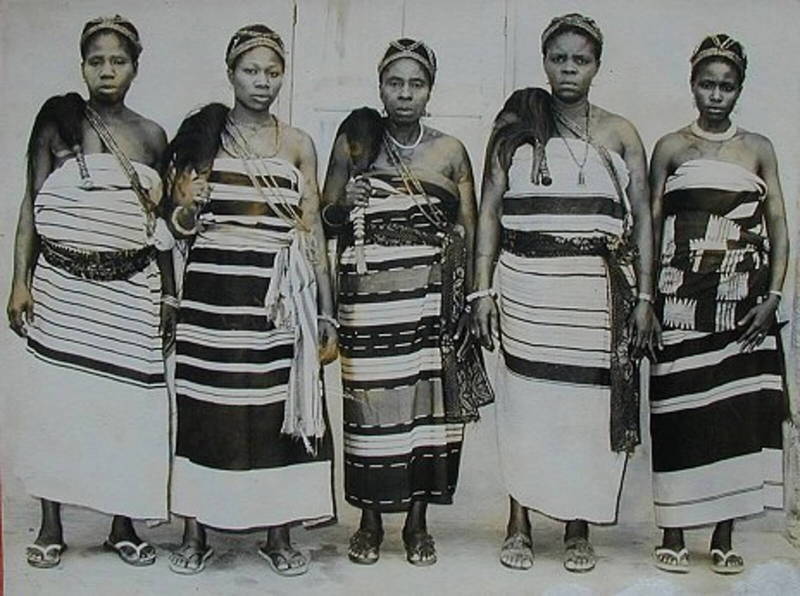
This successfully halted the taxes while also limiting chiefs’ powers. It also became a historic feminist and anti-colonial protest. Their protest was not only economic but also the defence of Igbo culture that colonial rule was trying to erase.
Women’s knowledge and its significance
The idea of knowledge centred around women here is key to understanding what was lost. Much of what was lost is preserved outside written records, which could be through land practices, rituals, oral traditions, naming systems, and inheritance. This helps us explain how memory and authority linked to women function in different societies without making reference to a single tradition. Here, for instance, it talks about practices such as maternal lineage in Khasi tradition or women’s collective organisation and protest in Igbo society.
Importantly, colonial rule did not completely erase the archive we are talking about but pushed it to the margins while limiting its role. The way we engage with customary law, historical memory, and feminist scholarship today shows that these knowledge systems continue to be reinterpreted rather than being entirely lost.
Decolonising culture is not just about critiquing the past but includes a revival of practices that carry different ways of being. Oral traditions are not any lesser form of record-keeping but a political act of remembering outside the control of the state, and that is why this lost archive centred around women holds great importance as it preserves memory, knowledge and authority of women.
Oral traditions are not any lesser form of record-keeping but a political act of remembering outside the control of the state, and that is why this lost archive centred around women holds great importance as it preserves memory, knowledge and authority of women.
Back in the East Khasi Hills, the grandmother ends her story with a quiet smile. Outside, young people scroll through phones and speak a mix of Khasi, Hindi, and English as the world is changing in real time. When she calls her granddaughter to sit beside her, the girl moves closer without hesitation and starts listening closely.
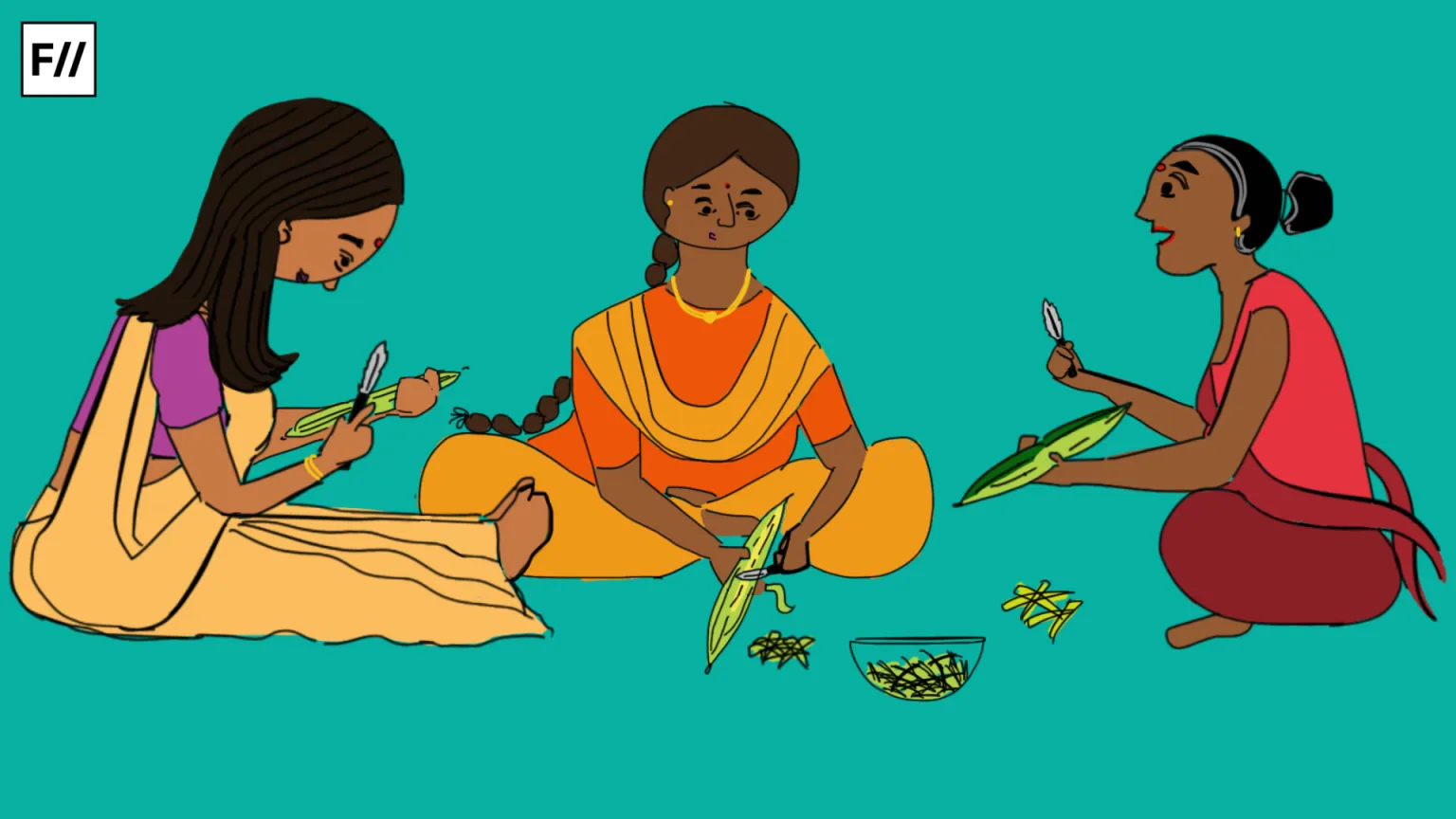
Empires have tried to replace matrilineal memory with patriarchal order. But the maternal memory lives on in very moments like these: in our stories, in our soil, and in our acts of survival.
About the author(s)

Juhi Sanduja is an Editorial Intern at Feminism In India (FII). She is passionate about intersectional feminism, with a keen interest in documenting resistance, feminist histories, and questions of identity. She previously interned at the Centre of Policy Research and Governance (CPRG), Delhi, as a Research Intern. Currently studying English Literature and French, she is particularly interested in how feminist thought can inform public policy and drive social change.