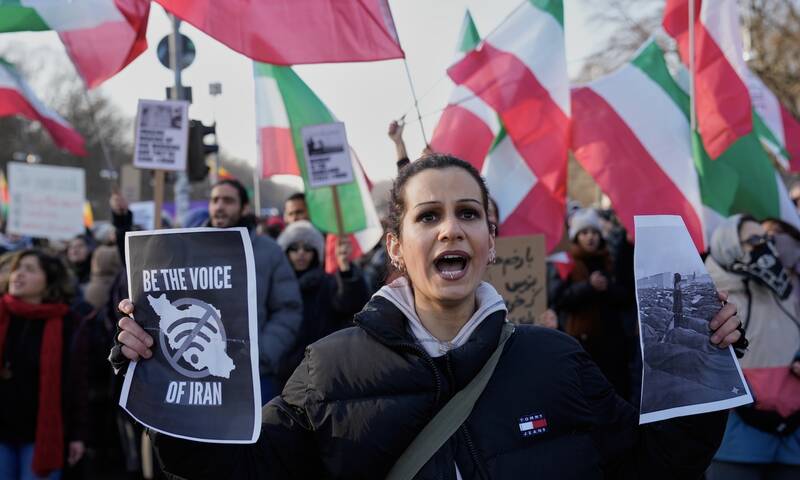
As protests in Iran enter their fourth week, the West Asian country continues to dominate headlines globally. However, while Iranians are mounting a brave fight against an authoritarian regime and a crumbling economy, a narrative war that leverages this critical struggle for ulterior motives is being fought in other parts of the world.
How the protests in Iran began
The protests initially began on December 28, 2025, with people taking to the streets against rapidly increasing inflation in the country, rising fuel costs, and the value of the country’s currency, the rial, dropping to a record low against the US dollar. From Tehran, the country’s capital, the protests spread to other parts of Iran. As per Al Jazeera, the rate of inflation in Iran is currently around 40 per cent, and food prices have soared by a staggering 72 per cent.
However, the protest soon grew into a larger political protest against the Khamenei-led Islamic theocracy. Women have also taken on a central role in these protests, raising their voices against the mishandling of the economy, the denial of women’s rights, and human rights violations.
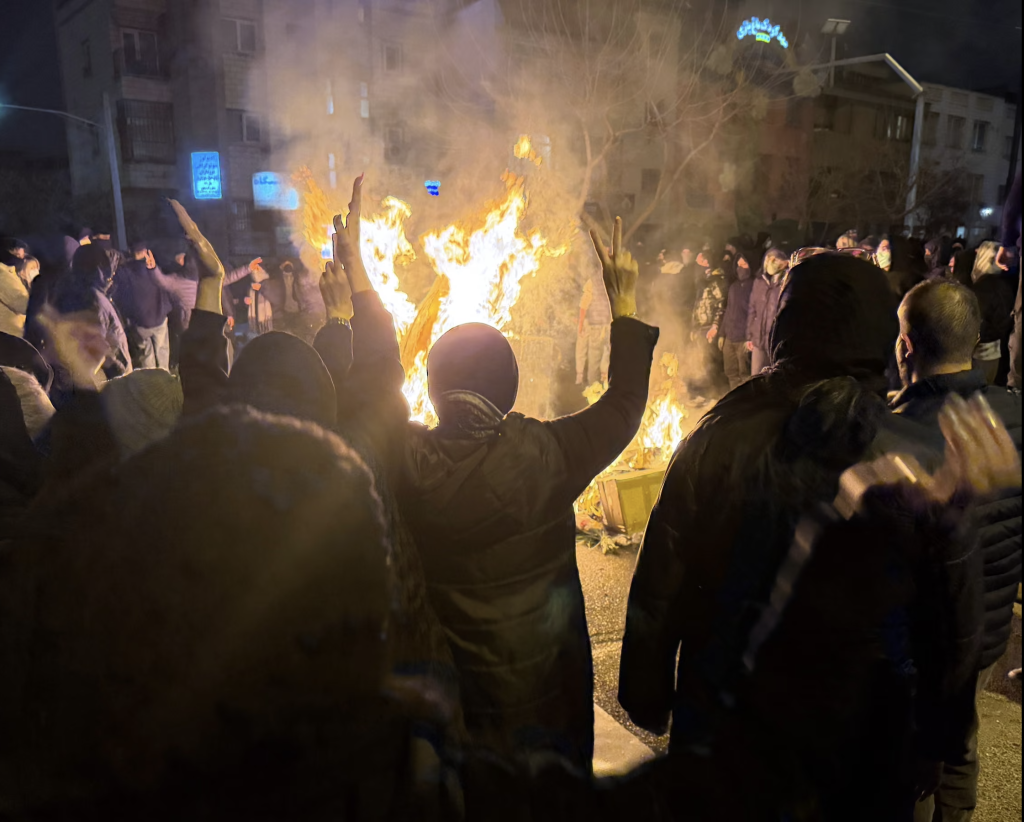
Image Credit: AP
The protests that have taken over Iran have raged unabated for weeks, with harsh government crackdowns against protestors and a mounting death toll that has exceeded four thousand. While the Iranian government puts the current death toll at 3,117, it is believed this number likely doesn’t accurately report the true extent of fatalities. As of January 22, a US-based rights group, the Human Rights Activists News Agency, reports the current figure as 4,902.
Iranian theocracy and women
Iranian women’s keen participation in political protests has long been the norm, and the protests this time are no different. The first women-led protests in the country started merely weeks after the 1979 Islamic Revolution.
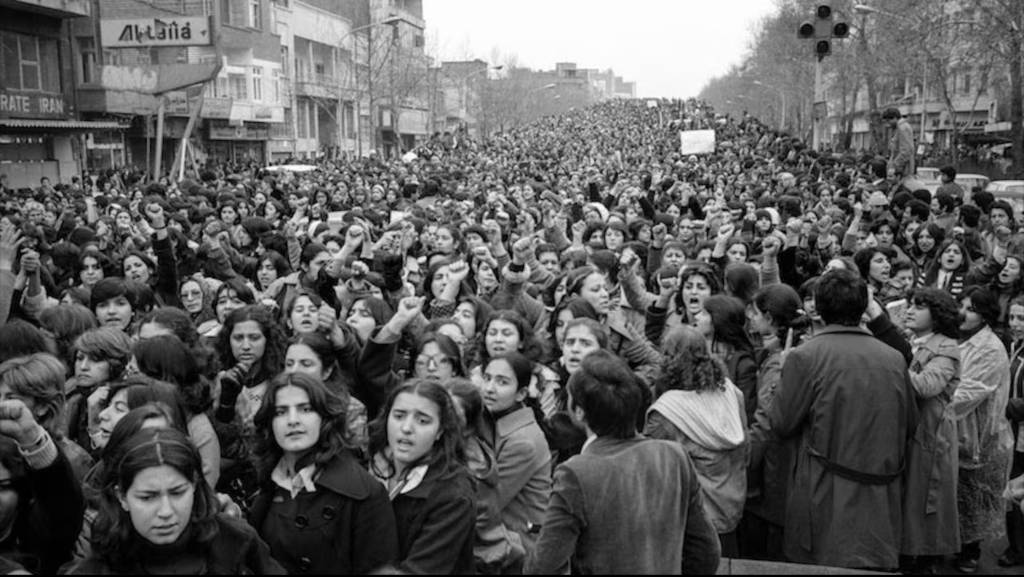
Image Credit: Hengameh Golestan
In 2022, the custodial death of 22-year-old Mahsa Amini led to public anger reaching a tipping point. Amini was detained by the country’s morality police for wearing her hijab improperly. She was then physically assaulted by security personnel at a ‘re-education’ centre, after which she collapsed. She died in the hospital three days later.
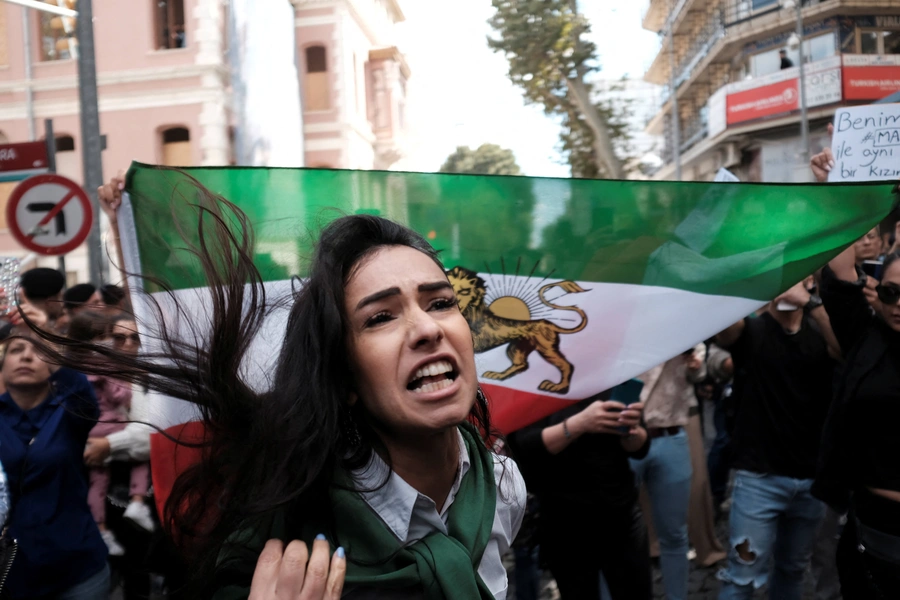
Image Credit: Murad Sezer/Reuters
Following Amini’s death, thousands of women protested against the country’s treatment of women. After her funeral, women began to remove their hijabs in solidarity with Amini, led demonstrations, cut their hair, and set their hijabs on fire. Even schoolgirls across the country were seen engaging in protests. Over the years, women have occupied a central position in the fight against authoritarianism.
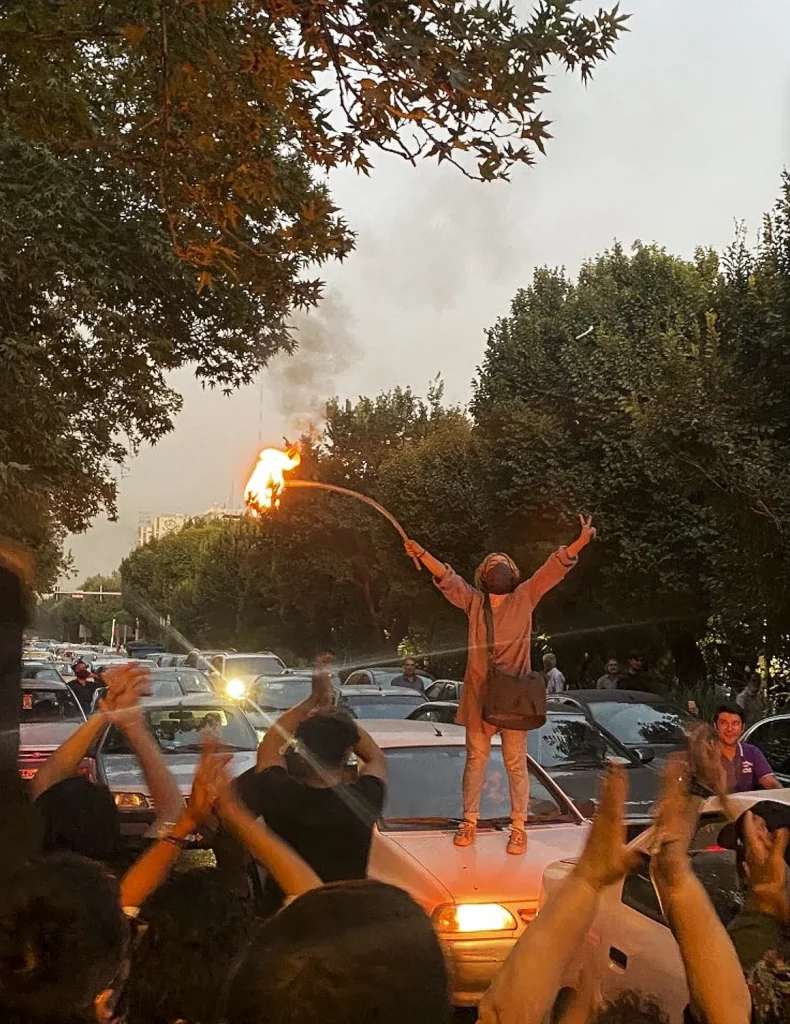
Image Credit: SalamPix/Abaca/Sipa USA
Outside of mass organising, Iranian women continue to protest in quieter ways, often by defying the strict patriarchal norms imposed on them. In 2024, Ahoo Daryaei, an Iranian doctoral student, had an altercation with security forces near her university regarding the hijab. In protest, Daryaei undressed and was seen sitting on the steps of the Islamic Azad University and walking down the street. She was detained by security forces and held in a psychiatric facility, but was released days later, likely due to the international condemnation her detainment drew.
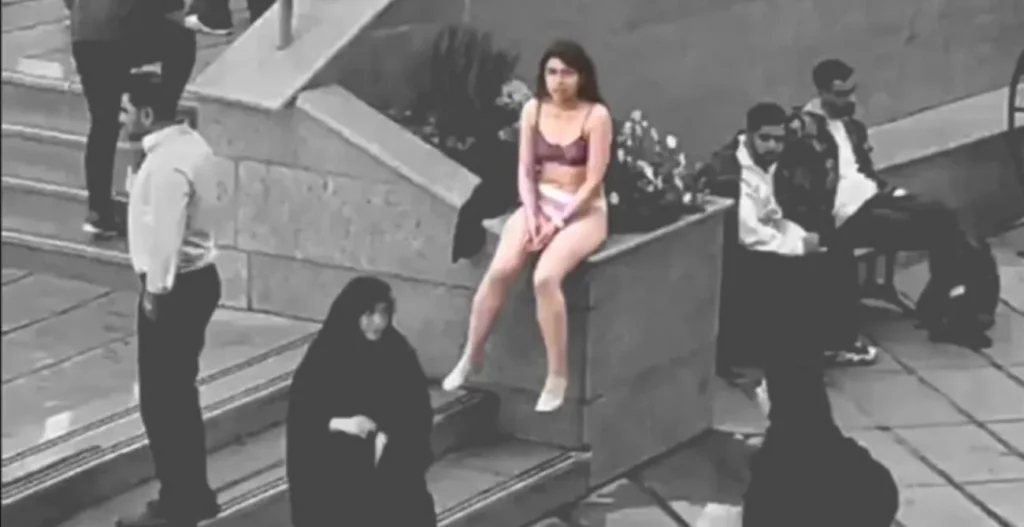
Image Credit: National Secular Society
Since the 1979 Islamic Revolution, women’s rights in the country have been under severe threat. Iran’s morality police, for instance, is known to arbitrarily detain women and mistreat them in custody. Women who don’t comply with the country’s compulsory hijab law are often declared mentally ill and forced to undergo psychiatric treatment. Iran also uses surveillance to enforce its hijab law.
Following Amini’s death, a UN fact-finding mission found that some of the women detained by security forces for flouting the country’s dress code or for demanding equal rights faced custodial sexual violence. The report further noted that security forces used sexual violence against detainees to instil fear in women by leveraging the social stigma associated with sexual and gender-based violence as a threat. As per the BBC, leaked Iranian documents reveal that before 16-year-old protestor, Nika Shakarami’s custodial death in 2022, the teenager was molested by security forces.
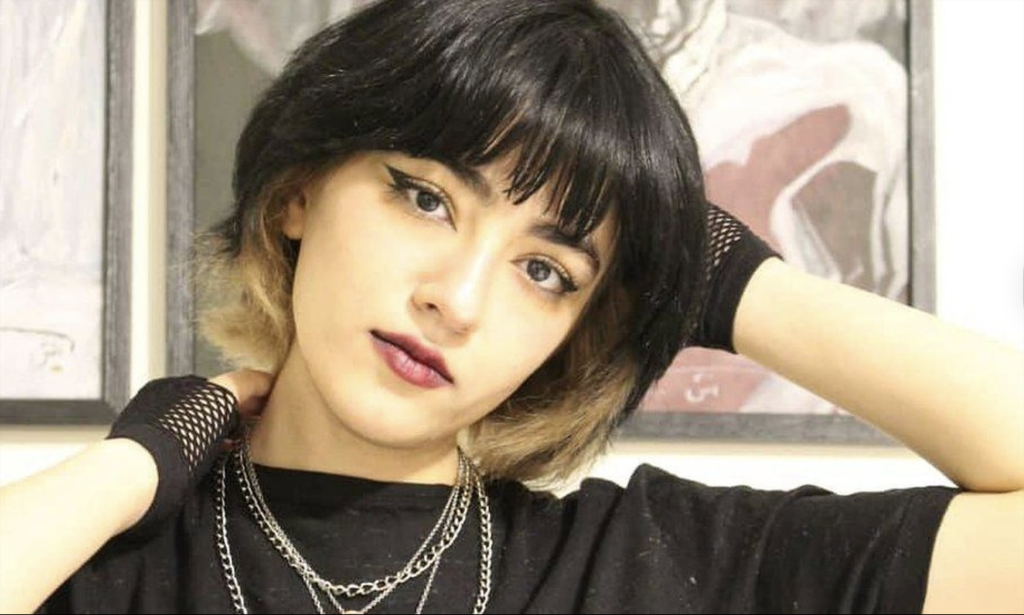
Image Credit: X (formerly Twitter)
US imperialism and the lie of the ‘just cause’
The Iranian government claims the protestors are ‘rioters’ encouraged by the United States and Israel; however, there is no evidence to back this claim. On the other hand, Donald Trump has threatened Iran with military intervention if the crackdown on protestors continues. However, America’s concern has little to do with Iranian citizens’ rights and more to do with its vested interests.
US imperialism has destabilised and wreaked havoc in various parts of the world, including West Asia. US imperialism is not a relic of the past; it continues unabated, as evidenced by the recent arrest of Venezuelan President Nicolás Maduro by the US on charges of narco-terrorism. From destabilising countries in South and Central America in the name of the War on Drugs to using terror as a pretext for attacking oil-rich West Asian countries, the U.S. imperialist agenda has long been obscured behind domestically parroted ‘righteous causes’.
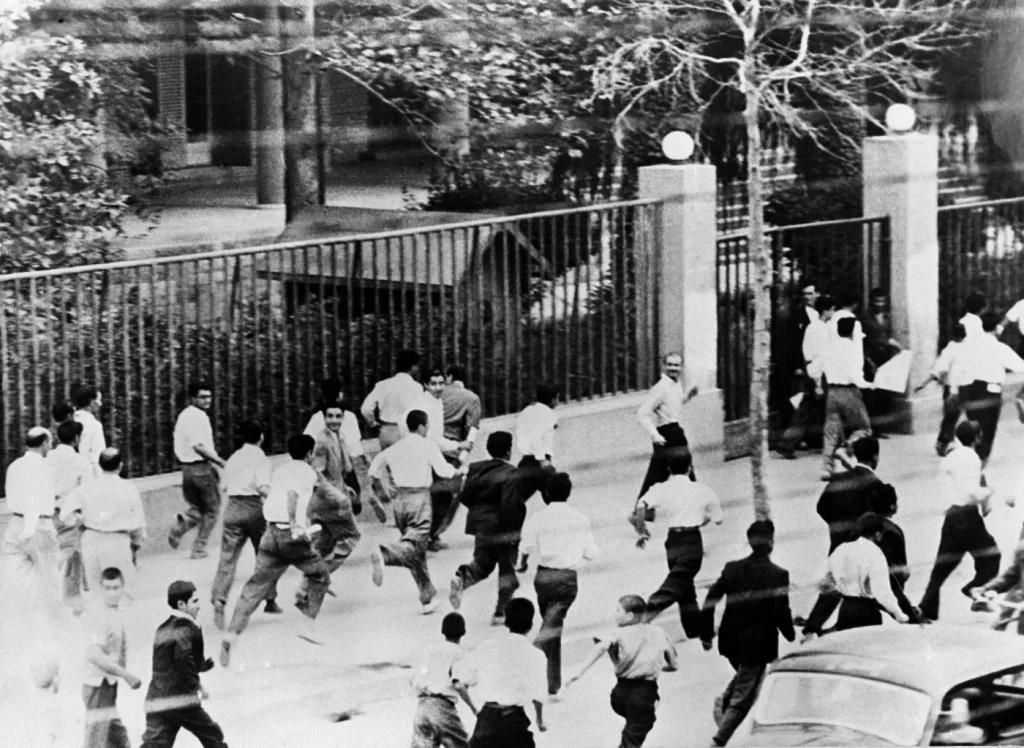
Image Credit: AFP
Iran’s far-right theoretical government has long been known for its egregious human rights abuses and mounting attacks against women’s rights; however, condemnation of this by countries like the United States or Israel cannot be taken in good faith. For such imperialist forces, their interest does not lie in protecting protestors, their free speech, or preventing human rights abuses; rather, it’s an effort to couch their agendas in progressive terms that will receive populist backing domestically and internationally.
The United States, alongside the United Kingdom, was instrumental in orchestrating the 1953 coup in Iran that overthrew its democratically elected government and reinstated the Shah-led monarchy in the country. Principally because the Mohammad Mossadegh-led democratic government had nationalised the Iranian oil industry, cutting off British access to Iranian oil, access that the UK had enjoyed for decades. The UK is then said to have reached out to the US, which led to the CIA orchestrating the overthrow of Mossadegh and succeeding in its second attempt.
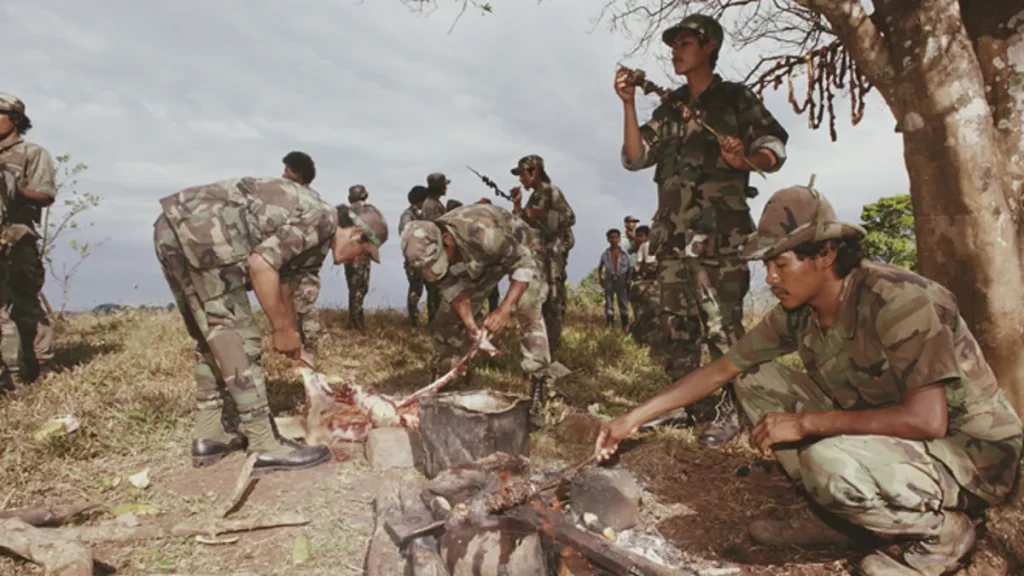
Image Credit: Scott Wallace/Getty Images
US interventions in much of Central America, South America, and West Asia aren’t motivated by ideology, but by pragmatic considerations and strategic interests. Declassified documents show that the Carter administration in the US was in talks with Ayatollah Ruhollah Khomeini for two weeks, just before the 1979 Islamic Revolution. Soon after, the US was embroiled in the Iran-Contra Affair, a Reagan-era political scandal.
The Ronald Reagan administration illegally sold arms to Iran between 1985 and 1987, despite an arms embargo that prohibited the sale of weapons to Iran. The profits from the sale were then used to fund Contra rebels in Nicaragua, despite the US Congress prohibiting any further funding of the Contras under the Boland Amendment.
The move allowed the Reagan administration to keep funding the Contra rebels, who were attempting to overthrow the socialist Sandinista government, keeping in line with Reagan’s efforts to support and fund anti-socialist insurgencies.
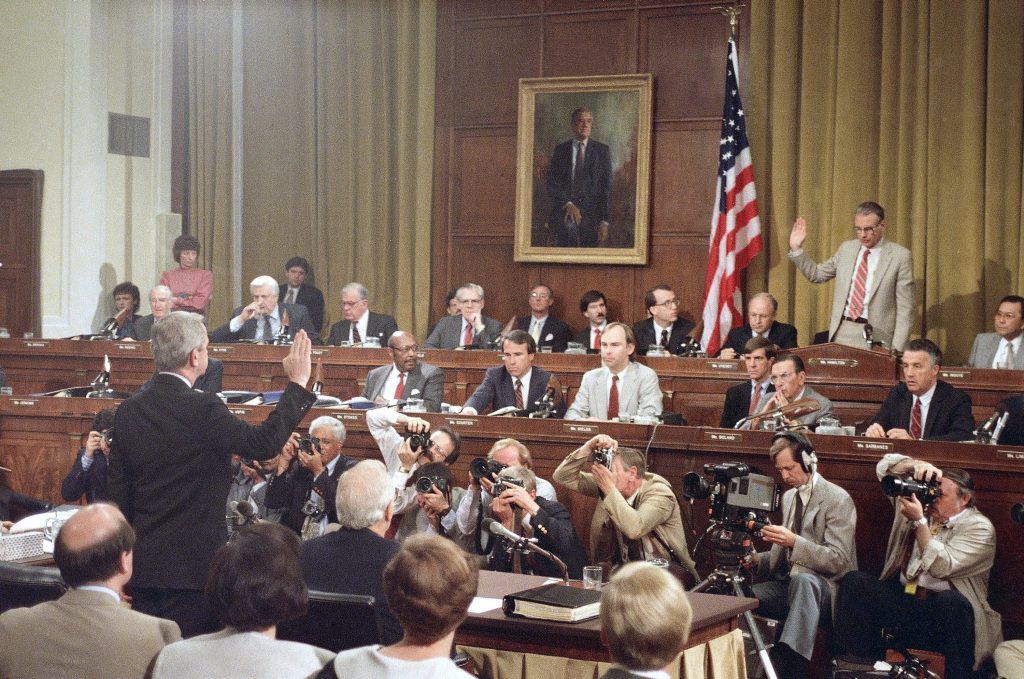
Ayatollah Ruhollah Khomeini, too, after spending years decrying American imperialism and vowing to fight it, and even calling the US the ‘Great Satan’, reportedly reached out to the US in the weeks before the 1979 Revolution. Iran also bought arms from the United States for two years between 1985 and 1987. For far-right forces, ideological adherence is often a farce used to manipulate the narrative.
Far-right politics and the co-opting of rights-based struggles
While the co-option of rights-based struggles by the US or Israel is done for imperialistic agendas, in the case of India, the agenda is one of influencing domestic narratives. Hindutva proponents have been quick to side with the Iranian citizenry; however, these same ideologues side with Israel in its ongoing genocide in Gaza. Hindutva’s concern doesn’t lie in Iranian citizens being denied their rights or Iranian women living under an oppressive regime; co-opting their struggle is merely a way to indulge in Islamophobia and further domestic propaganda that positions Hindutva extremism as a solution to Islamic extremism.
If Hindutva seems on the right side of the conflict in Iran, that’s purely incidental. Islamophobia is the real driver. In Iran’s case, that takes the form of taking an outwardly correct stance against a far-right theocratic government; however, in the case of Gaza, it takes the form of taking a stance against a population that is facing genocide, just because they are Muslims.
It is essential that our understanding of the situation in Iran isn’t influenced by far-right propaganda. Far-right governments and ideologies that commit human rights abuses in their own countries against minorities and women can be no friend to an Iranian citizenry fighting these same abuses. There is no room for imperialist or far-right voices in the discourse surrounding Iran, and that includes even Iran’s theocratic government. The only voice that must be centred and amplified is that of Iranian citizens themselves.
About the author(s)