In a recent incident near the capital, in Ghaziabad, three young sisters named Pakhi, 12, Prachi, 14, and Nishika, 16, jumped one after the other from the ninth floor of their residential building home. The fall killed them almost instantly.
Initial reports alleged that the girls were obsessed with Korean games and online content. This quickly sparked outrage, with call for the government to regulate or ban such applications.
However, further police investigations revealed something deeper than mere phone or internet addiction. It came out that the sisters lived in cramped living conditions, a complicated household with multiple marriages, and an entangled, unstable family history.

The sisters were half-siblings living together with their father, Chetan Kumar, and three women identified as their mothers, Sujata, Heena and Tina. The girls had also, reportedly, been out of school for years and had little interaction with the outside world. As details emerged, reports also pointed toward disturbing accounts of isolation, possible abuse at home, and inconsistencies in the family’s narratives.
If we move beyond the easy explanation of “phone addiction,” the blame we often place on children when we don’t want to confront harder truths, what emerges is something more hidden and disturbing: the possibility of natal family abuse.
The story we chose to believe
What is striking in this case is how quickly the blame shifted onto the girls themselves. Their father publicly described them as addicted, almost obsessively so, to Korean culture. He said they used Korean names, played Korean games constantly, and spent all their time on their phones. The image that was constructed was one of three children consumed by a digital fantasy.
What is striking in this case is how quickly the blame shifted onto the girls themselves. Their father publicly described them as addicted, almost obsessively so, to Korean culture.
He also maintained that he had taken away their phones as any “good father” would. Instead of addressing why the girls had been out of school for years, with no formal education or homeschooling in place, the explanation offered was financial hardship. The two phones the sisters owned were reportedly sold to pay electricity bills, a detail now under police scrutiny.
Altogether, the narrative presented suggested that their deaths were a reaction to losing access to their devices. Their alleged addiction became the central cause. It was even claimed that they were upset about being restricted and possibly threatened with early marriage.

However, the diary notes left behind complicate this version. The girls wrote about not being allowed to watch television and about feeling very lonely and confined. The language in those notes speaks less of gaming obsession and more of isolation. That aspect, the loneliness that may have pushed them towards an external digital world, was largely sidelined in the early public discourse.
The details that didn’t fit
Behind the noise around “phone addiction,” and an alleged obsession with the Korean fantasy world, one detail kept resurfacing: “school.” After the pandemic, the sisters had reportedly dropped out and never been sent back. For years, there was no regular education, homeschooling, or a routine outside the home. Their world was their residential building, and they had nowhere to go.
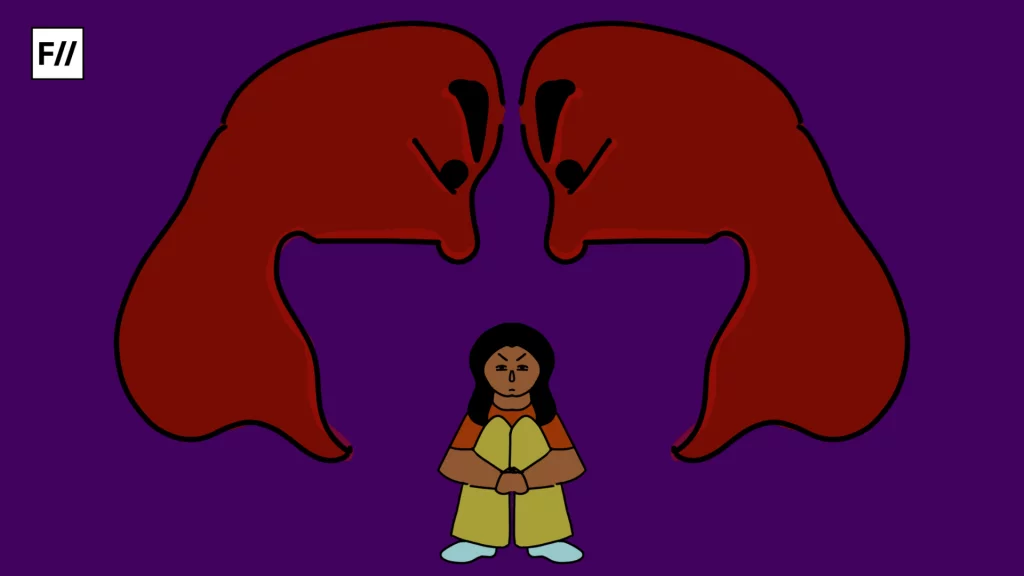
Adolescence is usually the age when life expands. For these girls, it seemed to shrink more and more instead. Most of their time was spent inside a cramped home, both literally and metaphorically. Though the flat had three bedrooms, multiple adults and children reportedly shared limited space, often crowding in a single room. This isolation made the home prison-like.
National data suggest this is not incidental. According to the National Crime Records Bureau, ‘family problems‘ remain the single largest recorded cause of suicide in India. What is even more shocking is that these family problems account for over 30% of cases each year. Even with such grave numbers, the home is rarely believed to be a site of such grave harm.
According to the National Crime Records Bureau, ‘family problems‘ remain the single largest recorded cause of suicide in India.
Taken together, these are not the details of three children consumed by screens. Instead, these are three children who fell victim to the most ignored form of abuse, natal family abuse.
The violence we don’t name at home
In India, we have a vocabulary for violence inside marriage. It is very common to hear about domestic abuse, which includes abusive husbands, dowry harassment, or even domestic violence. Laws exist around it. Helplines exist as well. Even outrage exists. However, we rarely extend that language to what happens before marriage inside the natal family itself.
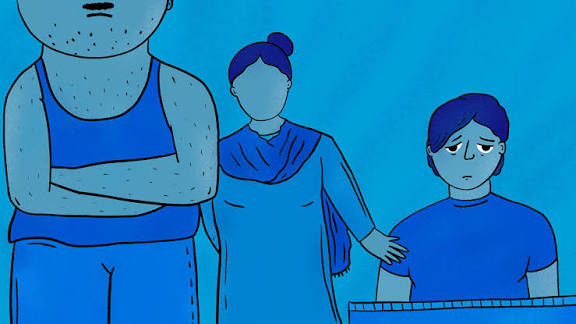
When we talk about domestic violence, we often forget the children who live inside those homes. Not all violence leaves bruises. Sometimes it looks like a child being pulled out of school without explanation. At other times, it can just look like constant surveillance, doors that never open, or even friendships that never form.
What makes this even more complicated is that abuse within natal families often hides under the garb of protection. It often takes the form of punishment disguised as protection, or control disguised as love. In such environments, it becomes difficult for children not only to report harm, but even to recognise it as harm in the very first place.
There is also a gendered layer here. These were young adolescent girls. Historically and culturally, control over girls’ mobility intensifies first and fastest. When something is even perceived to be wrong, their movements shrink first, and their already limited world gets smaller and smaller. And the solution offered to them is always the same: adjust, stay indoors, and be obedient.
There is also a gendered layer here. These were young adolescent girls. Historically and culturally, control over girls’ mobility intensifies first and fastest.
In this case, the report suggested that after their phones were taken away, the girls were also threatened with early marriage. So, at first, the refuge of the digital world was removed, and then they were threatened with being married off. Their diary notes repeatedly spoke of loneliness.
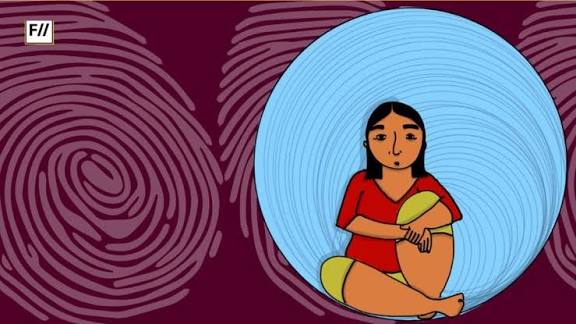
Reading about the Ghaziabad sisters, one realises that in Indian homes, many girls grow up this way, being half visible, half heard, expected to endure whatever happens inside their homes. We call it strict parenting, culture, discipline, but rarely call it what it really is: violence.
And maybe that is the problem. Because what we refuse to name, we rarely try to change. Blaming the phone is easy, as it demands nothing from us. It lets us point outward, at apps, games, foreign cultures, instead of looking and reflecting inwards. But the real question is simpler and far more uncomfortable: do our homes actually feel safe to the children who live inside them?
Prevention rarely looks dramatic. Instead, prevention is the most ordinary form of life. It can be as basic as a teacher noticing a child who hasn’t come to school, or a neighbour checking in, or just a friend calling, or a safe adult asking the child if they are okay, more often than not. Sometimes it is the small interruptions that save lives. But accepting this means confronting something we often resist, especially in the Indian context, that families are not automatically safe spaces, and that harm can begin long before a child ever steps outside the home.
Until we are willing to question what happens inside our own homes, we will keep blaming screens or technology for wounds that began much closer to us.
This leads us to a grave realisation that technology did not push those girls out of the window, isolation and neglect, a home that failed to hold them, did. Until we are willing to question what happens inside our own homes, we will keep blaming screens or technology for wounds that began much closer to us.
About the author(s)

Ananya Shukla is a development communication researcher and poet currently pursuing her Master's at Jamia Millia Islamia. Her work bridges academia and creative expression, using media like documentaries and poetry to explore how storytelling can drive social change.