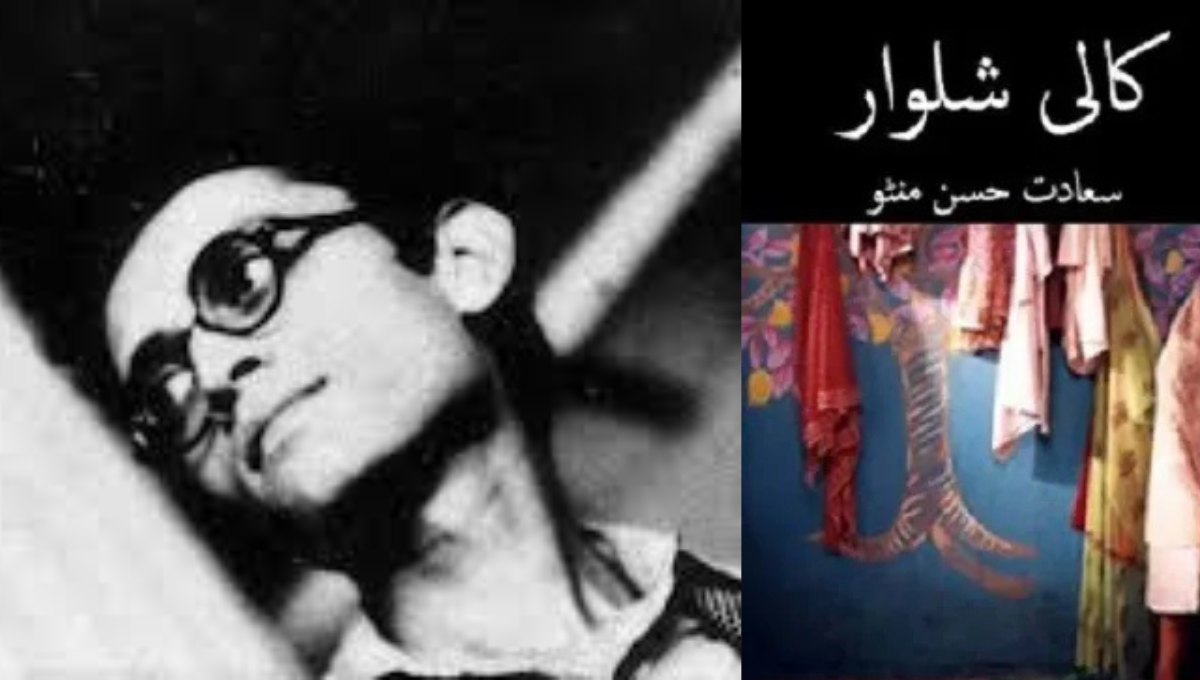
Saadat Hasan Manto was renowned for being a major contributor to Urdu literature, and one of his prominent short stories is Kali Shalwar, which was published in 1941. The short story introduces readers to the plight of a prostitute named Sultana, who faced socio-economic marginalisation. It is of immense significance to understand the essence of Kali Shalwar in a critical manner to gain insights into the historical changes that prostitutes experienced under the British Raj.
When this fictional literary work was published, the nationalist movement was at its peak, awaiting the transfer of power from the British. One must consider how nationalism perceived prostitutes who were subjected to state-sponsored regulations. To understand this, a historical approach is used to establish a link between the past and the present. It is important to acknowledge that the socio-economic plight of sex workers has not changed much since then.
Commodification of Colonised Women’s Bodies
Cantonments in British India were built to garrison military troops and house them. Kali Shalwar begins with Sultana, a ‘prostitute’ who earns her living by providing sex services to British soldiers in the Ambala Cantonment. This was a historical practice that became commercial during the British Raj. In the aftermath of 1857, a large number of British troops were recruited to protect the occupied territories. It became important to ensure their health so their services could benefit the regime. As a result, the Cantonment Act of 1864 was introduced in response to the Royal Commission into the Sanitary State of the Army of India (1863), which had recorded the prevalence of venereal diseases among British soldiers. The Cantonment Act imposed medical checks on prostitutes who were registered in cantonments. If they were identified as infected, they were confined in lock hospitals.
The short story introduces readers to the plight of a prostitute named Sultana, who faced socio-economic marginalisation. It is of immense significance to understand the essence of Kali Shalwar in a critical manner to gain insights into the historical changes that prostitutes experienced under the British Raj.
In order to prevent European troops from resorting to masturbation and homosexual activities, state-sponsored prostitution was widespread in cantonments from the mid-nineteenth century. The introduction and imposition of regulations tried to make prostitution exclusive for European soldiers and considered it a sanctioned practice in cantonments.
Along with the Contagious Diseases Act of 1864, the Contagious Diseases Act of 1868 was colonial legislation that aimed to prevent STDs such as syphilis and gonorrhoea by medically examining prostitutes to protect British soldiers. This medical practice ignored men for spreading diseases. This could be seen as a result of imposing Victorian morals and values on India, where prostitutes were considered immoral women. These legislative measures were primarily introduced to institutionalise a new set of rules for prostitution. The Cantonment Acts of 1864, 1880, 1889, 1893, and 1897, along with the Indian Contagious Diseases Act of 1868, maintained segregated areas where prostitution could be practiced.
During the British Raj, the bodies of native prostitutes were commodified to serve British troops at the expense of their rights. This resulted in the eventual discrimination against prostitutes in Indian society.
Although it is wrong to assume that the colonial authorities were solely responsible for marginalizing prostitutes and their rights. According to Uma Chakravarti on colonialism, gender, and nationalism, prostitutes faced exclusion in Indian nationalist discourses as they were not considered ideal women by early reformers. To be precise, it was a way to control women’s bodies through deeming prostitutes immoral and a threat to a nation’s reputation.
According to Chakravati, both colonial authorities and nationalist reformers wanted to control women’s sexuality but with different aims. The former aimed to protect the health of soldiers, whereas the latter wanted to protect their nation’s ideal reputation. In fact, there was racial segregation between colonized prostitutes and European prostitutes to maintain national pride. Dr Ashwini Tambe argues that there was a racially stratified system in Bombay where a large number of brothel workers were from different parts of the world. Native women outnumbered Eastern European women in prostitution. It was primarily these native women in prostitution who were in cantonments. The colonial authorities were worried about the presence of British women in prostitution because it was seen as a threat to their nation’s pride. There are historical records that mention British women were often forced to go back to their homeland.
Kali Shalwar Highlights Migrants Facing Socio-Economic Constraints
Manto’s Kali shalwar also reflects marginalized prostitutes who face socio-economic constraints when they become migrants and move to big cities where there is intense competition. The protagonist Sultana, who enjoys financial independence at first in Ambala by providing services to European soldiers, migrates to Delhi at the suggestion of her lover Khuda Baksh for better opportunities. She starts losing her financial independence, which she believes has happened to her because of Khuda Baksh, considering him her lucky charm. She faces economic constraints when she is unable to buy a kali shalwar (a black pant) for Muharram. Ambala was known for its large cantonment space, garrisoning a large number of British soldiers who required sex services, so prostitutes were able to maintain their finances. Delhi was a large area where there was high competition to earn a living. Manto’s Sultana migrates to Delhi and sells her gold jewellery to afford basic living expenses. Likewise, migrants who migrate to big cities without their essential belongings face socio-economic constraints in other cities due to intense competition. Their identities also limit their access to resources and opportunities.
Marginalized People Used the English Language to Express Hardships
Manto’s Kali Shalwar reflects marginalized people using the English language to express their hardships. After migrating from Ambala to Delhi, Sultana faces an economic crunch, and while talking to her friend, she expresses her economic hardship by uttering certain English words: “This life is very bad.” These words she learned from European soldiers in the Ambala cantonment. This narration sets up a mirror to a historical change that came about following Thomas Babington Macaulay’s emphasis on English as a medium of instruction in the 19th century.
Manto’s Kali shalwar also reflects marginalized prostitutes who face socio-economic constraints when they become migrants and move to big cities where there is intense competition. The protagonist Sultana, who enjoys financial independence at first in Ambala by providing services to European soldiers, migrates to Delhi at the suggestion of her lover Khuda Baksh for better opportunities.
In her poetry ‘Mother English’, Savitribai Phule considers English a source of emancipation for socially marginalized people. Although she writes about shudras, atishudras, and women, whose English education is detrimental to upper castes and their hegemony over languages like Sanskrit and Persian. The essence of this poem can be extended to include marginalized prostitutes who face economic hardships like Manto’s fictional character Sultana.
In this way, this reflection on English as a medium of emancipation and freedom challenges the dominant narratives that surround privileged sections’ languages like Sanskrit and Persian, which had lost their importance to English, a colonial language. English is still considered a colonial language that penetrated into the Indian subcontinent when the British took control over it. In the past, it was considered a language that could challenge centuries-old oppression meted out to marginalized castes and genders.
When Kali Shalwar was published in Adab-e-Latif in 1941, people deemed it obscene. Ironically, it is still unbearable for people to understand that the story narrates the plight of a fictional character in a society that marginalizes people based on their identities and occupations. Kali Shalwar was written in a society where marginalized people faced exploitation and suppression of rights. Even though there is a need to understand the story in a critical manner to trace the past and build an interlink with the present.
About the author(s)

Nashra Rehman finds her profound interest in addressing the plight of Muslim women and their unappreciated marginalisation. Her focus remains on bringing a novel argument to life.