Umesh Shukla’s Ek Chatur Naar (2025), currently streaming on Netflix, presents itself as a familiar Hindi entertainer—light, brisk, and comfortably placed within the territory of situational comedy and family drama. It is the kind of film that relies on clever narrative turns rather than heavy themes, aiming to amuse rather than unsettle. There is no overt claim of social commentary, no visible attempt to interrogate politics or ideology. The film, at least on the surface, wants only to entertain.
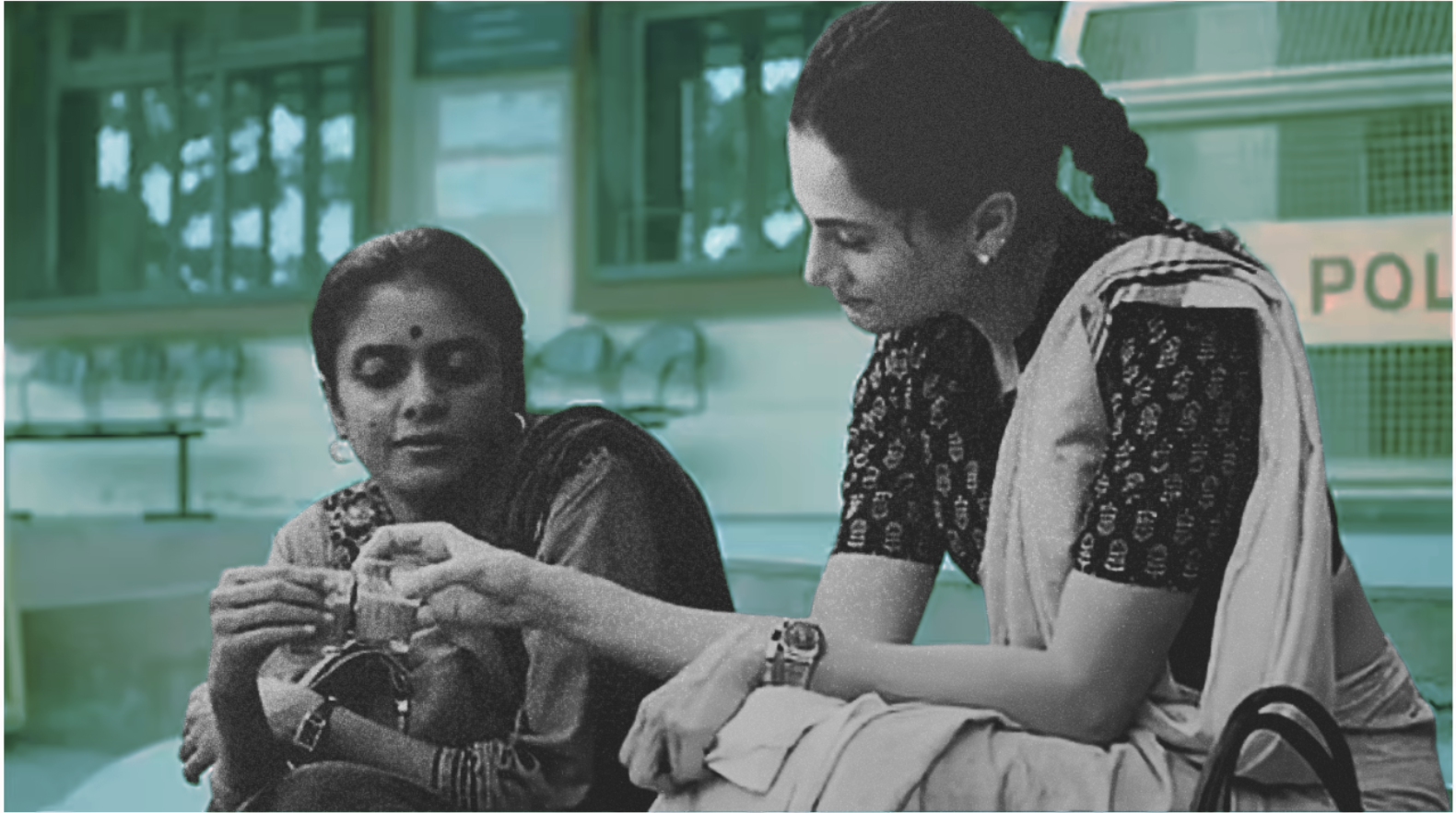
Titled after the idea of a “clever woman,” the story follows Mamta Mishra, played by Divya Khosla, a resourceful, street-smart woman navigating financial instability while caring for her young son and her mother-in-law. Mamta’s intelligence is framed not as exceptional brilliance, but as everyday survival, quick thinking, adaptability, and an ability to read situations before they close in on her. The narrative unfolds with humour and ease, inviting the audience to root for her small victories and clever escapes.
It is precisely within this tone of harmlessness that the film earns the viewer’s trust. Ek Chatur Naar does not announce itself as political cinema, nor does it ask to be read with suspicion. Like many mainstream Hindi films, it operates within a familiar grammar—one where laughter softens conflict and convenience often guides storytelling choices. And it is within this very comfort that a particular moment slips by almost unnoticed.
The sequence lasts barely a minute.
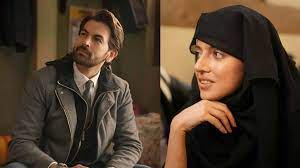
Set inside a crowded metro station, the camera follows what appears to be a routine urban incident: a phone is discreetly stolen by a man dressed in a burkha, who then vanishes into the anonymity of the crowd. The moment does not pause for emphasis. It blends seamlessly into the rhythm of the film, registered as nothing more than a fleeting plot device—another small incident in a bustling public space.
Ek Chatur Naar does not announce itself as political cinema, nor does it ask to be read with suspicion. Like many mainstream Hindi films, it operates within a familiar grammar—one where laughter softens conflict and convenience often guides storytelling choices.
Soon after, the narrative reveals its twist. The theft was not random but carefully orchestrated by the protagonist herself. The stolen phone becomes a strategic tool, turning what first appeared to be a petty crime into a calculated move within Mamta’s larger plan.
Later in the film, the garment returns, this time worn by Mamta herself.
As she finds herself pursued by the man whose phone was stolen and by people demanding repayment of her husband’s debts, Mamta covers herself in the same burkha, blending into public space and slipping away unnoticed. Once again, the moment does not demand attention. It functions smoothly and efficiently, doing exactly what the narrative needs it to do.
The Burkha as Cinematic Convenience
And yet, it is precisely here that a question begins to form.
Why a burkha?
Why does this particular garment feel like such an effortless cinematic solution?
Films that declare themselves serious or political are often seen with a critical eye. Light comedies, like this one, often arrive disarmed. But can any film truly be apolitical when its images circulate freely in the public imagination?
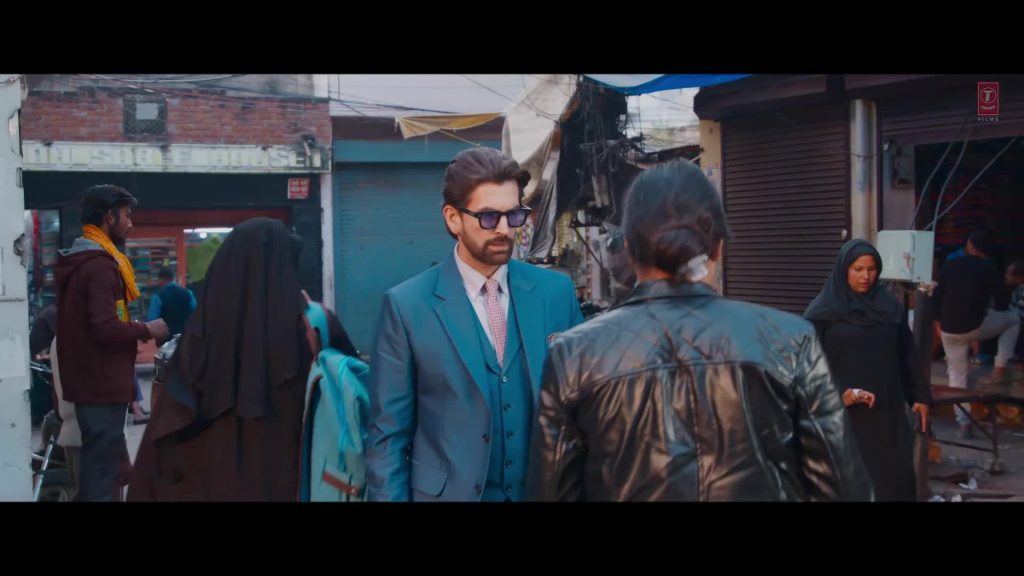
Hindi cinema has long relied on costumes as cinematic shorthand. Cinema speaks through clothes long before it speaks through words. Disguises allow characters to cross boundaries and escape surveillance, a device audiences instinctively understand. Yet, the choice of disguise is never neutral. When Ek Chatur Naar reaches for Burkha, what is it reaching for exactly—fabric or an idea of invisibility already associated with the garment?
To hide the malicious intent, the burkha has been borrowed from the minority identities as a form of concealment. The burkha here is selected not for who wears it, but for what it hides.
“A Burkha carries layered meanings. It can be for faith, modesty, personal choice or even a social identity. A garment so deeply embedded in cultural and religious life can never be reduced to function alone” expresses Saud Siddiqui, an advocate registered under the Bar Council of Delhi.
In the film, these layers are stripped off. First, the garment enables theft. It becomes an easy option for the mind of the potential wrongdoer. It enables escape. The narrative purpose becomes clear.
When a criminal and protagonist both rely on the same symbol of deception, a cinematic tool becomes a statement within the film. Images that pass without resistance often settle deepest in memory.
Images do not exist in isolation from the world in which they are viewed. In contemporary India, Muslim identity has become increasingly politicised, with visible markers, names, beards, and clothing often subjected to suspicion and surveillance. Public discourse has repeatedly framed Muslims’ social conduct as something to be questioned, regulated, or explained.
In this context, the casual portrayal of a Burkha as a tool for anonymity acquires new weight. What might once have been dismissed as harmless now interacts with real anxieties and prejudices, often strengthening the stereotypes. Cinema, as one of the most powerful cultural storytellers in the country, cannot be separated from these realities.
“When a garment associated with women becomes a unisex tool for disguise, the film borrows women’s clothing while leaving women’s experiences out of the frame.” Says Sidra Fatima, a journalist at FoEJ Media.
Notably, the film does not question the disguise in either instance. But silence is never empty in cinema. When a film does not interrogate its own imagery, it invites the audience not to interrogate it either. The repeated use of Burkha as a tool for anonymity carries a different weight. Can a scene created for humour remain harmless when viewed in a charged social climate?
In this context, the casual portrayal of a Burkha as a tool for anonymity acquires new weight. What might once have been dismissed as harmless now interacts with real anxieties and prejudices, often strengthening the stereotypes. Cinema, as one of the most powerful cultural storytellers in the country, cannot be separated from these realities
“Is not India starting to cater to the religious safety of the majority? If the minority does not have the right to express dissent over such reflections of Brukha, let alone protest or lodge an FIR, as recently took place in the case of the teaser of the film ‘Ghooskhor Pandat’ where an FIR has been lodged and the case has reached the Delhi Court as well.”
“Sarva Dharma Samabhava—are we truly upholding that today?” puts across Suhaira Irfan, an advocate and an LLM student from Jamia Milia Islamia.
Because ‘Ek Chatur Naar’ is a comedy, these choices often escape scrutiny. Humour reassures the viewer that nothing serious is at stake. Yet comedy also allows certain images to slip past unquestioned.
“When problematic representation appears without malice, it does not make it less influential, or hard to name. A genre’s lightness does not protect it from accountability,” says Rabiya Parveen, a budding lawyer from the University of Delhi.
To critique these scenes is not to accuse the film of malice or demand its erasure. On the contrary, it resurfaces the implied responsibility of the artist to create not from the place of ignorance. Popular cinema teaches us how to see the world not only through what it highlights but also through what it normalises.
What ‘Ek Chatur Naar’ ultimately reveals is not intent, but habit. A habit of choosing certain symbols because they feel convenient, familiar, and unquestioned. The Burkha appears, does its job, and exits the frame, leaving behind associations the film never acknowledges. In noticing such moments, the task is not to demand answers from cinema, but to begin asking better questions of it. Because what popular films treat as ordinary often tells us the most about how we are taught to perceive.