On a cold February morning in Kashmir, 35-year-old Myuna Akhtar walks towards a hand pump near her temporary shelter. Her back is bent, and it is difficult to discern her age. Her day starts by washing utensils in the cold water; she then collects firewood and prepares food for her children. Myuna is fasting, but she ensures her children are fed.
Myuna was only thirteen when she was married to a man nearly twice her age. She says that her father left her no other choice.
Myuna was only thirteen when she was married to a man nearly twice her age. She says that her father left her no other choice. She smiles weakly and says, ‘I was just a child. There was family pressure. But I didn’t even understand what marriage meant.’
Out of her thirteen pregnancies, four of her children died due to preterm births and illness. With tears in her eyes, she says, ‘I am thankful to Allah that nine of them survived.’ She describes her life as a constant cycle of pregnancies. ‘I feel like I was born to give birth and feed them,’ she says. Quietly adding, ‘No one asked me if I was ready physically or emotionally to have children.’
Myuna’s pregnancies have taken a toll on her health. ‘I am no longer able to stand for long hours. I don’t know who will care for my kids now.’ Doctors warn that repeated, closely spaced pregnancies weaken the spine and pelvic muscles, especially when nutrition is poor. Myuna suffers from many health issues. She experiences constant back pain, fatigue, and anxiety. But she has little time to address her health. ‘I am in pain all the time,’ she says. ‘But I still have to cook, clean, fetch water, and look after the children and my husband. If I stop, everything stops.’
There isn’t enough space. Sometimes I feel that I have been living in hell all these years.
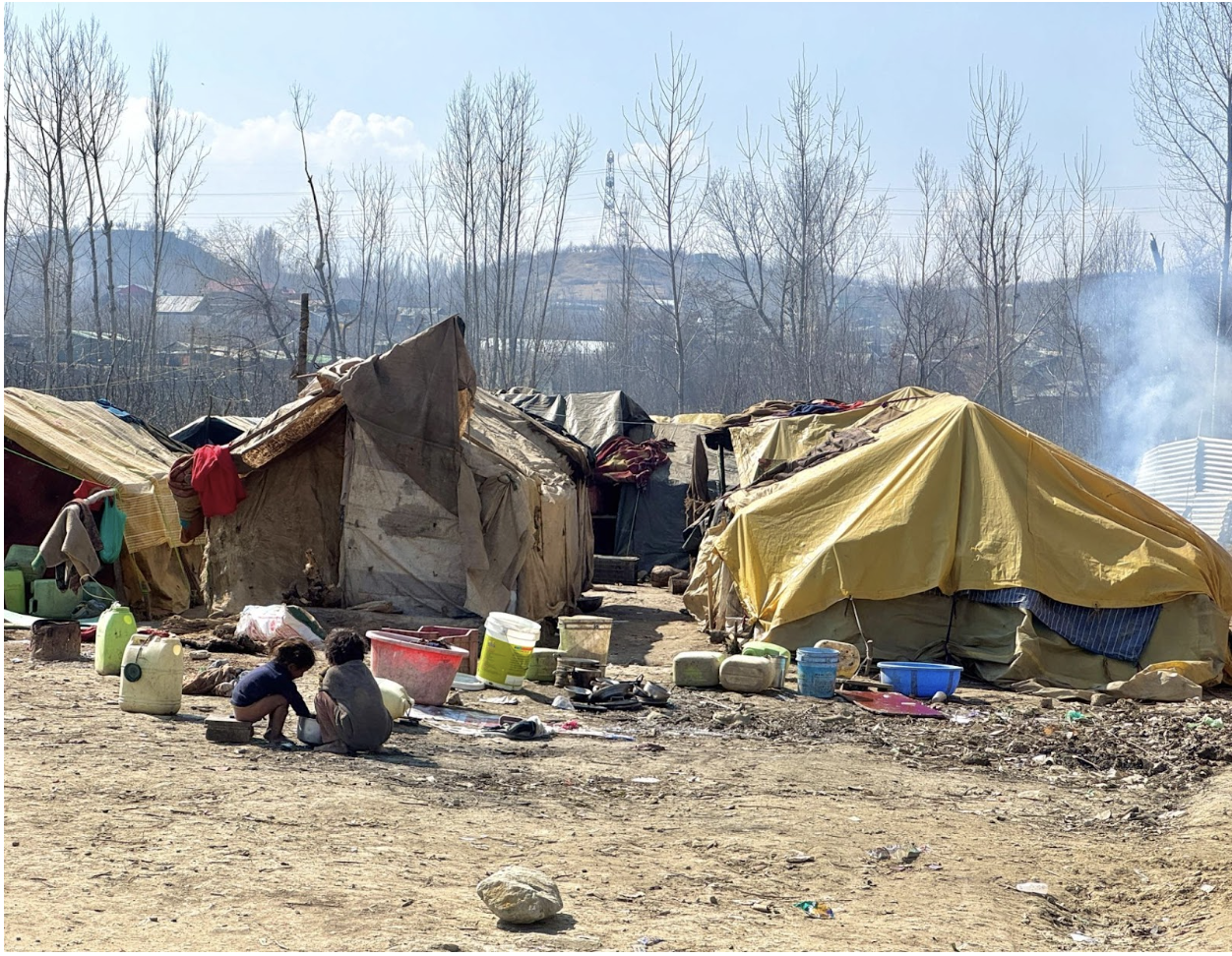
Today, Myuna shares a home with 11 family members. The cramped living quarters afford no safety or privacy, and offer few opportunities for rest. ‘One child is crying, another is asking for milk, and another is making a mess,’ she says. Adding, ‘There isn’t enough space. Sometimes I feel that I have been living in hell all these years.’
Myuna was only 13 when she was married. She remembers the pain she experienced in the days after her wedding. ‘Our shelters are close to each other. Even if I wanted to scream, I couldn’t because everyone would hear it,’ she says. Quietly remarking, ‘Who could I complain to?’
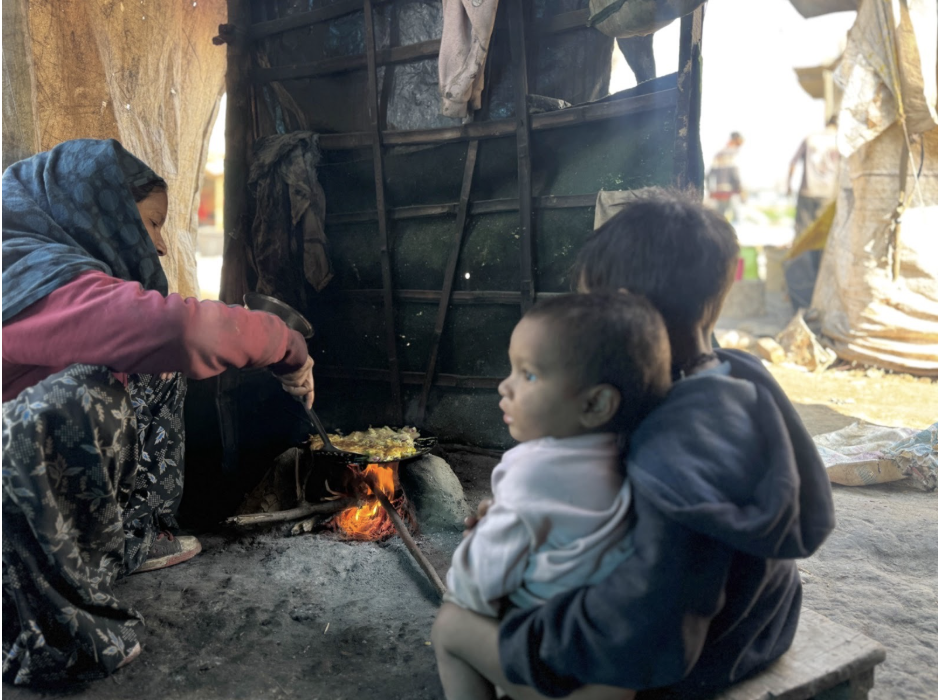
Myuna belongs to the Gujjar-Bakarwal community, who practice seasonal migration. The community migrates from Pir Panjal in Jammu to the higher pastures of Kashmir with their cattle in the summer. In the winter, they return to their homes. They live on small pieces of land, setting up temporary shelters made of tin sheets and plastic.
She says that within the community, girls are often seen only as future wives and mothers. Their age is rarely taken into account, and their consent isn’t sought. ‘No one asks us what we want,’ she says. She adds, ‘If a boy is born, there is a celebration. But when it’s a girl, they begin to think of her marriage.
Myuna says that a girl’s entire life can be changed by child marriage, before she even understands the weight of this decision that has been made for her. But Myuna’s story is only one of many.
Shabnam’s story
50 kilometres away, in another village in Kashmir’s Bandipora, 27-year-old Shabnam Akhtar is wearing a faded green pheran. Inside her small, dark shelter, smoke from a mud stove is spreading across the room. She and her children are coughing. The children have soot on their bodies. They walk barefoot and without proper clothes.
Shabnam was married at seventeen-years-old. ‘My aim was to study more,’ she says. ‘But marriage has ruined my dreams.’ Shabnam became pregnant in the first year of her marriage. She didn’t have regular medical check-ups because the hospitals were far and hardly affordable. ‘Sometimes I did not have the money for the commute,’ she says.
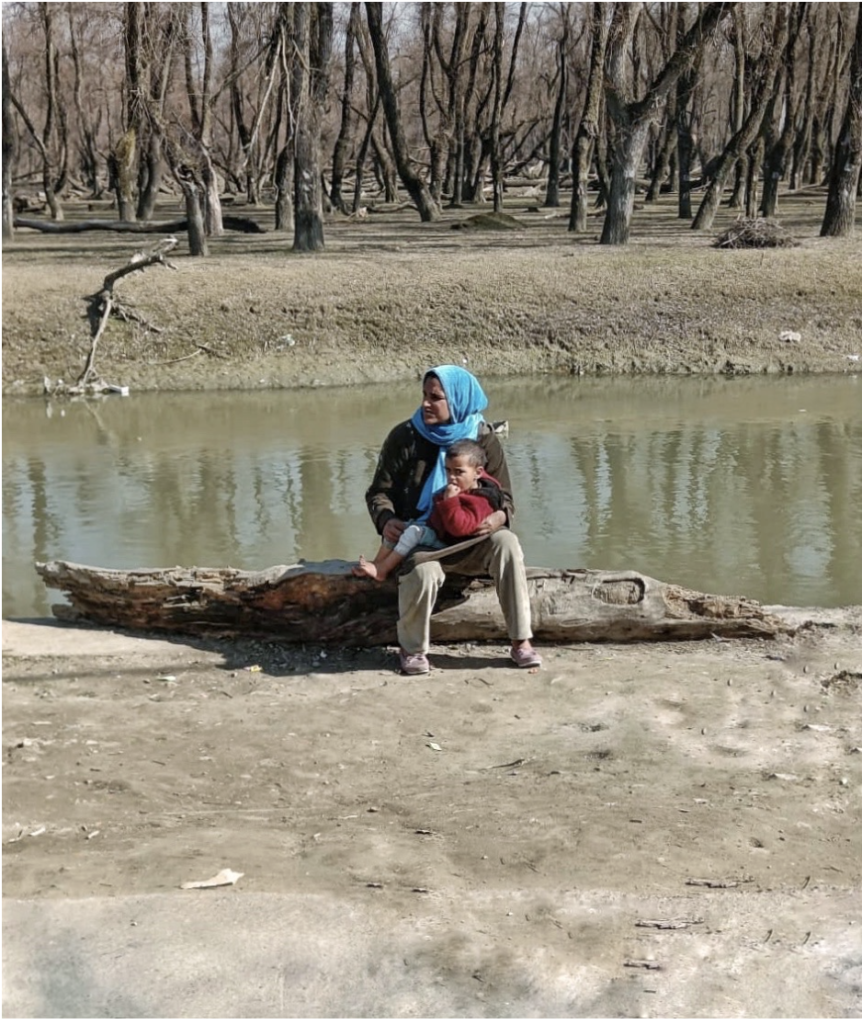
‘I still remember when I experienced pain during my first pregnancy; there was no doctor nearby,’ she recalls. ‘I thought I would die, but someone managed to arrange a car.’ She says medicines were also often unavailable. Sometimes she relied on home remedies, sometimes she would simply wait for the pain to pass.
Early marriage, she says, brought health problems she still carries. She doesn’t feel strong enough to manage her household. She says, ‘My body feels much older than that of someone my age.’ But the impact is not just physical. ‘Mentally, I feel tired all the time,’ she says. ‘There is constant pressure to manage the house, the children, and the animals. There is no rest. Sometimes I feel anxious for no reason, and I cry alone.’
Child and early marriages have robbed many women and girls of their professional aspirations and impacted their personal lives. Shabnam says, ‘I lost everything, my health, education, and future.’
‘I get anxiety attacks, and I am depressed sometimes,’ she says. Adding, ‘I work day and night without any rest. I cry alone, but who would listen to my problems?’
Child and early marriages have robbed many women and girls of their professional aspirations and impacted their personal lives. Shabnam says, ‘I lost everything, my health, education, and future.’ She asks, ‘How can a 17-year-old girl raise a child when she is a child herself? How is it justified to expect a child to be a mother?’
In the Gujjar-Bakerwal community, the intersection of tradition with poverty, lack of healthcare access, and lack of education leads to child marriages, leaving young brides to face pregnancies, childbirth, and emotional stress without any familial or institutional support.
Health risks associated with child marriages and early pregnancies
Child and early marriages expose girls to major health risks and complications. Early pregnancies carry increased complications, such as anaemia, obstructed labour, premature birth, low birth weight, and even maternal death.
In developing countries, about 90 per cent of births to adolescents occur within marriage. Complications from pregnancy and childbirth remain among the leading causes of death for girls aged 15–19. Early marriage also increases the risk of repeated pregnancies, miscarriages, untreated infections, and long-term reproductive health problems. Girls married before 15 also commonly face intimate partner violence, which adds deep psychological trauma to their already fragile health.
Dr Yasmeen Abdullah, a Delhi-based gynaecologist who has worked with Gujjar and Bakarwal families in Kashmir for many years, and with underprivileged people in many parts of India, says that the girls who live in remote mountains are at higher risk of facing health issues and health neglect. ‘In Gujjar and Bakarwal communities, where families migrate seasonally and trek long distances in the Zabarvan Mountains, access to basic care is extremely limited,’ she explains.
‘There is less health screening or nutritional support. Most young brides in the community conceive within the first year of marriage.’ She adds, ‘A girl’s pelvis is often not fully developed at 14 or 15. Early pregnancy can lead to obstructed labour, severe bleeding, and long-term complications like uterine prolapse. These are not rare cases; we see this happen frequently.’
Dr Abdullah also notes that the lack of awareness about sexual and reproductive health makes the situation worse. ‘There should be government awareness programmes on a community level. People in these communities are not taught about contraception, spacing of pregnancies, or warning signs during pregnancy. And by the time they reach the hospital, it is often too late.’
Health experts say that child marriage is not only a socio-cultural issue, but it is also a public health crisis and needs to be addresed at the grassroots level.
She also highlights that anxiety, depression, and emotional withdrawal are common, but they are rarely diagnosed. ‘In remote communities, mental health has never been discussed,’ Dr Abdullah says. Health experts say that child marriage is not only a socio-cultural issue, but it is also a public health crisis and needs to be addressed at the grassroots level.
On the ground, Accredited Social Health Activists (ASHA) workers, who are trained female community health volunteers, bridge the gap between rural communities and public health services. ASHAworker Fatima Begum has dedicated her life to serving the community. She works with Gujjar families and tracks pregnant women, and maintains their health records.
Fathima says, ‘This community is more vulnerable in terms of living conditions and health, they live in temporary shelters far from medical centres. She also says it is difficult to follow a case to its end because members of the Gujjar-Bakarwal community migrate to higher pastures, even during treatment, making them unreachable.
Fatima also points to deeply rooted patriarchy. ‘Women in these communities do not openly share their problems. And they rely on men financially and for mobility. In these communities, men are decision makers, and women have little say. They also fear social consequences and abuse from male family members,’ she says.
Sometimes perceived as a protective measure against kidnapping or sexual violence in unsafe areas, families think marrying girls early will keep them safe. However, they don’t consider the severe health consequences of the decision.
She notes that early marriage is often justified as a means of protection during migration. Sometimes perceived as a protective measure against kidnapping or sexual violence in unsafe areas, families think marrying girls early will keep them safe. However, they don’t consider the severe health consequences of the decision.
Poverty, mobility, and marginalisation
Activists who work with these communities believe that child marriage is a structural vulnerability. Darakshan Hassan Bhat, founder of the Kashmir Women’s Organisation, says early marriage among Gujjar-Bakarwals cannot be reduced to tradition alone. ‘Early marriage is not a single cultural choice,’ she says. ‘It is shaped by poverty, seasonal migration, tribal marginalisation, and entrenched gender norms.’
Financial insecurity plays a big role in the decision as well. ‘Marrying off a daughter is seen as reducing economic burden and transferring responsibility,’ Darakshan added. She further notes that education systems fail to match the community’s patterns of mobility. ‘There are often no schools on migration routes, or sometimes even where they live,’ she says. Adding, ‘Many children drop out because their pattern of migration does not match the academic calendar. And language is also a barrier that keeps them away from schools.’
In tribal communities, school dropout rates are high. Children between the ages of 10 and 18 often don’t receive an education due to the widespread practice of conducting child marriages.
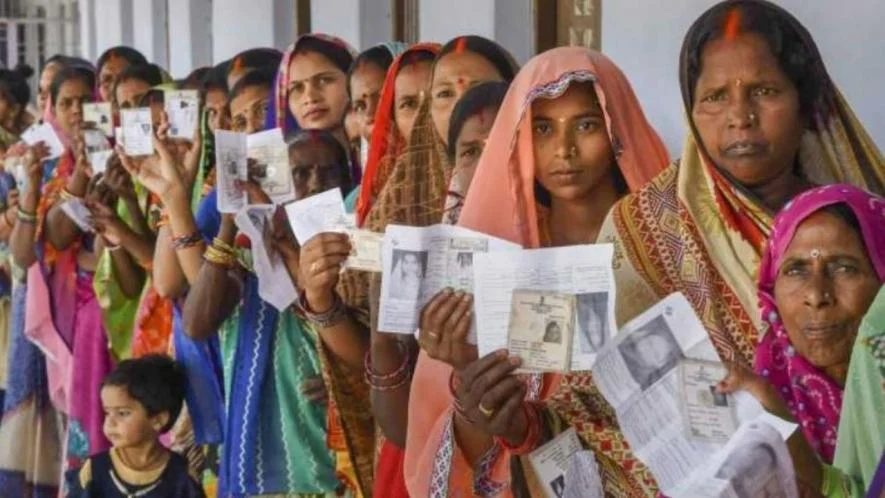
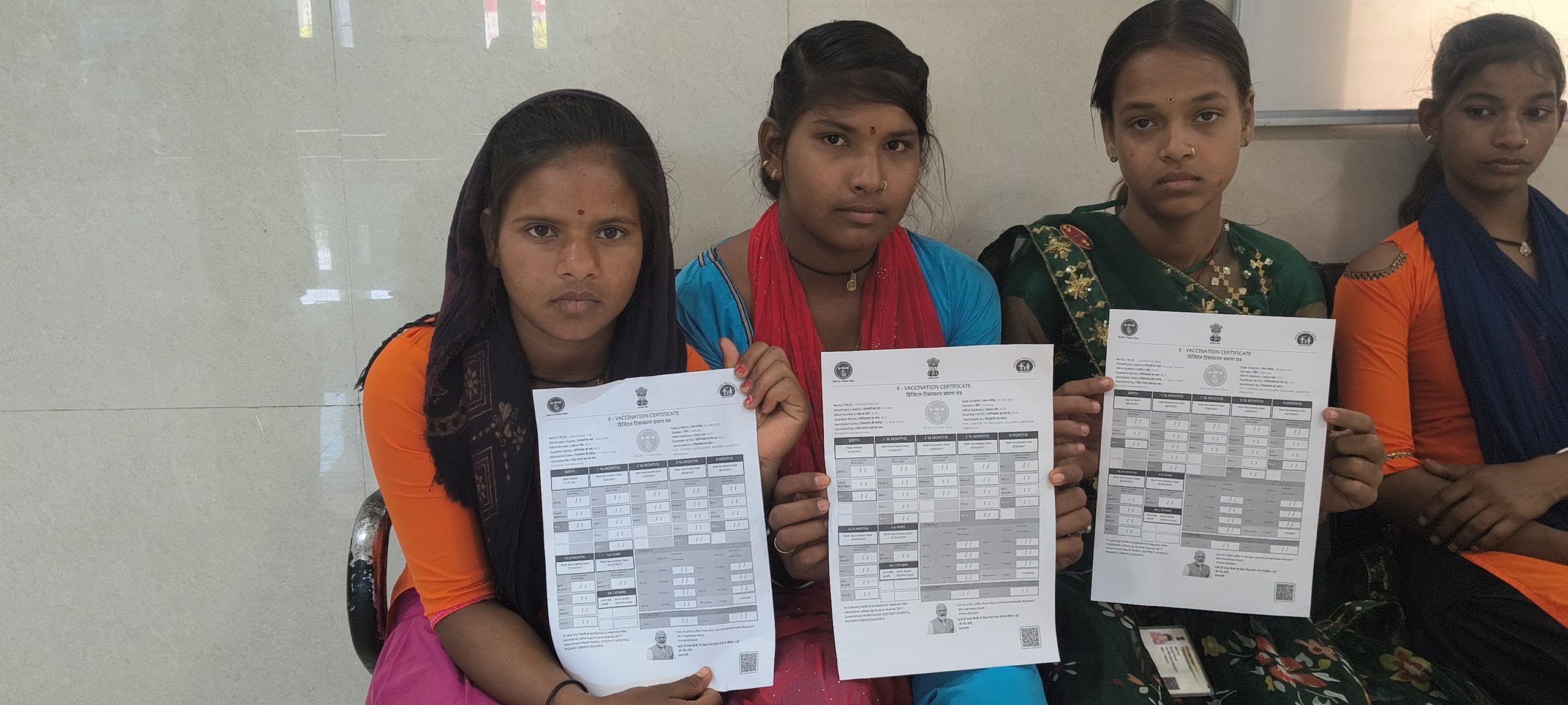
Further, children born during forest migration do not have birth certificates and other documents through which their ages can be ascertained or they can access government schemes. ‘Without proof of age, how can authorities legally establish if a child marriage has occurred?’ says Darakshan.
In tribal communities, school dropout rates are high. Children between the ages of 10 and 18 often don’t receive an education due to the widespread practice of conducting child marriages. As per a 2015 survey by the Tribal Research and Cultural Foundation (TRCF), 89 per cent of people marry their children between the ages of 14 and 18 among tribal populations in Jammu and Kashmir.
Darakshan advocates for mobile solutions, such as mobile health clinics, mobile anganwadi centres, and mobile schools that track seasonal movement to address the issue of child and early marriages. She also says, ‘When there is proper documentation of birth, there is more accountability. Community members must also be taught about sexual and reproductive health and legal rights, which will slowly shift mindsets.’ She also highlights the need to make legal literacy more accessible by providing it in the native language of the community.
The cycle continues
Inside the shelter, Myuna looks outside as her 13-year-old daughter plays with the other children. This year, her father has decided she will be married. Myuna doesn’t want her daughter to marry so young, fearing for her health.
‘But I cannot take that decision,’ she says. The family plans to move to Rajouri after Eid in March, where preparations for the wedding will begin. Teary-eyed, Myuna says another child marriage will soon take place.
Quotes in this article are the author’s free translation from Urdu. Some of the quotes in this article have been edited for clarity and length.
This article has been published under the Laadli Media Fellowship 2026. The opinions and views expressed are those of the author. Laadli and UNFPA do not necessarily endorse these views.