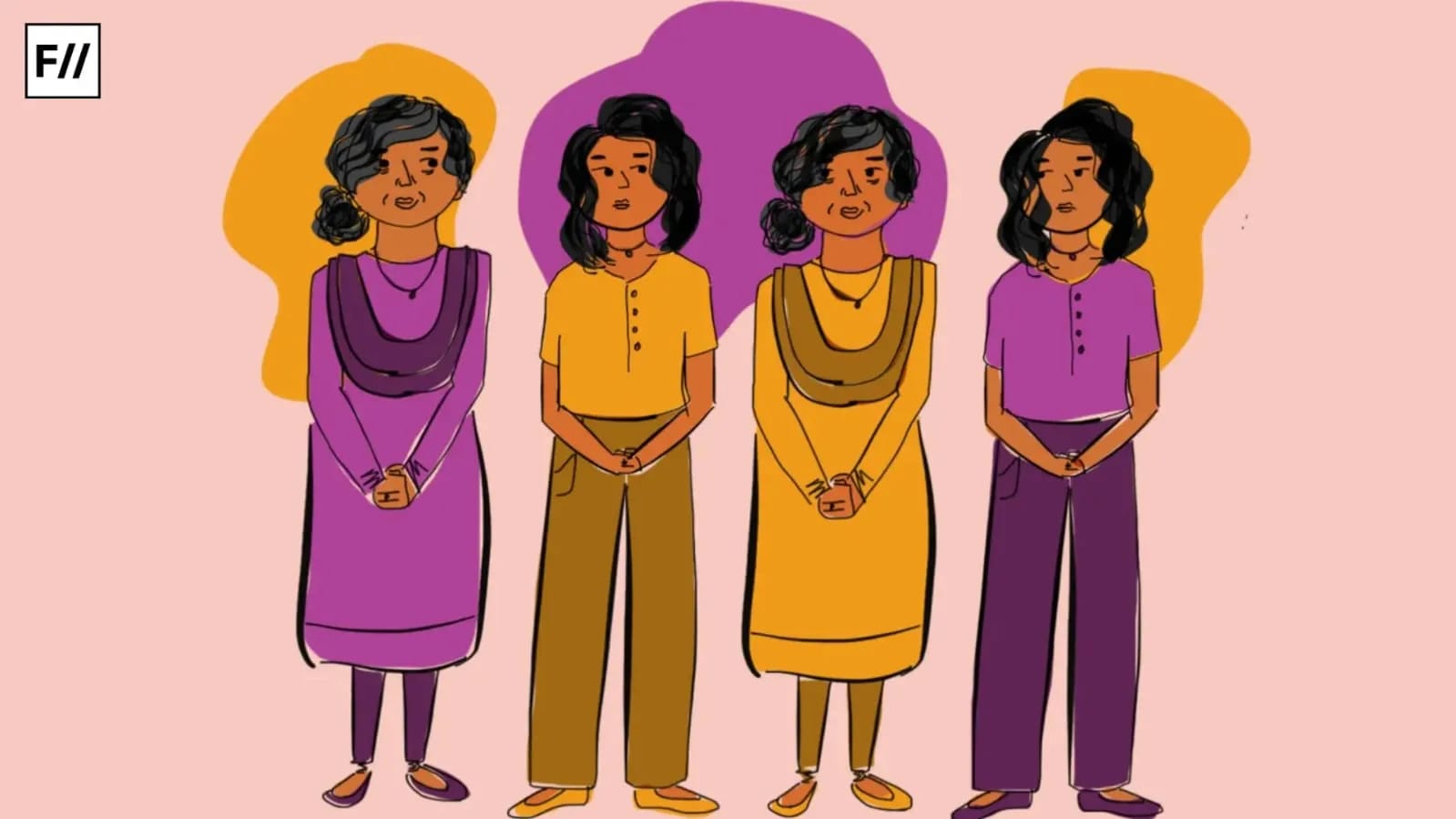
This video is easy to pass off as just another reel or YouTube short of a smiling couple, who are soon to be parents, recalling how they met on a dating app. Their love story is similar to today’s digital-age love – meeting on a dating app, right swipe, months of texting & meeting, and ultimately deciding to get married. But something in their story felt off when the man almost playfully and very casually mentioned, “I lied about my age,” as he was older than what he mentioned on his dating app profile. Why? Because he felt changing his age would attract younger women, which wouldn’t be possible if he kept his real age, and the woman laughs at this. The internet called it “cute” or “romantic” and rewarded it with millions of views, ignoring the uncomfortable truth lying beneath the ‘playful’ humour of the man, i.e., in online dating, deception is often disguised as love.
The man’s confession is a window into how gender, age and algorithms play a significant role in modern age relationships. It is no surprise that online dating has normalised deception and how younger women are often the desirable targets for men who tend to lie not just about age but also about work, personality and lifestyle.
The double standard in the dating culture
In a 2023 survey, it was found that nearly 31% of people on online dating apps admitted to using false information that includes age, height and income. Further in the study, it was discovered that age is among the most common altered details on online dating sites. A study by the journal Computers in Human Behaviour showcased that men significantly either exaggerate their social status or reduce their age, whereas women alter their appearances online using several tools. Similarly, in India, more than 27% of men admitted to changing their age or job details to improve match rates. An observation made in the same report is that women aged between 18 and 25 often receive more matches than men in that same age range, highlighting the demand for younger women.
Age deception is a lot more troublesome when older men lie about their age only to match with younger women, which is apparently romanticised and socially accepted.
Age deception is a lot more troublesome when older men lie about their age only to match with younger women, which is apparently romanticised and socially accepted. But if older women do the same, they are judged harshly and are often put on the spot with suggestions such as ‘You should marry someone your age or older.’ This viral video only exemplifies the double standard in the modern dating culture, where a lie is not seen as manipulation but as romance.
The price of youth on online dating platforms
In today’s time, dating apps are seen as a modern space, not knowing that it is a digital market space where a person’s profile is ranked and rewarded based on how they look, or to put it bluntly, how desirable they are. From swipes to visibility on the platform, it becomes the price of the youth, especially young women. Men across different age groups consistently prefer younger women, whereas women often tend to choose partners of the same age or slightly older. Similarly, the OkCupid report revealed that men in their 40s rated women in their 20s as the most attractive.
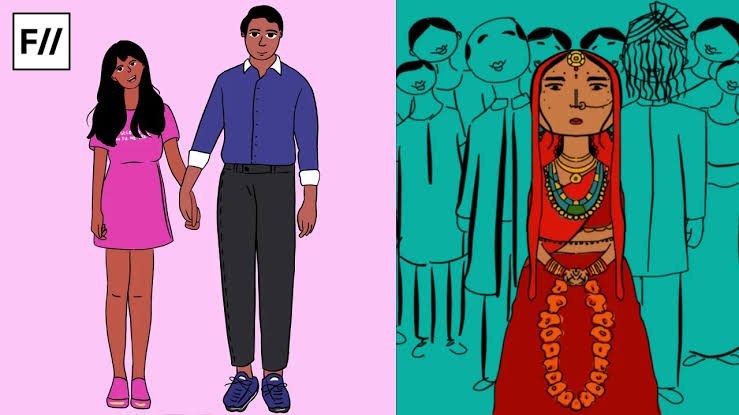
Algorithms also play a major role in this imbalance on dating apps. The profiles that receive more attention on the app, typically younger women, become hyper-visible on the app, whereas older women and men gradually disappear. Visibility is not distributed evenly; it is shaped by these algorithms that reward young age and attractiveness over anything else.
A digitised version of the orthodox tradition
Long before any of the modern dating apps, in India, the dynamics of difference in age or lying about age were deeply rooted in orthodox societal norms. Several studies and data on age gaps in marriages showcase that men in India are often several years older than their wives. It is a reflection of a society where men are supposedly older and financially stable, while women must be younger and marriage-ready. Over time, this norm has extended into the realm of dating. According to an article in Mid-day, age is, apparently, a very important factor when it comes to dating, and it is the preference of both genders – women like men slightly older than them, whereas men prefer younger women (i.e., in their 20s or so).
It is a reflection of a society where men are supposedly older and financially stable, while women must be younger and marriage-ready.
Women have always been tied to their youth, whereas men are often associated with their social status, financial stability and career, ignoring their old age. Historically, Indian women were married as young as the age of 9 in the early 1900s-1990s. Fortunately, this has declined significantly, but it has left behind its cultural impact and can be seen in the modern dating apps, where one can easily lower the age bar for the partner they are looking for. And these dating apps, instead of opposing these age options, are favouring and digitising the historical patriarchal rules of society.
It is no surprise that a lie – big or small – can heavily impact a relationship and often leads to withdrawal of trust, commitment and communication. However, several cultural narratives showcase that people in relationships go out of their way to tolerate and rationalise petty lies, which mostly happens when they believe these lies only lead to positivity. For instance, the lady in the video seemed to be happy and agreed with the fact that yes, she knew his husband lied to her on the app and hid his real age. According to a study on the impact of romantic relationships on deception detection, it was found that romantic relationships enhance one’s ability to understand dishonesty over time. This kind of tolerance is often amplified online: if a couple appears to be cute or happy in love, the deception is framed as ‘cute’, ‘charming’ or even ‘a play of destiny’; whereas if that same couple appears to be distressed in their relationship, then the people are quick to tag any deception or lie as a ‘red flag’, ‘toxic’ or ‘problematic’.
Romance built on an unequal system
The viral video struck a chord with people because it fits into the ideology of love and masculinity. The older man who ‘wins’ a young woman is celebrated, and all the ethical questions are silently ignored. Several feminist thinkers have labelled this behaviour as ‘hegemonic masculinity’, in which male dominance is normalised and romanticised. In this scenario, the younger woman is often portrayed as a man’s success. Her agency is pushed back and gets replaced only with the relationship. When it comes to the digital dating scene, this dominance and inequality are amplified with technology because algorithms reward the profiles that fit the traditional ideals and reinforce the deception that age is a natural thing. Until accountability becomes more than an option, such stories of dating app deception will continue to circulate & celebrate as modern love, with young women becoming targets of deception every day.
About the author(s)