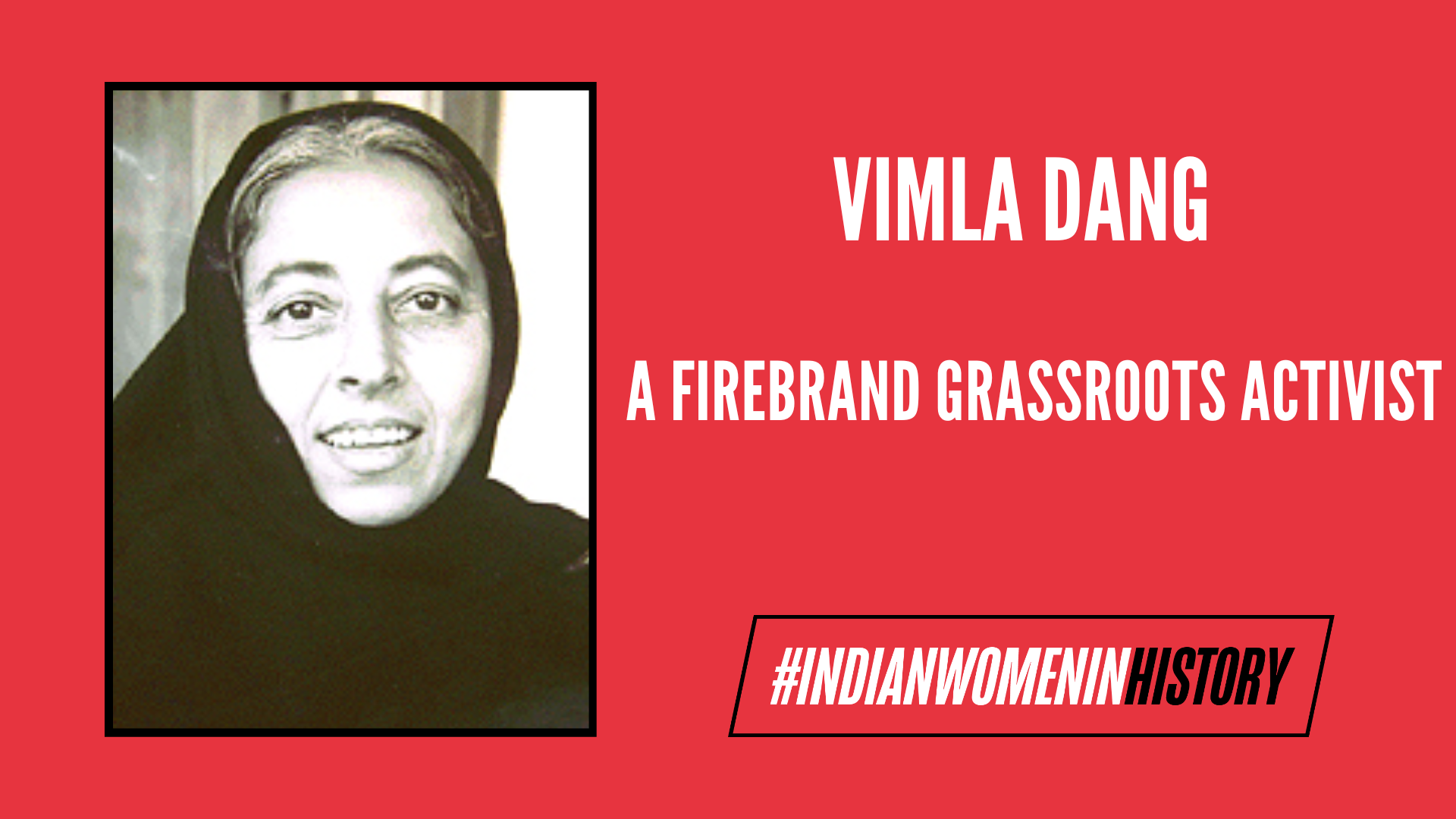
The freedom struggle gave rise to many prominent women leaders and activists. Many of whom, post 1947, went on to contribute to the foundation of the women’s movement in India and the various causes it espoused over the years. One such leader was Vimla Dang, whose life offers important insights into grassroots organising, feminist politics, and the gendered erasures embedded in political narratives.
Vimla was born on December 26, 1926, in a Kashmiri Pandit family in Allahabad to Autar and Kamla Bakaya. She was the third among five siblings. Her mother, Kamla Bakaya, was one of the first four Montessori teachers in the country. When Vimla was barely six months old, Kamla travelled to Europe to pursue her studies. After her return, the family shifted to Lahore.
Vimla’s schooling was completed in Lahore in the 1930s and early 1940s, which played a significant role in shaping her politics and worldview. Influenced by her older brothers, Shashi and Ravi Bakaya, she was introduced to communist thought and student activism as a teenager—an exposure that would define her lifelong engagement with political movements.
Early years of activism
Punjab, especially the city of Lahore, was a buzzing centre of nationalist ideology as well as left movements during the 1930s and 1940s. It was the Chattopadhyay family, specifically Sarojini Naidu’s two younger sisters, Mrinalini and Suhasini, who played a pivotal role in introducing the Bakayas to the communist movement.
Vimla and her siblings began their schooling in Sir Ganga Ram School, whose principal was Mrinalini Chattopadhyay. As mentioned in Vimla’s memoirs, Sir Ganga Ram School, under the brilliant guidance and leadership of Mrinalini, had become the leading girls’ institution of Lahore. It was not only known for its high educational standards but also for the spirit of patriotism it instilled in its young students.
Mrinalini’s house was a hub of discussions and active politics, with renowned artists, lawyers, musicians, and poets coming in for parleys. These discussions played a major role in igniting the youth’s interest in politics. The first chapter of the Friends of the Soviet Union – Lahore was started in the Bakaya household by Vimla’s elder brothers with support from Suhasini Chattopadhyay.
Vimla joined the All-India Student Federation (AISF) — the first student organisation in India — during her time at college in Lahore. However, it was soon realised that a separate unit within the AISF, dedicated to women, would be required to ensure their retention and active participation. It was in 1938 that the Girls’ Student Wing or Chhatri Sangh was formed in various parts of the country.
Vimla became a member of the Girls’ Student Committee and was instrumental in forming such committees in various other colleges of Lahore by mobilising young women. This movement soon spread beyond educational institutions to urban slums and rural areas. During the Second World War, people in urban slums faced food shortages. Women from the Girls’ Student Committee prevented hoarding through their agitations and were instrumental in ensuring seamless operations in ration shops.
This was an important step in making women, beyond colleges, more politically conscious and involved, and this led to the formation of a larger women’s organisation called the Women’s Self-Defence League (WSDL) in Punjab. WSDL was the foundation behind the women’s movement that emerged in Punjab post-independence as well. During their agitations, they used interactive theatre, music, and dance performances to engage with the audience. In fact, this tool was used by Vimla throughout her life, creating what scholars have described as a ‘parallel culture of resistance’.
One of the most important events in which Vimla played a critical role, along with several other women and student activists of AISF, was the Royal Indian Navy (RIN) strikes.
In 1943, Vimla moved to Bombay for her higher education and continued her active involvement in student and left-wing movements. Bombay was a hub of major political and cultural activity in the 1940s. Both nationalist and communist movements were at their peak, and the city witnessed significant events, movements, and the emergence of many important leaders.
One of the most important events in which Vimla played a critical role, along with several other women and student activists of AISF, was the Royal Indian Navy (RIN) strikes. Braving tear-gas attacks and gunshots, the students led by Vimla continued the march in support of the oppressed. In the months to come, Bombay witnessed several such protests, and Vimla played a major role in organising them.
The RIN mutiny saw all the armed forces come together to revolt against British rule. A unique aspect of this movement was that workers, the armed forces, and students all joined these protests and led the struggle. Women played a key role in the demonstrations. These protests saw one of the worst massacres by the British in which more than 200 people died, akin to Jallianwala Bagh, as noted by Vimla in one of her interviews.
Organising women in post-independence Punjab
Vimla married Satyapal Dang, a comrade and trade union leader, in 1952. They both decided to settle and work amidst the trade union workers and their families in Chheharta, a satellite town at the outskirts of Amritsar. Vimla initiated the work of mobilising women from the region to form the Punjab Istree Sabha (PIS). She was also one of the founding members of the National Federation of Indian Women (NFIW).
One of the initial struggles undertaken by the PIS was participating in the trade union strikes in the 1950s and 1960s in Chheharta and other parts of Punjab. Mobilising women to become part of the struggle was a tedious task that remains undocumented and unacknowledged. When Vimla Dang first came to Punjab, she recalls asking her husband, ‘How will I work with these women?’ This was because the women used to wear veils, and it was difficult to mobilise them due to the lack of any collective.
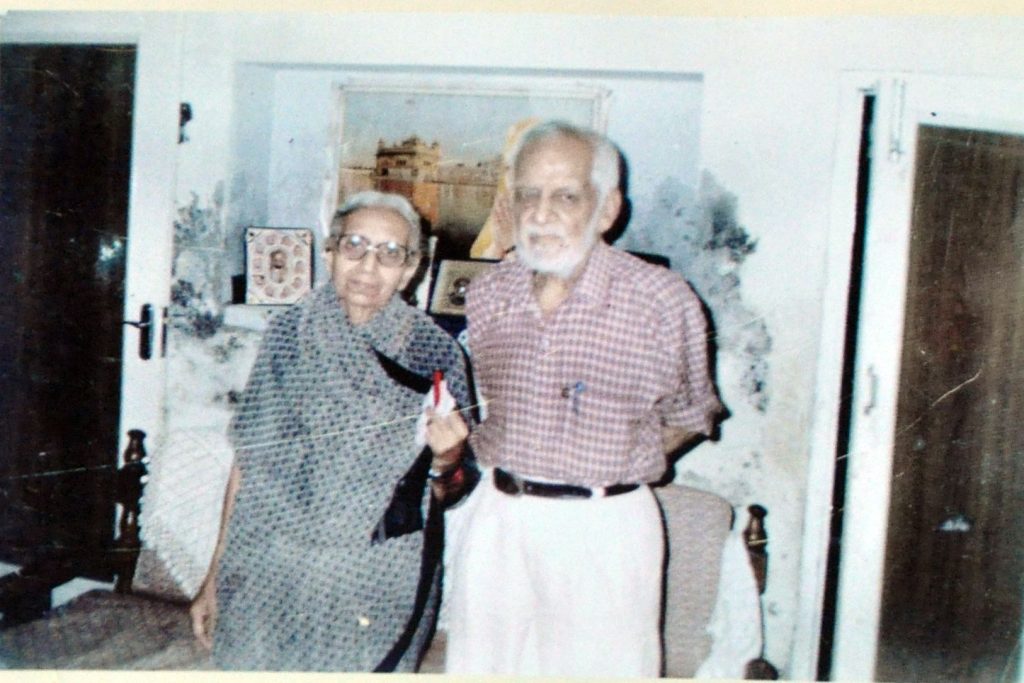
However, the formation of PIS helped with mobilising women in a significant way. Several strikes in the 1950s and 1960’s were undertaken in Chheharta to demand better working conditions for workers, salary hikes, and paid holidays. Women, under the aegis of PIS, played a critical role in all of these strikes. The 1965 General Strike, which lasted for 52 days, saw over 80 women arrested. This was unprecedented in Punjab.
One of the most striking aspects of the movement was that, as early as the 1950s, women were systematically organised and mobilised alongside workers. It was also one of the first women-led labour strikes.
The movement initially began by organising the wives, sisters, and mothers of the workers. Although classified as a labour movement against mill owners, this struggle provided a major impetus to the women’s movement. One of the most striking aspects of the movement was that, as early as the 1950s, women were systematically organised and mobilised alongside workers. It was also one of the first women-led labour strikes.
The official documents of the trade union in Chheharta, including a book written by one of its leaders, Pradyuman Singh, illustrate the historic struggles from the 1950s to 1980. There is detailed documentation of the strikes, their leaders, and their protest strategies. While long passages ruminate on the struggle of male trade union workers, with their names and occupation details, information regarding their imprisonment, and mentions of the atrocities they suffered, the role of women is mentioned mostly in passing, despite the pivotal role played by them.
From trade union struggles to social reform
While the trade union struggles were the starting point, PIS, under the aegis of Vimla, initiated and participated in struggles for social reform for women. Vimla’s work highlighted several key issues that eventually became the fulcrum of the women’s movement in India. Punjab was one of the first states in North India to demand a change in the anti-dowry law. Women leaders like Vimla used meetings, agitations, and awareness campaigns to challenge the practice of dowry, while also actively participating in protests for reforming anti-dowry laws.
A network of women was formed throughout Punjab to ensure that if a case of dowry harassment, violence, or death occurred, members of PIS would come to know about it. Vimla herself made an effort to travel to the districts where such cases occurred. PIS activists would stage a dharna outside the victim’s in-laws’ house, causing public humiliation in the neighbourhood and ensuring that everyone knew about the crime they had committed.
These actions represent early forms of community-based feminist accountability. Such local and regional struggles between the 1950s and 1970s laid the groundwork for the anti-dowry movement, which gained momentum across India by the late 1970s.
These actions represent early forms of community-based feminist accountability. Such local and regional struggles between the 1950s and 1970s laid the groundwork for the anti-dowry movement, which gained momentum across India by the late 1970s. Punjab became one of the first states to amend the Dowry Act in 1976, making dowry a cognisable offence. At the national level, the law was amended in 1984 and again in 1986 to make demanding dowry a cognisable offence.
Women’s resistance and peacebuilding during militancy in Punjab
Even as PIS expanded its work from labour struggles to social reform, the militancy in Punjab during the 1980s posed new and urgent challenges that reshaped its activism. While existing scholarship largely focuses on state repression and militant activity, the role of counter-movements like PIS remains underexplored. PIS used both communist principles and teachings from Sikh traditions to mobilise women, organise protests, provide relief, and disseminate messages of peace and communal harmony.
In 1992, despite threats to her life, Vimla Dang contested and won the Punjab Assembly elections from Amritsar West.
The involvement of PIS demonstrates how women, often positioned as the worst sufferers of conflict, also acted as active agents of reform. Through protests, relief work, cultural interventions, and strategies rooted in both Marxist and Sikh egalitarian ideals, PIS members emphasised alternative visions of peace and justice. They confronted militants in public, risked their own lives, offered solidarity to bereaved families, collaborated with artists and writers, and established institutional mechanisms like the Punjab Istree Sabha Relief Trust (PISRT) to support victims of militancy as well as police excesses in Punjab.
In 1992, despite threats to her life, Vimla Dang contested and won the Punjab Assembly elections from Amritsar West.
Rethinking feminist histories through grassroots lives
Vimla Dang’s life offers important insights into how grassroots movements are built and sustained, as well as how they are remembered. Her work reveals the extent to which women’s contributions — particularly in labour and political movements — remain structurally under-documented.
At the same time, her activism challenges rigid ideological boundaries. By combining communist principles with culturally resonant frameworks, including Sikh traditions, she demonstrated a pragmatic and context-sensitive approach to political mobilisation. This blending was not a contradiction but a strategy that enabled broader engagement and legitimacy.
Vimla Dang’s life also foregrounds women as active agents of political change rather than passive victims. From labour struggles to anti-dowry campaigns and resistance during militancy, her work reflects a form of feminism rooted in everyday organising and collective action.
Recovering such histories is crucial to rethinking the women’s movement in India beyond elite and urban narratives. It allows for a more nuanced understanding of feminist politics as it has evolved across regions, ideologies, and lived experiences. In this sense, Vimla Dang’s life is not just a biography; it is a lens through which to examine the intersections of gender, politics, and history in modern India.
References
- Chakravartty, Gargi, and Sadhna Chotani. Charting a New Path: Early Years of National Federation of Indian Women. New Delhi: People’s Publishing House, 2014.
- Chakravartty, Renu. Communist Women’s Movement in India. New Delhi: People’s Publishing House, 1980.
- Chibbar, Gurdarshan. Vimla Dang: Oral History Interview Transcript. Oral History Project, Nehru Memorial Museum and Library, 2006. Accession no. 901.
- Chibbar, Gurdarshan. Comrade Praduman Singh: Oral History Interview Transcript. Oral History Project, Nehru Memorial Museum and Library, 2017. Accession no. 950.
- Dang, Aastha. “Voices of Resistance: Peacebuilding Efforts by the Women in the Left Movement during Militancy in Punjab.” Reading Archive, [Vol. 1, No. 2 (December 2025): 1-26].
- Dang, Vimla. Fragments of a Life: A Memoir. New Delhi: People’s Publishing House, 2005.
- Loomba, Ania. Revolutionary desires: Women, communism, and feminism in India. Routledge, 2018.
- Behal, Rana Partap. “Three Moments of Workers’ Struggle in Their Own Words: Oral History of Labour in Post-Independence Amritsar City.” Paper presented at the Workshop on Oral Histories of Labour in South Asia, Re: Work, Humboldt University, Berlin, May 23–24, 2017.
- Sawhney, Nakul. “Once upon a Time in Chheharta…” Alternate View, 2007.
About the author(s)

Aastha Dang holds a PhD in Gender Studies. Her research focuses on exploring the life histories of women activists associated with the Left movement in India. She has extensive experience in gender and public policy research. Presently, Aastha works as a Gender Strategy Specialist with Macquarie Asset Management’s e-mobility platform, Vertelo.