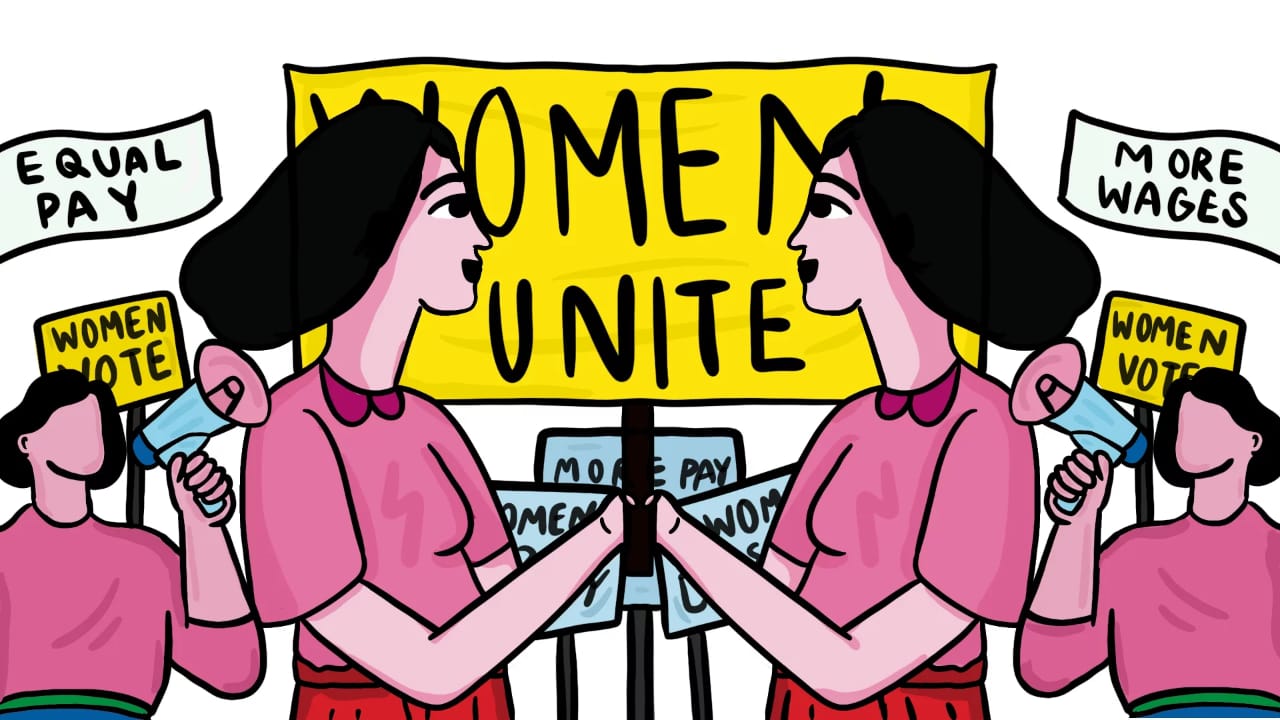
This article analyses the Union Budget 2026–27 from an intersectional feminist perspective, based on the provisions and allocations articulated in the Budget Speech for 2026-27 and officially released expenditure data under Statement 13 (Gender Budget), as the detailed budget documents are yet to be released. The analysis focuses on how women and girls are recognised within the fiscal framework, the nature of the interventions directed at them, and the extent to which these measures move beyond welfare and protection towards structural empowerment.
The Union Budget 2026–27 marks a quantitative strengthening of gender-responsive budgeting. The share of the Gender Budget has increased to 9.37% of the total Union Budget, up from 8.86% in FY 2025-26, with reported allocations of approximately Rs. 5 lakh crore for the welfare of women and girls. This increase points to a sustained institutional effort to integrate gender concerns across sectors such as health, nutrition, education, livelihoods, safety, and care services.

However, while the overall expression is significant on paper, an intersectional feminist assessment turns to how these resources are deployed in practice, whether they advance women’s autonomy, redistribute care responsibilities, and address structural barriers, or whether they largely reinforce existing welfare and caregiving roles.
Explicit recognition of women and girls: limited but targeted
Statement 13 categorises gender-related expenditure into three parts: schemes with 100% allocation for women and girls (Part A), schemes with 30-99% allocation (Part B), and schemes where women receive less than 30% of the benefits (Part C). While the overall size of the Gender Budget has expanded, its internal composition reveals notable continuities. A substantial share of allocations continues to flow towards social welfare, housing, nutrition, rural livelihoods, and care-related services, rather than towards interventions aimed at labour market participation, asset ownership, legal-economic autonomy, or leadership.
The Budget includes a relatively small set of provisions that explicitly identify women and girls as distinct beneficiaries. Among the most significant is the proposal to establish girls’ hostels in higher education institutions, reflected under the Prime Minister’s Girls’ Hostel scheme and placed within the 100% allocation category. This intervention addresses a critical infrastructural barrier faced by women students, particularly those pursuing STEM education in districts beyond major urban centres, namely, the lack of safe and affordable residential facilities.
Among the most significant is the proposal to establish girls’ hostels in higher education institutions, reflected under the Prime Minister’s Girls’ Hostel scheme and placed within the 100% allocation category.
This measure must also be viewed against the backdrop of the government’s sustained policy efforts to increase women’s participation and retention in STEM education and careers. In a written reply to the Rajya Sabha on 29 January 2026, Dr. Jitendra Singh highlighted that women constitute 43% of total enrolment in STEM disciplines at the higher education level, as per the AISHE Survey 2021-22. However, this relatively strong enrolment figure drops sharply at the professional level, with women accounting for only 18.6% of the STEM workforce engaged in research and development activities.
To address this leakage, the government has rolled out a range of targeted schemes, spanning scholarships, fellowships, internships, re-entry programmes, leadership training, and intellectual property capacity-building, aimed at mitigating the impact of social, familial, and biological responsibilities that disproportionately affect women’s continuity in STEM. Importantly, these initiatives explicitly recognise non-financial constraints by incorporating enabling provisions such as hostel accommodation, maternity benefits, mentoring, career counselling, and exposure to role models. The hostel provision in the Budget thus serves as a tangible step towards converting women’s educational participation in STEM into sustained academic and professional engagement.

Safety-focused interventions also continue to receive emphasis. Allocations under Schemes for Safety of Women, including Safe City projects, exceed Rs. 1,000 crore in FY 2026-27. Similarly, Mission Shakti, aimed at women’s protection and empowerment, has seen enhanced funding, but the absence of new components or institutional reforms indicates that the approach remains largely welfare-oriented rather than transformative.
Care economy and women’s workforce participation
The largest allocation directed at women and girls continues to be Saksham Anganwadi and POSHAN 2.0, with an outlay of approximately Rs. 18,580 crore in FY 2026-27. The scheme provides nutritional support to children, pregnant and lactating women, and around 20 lakh adolescent girls, particularly in aspirational districts, including those in the North Eastern region.
The explicit inclusion of adolescent girls is notable, as this group frequently falls between child welfare and maternity-focused programmes. Alongside POSHAN 2.0, Mission VATSALYA receives over Rs. 1,000 crore, further reinforcing the centrality of child welfare and maternal health within the Gender Budget.
Care-related investments extend across the health sector more broadly. Gender-attributable allocations under the Department of Health and Family Welfare exceed Rs. 40,000 crore, covering reproductive and child health services, nursing development, district hospitals, and national health programmes. While these investments yield clear gendered benefits, they also reflect a recurring pattern: women are predominantly recognised in their roles as mothers, caregivers, and recipients of social services.
While these investments yield clear gendered benefits, they also reflect a recurring pattern: women are predominantly recognised in their roles as mothers, caregivers, and recipients of social services.
The Budget’s emphasis on training 1.5 lakh multi-skilled caregivers across geriatric, child, and allied care services, along with the expansion of allied health professional education, further formalises paid care work, an occupation overwhelmingly performed by women. Formal training and certification may improve employability, income security, and professional recognition for women engaged in paid care work.
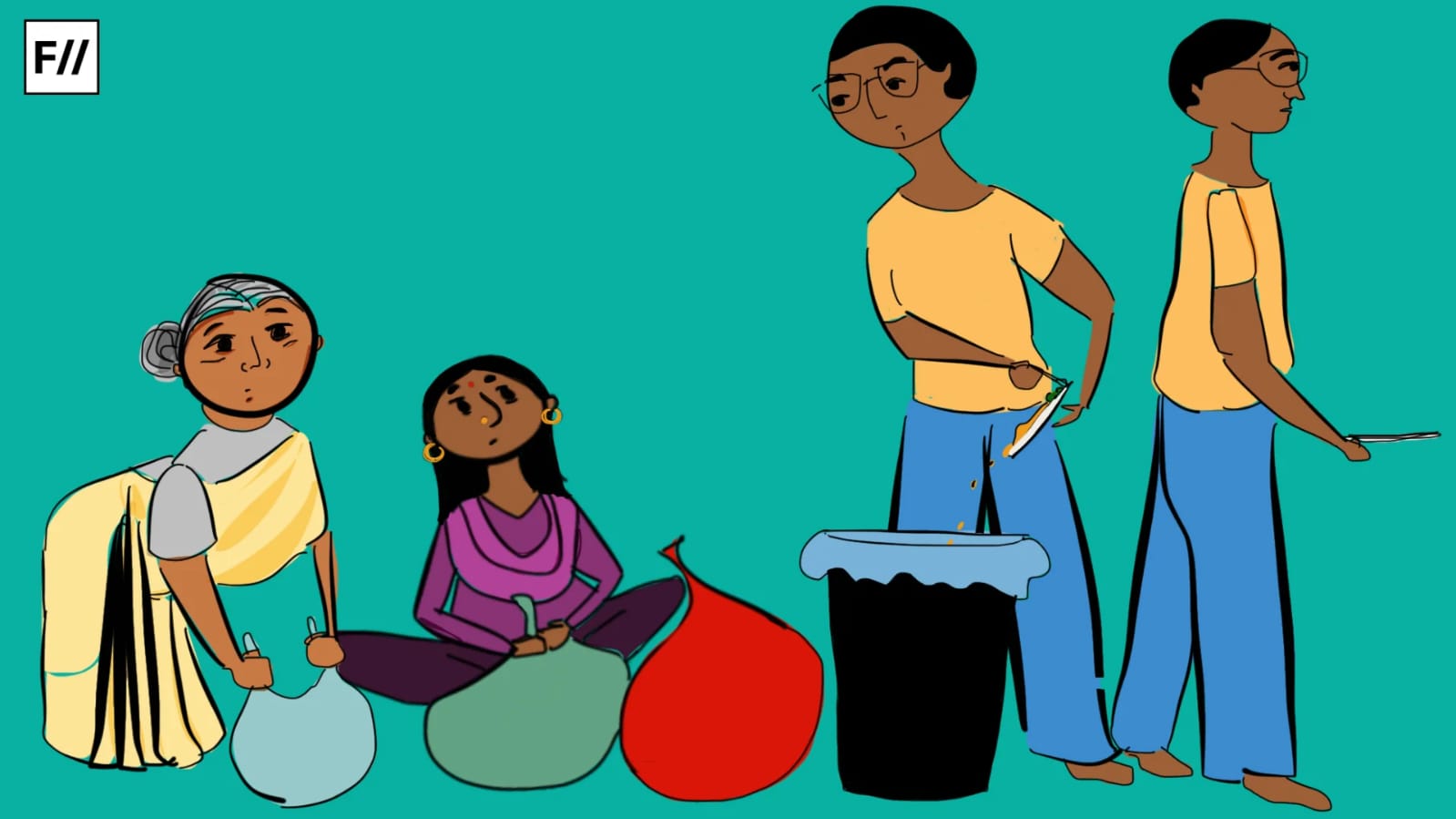
However, neither the Budget Speech nor Statement 13 acknowledges unpaid care labour, nor do they propose redistributive measures aimed at reducing women’s disproportionate care burden within households. As a result, women continue to be positioned as primary caregivers, albeit within a more formalised and market-oriented care economy.
Women as economic actors: rural livelihoods without power shifts
Women’s economic participation is most visible in the Budget through rural livelihood schemes. The Deendayal Antyodaya Yojana–National Rural Livelihoods Mission (DAY-NRLM) alone accounts for approximately Rs. 19,200 crore under the 100% allocation category, positioning self-help groups as the principal mechanism for women’s income generation. Women also benefit indirectly from substantial allocations to MGNREGA and other rural employment programmes, which together exceed Rs. 64,000 crore in the 30-99% category.
While these interventions recognise women as contributors to the economy, they remain largely limited to subsistence-level employment and collective savings models. They do not meaningfully address wage parity, asset ownership, market access, or upward economic mobility. Traditional and informal sectors, such as handloom, handicrafts, khadi, MSMEs, fisheries, and village industries, also receive gender-attributable funding across Parts B and C of the Gender Budget. For instance, allocations under the Ministry of MSME exceed Rs. 3,400 crore, while textile-related schemes account for over Rs. 400 crore. Despite women’s substantial presence in these sectors, the Budget does not explicitly recognise them as entrepreneurs, employers, or decision-makers within these value chains, nor does it offer safeguards to ensure that technological upgrades and modernisation do not marginalise women operating at smaller or home-based scales.
While these interventions recognise women as contributors to the economy, they remain largely limited to subsistence-level employment and collective savings models.
Overall, while women’s livelihoods are supported indirectly, the Budget stops short of framing women as autonomous economic agents in a systematic or rights-based manner.
Infrastructure and public services: gender benefits without gender framing
Several infrastructure-focused measures have clear gendered outcomes, even though gender is not mentioned explicitly. The extension of the Jal Jeevan Mission to achieve universal tap water coverage has a direct impact on women by reducing unpaid domestic labour and improving health and time availability. Similarly, investments in district-level health infrastructure, such as day-care cancer centres, reduce care burdens that are disproportionately borne by women as patients and caregivers.
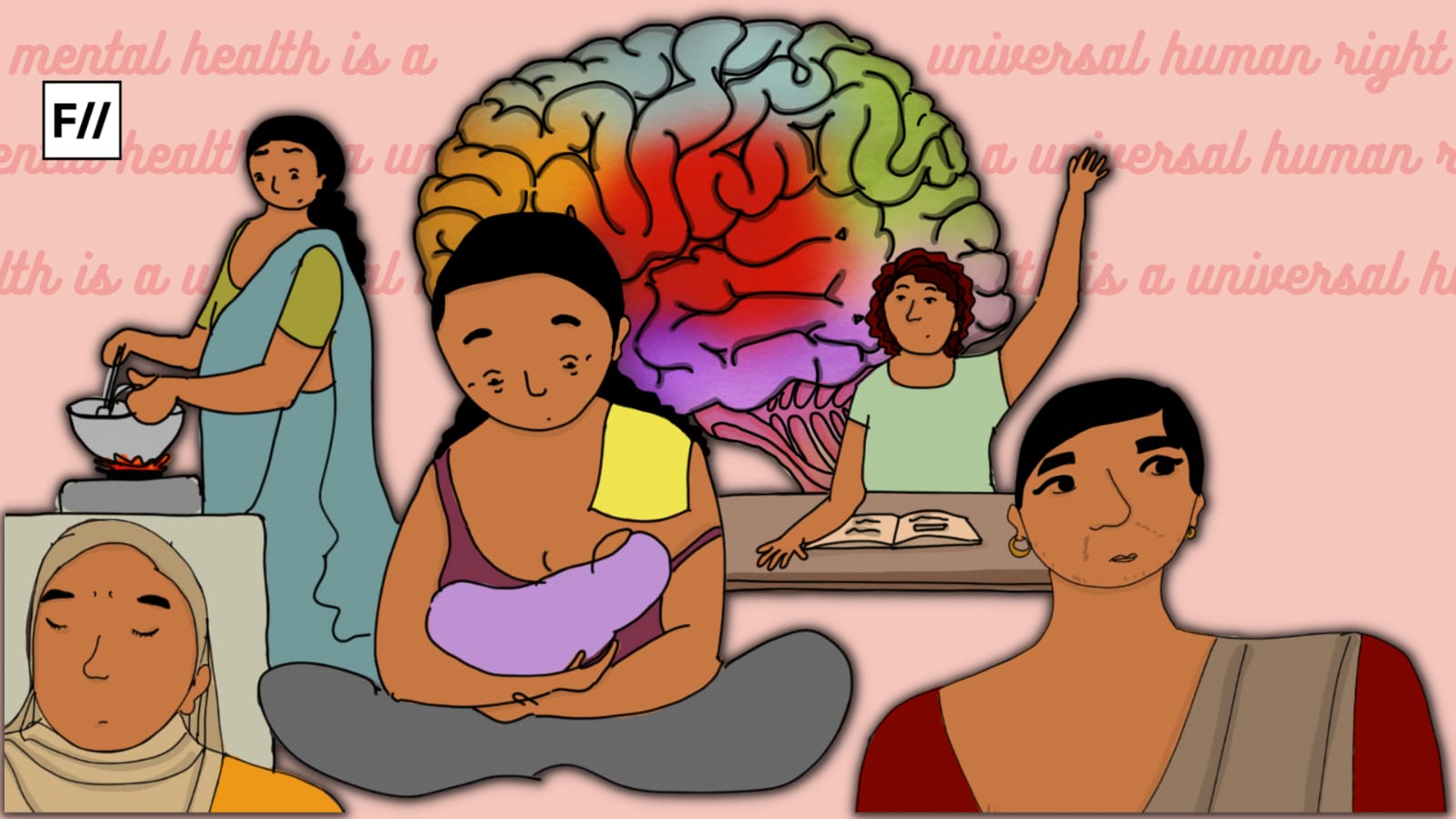
The Budget’s focus on mental health infrastructure, including the proposed establishment of NIMHANS-2 and the upgradation of mental health institutes in Ranchi and Tezpur, also carries important gender implications. Women, children, and adolescents are disproportionately affected by mental health stressors linked to caregiving responsibilities, poverty, violence, and social expectations. Expanded access to mental health services may therefore generate meaningful, though indirect, gender benefits.
Additionally, Statement 13 reflects targeted spending for persons with disabilities, with allocations of approximately Rs. 360 crore under the Department of Empowerment of Persons with Disabilities. Scholarships, assistive devices, and rehabilitation services have particular relevance for women and girls with disabilities, who experience layered forms of exclusion across education, employment, and mobility. Gender-linked spending in education is also significant. Schemes spanning school and higher education together account for over Rs.43,000 crore in the 30-99% category, including PM POSHAN, Samagra Shiksha, central universities, IITs, and research fellowships.
Schemes spanning school and higher education together account for over Rs.43,000 crore in the 30-99% category, including PM POSHAN, Samagra Shiksha, central universities, IITs, and research fellowships.
However, because these gains are incidental rather than explicitly articulated, accountability remains limited. Without clear gender objectives or outcome indicators, such benefits remain peripheral to fiscal planning rather than central to it.
Key gaps, silences and conclusion
Despite the scale of the Gender Budget, both the Budget Speech and Statement 13 reveal notable structural silences. A substantial share of allocations classified as “gender-responsive” fall under schemes where women receive less than 30% of the benefits, including major agricultural, industrial, and technology initiatives. The Budget does not engage explicitly with women’s labour force participation, unpaid care work, workplace equality, or access to justice, nor does it link fiscal policy to broader gender equality outcomes.
Legal, institutional, or fiscal reforms aimed at enhancing women’s autonomy remain absent. Women thus continue to be positioned primarily as beneficiaries of nutrition and welfare schemes, caregivers within households and communities, and participants in informal or semi-formal economic activity.
From an intersectional feminist perspective, the limitation lies not in the absence of spending, but in the absence of structural ambition. While the Budget strengthens the foundations of women- and child-centric development, it stops short of deploying fiscal policy as a tool for substantive gender equality.
About the author(s)

Mahi Agrawal is a B.A. LL.B. (Hons.) student at Hidayatullah National Law University, Raipur.