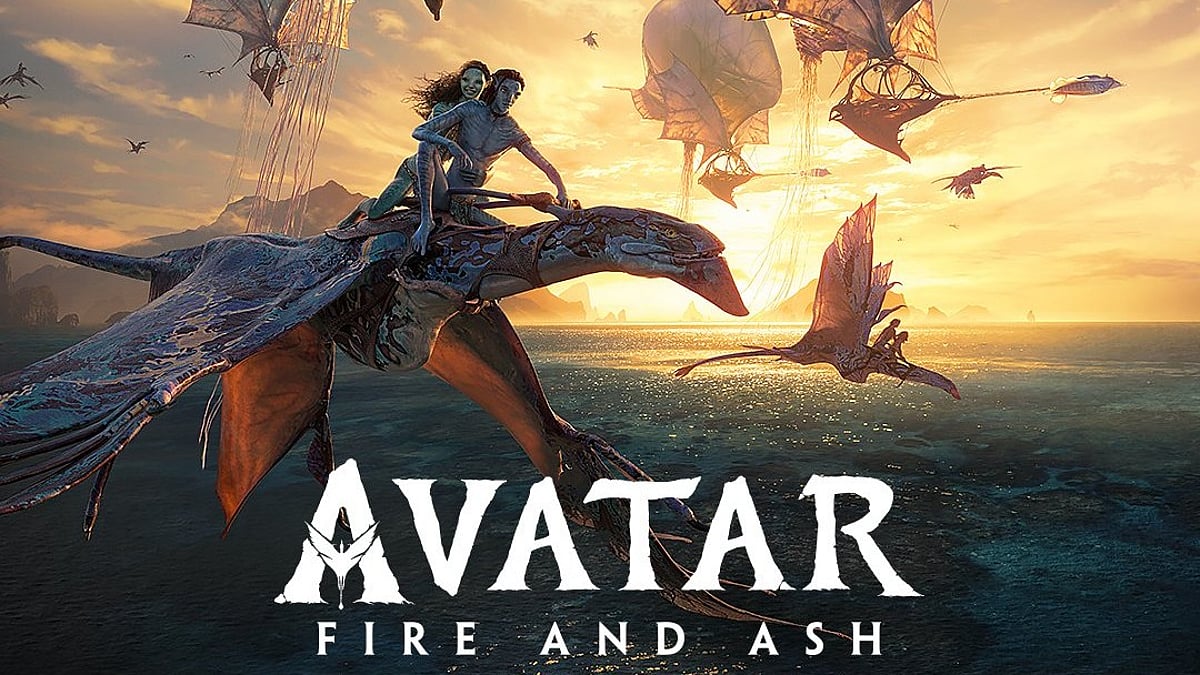
James Cameron’s Avatar: Fire and Ash is alive, beautiful and overwhelming. Watching it actually feels like one is inside a moving painting with gorgeous landscapes and intensified battles. Yet despite all its beauty, there is one important question that needs to be raised: ‘Who is allowed to act and who is allowed to adapt?‘
Avatar indeed speaks about war, loss, colonialism and inherited power. However, it repeats cycles of dominance: we see little contribution from women, children or any marginalised group in the war and they are just there for the emotional and mmoral consciousness of the story.

Now this might seeing very harmless and trivial. However, media and socialisation is how people learn about gender norms. Assuming that the target audience for this film is young, this might indirectly teach them that leadership roles are just for men and maintaining the emotional aspect of the story is the job of women. This instills rigid gender stereotypes that have not yet been fully registered in young minds. The film, however, seems to be very aware of the imbalance that they are portraying. For example, it showcases male centred heroism and repeated cycles of dominance.
Avatar and the war between men
The story, once again, follows Jake Sully and his family as they are hunted by the RDA and Quaritch wherein Jake is still the protector and Quaritch is the ultimate embodiment of violent masculinity. The battle, yet again, is between two men.
Meanwhile Lo’ak, Spider and especially Neytiri are expected to shape themself like water fitting into any jar possible but not be like the ocean that reshapes the world around them. Through this problematic conceptualisation, they subconsciously understand that men are the power and authority figures “by default”.
Hstory bears witness that in the Global South, this conflict of colonialism is not just a theme for a blockbuster film but a lived reality for many countries till date.
In the Avatar franchise, humans are the colonisers and Na’vi are the colonised ones. In this film, particularly, this plot continues. Humans are able to breathe Pandora’s air. It is a symbol of entitlement, showing that even the planet’s atmosphere will eventually have the coloniser’s name inscribed in it. Hstory bears witness that in the Global South, this conflict of colonialism is not just a theme for a blockbuster film but a lived reality for many countries till date.

When we encounter any form of violence, we rarely talk about the power imbalance that ends up affecfing our daily lives even after we gain “independence”. However out of all this, who is the winner who takes it all? Women and children grieve or adapt, systems fail, but men remain powerful. Even after colonialism is “over”, power still remains in the hands of men who perpetuate oppression in different and new ways.
Understanding the female characters in Avatar: Fire and Ash
In Avatar: Fire and Ash, Neyitri is a well portrayed character but not well understood. She processes herself through grief and rage and is very territorial about her family. But all she does is feel. She does not strategise, which in reality women do. Contrary to popular belief, women, in times of conflict, do not just sit with tears flowing down their cheeks and ask male warriors, ‘What do we do now?‘ This reiterates misogynist tropes in film and literature like the damsel in distress, wherein the women’s pain and suffering give meaning and purpose for the male hero to take action and “save” her, as if women have no agency.
If we watch Avatar: Fire and Ash from a feminist perspective, a character that has potential would be Kiri. Afterall, her connection to Eywa is not simply a plot-point, but a testament to her growth. Her genuine nature is what stood out in the film the most. However, often, characters who are good listeners and are caring are labeled as “soft” and “weak”. Although that is not a bad thing, these attributions strip them off their transformations and invalidate the character development they have. Kiri’s value is undermined simply because she’s a young woman and such a nurturing nature is “expected” of her.

The Ash people are another interesting group in the film. Although they have no relationship with Eywa, their leader Varang had a lot of potential. She is someone who is shaped by her trauma. Sadly, there was little emphasis was on the Ash peoples’ origin story, and their background and dynamics could have been explored much more descriptively. Varang’s character could have been depicted with more nuance, contextualising her violent nature in her past experiences.
The need to contextualise our stories in our times
Overall, although Avatar: Fire and Ash is very visually appealing, a lot of scenes have room for improvement. However, the film depicts themes of colonialism, conflict and violence, skillfully. While watching films like these, it is important to connect the narrative with our times, just as director James Cameron has repeatedly done. Avatar: Fire and Ash is made with genuine effort, and it tells us to protect what is ours and teaches us to protest against injustice as a community. The film also shows us what support looks like with utmost ambition.
While watching films like these, it is important to connect the narrative with our times, just as director James Cameron has repeatedly done.
One might wonder, if Avatar: Fire and Ash was made by and in the Global South what impact the film could have had. Would women characters still be sidelined? Would the male hero’s character arc still be given priority? Would women have a story of their own, or would they just be there for emotional support?

Despite the beautiful visuals and breathtaking cinematography, the makers of Avatar: Fire and Ash need to address the power imbalance in the narrative so that the films in the franchise are intellectually stimulating, instead of just being a fantastical escape for viewers who see the beautiful worlds depicted in Avatar, but do not acknowledges that they hold up a mirror to our own social realities.
About the author(s)

Swastika Chakraborty is a third year student of Media studies. She has a keen interest in feminist perspectives of womanhood, loves questioning the norms and is eager to learn how identity and power are negotiated within social or cinematic spaces.