Dalit Christian literature emerges from a space of historical rupture, where the Dalit Christian self is continually compelled to view itself through the oppressive caste gaze. Conversion held the promise of equality, but caste ‘marks’ the body and name anyway, creating a fracture of being spiritually Christian, however socially treated as Dalit. Positioned within this hyphenated identity of being both Dalit and Christian, such writing becomes a crucial archive of resistance, recording the lived contradictions of Brahmanical Christianity and casteist society.
The formation of Dalit Christian identity is inseparable from Kerala’s specific caste history, Christian institutional structure, and twentieth-century reform movements. Kerala’s caste order was structured not only around untouchability but also ‘unseeability’, with agrarian slavery binding communities such as the Pulayas and Parayas to upper-caste landlords (Mohan, 2015). By the twentieth century, Kerala witnessed powerful anti-caste and reform movements led by figures such as Ayyankali and Poykayil Appachan, that politicised questions of dignity, education, and collective mobilisation. These movements produced a new consciousness that inevitably entered literary production (Mariya, 2023). Crucially, such narratives also register the invisible burdens borne by Dalit Christian women, domestic labour, their embodied trauma, and systematic denial of speech within both caste society and ecclesiastical structures.
The Quiet Work of Sustaining Family and Caste Honour
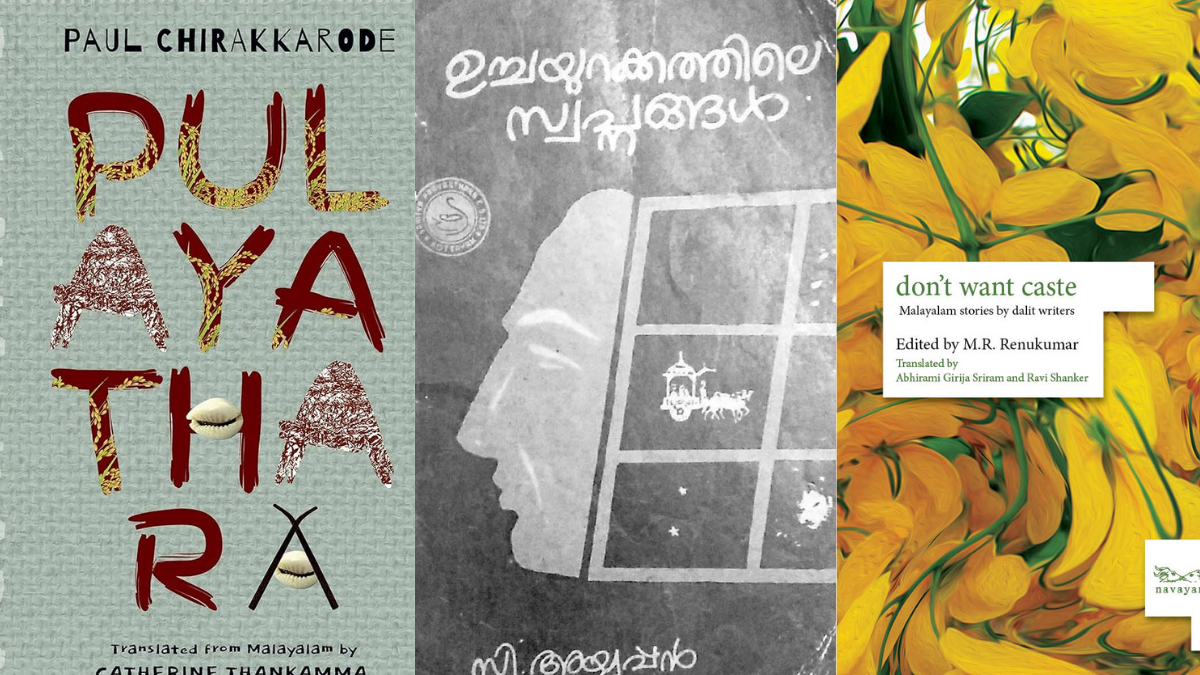
When Paul Chirakkarode (1963) wrote Pulayathara, he was responding not only to caste oppression within Kerala, but also to the concrete social realities of the state, agrarian landlordism, anti-caste movements and Syrian Christian dominance within the church, alongside the persistence of Brahmanical hierarchies within both Hinduism and Christianity. Considered the first Dalit-Christian novel, Pulayathara (Pulaya Home/Land) reads as a yearning for belonging and dignity in a society that denied both. In Brahmanical Kerala, Pulayas and other ‘slave castes’ were historically landless, tied to the soil as bonded labourers but never permitted to own or inhabit it as their own. Conversion to Christianity appeared to offer a threshold into stability, access to mission land, the possibility of settlement, and a fragile claim to space, but Chirakkarode reveals how this ‘home’ was never truly theirs.
The novel begins in the fields of nineteenth-century Kerala, where Thevan Pulayan bends over soil that will never belong to him. “This thara is all I have” (p. 12), he tells his son Kandankoran one evening, pointing to their fragile hut. During a particular instance following a minor mistake, Thevan is evicted without mercy, his home declared a temporary concession rather than his right. Dispossessed and humiliated, Thevan and Kandankoran seek refuge in the house of Pathrose, a Pulayan who has converted to Christianity. Kandankoran falls in love with Anna Kidathi, Pathrose’s daughter, but marriage requires what he still lacks: a home. To secure it, he converts, becoming Thomas. This new name does not grant him a new social body. He is mocked as a poocha kristiyani, a fake Christian, as his spiritual skin is still stained by untouchability. The soil, songs, and soul of his Pulaya heritage continue to call to him, reminding him and the readers of the emotional and cultural cost of leaving one world only to enter another that never truly accepts him. “He thought to himself, what a cursed creature he was!” (p. 115).
Now, in this narrative, conversion and dignity are articulated through male crisis as in Thevan’s eviction, Kandankoran’s humiliation, and Thomas’s fractured identity. But the structure of that crisis depends on women. Anna is the reason for conversion, marriage, and settlement. Her body becomes the site that negotiates caste mobility, while her subjectivity remains unrecorded. This asymmetry reveals how Dalit Christian women occupy a precarious place within the intersection of caste and religion. The ‘search for home’ is therefore gendered. Men seek land and recognition; women sustain the fragile domestic space through labour and emotional endurance. After marriage, Anna Kidathi lives only a few hundred yards from her natal home, but never visits it because Kandakoran refuses to accompany her, knowing her mother disapproves of him. Anna fears that going alone would result in society labelling her an ‘incapable woman’. Her body marks the shift from daughter to wife, but she has no agency over movement between these spaces. When the narrator describes “a mist-like barrier” (p. 130) between the two houses, it signifies how caste anxiety and patriarchal norms quietly enforce her emotional and spatial exile despite physical proximity.
Her longing intensifies the silencing that operates within both the household and the church. In such contexts, literature becomes the only viable space for articulation. This is powerfully echoed in C. Ayyappan’s short story Prethabhashanam (The Ghost Speaks), first published in his 1986 collection Uchayurakkathile Swapnangal (Dreams in the Afternoon Sleep), where those who were denied a voice in life return as ghosts to narrate their suffering. As John (2019) observes, “these characters were silenced and never given answers. Their ghostly afterlife becomes a paradoxical rebirth, an additional dimension of freedom that allows them to speak while still bearing the weight of their human wounds.”
Haunting, Silence, and the Weight of Injustice
Prethabhashanam unfolds through an unsettling monologue, the voice of Rosykutty, a Pulaya woman who returns as a ghost not to frighten but to finally speak. Sixteen days after her death, she enters the body of Kunchako’s sister, a Syrian Christian girl, to reveal the truth of her exploitation and death. In life, Rosykutty was only fifteen when Kunchako, an upper-caste man, seduced and abused her. When she became pregnant, he spat on her and beat her for daring to carry his child. As the story progresses, we find out that Rosykutty’s mother was also a victim of sexual exploitation by Kunchako’s father, revealing a haunting cycle of violence passed down through generations. This exposes Rosykutty as Kunchako’s illegitimate half-sister. Upon knowing, the spirit condemns God by asking, “How can an upper caste Christian have a Dalit girl as his sister?” (p. 92). Here, the metaphysical does not point to transcendence or closure but rather to the return of the repressed, the buried traumas and silenced sufferings that society refuses to acknowledge.
In this sense, Jacques Derrida’s concept of hauntology (1993) is instructive, suggesting that our very sense of being is perpetually haunted by what remains lost or suppressed. Rosykutty’s ghost thus becomes a powerful symbol of unresolved histories, silenced voices, and broken promises, carrying the persistent weight of caste violence and the intergenerational abuse endured by Dalit women. The narrative forces us to see how religious identity offers no protection as Kunchako’s Syrian Christian status upholds the same caste hierarchies that forbid his union with a Pulaya girl, highlighting the complicity of faith in maintaining structural oppression.
The Ordinary as Site of Resistance
If Prethabhashanam represents a voice reclaimed after annihilation, later Dalit Christian writings relocate this struggle into the everyday survival, labouring bodies, girlhood desire, and the politics of visibility. It is within this continuum of silence and reclamation that Reena Sam’s (2002) Mullil Kortha Kannu (Thorn Strung Eye) becomes significant. Sam’s narrator is a living Dalit schoolgirl whose resistance begins in childhood through something as ordinary and dangerous as the act of ‘looking.’ The narrator’s ‘peculiar eyes’ become a crucial metaphor; her stare unsettles the dominant gaze, transforming looking itself into a form of resistance. However, this resistance is immediately met with violence, where the author shows how the fair, upper-caste classmates like Athira Mohan and teachers policed her. By portraying upper-caste women and children as active participants in enforcing hierarchy, Sam problematizes oppression and shows how Brahmanical patriarchy is reproduced through everyday socialisation. It also disrupts the expectation that Dalit women must remain silent, unseen, and desexualised.
Rekha Raj’s (2008) Njaaru (Seedling) allows suppressed histories of Dalit women’s labour and generational trauma to surface through the figure of Anna, whose agricultural work sustains the family but remains unacknowledged within dominant narratives of progress and mobility. The story narrates the struggle of Mathayi, a Dalit Christian farmer, whose attempt to escape caste oppression through land ownership ultimately collapses under the weight of social exclusion. Although Mathayi achieves economic progress by buying land and educating his children, dominant caste landlords prevent labourers from working for him, intending that legal ownership does not translate into social authority in a caste-ordered economy. Njaaru thus critiques not only caste Hindu dominance but also the limitations of leftist and reformist discourses in Kerala, which often subsume caste under class and fail to account for the specifically gendered exploitation of Dalit women.
In conclusion, gender, religion, and caste intersect to shape narratives of survival and resistance. From the spectral testimony of Rosykutty to the everyday defiance of schoolgirls, these texts challenge the histories produced by upper-caste Kerala literature, which frequently marginalises or silences Dalit experiences. We can also trace how Dalit Christian writing evolves from the 1970s, when it largely documented social injustice and collective marginalisation, to the 2020s, when Dalit Christian women increasingly assert their own agency and articulate a distinctly gendered subjectivity through themes of the body, labour, sexuality, memory, and resistance.
References
- Ayyappan, C. (2011). Prethabhashanam (Speech of the dead). In S. J. Tharu & K. Satyanarayana (Eds.), No Alphabet in Sight: New Dalit Writing from South India (pp. 348-362). Penguin Books.
- Chirakkarode, P. (1963). Pulayathara (M. Krishnan, Ed.; C. Thankamma, Trans.). Oxford University Press.
- Derrida, J. (1993). Spectres of Marx: The State of the Debt, the Work of Mourning and the New International. Routledge.
- John, A. (2019). The ghostly tongue of the otherwise voices: an analysis of the supernatural in the short fiction of C. Ayyappan and Gracy. JETIR J, 6(6), 11-19.
- Mariya, B. (2023). Towards an Alternative Epistemology of Resistance. CASTE: A Global Journal on Social Exclusion, 4(2), 253-266.
- Mohan, P. S. (2015). Modernity of Slavery: Struggles Against Caste Inequality in Colonial Kerala. Oxford University Press.
- Sam, Reena. (2002). Karthik Immanuel’s Spiritual Musings. In M. R. Renukumar (Ed.), Don’t Want Caste: Malayalam Stories by Dalit Writers (pp. 129-133). Navayana.
- Rekha, Raj. (2008). Karthik Immanuel’s Spiritual Musings. In M. R. Renukumar (Ed.), Don’t Want Caste: Malayalam Stories by Dalit Writers (pp. 104-109). Navayana.