The sociopolitical nexus of the Indian diaspora has long since been dominated by the prevailing caste hierarchy and Brahminical hegemony, allowing the schematic caste pyramid to determine the professional mobility of each echelon, with those at the apex enjoying total labour autonomy, whereas those relegated to the bottom are constricted to bonded agricultural labour and undignified sanitation work.
This caste-based oppression extends into every sphere of modern life—including the world of art. Despite art’s potential as a space for creative freedom and expression, it remains deeply marred by the same structures of exclusion and discrimination that govern Indian society at large.
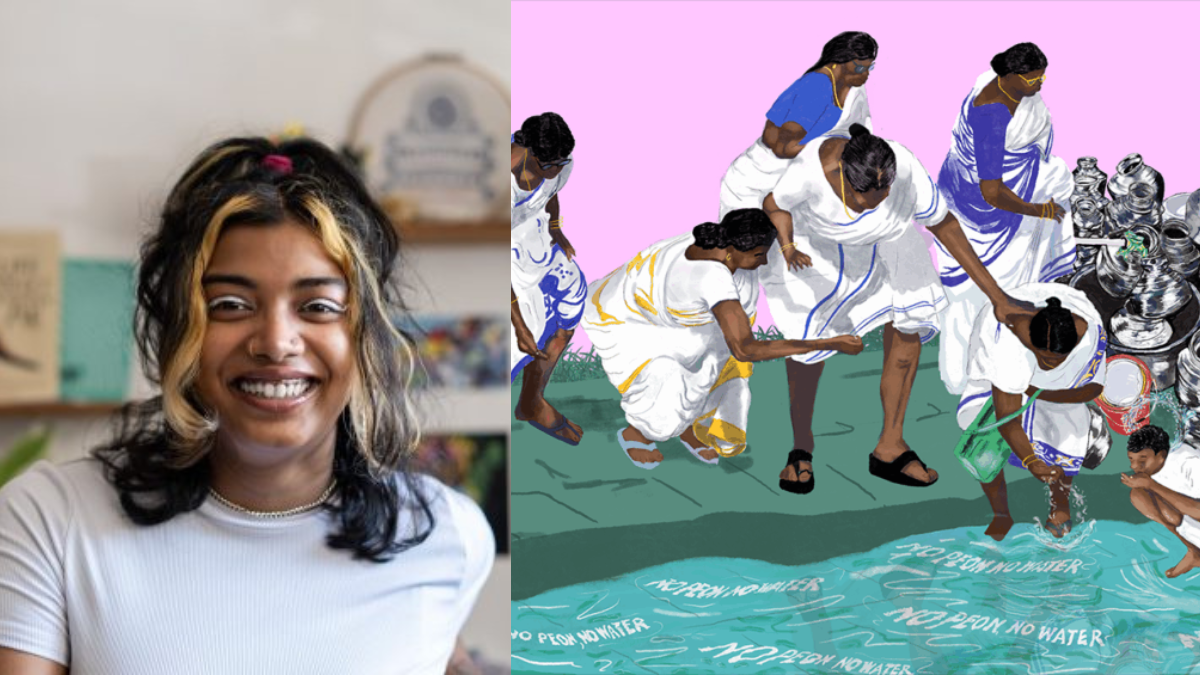
Shrujana Niranjani Shridhar is an artist and an illustrator whose work features the intersection of caste-based identity and art. She runs the Dalit Panther Archive, an initiative chronicling the Dalit Panther movement of the 1970s. She is also the co-founder of Mavelinadu Collective, an anti-caste publication. Her work revolves around caste, gender, and capitalism and has been displayed in several exhibitions and magazines all over the world.
The Tokenization of Dalit Art
The term ‘Dalit art’ and how the association of an artist’s identity with their caste may contribute to a greater alienation from mainstream and modern art as it has been the case historically within the art community. On this topic, Shridhar is clear: ‘So, the thing about Dalit art is that I believe it’s important to talk about it in the world that it belongs, which is, coming from the anti-caste culture, anti-caste movement. But at the same time, to call it Dalit art…flattens the work. And what it does do, is that it actually puts people away and puts art away in these tokenistic boxes that we’re then forced to be limited to.’
The consequences are material. ‘For example, as an illustrator, I can draw and paint about anything in this world. And sure, I use my voice and my professional expertise to talk about a certain kind of subject. But let’s speak commercially—I’ll never be commissioned for political issues, even, for an article that is about anything outside of caste. It alienates the artist and alienates your livelihood in a big way.’
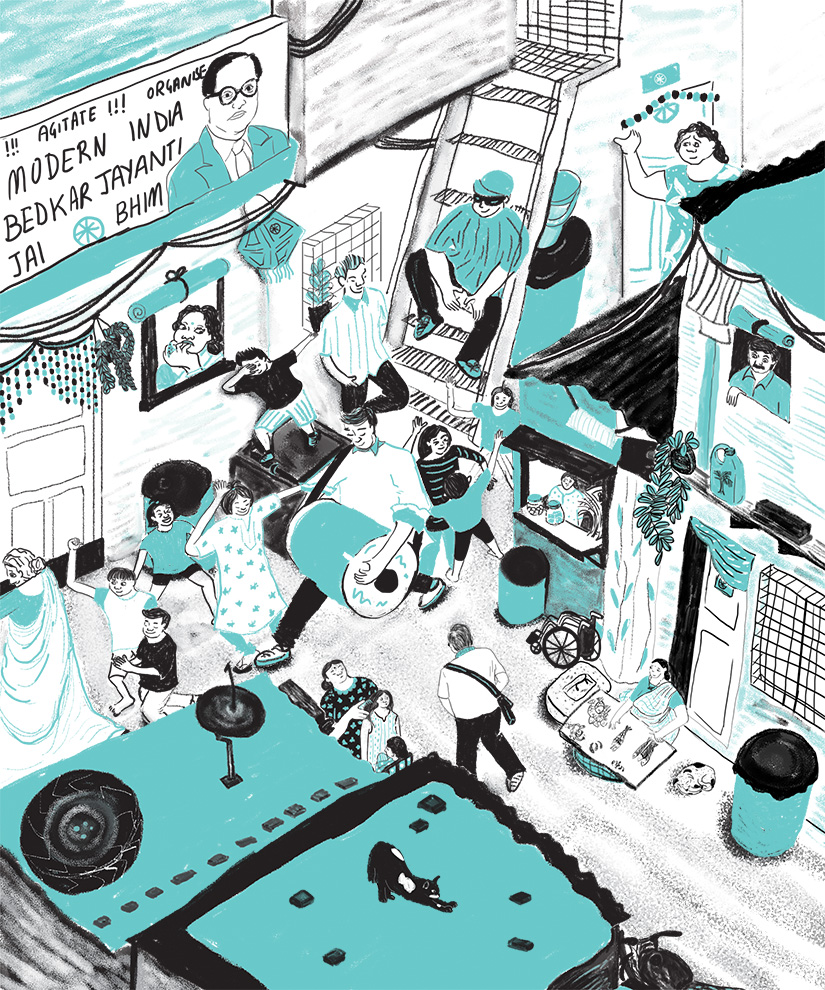
Shridhar asserts that the only way annihilation of caste can truly happen is if we acknowledge that most historical art in the country is borne from oppressed caste and tribal cultures. Indian handicrafts like Patachitra (from Naya village, Paschim Medinipur) and Dhokra metal casting (from Bikna village, Bankura) are practised by Dalit and tribal groups such as Patua artists and Karmakar metal workers. The Madhubani painting style originated among lower-caste Dalit women, and various crafts, including pottery, weaving, and carpentry, tie to historical caste-based labor divisions where Scheduled Castes and Other Backward Classes dominate artisanal production. Additionally, when India achieved democratic independence, it moved to capitalise on its cultural exports, promoting the production of handicrafts that were predominantly manufactured by marginalised caste or tribe communities.
A concerning trend that Shridhar has witnessed revolves around the appropriation of oppressed caste art styles, in which mainstream painters are commissioned by industrialists and corporate organisations to paint Gond, Warli, or Kalamkari work, whereas traditional artisans who practise this work are usually not recruited for these projects or remunerated in the same fashion. ‘And till the day that it’s not stolen from them, where most Indian art is essentially stealing from traditional artists from oppressed castes, I don’t think we can consider annihilation of caste to happen to them in that sense,’ she states.
Shridhar asserts that the only way annihilation of caste can truly happen is if we acknowledge that most historical art in the country is borne from oppressed caste and tribal cultures. Indian handicrafts like Patachitra (from Naya village, Paschim Medinipur) and Dhokra metal casting (from Bikna village, Bankura) are practised by Dalit and tribal groups such as Patua artists and Karmakar metal workers.
To combat the scarcity of marginalised caste art in broader spheres, Shridhar urges a re-establishment of physical spaces to foster cultural connections or practise art in collective ways, voicing her concerns with social media algorithms and their inability to reach a wider community.
Savarna Feminism and the Politics of Liberation
Another hindrance to the freedom of oppressed caste women has been an insidiously repackaged form of choice feminism, branded in the Indian subcontinent as ‘Savarna feminism’—feminism which claims to liberate women from long-suffered political, social, and economic injustice, yet propagates the very bedrock of marginalisation in India: casteism.
Noting the intersectionality of real feminism that seeks to free women from the shackles of both caste and class, Shridhar argues that almost all anti-caste leaders have fought for the protection of all women, setting up schools for not just ‘Dalit and Adivasi girls, but also Brahmin girls, widowed girls, and girls who were abandoned’.
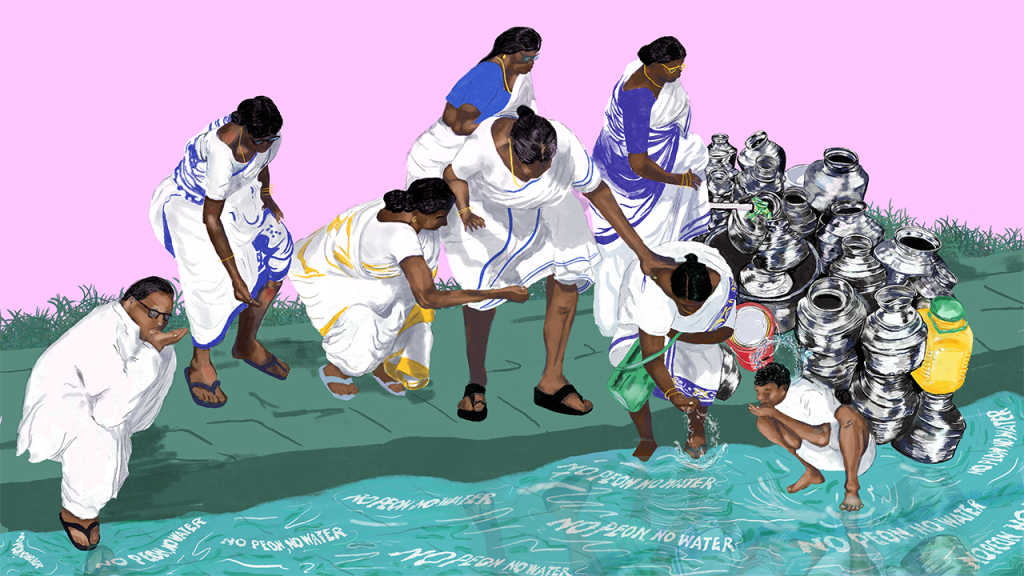
She proclaims that the true liberation of Savarna women lies in the annihilation of caste: ‘Because caste is about controlling women’s bodies, whether those are Dalit women or whether those are oppressor-caste women. Now, for oppressor caste women, the way that they function in society is kind of different, obviously, from Dalit women because they are not forced into being labelled as bodies. But at the same time, their bodies are being used and controlled and extracted in different ways. Somehow, due to their own fear of losing their close camaraderie with oppressor-caste men or their family in itself, they do not understand that they should act.
She continues, ‘It’s not that they just need to be allies to us because we need them. The truth is, they get what they get because we did this for them, you know? They get to enjoy their corporate jobs and their modern lives because of the anti-caste movement. Because they haven’t recognised that, they are the ones who are going to suffer consequences of having to lead extremely regressive lives if they do not understand that the annihilation of caste is important for them.’
Shridhar argues that the ruling class has been adept at creating laws and policies that restrict women’s personal rights and education, and as this ramps up, Savarna women are going to lose their financial independence and will have to be forced to go back to leading extremely difficult conservative lives.
Exploring another aspect of Savarna feminism, Shridhar states, ‘As a word, it doesn’t make any sense to me because feminism is about being egalitarian. So the second you say ‘Savarna’, I mean, I know that it’s a word that we use to call out oppressive caste women within political movements or within progressive cultural spaces. But the truth is that they hold a lot of cultural capital today. They hold a lot of access to not just financial resources but also platforming, and a lot of money is washed through their name. A lot of political power and cultural power are channelled. They have become agents of imposing caste on others. And if they keep at it, it’s going to come and bite them because that’s just the nature of how patriarchy and caste function. So, currently they can live under the delusion that they don’t want to lose anything. But the truth is they’re going to lose everything very soon.’
She adds a warning: ‘Because freedom and liberation are not things you can take for granted. Those are not things that you will have eternally. Those are things that are always being taken away. And if you do not perpetually keep an eye and fight for your freedom and your liberation, it will be taken away for sure. So that’s what’s going to happen.’
Labour, Maternity Leave, and Historical Erasure
Mainstream feminism, in Shridhar’s view, operates under the false belief that work is new to the lives of women—a narrative that erases the reality that the majority of South Asian women belonging to oppressed castes have always been labouring people. Contrastively, for Savarna women, the concept of entering the workforce has been hailed as a fresh, liberating ideal. It was the labour of oppressed caste women that heralded the fight for equality in education, rights, and remuneration.
Mainstream feminism, in Shridhar’s view, operates under the false belief that work is new to the lives of women—a narrative that erases the reality that the majority of South Asian women belonging to oppressed castes have always been labouring people.
In validation of this fact, Shridhar brings up the concept of maternity leave, which is usually associated with being appropriated from the West but was actually introduced to the subcontinent by Dr B.R. Ambedkar upon observing the condition of pregnant women working in the coal mines. She questions, ‘The fact that Indian society and the Indian Republic had that in the mid-20th century is so much more progressive than many European and Northern Hemisphere countries, right?’
Art, Capitalism, and Political Responsibility
As a staunch artist-activist, Shridhar firmly believes art can combat deeply entrenched caste hierarchies and institutional oppression and draws allusions to the capitalist machinery that encompasses and propagates art. She says, ‘I think all art is political even when it’s apolitical. Because to be apolitical is also a political stance. So if you have painted a landscape painting and it has been bought by Nita Ambani and put up at NMACC, that is a very political act, right? So invariably art is political. Art is also, besides being just a cultural artefact, a financial investment in capitalist society. And hence, the kind of art that is created is also reflective of capitalism, and the kind of art that is not widely distributed is also a reflection of capitalism.
However, she recognises the inherent conflict in reconciling being a ‘radical’ artist and having to be accountable to one’s financial responsibilities. She calls upon the wealthy progressive populace to invest in the arts, to ‘open up their purses’ and create physical spaces in which progressive art, progressive music, and progressive films actually thrive.
‘Bombay is full of artists. Every nook and cranny. Children from oppressed castes who come from very poor families are so many of them, the youth, are rappers; they’re breakers; they’re dancers; they’re singers. Where is the space to actually promote their art, political or not?… If you have money and if you call yourself progressive and you are angry about propaganda films, you need to open up your purses and actually invest money in creating the next generation of artists who will not have to do something like that.’
Shridhar’s Upcoming Work
When asked about how her work defies Brahminical notions of beauty and aesthetics, Shridhar brings up the first part of her three-part series called ‘Educate, Agitate, Organise’, which ‘looks at the aspirations, the loneliness, the community, the pain, the grief, the violence, the joy and everything that comes with trying to aspire towards learning and knowledge as Dalit students in Dalit communities’.
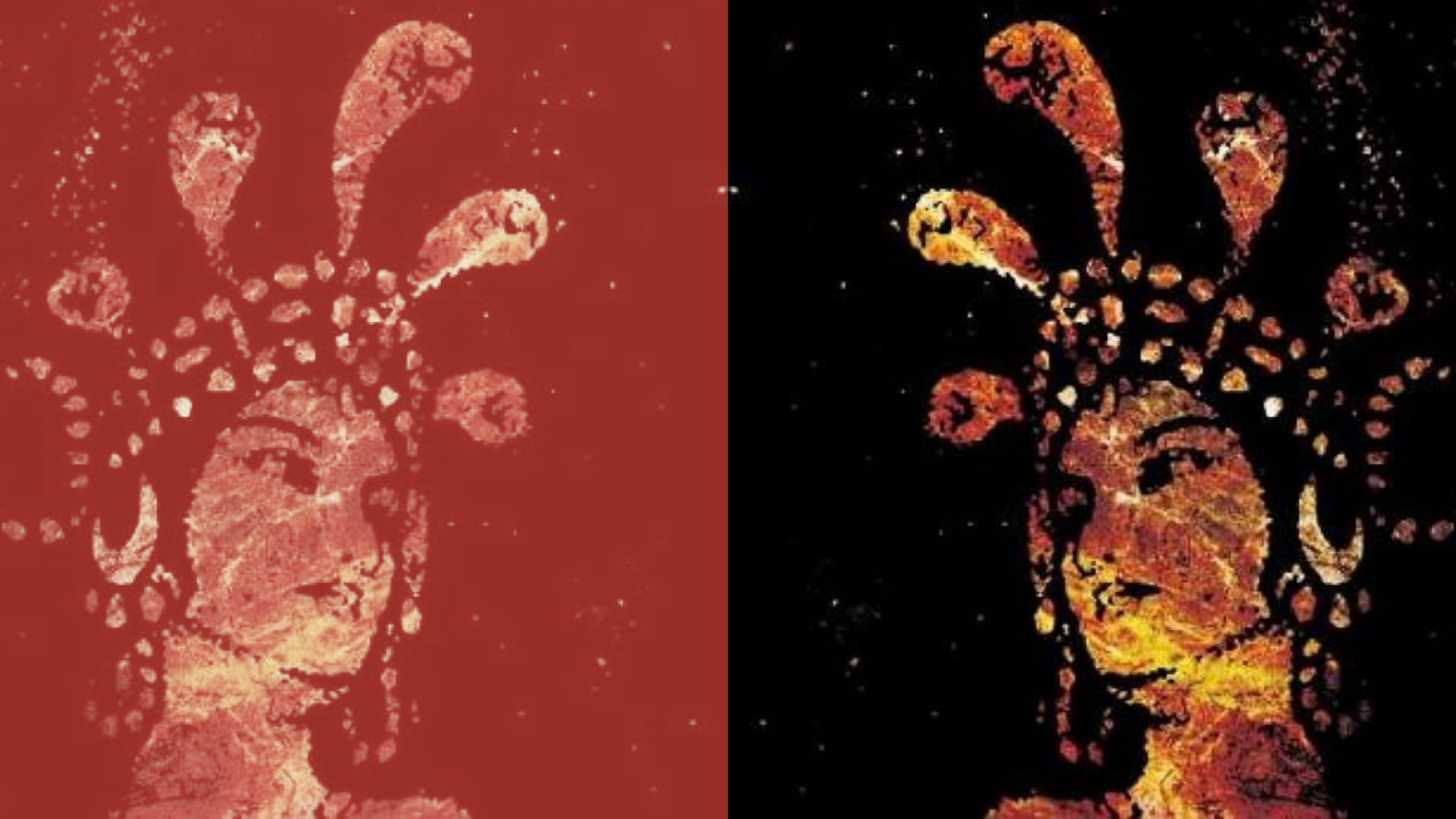
Within the inaugural part of this series, ‘Educate’, she’s creating a series of portraits inspired by Mukta Sarve, a 14-year-old student who, in 1855, became the first published Dalit female writer with her essay ‘About the Grief of Mangs and Mahars.’ Since no photographs of Mukta Sarve exist and the one widely circulated painting depicts her through what Shridhar calls a “Savarna-coded” lens (reminiscent of Raja Ravi Varma’s style), she decided not to paint Mukta herself. Instead, she’s painting her “descendants”—contemporary Dalit women pursuing education: master’s degrees, PhDs, and law exams.
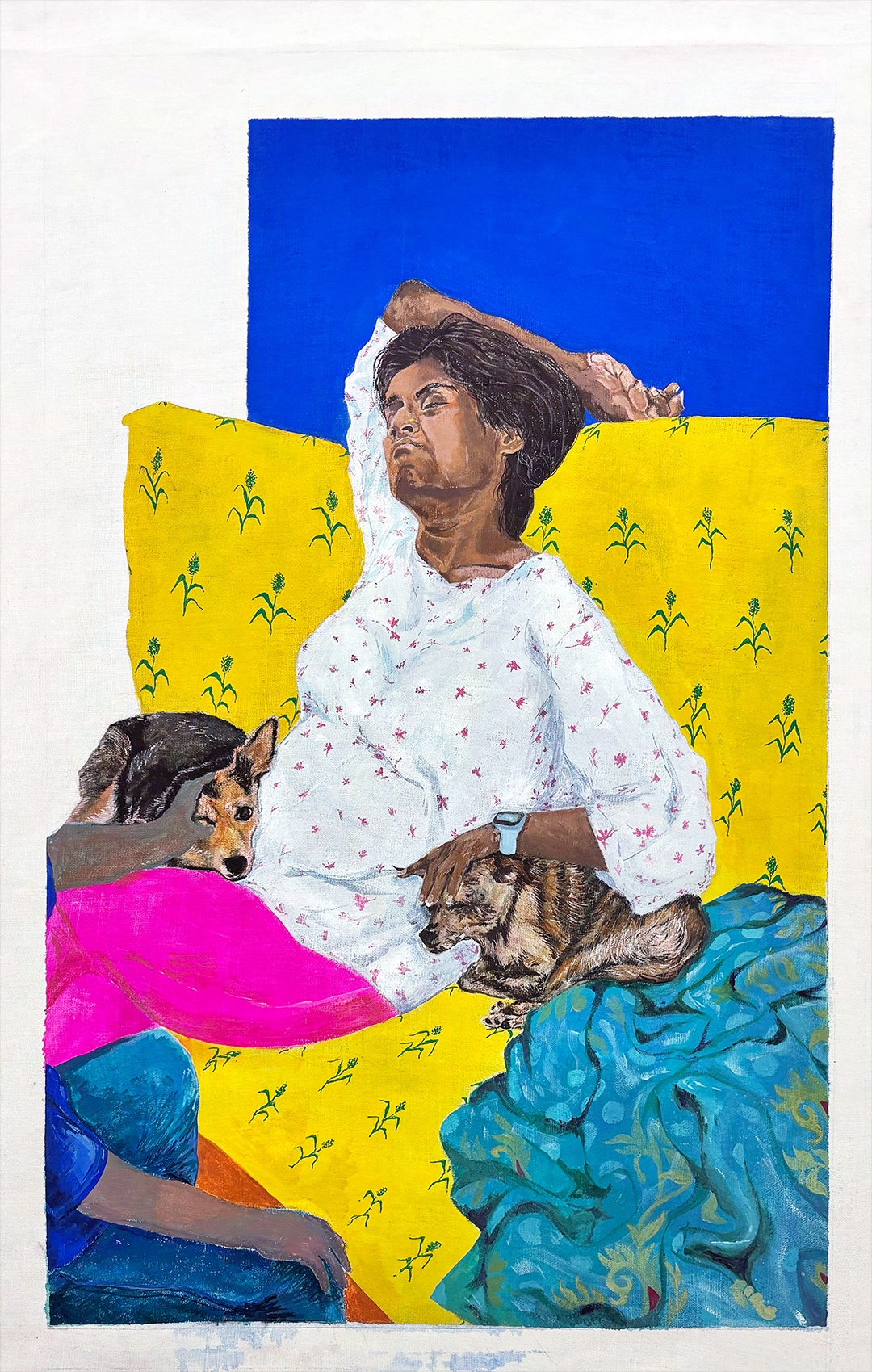
These paintings depict these women in moments of leisure, rest, and repose—a deliberate counter to how Raja Ravi Varma painted oppressed caste women in poses of leisure that became the template for Hindu goddesses like Lakshmi and Saraswati.
In Shridhar’s hands, art becomes both a site of resistance and a space for reimagining who is allowed rest, beauty, and the freedom to simply exist.
Shridhar is also proud to be working on another creative endeavour. Her new book, Leaping Towards the Deep Blue Sky, is a small tribute to a rich, layered literary heritage. This anthology of poetry translated from Marathi to English brings together the work of three generations of Ambedkarite women poets from Maharashtra. The poems chart a journey through the formative currents of early Dalit feminist writing to the emergent, queer, contemporary political expressions of today. With a foreword by Urmila Pawar and the works of visionary poets like Hira Bansode, Dr. Pradnya Pawar, Ushakiran Atram and Disha Pinky Sheikh, Leaping Towards the Deep Blue Sky traces a living history of struggle, sisterhood and Dalit feminist articulation—opening a vital literary tradition to new readers.
Shridhar describes this work as a humble attempt to gather the voices of thirteen poets across generations—each articulating an embodied experience of Dalit womanhood: resisting brahmanical patriarchy, building resilient communities, standing firmly in anti-caste conviction, dreaming of autonomy, and lastly, finding freedom in the process. ‘Inspired by these conversations, I felt a deep urge to share these voices with readers beyond Maharashtra. That’s how the idea of translating these poems into English took shape,’ she shares.
Shridhar ends our conversation on a sweet note. ‘I hope you enjoy reading this first edition of Leaping Towards the Deep Blue Sky. Its making involved long phone calls, searching for lost numbers, and navigating logistical hurdles that meant not every poet we hoped to include could be part of this edition. But this is only the beginning. We hope future editions will continue in the literary and cultural legacy of movements like Sanvadhini Stree and honour the voices still waiting to be heard.’
About the author(s)


This was such a powerful and necessary read. The way Shrujana Niranjani Shridhar speaks about how caste continues to shape even creative spaces really stayed with me. Art is often seen as “free,” but this article clearly shows how deeply social hierarchies still influence who gets visibility and opportunity. The point about tokenising “Dalit art” instead of truly engaging with it was especially important. Thank you for bringing this perspective forward.
I found this article both inspiring and uncomfortable in the best way. It really makes you reflect on how privilege operates even in spaces we assume are progressive. The idea that art can be both a form of resistance and also shaped by capitalism and exclusion is something I’ll keep thinking about. Voices like Shrujana’s are not just important—they’re necessary.
What stood out to me is the critique of “Savarna feminism” and how it can unintentionally reproduce the same structures it claims to resist. The intersection of caste, gender, and labour discussed here adds depth that is often missing in mainstream conversations. This kind of writing pushes us to rethink what true inclusivity really means.