What are the five steps to escape danger? Stay alert, be active, react quickly, hit the weak spot, and off you go. Done. This is your “Self Defence 101”, a clean and crisp guide to safeguarding yourself from a stranger in a dark alley. To most of us, this is a life hack, a skill like any other, a technique meant for ‘moments’ of danger and imminent threat. And truth be told, it does sound like a cool thing to know.
But wait.
What if the danger is seldom the moment? What if fear and threat are woven into the fabric of culture, into everyday life? How does one defend oneself from that?
In its commonsensical explanation, self-defence is understood as a set of fighting manoeuvres meant to protect us from designated crimes committed in empty streets by attackers who are strangers who look and behave in a way popularly imagined as threatening. The techniques to avoid and escape such situations are sold to us in a capitalist, consumerist market, dominated by the fitness and sports industry, where one martial art competes with another; where a lack of fighting skill is used as a tool to blame victims; where bodies are continuously shamed for not being a certain type; and where choices are constantly questioned as reasons for assault.
Mainstream narratives and practices on self-defence fail to grasp the root idea behind it. Beyond being an inalienable right of an individual to protect themselves, history shows that self-defence has always been a means to survive, resist, and challenge structures of power.
It is safe to say that mainstream narratives and practices on self-defence fail to grasp the root idea behind it. Beyond being an inalienable right of an individual to protect themselves, history shows that self-defence has always been a means to survive, resist, and challenge structures of power. In other words, self-defence has always been political, because so has violence.
Political Origins of Self-Defence
In its political origins, the right to self-defence is central to the foundations of the social contract between citizens and the state. It is understood as a fundamental law of nature and a central idea in the formation of the state, as defined by Thomas Hobbes in Leviathan. Interestingly, for someone who advocated complete state sovereignty, Hobbes still saw self-defence as critical protection against the state’s encroachment upon life. Similarly, John Locke, in his Two Treatises of Government, defines self-defence as a natural right rooted in equality, flowing from the right to preserve life, liberty, and property.
But as Elsa Dorlin points out in Self Defense: A Philosophy of Violence, this theorisation of self-defence as a “natural” right, however logical, is utopian at best, because history shows how this right has been legitimate for some and inaccessible to others. During the colonisation of the Americas in the 16th and 17th centuries,
European regimes used law as a tool to legalise slavery and quash resistance by restricting and violently punishing the carrying of weapons or the practice of martial arts. At a time when the state reserved the right to impose extreme violence on its “subjects”, brutal living conditions gave rise to many local martial-art techniques in African-Caribbean cultures. An example of this is Capoeira, a popular martial art from Brazil, which took birth in Portuguese-owned slave colonies. Intriguing as it is, the art was initially disguised as a dance form, hidden from its combative purpose. And history shows most martial art forms often survived the same way – by disguising themselves in performance, and were later formalised into sports for the elite to enjoy, retaining their form, but losing their spirit.
Self-Defence as Resistance
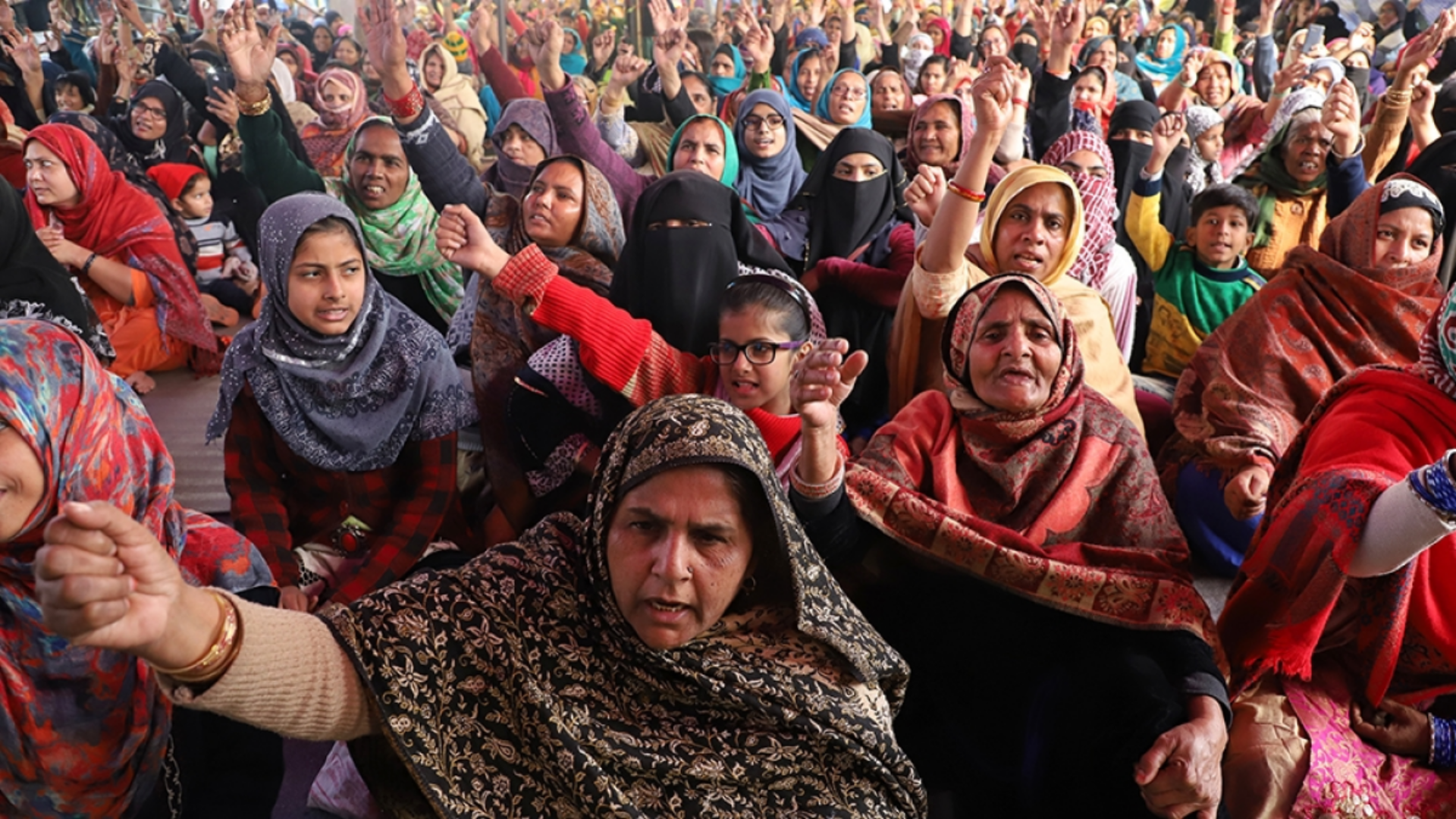
Violence is pervasive; it’s the reality of our daily lives, but it disproportionately affects the most marginalised. Much of it is normalised to an extent, which doesn’t make the headlines. Yet somehow, it becomes unacceptable only when it comes in the form of resistance. More than violence, even when resistance turns even mildly confrontational, the state and its forces respond with utmost swiftness to label these movements as illegitimate. Movements carry with them the discomfort of dissent. And, time and again, the state invokes the language of violence, chaos, social disorder etc., to delegitimize this dissent while remaining completely oblivious to structures that necessitate such a form of dissent in the first place.
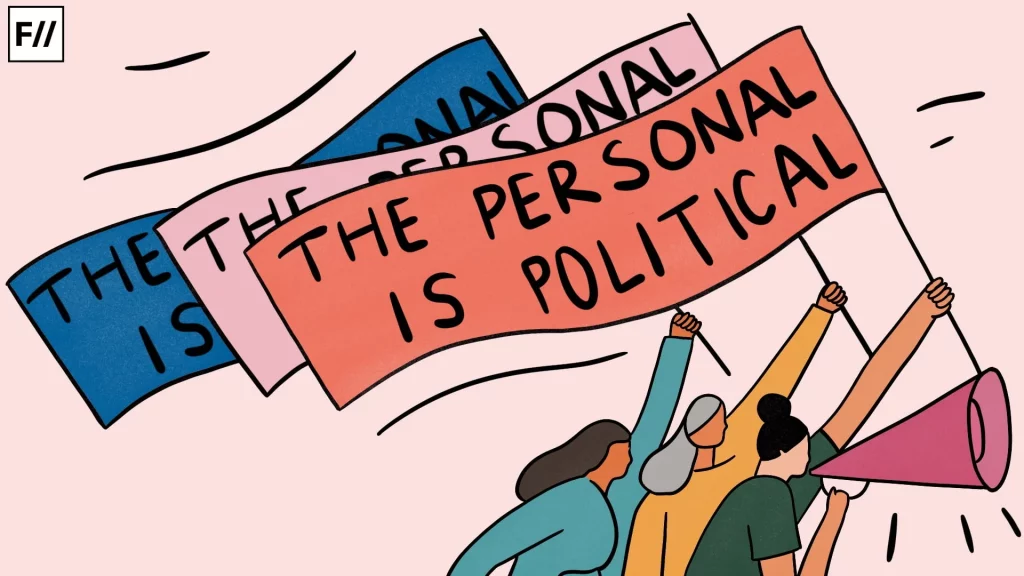
This hypocrisy, though, is not new. Across the history of social movements, people have embraced the idea of learning and using self-defence to make their voices heard. Whether it be through the taekwondo practised by Black Panthers resisting white supremacy; the self-defence training by Pink Panthers and queer patrols countering anti-LGBTQ+ violence; the jujutsu practised by English women during the Suffragette movement; or the indigenous martial arts, like Kalaripayattu practices used by anti-caste collectives in India, self-defence has been the language of resistance. This use of self-defence and violence hasn’t come about due to the acceptance of its legitimacy but because of the persistent failure of the dominant sections to provide any semblance of inclusivity, justice and safety.
Yet, the law, as an instrument of the state, has historically been swift in suppressing these social justice movements, acting against the charge of ‘vigilante justice’. But it forces us to ask whether the same law acts with equal urgency and intensity against the oppressors themselves. Does it intervene with the same force against gendered violence, caste violence and just denial of basic rights? Or otherwise, it’s precisely its failure to listen and failure to act that has fueled this form of resistance and usage of self-defence as a response?
What binds these movements together is their refusal of the docility imposed by entrenched structures of power, with patriarchy remaining enmeshed with caste, class, race and other forms of marginalisations. Self-defence symbolises the refusal to comply with these structures, and it is this refusal which becomes significant when we place it in the gendered nature of our society.
A feminist approach to self-defence
Gender discrimination and violence are rife in India. Official statistics indicate that roughly 51 crimes against women are reported on an hourly basis. The country continues to rank poorly on global gender indices, falling behind almost all our South Asian neighbour countries, which reflects the larger political and economic ramifications of this structural inequality. However, statistically violence is relevant when it is punishable as a crime. It doesn’t account for the continuous microaggressions and daily violations of one’s autonomy that girls and women face in our society. They are policed from everything they choose and aspire to do. The continuous negotiations with these norms then cause a deep internalisation of violence.
Feminist thought has long argued that patriarchal violence doesn’t just scar women externally; it shapes the bodies themselves. Female bodies are constantly surveilled and controlled, which produces a particular kind of learning that is reflected in lowered confidence, discomfort with one’s own body, a diminished sense of freedom and perennial fear of judgment. It would be myopic to pass them off as personal insecurities; what they reflect is an embodiment of years of oppression. And it can only be structurally challenged if resistance also becomes embodied.
The law, as an instrument of the state, has historically been swift in suppressing social justice movements. But it forces us to ask whether the same law acts with equal urgency and intensity against the oppressors themselves. Does it intervene with the same force against gendered violence, caste violence and just denial of basic rights? Or otherwise, it’s precisely its failure to listen and failure to act that has fueled this form of resistance and usage of self-defence as a response?
It is within this embodiment of resistance that the contemporary understanding of self-defence must place itself. Yet, we see self-defence being reduced to things like after-school karate classes or a one-day police workshop after a headline-grabbing incident. Hence, such approaches that emphasise just physical methods to fighting an attack, without building an understanding of who the attacker is and what structures enable them, do a disservice to the very idea of self-defence. Because unlike what these classes propagate, it is seldom the stranger in a dark alley; more often, it is someone closest and most known. The violence is not just physical but emotional and verbal too and more often entangled together. It doesn’t occur and die in a moment; it is embedded in everyday life scenarios. What do courage and self-defence mean in these realities, then?
A feminist approach to self-defence must necessarily move beyond two limiting ideas – one that sees violence as a one-off, isolated incident and one that only sees violence in its spectacular physical form. It must begin with validating experiences, without asserting blame. It should recognize the continuous, entangled nature of violence and find strategies to dismantle it structurally, which could be emotional, verbal, physical or even blatant refusal to comply. Additionally, it must work towards rebuilding this relationship with our own bodies, to recognise power within, and to reclaim that agency to respond rather than prescribe a set of techniques that do little benefit in reality. Lastly, it must seek to build a sense of solidarity with everyone who is in this fight to end oppression and continues to resist.
Reimagining Self-Defence
Any intervention of self-defence that is devoid of such political grounding remains hollow. It cannot continue to position itself as an apolitical, skill-building activity, centred on physically retaliating through isolated moments of danger. Nor can it continue to fall prey to capitalist ideals that have eroded our capacity to be human at all. Ultimately, in the defence of self, what we must preserve is the freedom to exist in its entirety.
This requires self-defence to become a point of conversation among everyone on how we view violence and safety in our homes, schools, on the streets and everywhere around. The need, also, is to recognise self-defence for what it truly is — not a five-step formula or a life hack, but an embodied practice of resistance and a feminist political act.
About the author(s)

Rishabh Chopra is Lead, Government Partnerships at MukkaMaar, a non-profit organisation working to build girls’ agency through empowerment self-defence. In his current role, he engages with government departments, schools, and ecosystem stakeholders to strengthen institutional responses to girls’ safety and advocate for a more contextual, gender-responsive, and child-centric understanding of self-defence within programs and policy. With over three years of experience in the gender and development space, his work has centred on engaging adolescents, young people, and community stakeholders on issues of gender equity.