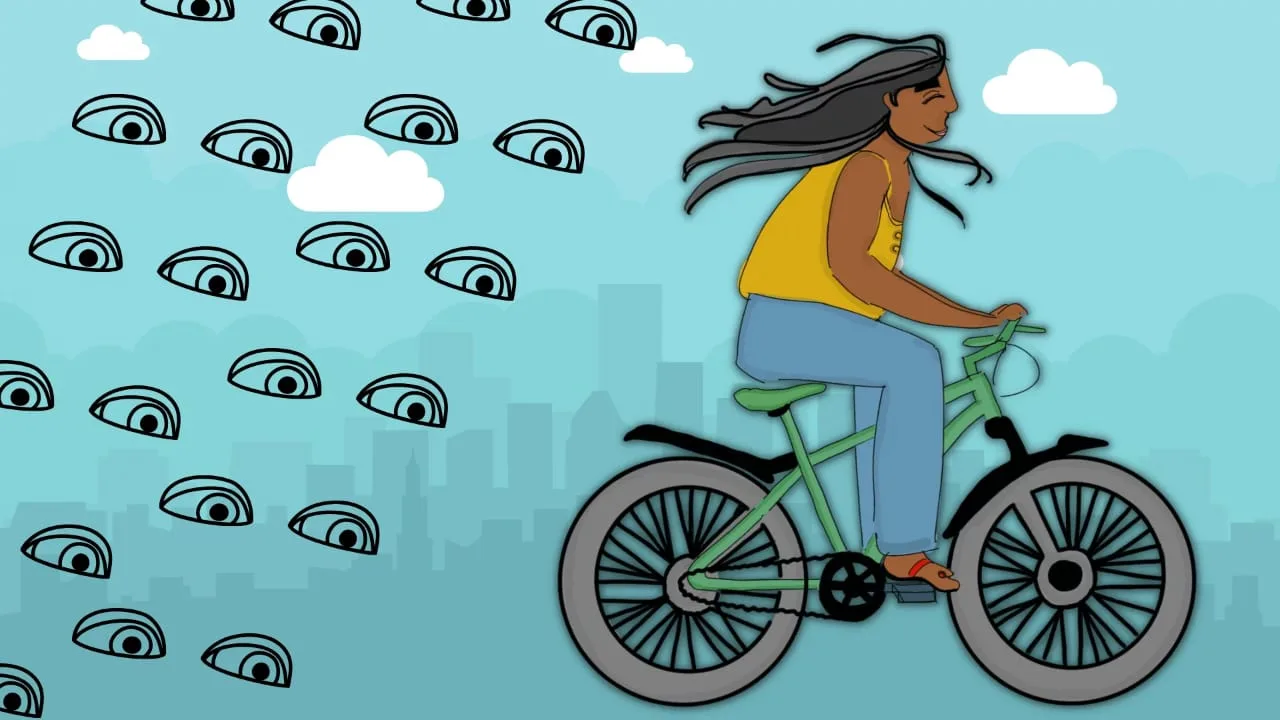
Movement for young women in Hyderabad is best described as a form of professional sport, except, instead of medals or sponsorships, you gain a finely tuned sense of self-preservation and maybe a few extra grey hairs for your troubles.
Across the country, NGOs like Safetipin, partnering with international agencies such as the FIA Foundation, are publishing handbooks on how gender-disaggregated data, direct participation, and infrastructure investment could transform the experience of young women navigating Indian cities. Their research in cities in Rajasthan reads like an echo of my findings in Hyderabad: girls travelling less, facing higher perceived and real risks, and paying the invisible tax of vigilance at every leg of the commute.
Safetipin’s recommendations — calling for women at the planning table, safety audits as routine, service design driven by lived experience — as with the best of civil society efforts, are actionable but persistently ignored by decision makers. This is either because they do not think these issues are important enough or because they are unable to implement them for reasons unknown.
Everyday mobility in Hyderabad
Hyderabad sells itself as a city of innovation: shiny new metro lines, government posters proclaiming that it’s a ‘smart city’, and experiments in gendered public transport. But the city’s infrastructure tells a different story. This research was conducted just months after the Congress government announced the Mahalakshmi free bus initiative. Women who had spent years calculating the cost of auto fares and the dangers of late-night walks in the city suddenly found themselves being offered new forms of ‘empowerment’.
In focus groups, praise for the scheme was quickly offset by concerns about overcrowding, incomplete coverage for outlying areas, and public grumbling (and vocal outrage) from male commuters.
The air buzzed with optimism but quickly filled with gendered ridicule, such as ‘women will take these free buses to go to temples all the time’ or ‘if the buses are free, wives are going to leave and go back to their mothers’ homes‘. In focus groups, praise for the scheme was quickly offset by concerns about overcrowding, incomplete coverage for outlying areas, and public grumbling (and vocal outrage) from male commuters. A policy designed to enhance women’s mobility and liberation quickly revealed itself as a microcosm of society, one in which women are offered space, only to find it difficult to access and continually contested.
While discussing everyday mobility with young women, each anecdote was laced with irony. Girls talking about ‘adventures’ that were mostly exercises in risk management, such as the bravado of sneaking in after hostel curfew, followed by the collective sigh when someone recounted getting back safely. Researching this subject was less a collection of tidy data points than a navigation of emotional landscapes. Over the course of the focus groups, which at times resembled therapy circles, certain themes emerged with measured persistence.
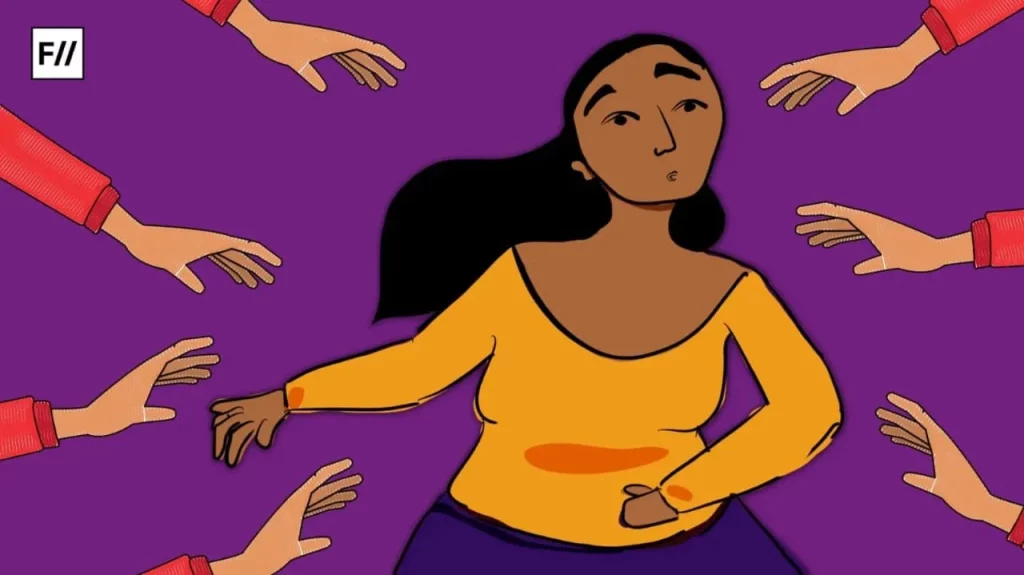
One of the most important themes was exhaustion from navigating the city as a young woman. Students described how a typical day begins with mentally rehearsing for their commute: which bus to take to avoid overcrowded stops, which route is ‘the safest’, and what to wear to maximise comfort and minimise ‘men’s comments’.
These decisions are not mere logistics; they are small acts of risk calculus performed before leaving home in the morning. I found myself recalling the grinding fatigue of my own undergraduate years — the careful planning required to make any travel happen and juggling texts from friends and family that emerged from genuine concern but resulted in a digital leash stronger than that of any surveillance app designed for women’s safety.
I joined in laughter with the young women when one participant asked, ‘Why are we not boys? They can go anywhere!’ That refrain, half-serious but coming from a place of familiar exasperation, resonated with the research participants, and, if I am honest, with me as well.
Women’s safety and the gulf between policy and practice
What became clear during this research was the dissonance between policy and practice. Institutional curfews, meant for protection, function mostly as limits on women’s autonomy. Each focus group mentioned a litany of strategies for stretching curfews and crafting plausible lies for hostel wardens. Meanwhile, women-only spaces like coaches on the metro were received as modest upgrades: marginally comforting, frequently overcrowded, and designed to address symptoms rather than cause.
Meanwhile, women-only spaces like coaches on the metro were received as modest upgrades: marginally comforting, frequently overcrowded, and designed to address symptoms rather than cause.
Young women themselves were not passive subjects in shaping the city and their own mobilities. What my fieldwork taught me is that no one knows the city’s space-time map better than those who must cross-reference geography with threat perception. The expertise to spot the safest seat on a bus, time the last ride, or disable Google’s real-time tracking to preserve slivers of privacy is possessed exclusively by those who rely on these methods for survival — the women themselves.

However, concerns with safety were only brought up when specifically asked about it. Whether in city buses rumbling through neighbourhoods or in the new metro line, all the students acknowledged or shared experiences of unwanted sexual advances. These experiences were accepted as a part of life, so persistent that they can only be avoided in spaces where women outnumber men.
The discussion led to stories of exhausted commuters who, after arriving at college following an hour of tactical avoidance manoeuvres, have already spent most of their mental energy for the day.
The discussion led to stories of exhausted commuters who, after arriving at college following an hour of tactical avoidance manoeuvres, have already spent most of their mental energy for the day. This is not merely a Hyderabadi feature; national and international reports suggest that the same fatigue and fear that shape women’s journeys in other cities.
One participant, with a faint smile and wary eyes, said, ‘Men on the road keep harassing me, so I just don’t go out unless I have to.’ Hearing this, the group nodded in a way that made clear that this isn’t one woman’s personal decision but a shared social calculation.
The way forward
What would actually fix this? The handbooks and think-tank reports, from the likes of Safetipin, World Bank, Cities Alliance, and Stop The Harassment are brimming with what seem to be straightforward wisdom: infrastructure responsive to women’s timing and routes, strengthened first and last mile connectivity, more women in planning and execution, and a willingness to see women’s mobility not as a service that might be provided but as a right.
Although the real engine of change, as simple as it sounds, might be treating women as co-designers, not as statistical anomalies to be occasionally granted concessions. My research cohort, armed with tactical knowledge of the city, demonstrates a far better and more comprehensive understanding of the city’s transportation infrastructure than most urban policies and plans.
India’s goal of gender parity in the workforce, widely trumpeted in documents pertaining to national development and in the mainstream media, will never materialise if urban mobility continues to be an everyday hurdle for young women to get to schools, colleges and even offices.
Buses may be free and the metros gleaming, but if classrooms and offices are only accessible at the price of constant fatigue and perpetual strategising, then the nation’s promise remains partially achievable at best. However, digital solutions, such as live tracking, hyper-visibility through safety apps, and surveillance cameras, which are often trotted out as substitutes for cultural change or real investments in public spaces and transportation, are no solution.
What does it mean to belong in a city that invites your labour and ideas but still questions your presence in public spaces, especially after dark? How do you trust your environment, your co-commuters, your institutions, when your safest journeys are still, inevitably, those made with groups or with a chorus of check-ins from concerned family and friends? These are not simply rhetorical questions but lived constraints on urban citizenship and gendered rights to the city.
To end with certainty would be to miss the truth of this study and the city. Hyderabad, like so many of India’s metropolises, hovers between the ideal of universal access and the perpetual reality of negotiation, rethinking, and strategising every step taken. Until women are the mapmakers and not just the nodes, the gap between city and citizen will remain wide.
Author’s Note: In this research project, my colleague and I conducted four Focused Group Discussions (FGDs) in four colleges. Each was selected for its unique geography: the old city, full of legend and labyrinthine streets; newer parts of the city, bustling with economic aspirations; and the ever-shifting periphery where Hyderabad tries — with mixed results — to become and outshine global cities.
About the author(s)





This article really highlights how something as basic as moving through a city becomes a constant negotiation for young women. The idea of “mobility as a daily strategy” rather than a simple routine is powerful. It’s striking how much mental energy goes into planning routes, timing, clothing, and safety before even stepping out. That invisible labour is rarely acknowledged but shapes everyday life.
I found this both relatable and unsettling. The line “why are we not boys?” captures a reality many women feel but rarely articulate so openly. It shows how freedom of movement is still unequal, even in cities that claim to be modern and progressive. The emotional fatigue described here is just as real as physical barriers.
What stands out is the gap between policy and lived reality. Even well-intentioned initiatives like free transport or women-only spaces seem to address symptoms rather than root causes. Without structural changes in infrastructure and social attitudes, mobility will continue to be shaped by fear and constant vigilance.
I appreciate how the article shows that women are not just passive users of the city but active strategists—constantly adapting, learning routes, and creating their own systems of safety. But at the same time, it makes you wonder why this burden still falls entirely on them instead of on better urban design and social change.