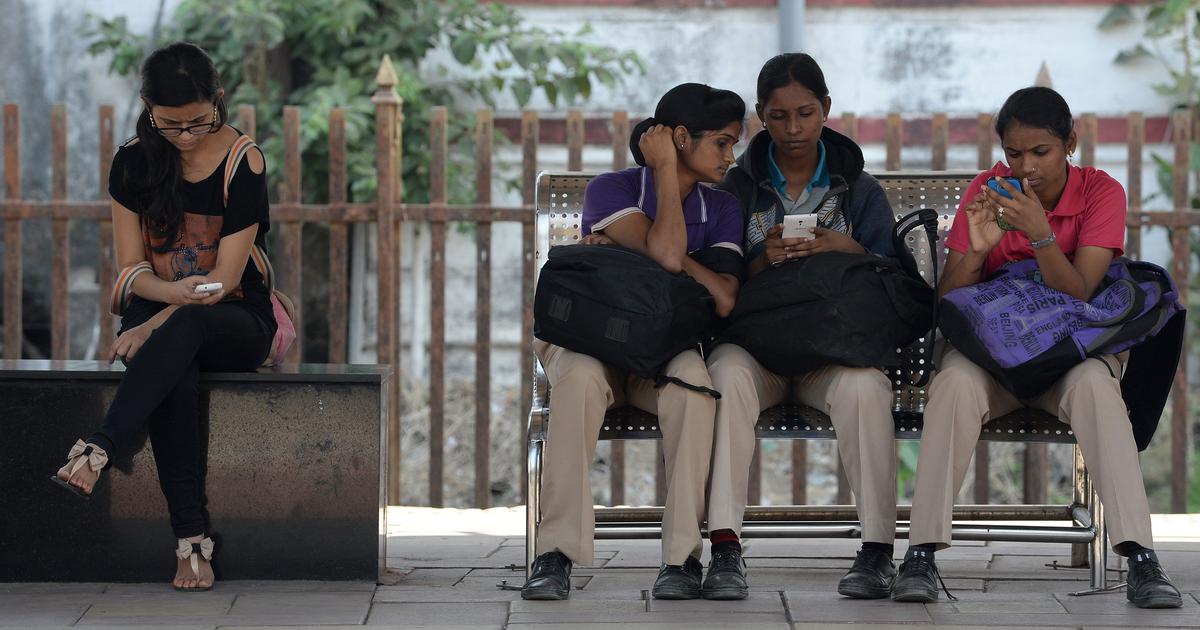
Imagine two women on the same street in Mumbai at the same hour. One is a late-twenties software developer, casually strolling home from a late shift. The other is a domestic worker who walks the same route but must navigate a different calculus. While the two women are in a public area, the two experiences are not the same.
Feminist interpretations of the flâneur are plagued by this dichotomy. It has long been recognised that the figure of the flâneur — the calm, detached male urban walker of nineteenth-century European modernism, immortalised by Baudelaire and theorised by Walter Benjamin — poses a challenge to women. According to this tradition, the man who can afford to do nothing on the street, owns it. The question of whether women can recover that role — that is, whether there is a flâneuse, as Lauren Elkin’s 2016 book contends — is a legitimate one.
The Flâneuse and Her Limits
In a 1992 essay, Elizabeth Wilson questioned the notion that women were merely absent from nineteenth-century city streets. She pointed instead to their overwhelming, if unacknowledged, presence, especially among lower-classes who had to work, hawk, and navigate urban areas in order to survive. Further, in Lauren Elkin’s work, from George Sand in Paris to Jean Rhys in London to Agnes Varda in mid-century France, expanded this argument by recovering a genealogy of female authors and artists who interacted with the city on their own terms.
These narratives are similar in that they emphasise women who were, in some fundamental sense, free to interact artistically with the city. As theorised, the flâneuse was a woman with resources, or at least some cultural capital – who may be a writer, artist, or bourgeois convention disruptor that used the street as her medium. This is a significant feminist intervention in and of itself. However, it has the same class presumptions as the original figure it criticises. The flâneuse chooses to wander. But, for many women, particularly in South Asia, the street is a place of labour, exposure, and contested survival rather than an artistic inspiration.
Henri Lefebvre’s in The Production of Space (1974) contends that social relations create space, which then reproduces them, and that space is not a neutral container in which social life takes place. The city is a crystallisation of the power relations that created it, and those power relations are etched in its physical form. The layout of streets, parks, pavements, building setbacks, lighting, the width of walkways, and the presence or absence of public restrooms are all examples of spatial choices that convey presumptions about the purpose of the city. There is ample evidence of the male model of urban planning. The most approachable contemporary synthesis is Leslie Kern’s Feminist City (2020), in which she contends that cities have been created by men, for men, with the presumption that the typical urban subject is a working-age male who travels in a straight line between home and work. This model is hostile to women as carers (lighting for drivers, not pedestrians; parks designed for active sport rather than quiet presence), hostile to women as workers (design assumptions that public space is for male professional activity), and hostile to women as bodies (poor pram access, inadequate toilet provision, and unsafe transit at off-peak hours among others).
This is even more acute in the context of colonial India. In Bombay, Calcutta, and Delhi, colonial urban planning specifically arranged space around the needs of trade and military rule as well as the European male administrator. The planned European district, the cantonment, and the Civil Lines were areas intended for a particular type of body moving in a particular manner. Native women were prevalent in colonial cities, but they worked as servants, sellers, prostitutes, and figures moving through areas intended for other people. Even when there was no formal rule against them, the physical layout of the city inscribed their exclusion. Even in Tagore’s most progressive literature, (the world that I’m familiar with), the concept in analysing modernity’s upsurge and its interactions with womanhood in the famously captured notion in Bengali society of ‘ghore baire’ – also primarily centers the Bhadramahila, who is the educated, upper-class, Bengali woman of the early 20th century.
Insofar, when the framework of the European flaneuse travels to India, it encounters something it was not built to hold: caste.
Why Loiter? (2011) by Phadke in this way, becomes a feminist and subtly caste-inflected extension of this right-to-the-city argument: the demand to not only safely exist in space, but also for the freedom to create new space and live there without permission. Since this framing does not prioritise aesthetics or artistic production, it already deviates greatly from the flâneuse approach. It focuses on the politics of presence, and so, the politics of legitimacy. Phadke and et al. contended that a variety of factors, including time of day, class, neighbourhood, the presence or lack of male companionship, and, most importantly, the visual visibility of their social status, mediate women’s access to the street in (Mumbai’s) public areas. The quality of a woman’s street experience varies depending on whether or not she appears to be from the respectable middle class, for the street interprets bodies and reacts to what it perceives.
Caste, Labour, and the Spatial Grammar of Exclusion
Equal occupation was not intended for the Indian city. Racial segregation was overlaid onto pre-existing caste geographies by colonial urban design, which established spatial hierarchies that divided the boulevard from the galli. These hierarchies were modernised rather than destroyed by post-independence urban development. Dalit and working-class populations thus were disproportionately relocated to the urban periphery by the slum clearance drives that have followed every Indian city’s growth in the 80s, increasing the distance they must travel to reach the hubs of social and economic life. The urban street, in this history, is not a neutral space that feminism must simply reclaim from patriarchy. It is a space already organised by caste, class, and labour — and feminist claims to it must reckon with that organisation.
This historical mechanism is explained in detail in Shailaja Paik’s The Vulgarity of Caste (2022). According to Paik, vulgarity was a caste technology rather than a moral category, as it was used by colonial administrators and upper-caste nationalist reformers to lower-caste women’s performance traditions. By categorising the Tamasha performer’s body as intrinsically sexual and her public presence as intrinsically illegitimate, excluded her legitimacy from the safeguards that respectability offered. A coalition of upper-caste Indian nationalists and British reformers removed her from it because they required a symbol of female degradation against which to build the respectable, domestic, upper-caste woman as the nation’s face. In this sense, the 1980s slum removal drives are nothing new. The same narrative — lower-caste women’s presence at the center of urban life, labelled as a problem, and sent to the periphery — is presented in terms of municipal planning rather than moral reform. The geographical logic remains the same, but the tool shifts whereby cultural contempt becomes development policy.
Savitribai Phule was walking to school before any of this had a theoretical name. At the age of eighteen, she was educating girls from lower castes, who had no alternative school, in a city where this was unacceptable. When she got there, she changed into a sari she was carrying, and then gave lessons, after which, she strolled home. The following day, she repeated the action. There is no flaneuse in the Western tradition who has claimed the street under those circumstances. This walk, which was intentional, repeated, physically opposed, and conducted for the explicit and radical aim of being wherever she had been told, with thrown stones, she did not belong – cannot be explained by any theory of urban wandering.
Ambedkar too used spatial language to explain untouchability, describing how the traditional Indian village isolated Dalits to the peripheries, mapped spatial boundaries to enforce purity and pollution, and made physical movement a site of violence and discrimination. This spatial language inherited and formalised through colonial design, updated itself through the spatial logic of respectability, security, and real estate. Against this background, when a flâneuse wanders freely across Indian urban space, they are in a place where caste has historically and materially organised the spatial grammar. Ignoring that takes the freedom of the flâneuse for granted when, in reality, it is a product of caste.
Thus, a fundamental problem with the flaneur paradigm in India, and his feminist revision, in my article through the Dalit woman body, are based on the figure with time. It is personal, unique, and embodied information that has been accumulated over years of navigating an environment that was not intended with them in mind. This provides a thorough insight of the city’s rhythms, hazards, social grammar, and unofficial hierarchies than any leisurely exploration could. As Elizabeth Wilson pointed out, working-class women were ubiquitous on metropolitan streets. Integrating them to the concept of flânerie runs the risk of aesthetizing precarity experiences, which are best understood as circumstances of structural inequality.
Towards an Intersectional Street
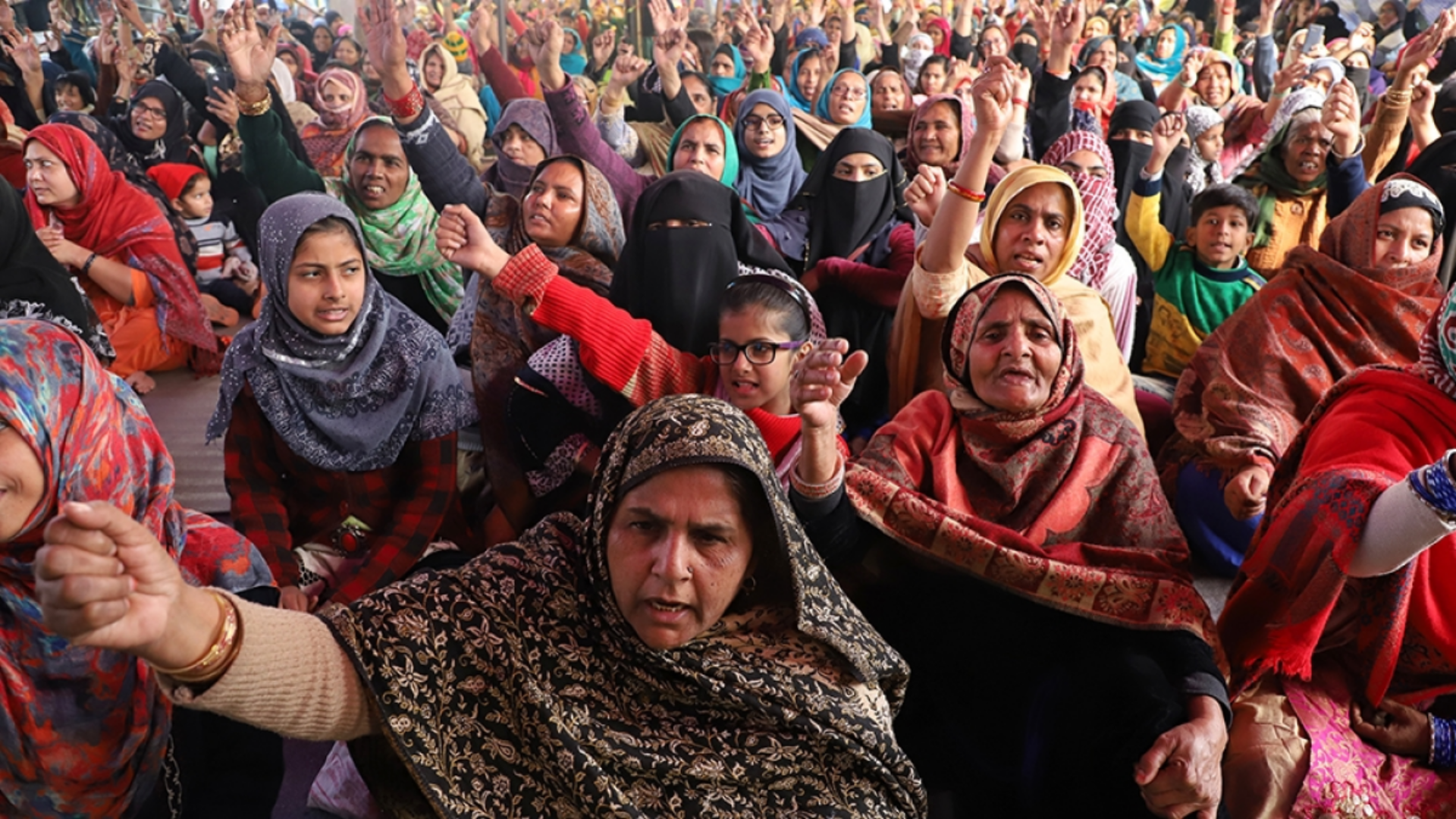
The flâneur and his feminist reworking, are valuable concepts. What it requires is, taking caste into account as both a spatial organiser and an identification category. To end where we started, ‘Who owns the Indian street?’ The truth is those with the caste, class, and gender advantages to enforce that ownership, do. With bodies that the city views as surplus, the bulk of Indian street and Dalit women are doing something more challenging and politically significant: they are asserting their right to exist at all in an environment that was not meant to accept them as its subjects. That assertion deserves its own vocabulary, one that goes beyond the freedom to wander and does not start in nineteenth-century Paris. At the very least, when thinking about women and the city and asking if the Indian flâneuse can roam freely, we should ask what she has always been doing and why the terminology for it keeps disappearing. Because, the street in India has never belonged to one kind of woman. They have lived there in varied ways, unequally, and on grounds that the prevailing framework consistently misses. Extending the freedom of the flâneuse to those who have been shut out is not the task. The challenge is to acknowledge that these women have been engaged in a completely different activity for which we do not yet have a suitable term and to start the process of giving it a name.
In the end, the Indian flâneuse is not a woman who has yet to claim the street. Instead, she goes through public space through sound, labour, commitment, and communal political occupation. Why Loiter? — was created by individuals who resemble me. It can explain how Dalit women are excluded from public areas. I am the limit of this essay. What comes after it should be written by someone else.
References
- Elkin, Lauren. Flâneuse: Women Walk the City in Paris, New York, Tokyo, Venice, and London. Chatto & Windus, 2016.
- Paik, Shailaja. Vulgarity of Caste. Stanford University Press, 2022.
- Phadke, Shilpa, Sameera Khan, and Shilpa Ranade. Why Loiter? Women and Risk on Mumbai Streets. Penguin Books India, 2011.
- Wilson, Elizabeth. The Sphinx in the City: Urban Life, the Control of Disorder, and Women. University of California Press, 1992.
- Hankins, Leslie K. ‘The Flâneuse in Literature and Film.’ Feminist Studies 22, no. 3 (1996): 535–558.
- Ambedkar, B.R. Annihilation of Caste. 1936. Verso Books, 2014.
About the author(s)

Sanandita Chakraborty is a scholar of Gender Studies with an academic background in History. Her research interests include feminist psychoanalytic theory, postcolonial critique, and the political life of interiority. She has published in peer-reviewed journals, student publications, and public-facing platforms, and writes at the intersection of the personal and the political.