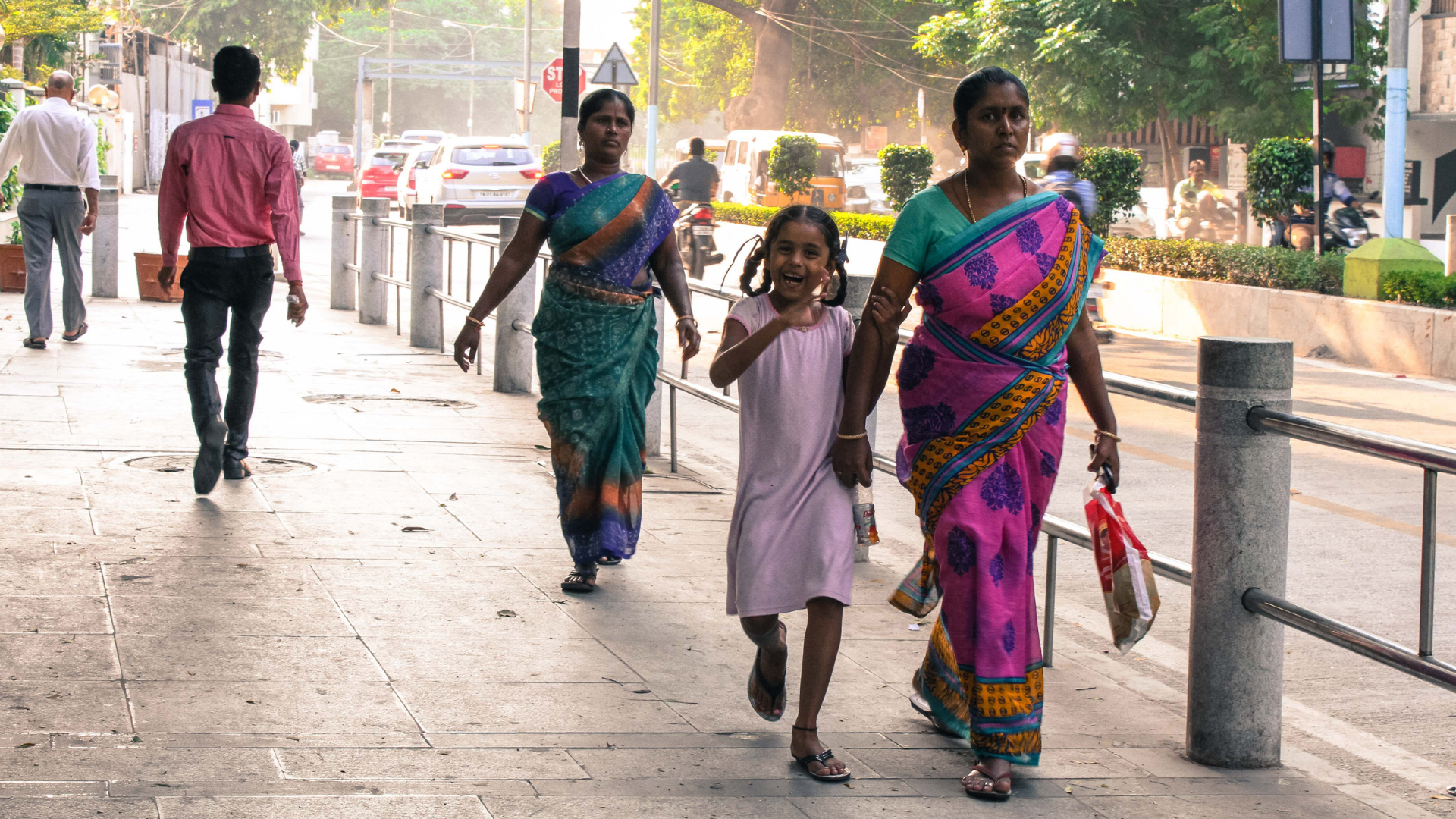
To go for a walk is the simplest pleasure in life — for a man. For women, however, going for a walk requires extensive strategising and planning. Will I be back before dark? Is this shirt too ‘revealing’? Should I carry something to cover up at night? Am I carrying pepper spray? Do I have my keys ready to hold between my fingers? Have I shared my location with my friends and family? Because each time women step outside, they take on risk.
Lack of safety restricts women’s access to education, employment, and exploration. It is a cost — financial, physical, and mental — that we pay every day. And the burden of this cost disproportionately falls on women from socially and economically marginalised communities, limiting their agency, autonomy, and mobility. Unfortunately, in a patriarchal society like India, the responsibility for women’s safety falls on their own shoulders, because their presence in public spaces is only conditionally permissible.
Fundamental right to walk
In a recent decision, the Supreme Court declared the ‘right to walk’ on safe, demarcated footpaths to be a fundamental right, integral to the rights to movement and personal liberty under Articles 19(1)(d) and 21 of the Constitution. It directed local development authorities at the city, district, and village levels to ‘Demarcate, construct, maintain, and safeguard footpaths and other necessary pedestrian infrastructure.’ The Court also recognised legislative gaps and called for statutory frameworks and a full-time regulator. The ruling, however, primarily addresses pedestrian safety in the context of road infrastructure and traffic accidents.
While progressive, the judgement raises practical questions about whose safety the law presumes to protect. Although the judgement does not answer the larger question of women’s safety in public spaces or the issue of conditional access, even in the context of pedestrian safety, there are complex and distinct infrastructural and behavioural requirements for ensuring women’s safety that the ruling fails to address.
Pedestrian safety of women
The National Annual Report and Index on Women’s Safety (NARI) 2025 recorded a national safety score of only 65 per cent. The report further recorded that perceptions of safety decline even more after dark, particularly on public transport, in the streets, and in recreational areas. Safety perceptions also vary by geography, class, and caste, resulting in vastly varied lived experiences for different groups of women.
Therefore, if women are to truly realise their fundamental right to walk, enforcement must move beyond the mere demarcation and construction of footpaths towards their regular maintenance and the robust implementation of safety measures in public spaces.
For pedestrian infrastructure to be accessible and safe for women, a few measures are essential: proper lighting, especially in high-risk areas; quick-response teams to respond to complaints of harassment; mobile safety applications with panic buttons; and women-led safety audits and consultations, particularly in rural areas.
However, some safety infrastructure carries an inverse risk. For instance, surveillance justified as protection can easily be repurposed as restriction. CCTV coverage raises privacy concerns, while the ‘for her own safety’ rhetoric reproduces the old logic of policing women’s conduct rather than addressing the conditions that endanger them. Ultimately, structural and technological interventions can become instruments of paternalistic control and surveillance by a state ideologically invested in curtailing women’s liberty.
Thus, behavioural and cultural change must be central to pedestrian safety. Social awareness campaigns for men, compulsory sensitisation workshops for civil servants, resident- and volunteer-led safety patrols, legal counselling for women, and strengthening the role of bystanders, among other measures, are imperative to realising the right to walk.
In this regard, a community-led alternative is showcased by the Red Dot Foundation’s Safe City project. The project documents women’s lived experiences in public spaces and translates these insights into advocacy for urban planning and policy reforms that enhance safety, inclusivity, and accessibility. What sets it apart is its use of crowd-mapping data to highlight everyday sexual harassment and gender-based violence. Models like this, which prioritise and centre women’s voices, should be supported and funded.
The walk ahead
The court ruling calls for legislation on pedestrian safety. However, the legislature should awaken from its deep slumber of indifference and tokenistic gestures towards women and formulate a law that ensures that the right to walk is accessible to all. The law must focus on both infrastructural mandates and behavioural change. Creating safe cities for women is about more than simply lighting streets or installing cameras; it is about fostering a sense of community, respect, and shared responsibility.
We must move beyond a negotiated and obstructed social life for women towards enabling active participation and free will. Walking is a basic, everyday activity that we have long had to bargain for because of gendered experiences of insecurity. As the Supreme Court noted in this judgement, ‘Walking has always triggered the Indian imagination — it has deep cultural, social, religious, political, and reformative roots.’ Therefore, we must reclaim it now, for women from all walks of life.
About the author(s)

Vasudha is a law graduate and researcher with a keen interest in gender justice, climate policy, and legal reform. Beyond her research, she is an emerging writer with a love for reading, cooking, and the classical dance form Kathak.