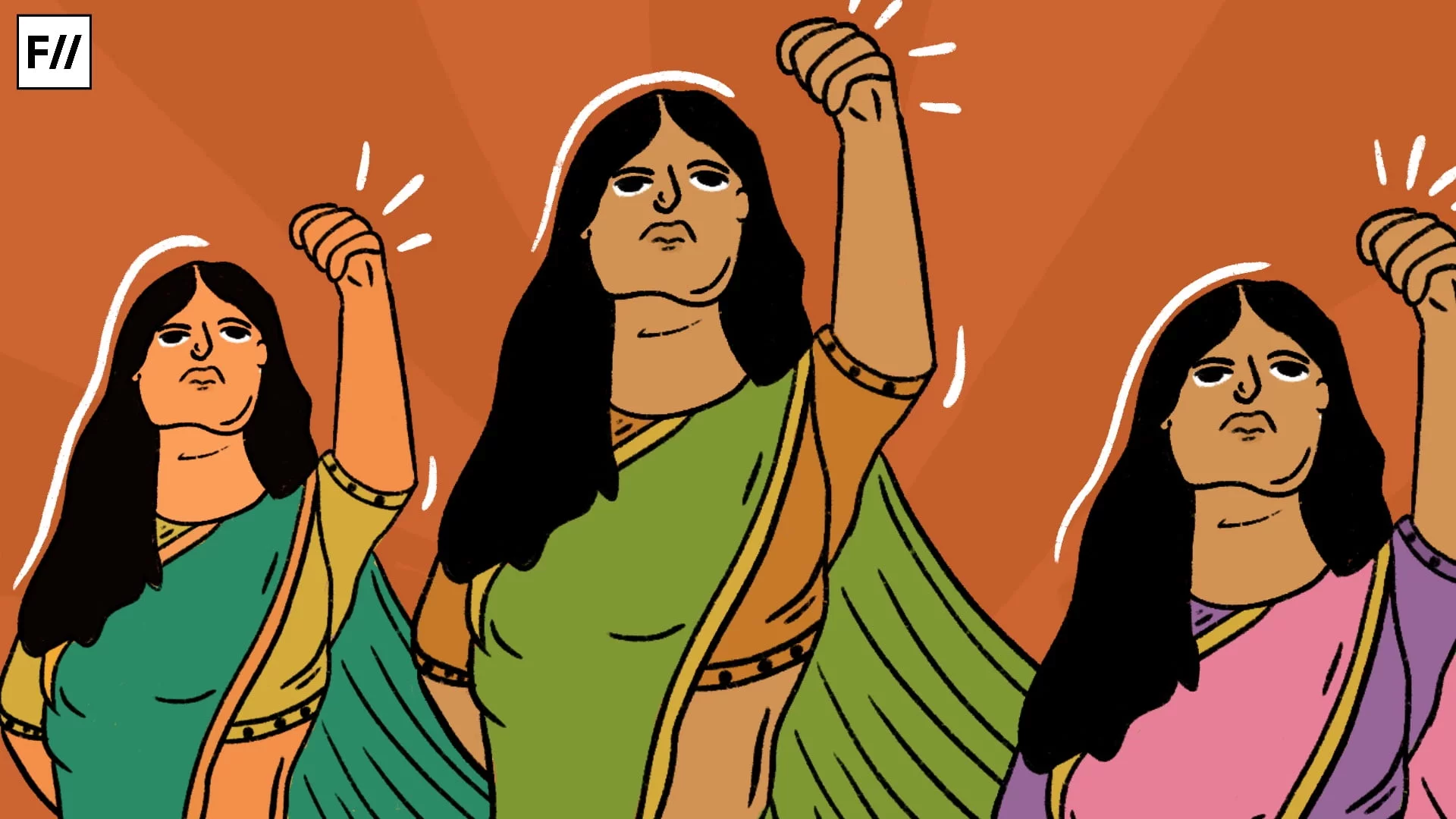
High-profile criminal cases in the early 2000s exposed critical weaknesses in India’s original Juvenile Justice Act, forcing lawmakers to overhaul the legislation, balancing public safety concerns with the goal of rehabilitating young offenders and helping them reintegrate into society. The Juvenile Justice (Care and Protection of Children) Act, 2015 endeavours to ensure that the child is protected from violence, abuse, and exploitation, taking a holistic, child-friendly approach and addressing the root causes of the offence committed, tracing the crimes back to issues such as poverty, abuse, or lack of education that plague the disadvantaged youth.
The bill also introduces certain worthwhile initiatives, such as foster care, creating a system in which abandoned and/or orphaned children, or those in conflict with the law will be sent to registered families, who receive financial aid from the state for this undertaking. Provisions also provide a ‘place of safety‘ for children both during and after the trial until they attain the age of 21—once they do, an evaluation of them will be conducted by the Children’s Court, whose verdict would either lead to the accused being released on probation, or in the absence of any reformation, being sent to prison for their remaining term. Children are also provided with services such as education, health, nutrition, de-addiction, treatment of diseases, vocational training, skill development, life skill education, counselling, etc. to help them assume a constructive role in the society, as well as foster care and sponsorship to satisfy their non-institutional care needs.
The Juvenile Justice (Care and Protection of Children) Act, 2015 also espouses the principle of a “fresh start” to avoid labelling and stigmatisation following the accused through their adult life. Highlighting the need for a system of expungement, the court in United States v. Dancy remarked that ‘the stigma of a criminal conviction may itself be a greater handicap in later life than an entire misspent youth‘. Thus, this concept aligns with the “rehabilitation not retribution” maxim that has been pronounced the objective of this policy.
While nowhere near perfect, with provisions of the bill allowing for unregistered orphanages and charitable organisations to function within the state which have reported multiple cases of sexual abuse, the Juvenile Justice (Care and Protection of Children) Act, 2015 was a landmark legislation that redefined the treatment of children in conflict with the law in India and reiterated the necessity of legal infrastructure supporting reformative justice.
The reality check: ground-level failures in the juvenile system
However, India Justice Report’s groundbreaking study, ‘Juvenile Justice and Children in Conflict with the Law: A Study of Capacity at the Frontlines,‘ released on November 20, 2025, exposed significant gaps between legislative intent and ground-level realities. More than half (55%) of the 1,00,904 cases before 362 Juvenile Justice Boards (the authority dealing with Children in Conflict with the Law) remained pending as of October 21, 2023. While 92% of India’s 765 districts have constituted JJBs, the pendency rate diverges from state to state, from 83% in Odisha to 35% in Karnataka. This means that more than 50,000 children in conflict with the law were awaiting justice. The study observed:
‘The legislative promise that a child in conflict with the law will have their case disposed of without delay and in a manner that promotes the child’s sense of dignity and worth remains largely unfulfilled: like adult undertrial prisoners, children are left to bear the consequences of an inconsistent system.‘
Vacancies and infrastructure gaps
These subpar outcomes of the Act may be attributed to numerous vacancies at the adjudicatory level. The Juvenile Justice (Care and Protection of Children) Act, 2015 specifies the multidisciplinary composition of the JJB, with each board comprising a principal magistrate and two social workers. This ensures a legal judgement is made at the intersection of psychosocial understanding and societal justice. However, nearly one in four (24%) of JJBs operate without a full board.

Justice Madan B Lokur, former Judge of the Supreme Court of India, called the findings worrying, saying that it was evidence ‘of a substantial number of staff vacancies in child care institutions‘.
‘This has a detrimental effect on children who fall under its purview,‘ he said. These detrimental effects may include slower, more drawn-out hearings, the dwindling possibility of a holistic and rehabilitative verdict, as well as children being held in institutional custody for longer periods of time, sometimes beyond legal limits.
Out of the 292 districts that submitted usable data, only 11 were equipped with the basic minimum conditions mandated by the act, including a JJB, a Special Juvenile Police Unit, a child welfare institution, legal aid services, probation officers, adequate staff and manageable pendency. Eight of these 11 districts were in Mizoram itself, depicting that the majority of the nation did not even establish the adequate apparatus required to fairly deal with children in conflict with the law.
The Act also mandates dedicated ‘Places of Safety‘ for 16–18-year-olds accused of heinous crimes. Yet fourteen states—including Maharashtra, Gujarat, Madhya Pradesh, West Bengal, Punjab, Andhra Pradesh and Telangana—lack even one such facility. Older juveniles are instead held in observation homes or adult-like settings, directly violating the Act’s core principles.
Older juveniles are instead held in observation homes or adult-like settings, directly violating the Act’s core principles.
Girls fare worse. With only 40 residential institutions designed to accommodate girls nationwide, authorities transfer girls across districts or states, severing their ties with family and legal representatives. These children end up in mixed environments with varying ages and offence profiles, putting them at severe risk—exactly what the 2015 law aimed to prevent.
The data black hole
Maja Daruwala, chief editor, India Justice Report, said: ‘The specially designed juvenile justice system is pyramidal in structure. Its optimal functioning relies on information flowing regularly from first responders at individual institutions such as police stations and care institutions upwards into overseeing authorities at the district, State, and national level. Yet, the IJR’s efforts at accessing reliable data from across the board evidence that authorised oversight bodies neither receive it routinely nor insist on it. Scattered and irregular data makes supervision episodic and accountability hollow.’
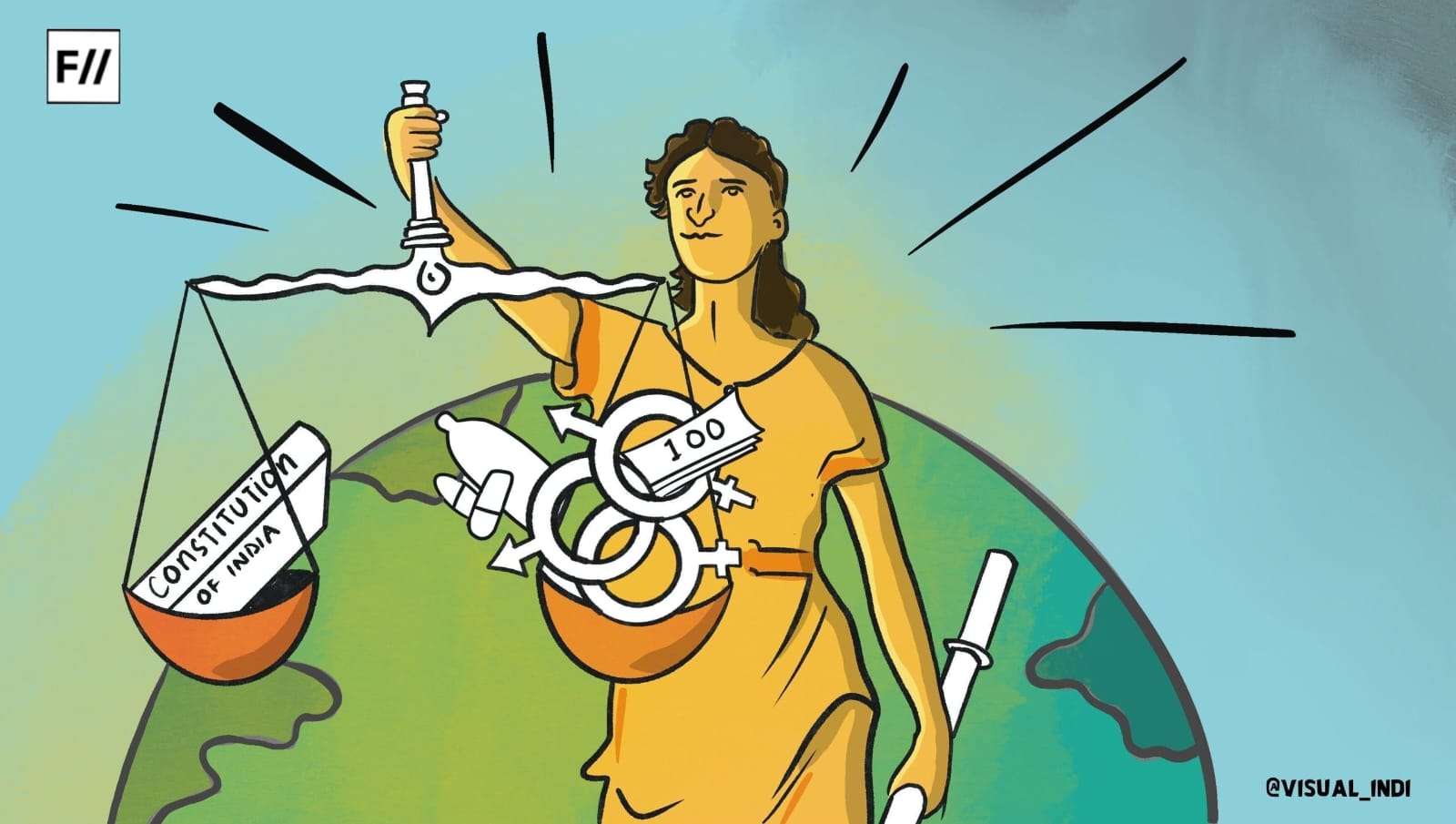
Justice Madan B. Lokur, former Judge, Supreme Court of India added: ‘IJR’s study exposes the gaps in our Juvenile Justice system. Despite the passage of 10 years since the implementation of the JJ Act, 2015, it is worrying to find that a quarter of JJBs did not have a full Bench and evidence of a substantial number of staff vacancies in child care institutions. This has a detrimental effect on children who fall under its purview.’ He further said the inadequate and patchy data from RTIs is concerning.
‘It is essential that a child-centric National Data Grid integrates information on the functioning of the juvenile justice system and that all authorities involved regularly publish standardised data about their functioning in relation to children. Until the information spine is built and used, the system cannot truly serve the best interests of the child,’ he added.
A decade after the 2015 Act promised rehabilitation and dignity, thousands of children remain trapped in a system that exists more in principle than practice.
A decade after the 2015 Act promised rehabilitation and dignity, thousands of children remain trapped in a system that exists more in principle than practice. The legislation envisioned fresh starts and reformative justice; the reality delivers delays, vacancies, and violations of the Act’s own safeguards. India’s juvenile justice system has the framework for change—what it lacks is the will to implement it.
References:
https://lawbhoomi.com/powers-and-functions-of-the-juvenile-justice-board/#:~:text=
The Juvenile Justice Board is the cornerstone of India’s child, overseeing rehabilitation and care institutions.
https://ijirl.com/wp-content/uploads/2023/07/THE-FAILINGS-OF-JUVENILE-JUSTICE-IN-INDIA.pdf
https://newsreel.asia/articles/india-juvenile-justice-system-failure-new-study
About the author(s)