In iSmart Shankar (2019), the protagonist chases a girl. It’s nighttime, and the girl is alone on the road, running helter-skelter to her home. Surprisingly, or rather not so surprisingly, a romantic peppy tune plays in the background. After all, it’s the period of trial, the chase before the (eventual) “success.” He barges into her home, smashes open the door, and grabs her from behind. She calls the police, asking for help from an assaulter, while the “hero” asks her to convey it straight. He’s trying to rape her.
He enters a room with her, shuts the door, and takes off his shirt. As she’s lying under him, breathing shakily, her chest heaving (a key detail: she’s nervous, but in a good, sexy way, you know, wink wink), the police arrive. He slaps her lightly; she asks him to slap her harder. As the police bang on the door outside, she shouts back, ‘You all can go! I like the boy now.’
The stalker: Tollywood’s profitable fetish
In the multibillion-grossing hit Pushpa (2021), the protagonist kisses and gropes the leading actress without her consent whatsoever. Over and over. While there’s no resistance whatsoever on her part (not as if it could be in the first place), what’s worse is that she enjoys it. The hint is that she either is shy or simply doesn’t know better. Her confusion is consent waiting to be discovered by a man who knows what she really wants.
Tollywood has had a long love affair with misogyny, a love affair that’s ongoing and thriving. It’s structural, it’s intentional, and it’s profitable. Women exist without agency, mere objects that move through stories created by and for men. Patriarchal expectations arrive dressed as love and tradition, as cultural values that must be preserved.
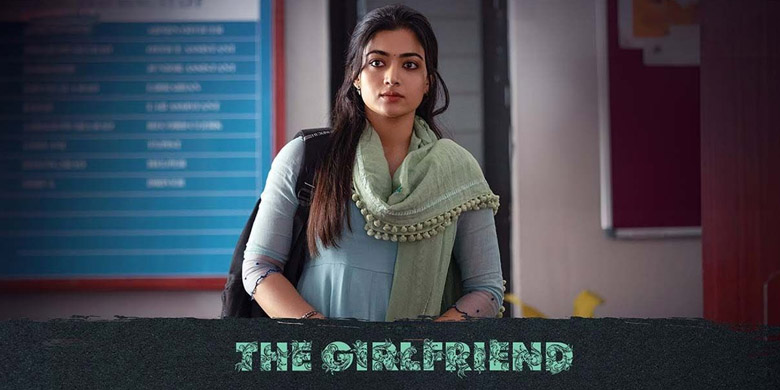
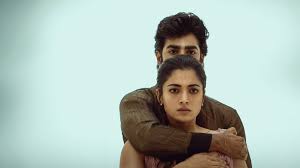
In The Girlfriend (2025), Vikram (Dheekshith Shetty), our “hero,” in a scene uncomfortable to watch, kisses this girl he’s been chasing for weeks — the demure, the naive, the homely, the “wife-material” Bhooma (Rashmika Mandanna) — against her consent. She becomes his girlfriend thereafter. The pattern is established after all. Everyone at the college congratulates her. What luck!
The stalking finally bears fruit. The chasing comes to its predestined end.
Tollywood has had a long love affair with misogyny, a love affair that’s ongoing and thriving. It’s structural, it’s intentional, and it’s profitable. Women exist without agency, mere objects that move through stories created by and for men. Patriarchal expectations arrive dressed as love and tradition, as cultural values that must be preserved. The camera fetishises the navel (one song has a cycle being run over the girl’s body, another has oranges thrown at her belly button), making recreational spaces out of women’s bodies. Violence of all kinds is normalised as masculinity — casual slaps, sexual assault, rape threats, actual rape.
In Sarileru Neekevvaru, which ironically has Rashmika Mandanna as the female lead, the girl’s mother defends the “hero,” played by Mahesh Babu, with, “He might’ve forced himself onto her, but we like him. We want him to marry her.” In Ala Vaikunthapurramuloo, Allu Arjun’s character can’t stop staring at his boss’s legs until she predictably falls in love with him.
With those contexts in mind, the male protagonist in The Girlfriend does everything right. He’s done his homework, after all. He chases her for days, he “conforms” his aggressiveness to woo the girl, he doesn’t eat unless she’s there to feed him, he inserts himself into anything and everything in her life, the magic problem-solver that he is, and constantly compares her to his mother (the ultimate compliment!). He expects her life to orbit around him — to stop thinking about her career and to instead think of how she can help his mother with her household chores and to think of raising his children (“I want at least three children!”).
As per Tollywood standards, he’s doing everything right and more. Unsurprisingly, he considers himself a progressive. When Bhooma asks why his mother is so quiet, he responds, “Did you think she is mute? No, no. That’s just my mother’s habit. If guests come home, she won’t talk much… won’t even lift her head to look. She will quietly go and stay in the kitchen. Otherwise, my father wouldn’t like it.
That generation of women is truly different. Their practices, their manners… You could build a temple for them. We can’t even expect that from girls of your generation. Why even talk about that! If my father is in a bad mood, my mother won’t even appear in front of him. Otherwise, it won’t be my father; it will be his belt talking. Hahaha. Don’t you worry… all that was okay in their time. No matter how angry I get, I won’t raise my hand at you. I promise. You are very lucky.“
From his perspective, he’s doing everything right. From Tollywood standards, it is he who should be worshipped. For never cheating on her. For fighting her dad for her. For wanting to marry her at the earliest convenience. For loving her so much that he can’t bear the thought of her talking to another man, friend though he may be. For expecting nothing of her outside of being a maid housewife.
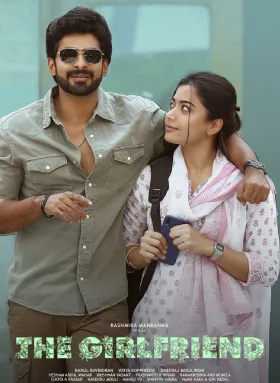
Coming from a toxic single-father family, Rashmika’s character tries to adjust, to conform, and to play the part of the dutiful partner. Even when things don’t feel right, she convinces herself of the socially acceptable nature of her relationship and life, and carries on. After all, the college heartthrob chose her. She tells herself this repeatedly, hoping repetition will make it true, hoping gratitude will eventually crowd out the growing sense that something fundamental is wrong.
Beyond the stereotypes
But Rahul Ravindran’s film goes beyond these stereotypes. Aurat hi aurat ki dushman hoti hai — women are women’s enemies. I’ve heard this line thousands of times growing up. But is it really so? Or is it that women have to fight for every iota of power rationed out to them in a patriarchal society? What if men get to have friendships because the world, the sky, and the ambitions belong to them, and they never have to one-up each other for scraps of autonomy?
But Rahul Ravindran’s film goes beyond these stereotypes. Aurat hi aurat ki dushman hoti hai — women are women’s enemies. I’ve heard this line thousands of times growing up. But is it really so? Or is it that women have to fight for every iota of power rationed out to them in a patriarchal society?
Durga (Anu Emmanuel) is a bold, modern girl with “strikingly beautiful eyes.” As college begins, she instantly takes a liking to Vikram and confesses her feelings to him. As Vikram begins dating Bhooma, she naturally harbours jealousy toward her. Masculine attention is always a powerful currency in a patriarchal world. But as Durga and Bhooma’s friendship develops, her perspective changes. She realises how Vikram would never date a girl like her, how Bhooma is the ideal girl for him, and how Vikram is the worst choice (I use the word “choice” deliberately, for in a patriarchal society like ours, decisions thrust upon women are called “choices”) for a girl like Bhooma.
The film is steadfast in its belief that sisterhood is the sole antidote to patriarchy, and correctly so. When a male saviour “saves” you from one patriarchal setting, he’s only taking you to another. “Less” oppression doesn’t mean a lack thereof. Our modern patriarchal society creates the illusion that being a wife, being sexually desired, is better than staying under the rigid reins of your father. But is it really so? Or is it just lateral movement within the same prison system?
The thing is, sisterhood isn’t automatic. Patriarchy incentivises women to go against one another. It incentivises you to feel superior by “not being like other girls.” It simultaneously incentivises you to obey, to follow the rules, to be the good girl, and to stay in your lane.
Tollywood has spent decades teaching women that their bodies are sites of shame requiring masculine protection. The heroines who get “saved” are the ones who remain pure. The ones who don’t are punished by the narrative itself. Bhooma breaks that contract.
The film ends with her writing again: the part of herself she lost first, the part not dependent on anyone else in her life, the part patriarchy works the hardest to silence. In a cinema that ends every love story with a wedding, that’s perhaps the most radical image The Girlfriend could offer: a woman alone. Unashamed. Whole.