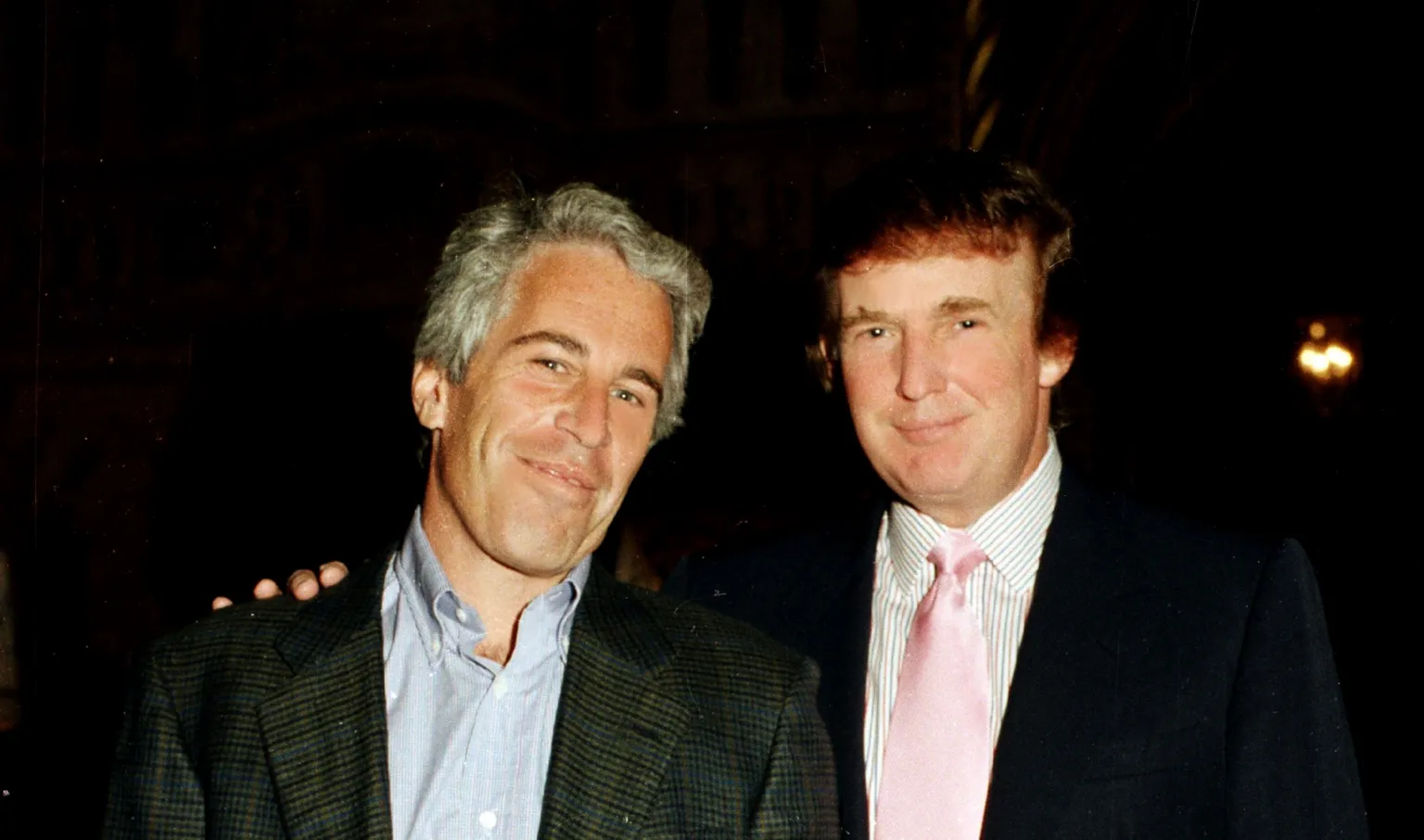
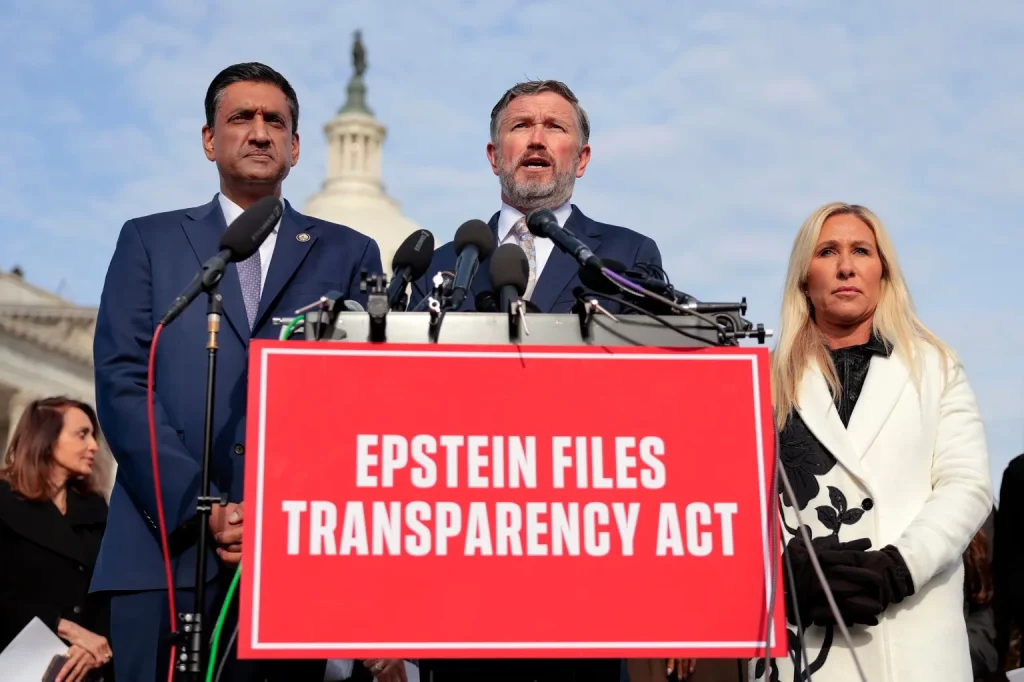
For years, the phrase “Epstein files” has been a shorthand for a fantasy. A grand moment when a hidden document would name every powerful man who participated in crimes. At least that was the promise. It was a campaign stick for Donald Trump, red meat for a base fully convinced that a shadowy elite was protecting paedophiles. His election victory, however, was followed by months of evasion. When his administration finally relented, after a near-unanimous congressional vote forcing his hand under the Epstein Files Transparency Act, what we received instead was less a list and more a map.
Between January 2024 and January 2026, the files were collectively released. Court documents from the Giuffre v. Maxwell defamation case. FBI investigative records. Grand jury materials. Financial papers from Epstein’s estate. Emails from his personal accounts. Internal memos from universities and banks. Roughly 3 million pages. Almost four thousand videos and images. All of it is now public, most of it heavily redacted. But as we’ll see, the “Epstein Files” don’t reveal a conspiracy so much as a culture. And culture, unlike a list, can’t be arrested.
What’s in the List
If the “client list” was intended to be a spreadsheet (names in one column, crimes in another), the files actually contained something closer to an organizational chart. Or, better, a wiring network diagram of nodes, where each node plays a role in making Epstein’s operation frictionless.
Node 1: The legal system. In 2007, federal prosecutors had a 32-count draft indictment for sex trafficking. Instead, they approved a non-prosecution agreement that immunized unnamed co-conspirators and allowed Epstein to serve 13 months on lesser state charges. What’s more, they kept the deal secret from the victims in violation of the federal law. The files include the internal DOJ emails and victim-notification letters that document this wilful opacity.
Node 2: The financial system. Court records from lawsuits against JPMorgan Chase show Epstein withdrawing up to $750,000 annually in cash, often in patterns commonly flagged by anti-money-laundering protocols. Bank executives intentionally underestimated or undervalued concerns to preserve a lucrative client relationship. The Virgin Islands’ complaint described the bank as “indispensable to the operation and concealment” of trafficking. JPMorgan would eventually settle for $365 million across two cases without admitting any wrongdoing.
Node 3: The knowledge economy. MIT’s fact-finding concluded that Media Lab director Joi Ito and development staff, despite being fully aware of Epstein’s conviction, structured post-2008 donations to be “relatively small and unpublicized”. It routed them through “anonymous” channels to keep taking his money while reducing visible association. Harvard administrators also acknowledged approximately $9 million in pre-conviction gifts. The files show Epstein positioning himself as a patron of evolutionary dynamics, genetics, and neuroscience as scientists pitched him projects, seeking introductions while treating a registered sex offender as a legitimate intellectual broker.
What the Victims Were Told vs. What Was Happening
As stated earlier, in 2007, federal prosecutors had prepared a draft 32-count indictment, from sex trafficking to enticement of minors. Internal memos described Epstein as “an extremely high flight risk” and a continuing danger to minors. The case file was extensive, with victim interviews, corroborating witnesses, and financial records linking him to “hush money” payments. Then-U.S. Attorney Alexander Acosta had what he needed for a clear conviction of decades in federal prison.
Instead, Acosta signed an agreement that granted Epstein federal immunity. Not just Epstein, but to “any potential co-conspirators.” The clause was so sweeping in nature that it would effectively shut down the FBI’s ongoing investigation. Epstein would plead guilty to two state charges and serve a mere 13 months in a county jail. His work-release privileges would be so generous that much of his “sentence” would be spent at his office.
Even worse, the deal was kept secret from the victims. They received letters falsely implying that the federal investigation was still active.
The 2008 non-prosecution agreement is now studied in law schools as a case study in how not to handle victim rights. What the Epstein files add is the paper trail showing there was no accident in the first place.
The files show a legal system that recognized the severity of the crimes on paper, yet ignored that recognition through a deal that would protect everyone except the victims.
Emails between Acosta’s office and Epstein’s defence team show a negotiation where victim notification was treated as a problem to be managed rather than a legal obligation to be met. In one internal memo, they worry how informing the victims might generate media attention and “sabotage” the deal. In another, they discuss timing the plea to minimize press coverage.
The files document all of this. They show a legal system that recognized the severity of the crimes on paper, yet ignored that recognition through a deal that would protect everyone except the victims.
The Airport Test of Elite Morality
Imagine you’re at a private airport. A billionaire offers you a seat on his plane. To a conference, perhaps a dinner later, all with illustrious people. You know he’s been convicted of soliciting prostitution from a minor. But you also know that senators, scientists, celebrities, and public intellectuals have taken this same flight. The plane has become, in effect, a floating venue of elite exchange.
Do you say no?
Saying no would mean breaking from the herd. Saying no would mean signaling you operated by different rules than your peers. Saying no would mean denying access and reputation, the primary currencies of our world.
Steve Bannon, the populist strategist and scourge of the “globalist elite,” appears in the files for coaching Epstein on managing his public image after the 2008 conviction. Noam Chomsky, the left’s most prominent critic of American imperialism and capitalist power, appears in his flight logs and correspondence. Ehud Barak, former Israeli prime minister, consulted Epstein on business ventures. Scientists at elite universities proposed research projects to him, media figures sought his connections, and politicians across the spectrum took his calls.
These are people who, in public, represent radically different visions of the world. In private, they orbited the same man, participated in the same social economy. At a certain level of wealth and fame, then, principles become negotiable. What matters is whether someone can be useful, and whether associating with them creates more opportunity than risk.
The files don’t accuse all of these figures of crimes, of course. But they point toward a far larger structural problem, of a class that, despite its public conflicts, operates as a coherent social network. Here, moral boundaries are weaker than reputational ones. Here, proximity to a convicted sex offender could be privately justified as long as it remained publicly deniable.
Whose Privacy Is a Right? Whose Is a Risk?
The redaction disaster of January 2026, yet again, wasn’t an accident. It was the predictable outcome of a rushed, under-resourced process conducted under extreme political pressure and with zero independent oversight.
The DOJ, while releasing the nearly 3 million pages, claimed to have completed a thorough review to protect victims’ identities while maintaining transparency regarding alleged perpetrators.
But independent analyses found the contrary.
At least 43 victims’ full names appeared in the documents, alongside home addresses and phone numbers. Many of them were minors at the time of abuse. Child sexual abuse images were posted with faces clearly visible. These images were accessible to the public for hours before being pulled down.
A coalition of more than 200 victims filed emergency motions to take the website offline. They described the release as retraumatizing and as a violation more extensive than anything they had experienced in prior litigation. The DOJ acknowledged “some errors” but defended the overall process, asserting that redaction errors affected a “negligible” percentage of the material.
Meanwhile, alleged perpetrators and powerful associates enjoyed far more aggressive protection. Their names were thoroughly redacted across documents, even when the individuals had been publicly named in prior reporting or court filings. The disparity was so stark that survivors’ attorneys accused the DOJ of “hiding the names of perpetrators while exposing survivors.”
A coalition of more than 200 victims filed emergency motions to take the website offline. They described the release as retraumatizing and as a violation more extensive than anything they had experienced in prior litigation. The DOJ acknowledged “some errors” but defended the overall process, asserting that redaction errors affected a “negligible” percentage of the material. The release itself became one more failure. One more proof that, even in the name of accountability, the system prioritizes power.
That framing of treating victims as a percentage, continuing to treat their exposure as statistical noise epitomises exactly what the files were supposed to expose. A system that consistently prices victims’ welfare below its own functioning comfort. More than incompetence, it was a matter of priority. And the priority, seventeen years after Epstein’s first conviction, hasn’t changed one bit.
No Hidden Keys Here
The demand for an Epstein “client list” reflects that deep, primitive human need to locate evil in individuals so it can be excised. If we can just name the monsters, just arrest them, just punish them, the thinking goes, the problem is solved. Just.
The Epstein files, however, publicize an ecology.
Power, in this case, was never located in a single institution or formalized role. Epstein held no elected office. He controlled no corporation. His influence derived entirely from access. The files show him functioning as an informal diplomat, shuttling advice between oligarchs and politicians; an informal patron of research, shaping agendas by deciding which projects to fund; an informal consigliere to powerful men in crisis, offering introductions and image rehabilitation when pristine institutions might turn them away.
Complicity in this world, in our world, is rarely spectacular. Minor acts that, individually, don’t look like atrocities. In aggregate, they are the scaffolding. The files may be out. Yet the world remains largely unchanged. It remains unchanged because it is normal. You see, normal is not criminal. Normal, unlike criminal, is far harder to prosecute. Normal, unlike criminal, is far harder to excise. Normal, unlike criminal, is far harder to solve.