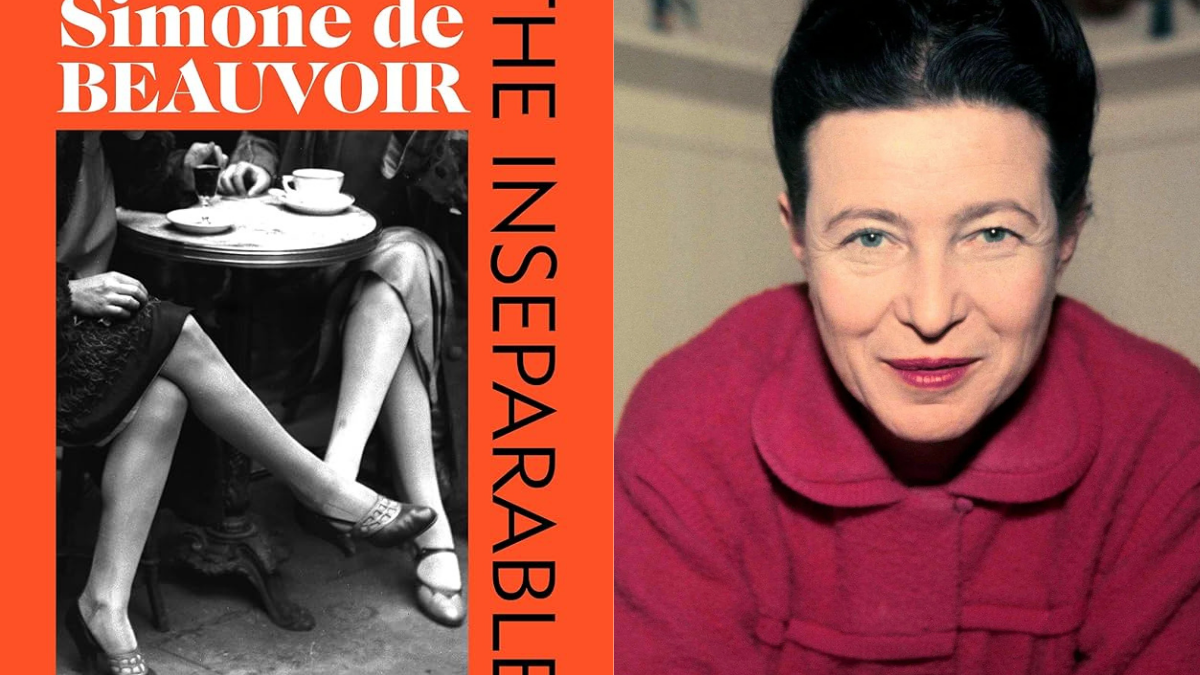
There is a scene in The Inseparables where a young girl, Andrée, has just been forced by her family to break up with her boyfriend. She is heartbroken and is telling her best friend Sylvie how being loved by this boy has changed everything for her—that his love has made her realise that she is worth being cared about. She says that he “was the only person who loved me for myself, exactly as I was, and because I was myself.” Her friend, who has been listening unhappily, struck by the injustice of it all, demands, “What about me? … Didn’t I value you for who you were?“
This friend, Sylvie, is the French feminist, novelist and philosopher Simone de Beauvoir, telling the fictionalised story of her first love and best friend Zaza. Andrée/Zaza and Sylvie/Simone became best friends in school and were dubbed “the inseparables“. With Zaza, Simone had “real conversations” for the first time, impressed by her new friend’s personality, the depth of her reading and the pleasure of her company. After the above conversation, in which Sylvie confesses her feelings for Andrée, the two become even closer, sharing their lives with each other, resisting the oppressive norms of the French bourgeois society together, and writing each other long letters when separated.
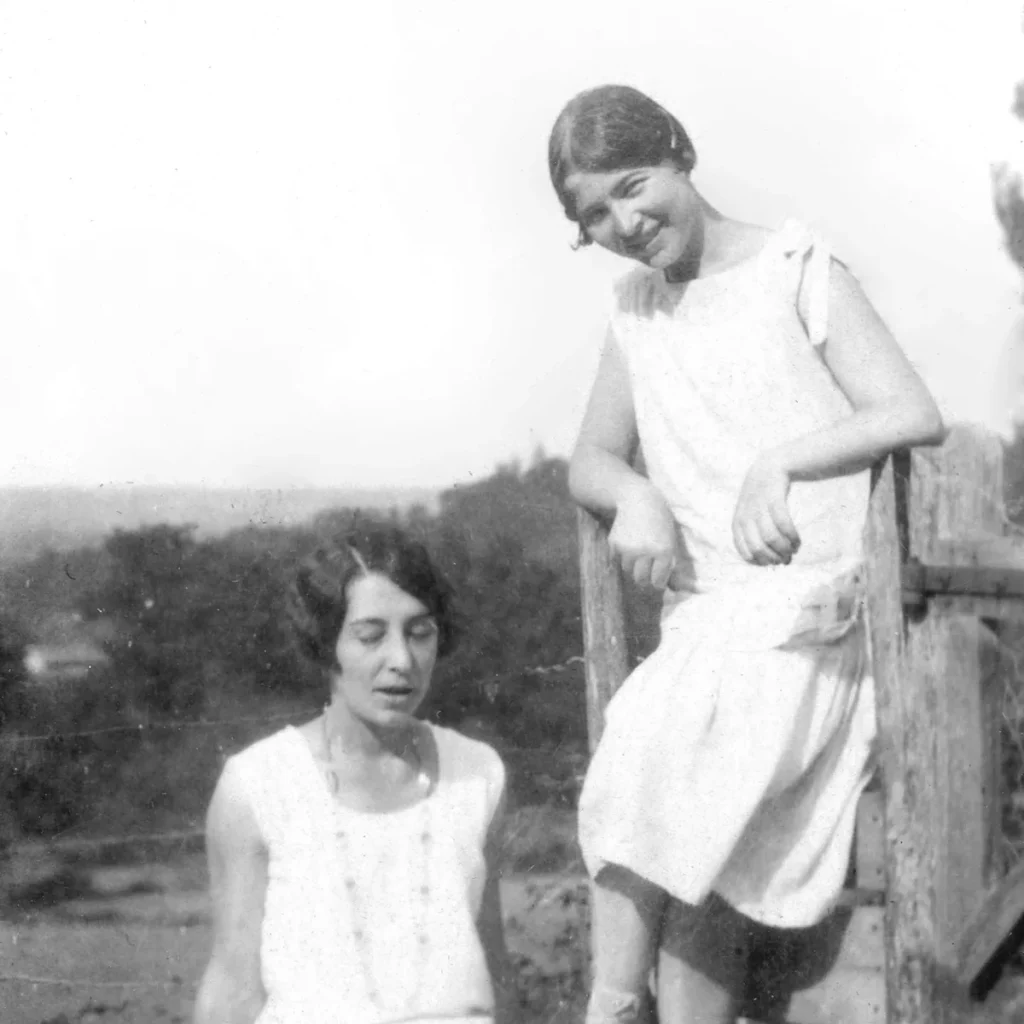
Unfortunately, Andrée/Zaza’s story ends tragically: after she is denied permission to marry the man she loves, she becomes very ill and dies at the age of 22—of viral meningitis, but also of being systematically suffocated by the expectations of her family and society in what Simone de Beauvoir would later call “a spiritual crime.” She would compulsively memorialise Zaza to try to make sense of her death, not only in her memoirs but also in fictionalised form as Andrée in Inseparables, Anne in When Things of the Spirit Come First, etc.
Sylvie’s intense yearning for Andrée runs like a dagger through the narrative. One of the earliest moments of tension comes from Sylvie’s realisation that her life would be death without Andrée in it: “Without Andrée, I would no longer be alive…if she died?….I decided; I would…die as well.” Just a few pages later, “What would I have daydreamed about? I loved Andrée above all else, and she was right next to me.” Young Sylvie realises that she cares for Andrée much more than Andrée does for her, yet what guts Sylvie is the realisation that the object of her affection is simply unaware of its intensity. Try as she might (and she does! with the present of a red handmade purse), expressing her feelings is difficult—partly because this love is other, alien and out of place, as Andrée’s mom is quick to realise and attempt to thwart. Bitter hopelessness and helplessness are hence always seeping in at the horizons of this relationship, and the unrelenting earnestness of this experience is part of what makes this novel almost unbearable.
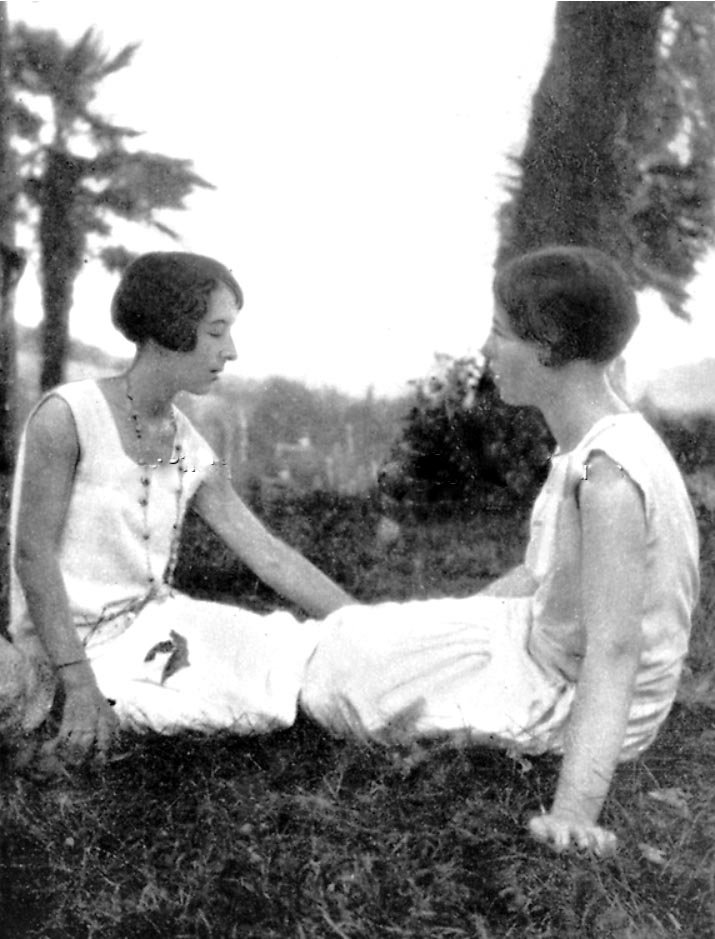
On my first reading of The Inseparables, I read Sylvie as a queer girl in unrequited love with her best friend (often an excruciatingly familiar situation for sapphics). And I wasn’t the only one. When the novel was published in 2020 (although written in 1954), its publication led to a discursive split between those who interpreted it as a novel of female friendship and others who read it as a lesbian love story. Paul Preciado controversially reviewed it for Libération, calling it a tragic lesbian love affair that forced Simone de Beauvoir to realise that homosexuality was “a second sexuality, a marginal and risky position in relation to the heterosexual norm” (just as she would later realise that women were the “Second Sex” in relation to the masculine norm). This position was also strongly criticised by other Beauvoir scholars, partly for being “obscene” and for superimposing sexuality in a novel where there was none to be found. Instead, they championed it as a story of female friendship and intellectual companionship.
I want to illuminate the allonormative assumptions implicit in these logics—when Preciado suggests certain elements of erotic intensity in the story as “obviously” sexual, this position implies that such a close and intense relationship couldn’t be “just” a friendship. Our allonormative conditioning encourages us to put romance on a higher pedestal—relationships that are not fraternal and above a particular threshold of intimacy must be romantic and/or sexual. On the flip side, considering the sapphic interpretation illegitimate because of the absence of sexual contact in Sylvie and Andrée’s bond is also an assertion bolstered by compulsory sexuality—specifically the dangerous myth that the romantic is always/must be sexual, which must be firmly repudiated to make space for asexual and non-sexual romantic experiences.
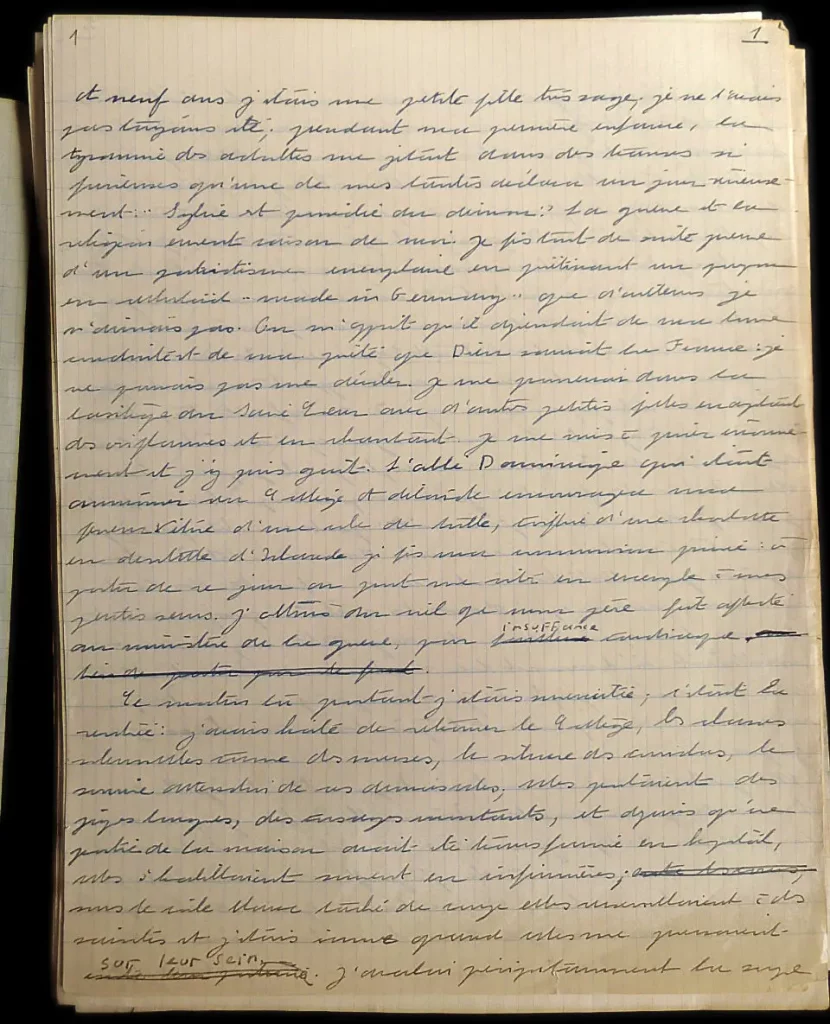
In Asexual Erotics: Intimate Readings of Compulsory Sexuality, Ella Pryzbylo takes up Audre Lorde’s revolutionary conceptualisation of the erotic as a creative life-force with “profound and mundane” modes to propose a methodology of reading for asexual resonances by extricating the erotic from being purely sexual. The erotic emerges instead as a source of energy and an emotional and intellectual power source that makes solidary and affective connections with oneself and others possible and productive, and asexual erotics allow us to imagine “language that does not yet exist” and “forms of erotic expression that are not feasible as identities or even nameable as properties in the first place.”
When Simone/Sylvie declares that she loves Andrée/Zaza with an “intensity which could not be accounted for by any established set of rules and conventions,” this affection pits her against the brute force of the social morality of French bourgeois society, allowing her to at least begin imagining joyous resistance, rebellion and love. When Simone de Beauvoir says of Zaza’s death at the end of her first memoir that “for a long time I felt that I paid for my freedom with her life,” on a queer-ace reading, she feels obliged to live a certain kind of life because her first love—her first friend (in the most resonantly complete, queer sense of the term)—didn’t have the kind of “exceptional” life that she wanted to have.
As Hazel Rowley has said, it’s impossible to read about Simone de Beauvoir’s life without thinking of your own, and this is doubly true when it comes to her fiction. For me, on my second reading, The Inseparables becomes a fertile ground to dig for resonances of ambiguity and ambivalence between queer friendships, lesbian and/or asexual romances, and platonic love affairs. Looking forward to queerer homecomings on consequent readings.
About the author(s)

Simran is a teacher and writer from Pune. They write about feminist issues from a philosophical perspective. They are committed to working on the issue of sexual and gender-based violence (SGBV). They love reading and learning languages (fluent in French, they are now trying their hand at Spanish and German). Simran has a BA in Philosophy from Fergusson College and a Masters in Cognitive Sciences from IIT Gandhinagar. They can be found on Instagram as @willtophilosophy, where they post about philosophy, literature and feminism.

Comments:
Comments are closed.