The new Canadian TV show Heated Rivalry is the Internet’s latest obsession. The show, which boasts high ratings, has now become a feature of everyone’s Instagram feeds, and many of us have lost count of how many times we’ve watched it. The plot of the show follows rival hockey players, Shane Hollander (Hudson Williams) and Ilya Rozanov (Connor Storrie), and their secret whirlwind romance. While the tension and chemistry between them make the show an exciting watch, the series also does a great job at handling more serious topics like internalised homophobia, male loneliness, and vulnerability in relationships.
Subverting expectations and embracing vulnerability
What starts as a casual, no-strings-attached relationship between Shane and Ilya begins to have a surprising tenderness to it. Heated Rivalry highlights this in subtle ways, across multiple episodes that span over a long period of time. We see a glimpse of it when Shane steps in when Ilya gets nervous at a press meet, or by their relief at seeing each other after months of playing in different cities. Shane and Ilya’s relationship is a sharp contrast to the ‘tough guy’ narrative common in popular media. While the characters explore dominance and playful teasing, they also communicate and check in with each other at intimate moments, showing their trust and mutual respect for one another.
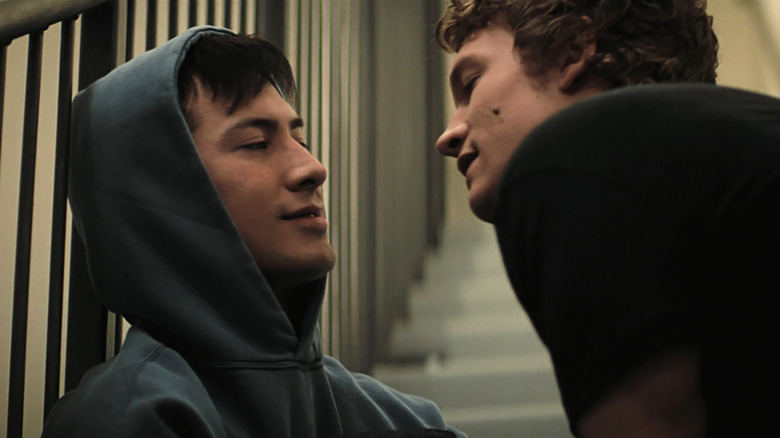
Ilya’s mother passes away when he is young, and he grows up in a toxic household, with a father who has impossibly high expectations from him, and a brother keen on getting his hands on Ilya’s money. This, combined with the pressures of being one of the best hockey players in the country, takes a heavy toll on him. During his father’s funeral, it’s incredibly touching to watch him finally break down in a phone call with Shane. We see them both supporting each other over the years, as they go through various struggles just to be themselves.
Shane and Ilya’s love for each other shines through in so many small ways, and they are eventually forced to confront the reality of their feelings for each other and to accept that they want more.
Shane and Ilya’s love for each other shines through in so many small ways, and they are eventually forced to confront the reality of their feelings for each other and to accept that they want more. However, knowing it could affect their careers, the possibility of being together in public and having a future together requires them to make sacrifices. And for Ilya, it also means not being accepted by his family and never being able to go back to Russia, his homeland. It is this high-stakes emotional intimacy that has captured the hearts of the audience.
Why women are drawn to gay sexually explicit media
Although the show has been widely praised by the queer community, 66 per cent of its viewership comes from women. Why is it that women are so drawn to Heated Rivalry, or gay sexually explicit media (SEM) in general? Even though with straight SEM, it’s easy for women viewers to insert themselves into the female point of view, straight SEM is created for the male gaze. This means it often depicts women poorly and glorifies toxic masculine traits. In straight SEM, women’s bodies are the ones on display for consumption. As English art critic and novelist John Berger once noted, ‘Men watch women. Women watch themselves being looked at.’
Not only is straight SEM made for the male gaze, but it is also usually unsafe for the women being filmed, which adds to female viewers’ discomfort. It also tends to reinforce unrealistic beauty standards for women. Gay SEM, on the other hand, flips the narrative, allowing women to indulge in a fantasy without having to confront the patriarchy and misogyny present in how they are depicted on screen in sexually explicit media.

Beyond this, it’s common for the romance genre to fall into the trope of the woman doing all the emotional labour in relationships. But in a gay romance, men are forced to confront the constructs of masculinity and be vulnerable and emotional in a way that straight men aren’t expected to. Shows like Heated Rivalry give women the opportunity to watch men being masculine in a safe, comforting way rather than expressing their insecurities through toxicity, as is common with depictions of heterosexual men on screen.
Sports and the pressures to be hypermasculine
Another aspect of Heated Rivalry that makes it stand out is that it is set in the world of sports. We hold athletes to an even higher standard of masculinity, expecting them to constantly perform masculinity, and mocking any signs of weakness or vulnerability. Hockey is especially known for being a violent sport, and hockey players are often expected to be aggressive and dominating.
When Trump made the joke about having to invite the women’s hockey team to the White House, all the male players laughed. But part of the problem is that we expect them to.
When Trump made the joke about having to invite the women’s hockey team to the White House, all the male players laughed. But part of the problem is that we expect them to. And men who don’t participate in these ‘bonding rituals’ get ostracised. It is these pressures that force Shane and Ilya to be so secretive about their relationship.
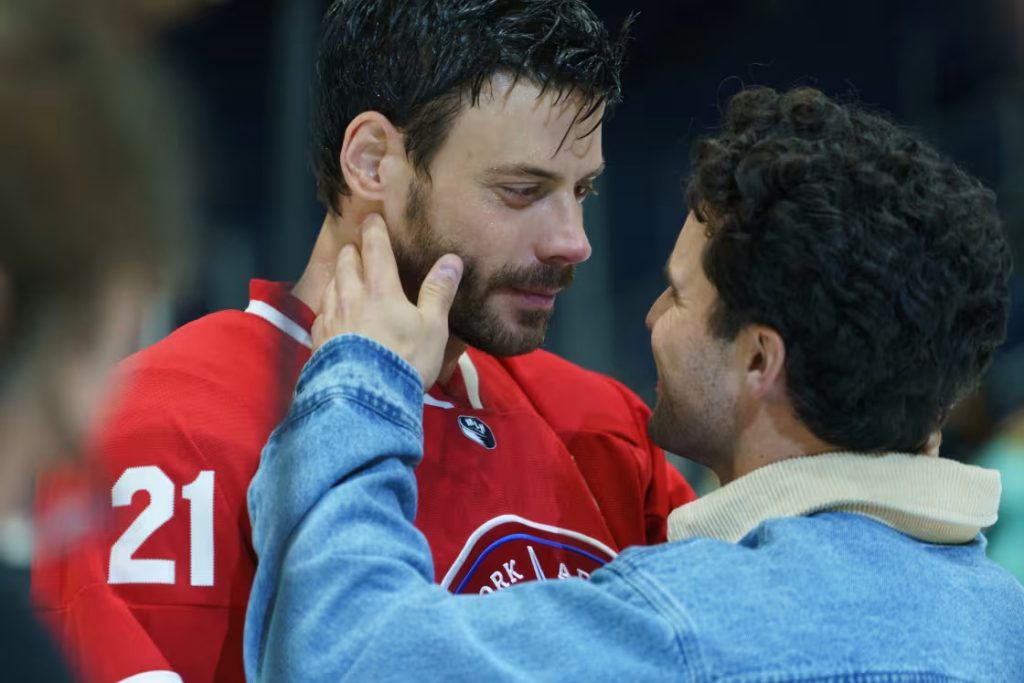
Heated Rivalry also tells the story of another gay couple, Scott and Kip. Scott is a hockey player who finally comes out after his team wins the MLH Cup by inviting Kip onto the ice and kissing him. This moment is significant for Shane and Ilya’s relationship as well, because it finally gives them the courage to pursue a real relationship.
Gender norms and stereotypes put a lot of pressure on women, but they also affect men in some ways. The patriarchy considers men to be superior to women, and therefore, masculinity becomes superior and aspirational as well. However, that means anything perceived to be ‘feminine’ is looked down upon, and men are mocked for having traits popularly understood to be ‘feminine’.
Inspired by Scott and Kip’s kiss in Heated Rivalry, real-life football referee Pascal Kaiser proposed to his boyfriend in an emotional moment on the pitch during a match in Cologne. Although the moment was praised and widely shared on social media, Kaiser began to receive threats soon after and was attacked at his house.
For queer men, who are often considered ‘effeminate’ due to homophobic stereotypes, failing to perform masculinity can not only invite mockery, but even harassment and violence. Inspired by Scott and Kip’s kiss in Heated Rivalry, real-life football referee Pascal Kaiser proposed to his boyfriend in an emotional moment on the pitch during a match in Cologne. Although the moment was praised and widely shared on social media, Kaiser began to receive threats soon after and was attacked at his house.
Heated Rivalry explores how queer men are forced to navigate this and make choices that no one should have to make, such as deciding between a successful career and being with their partner in public. Shane and Ilya’s story, as well as Scott and Kip’s, gives hope to queer men who feel trapped by these gendered patriarchal norms. It also gives hope to women who want the men in their lives to express themselves freely, without the constraints of toxic masculinity.
About the author(s)