P. Sainath, in his book Everybody Loves a Drought, taps into an undercurrent: ‘Given a chance, people hit back at the forces that hold them down. They may have different ways of doing this, some less effective than others. But fight back, they do. Yet, too often, covering the poor for the media gets reduced to romanticising the role of saintly individuals working among them. Often, these heroes are from the same class and urban backgrounds as the journalist covering them. A latter-day version of the noble missionary working among heathen savages. Far more sophisticated, perhaps, but not too different at some levels.
True, the linkages between local protests, outside intervention, and mass consciousness are quite complex. In conventional terms, the story then becomes one about the individual hero or heroine, or the government, preferably the former. In all this, however, the role of people themselves tends to get obscured, as do the political trends shaping them.’
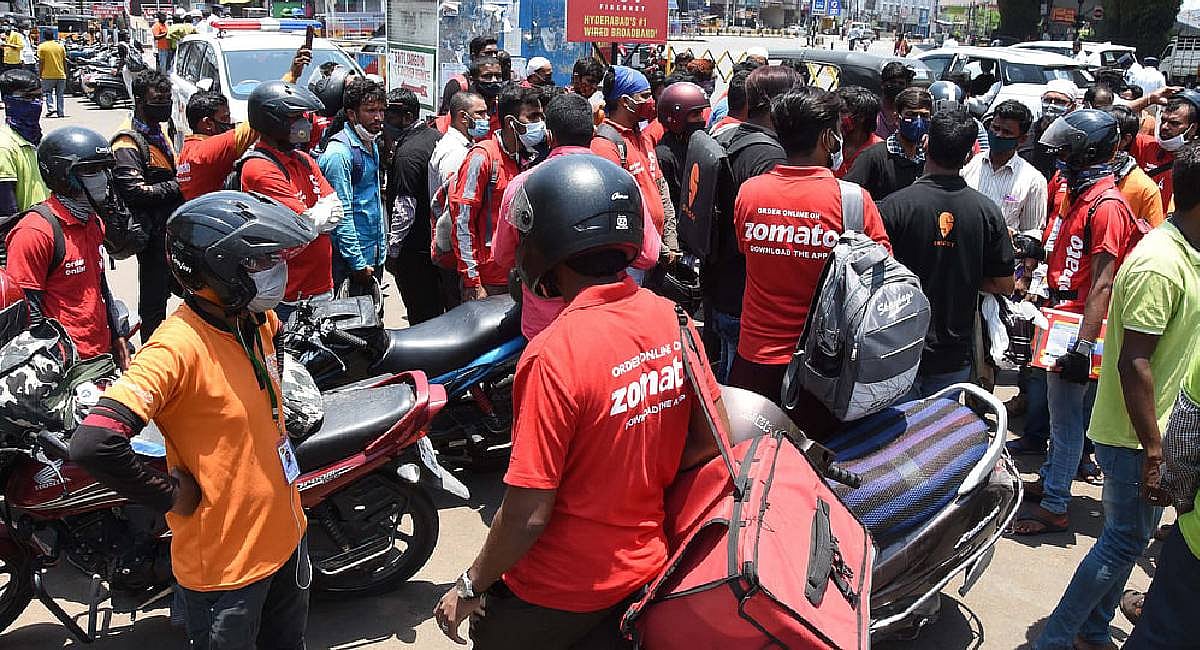
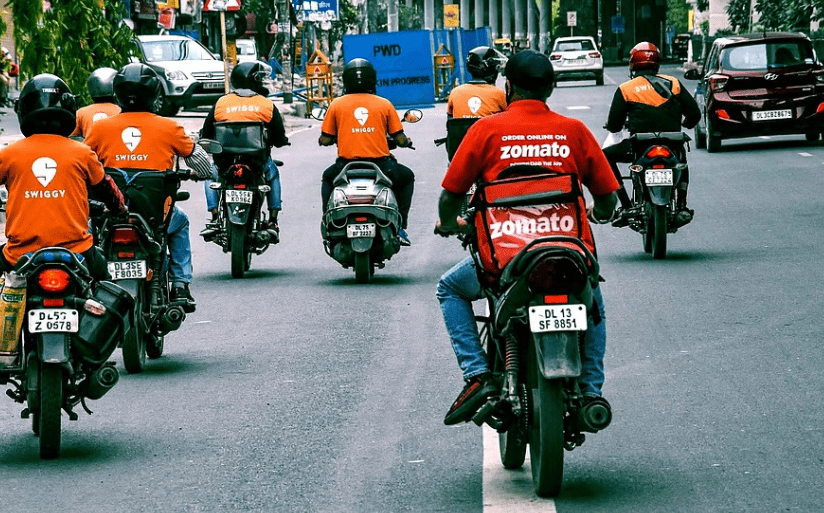
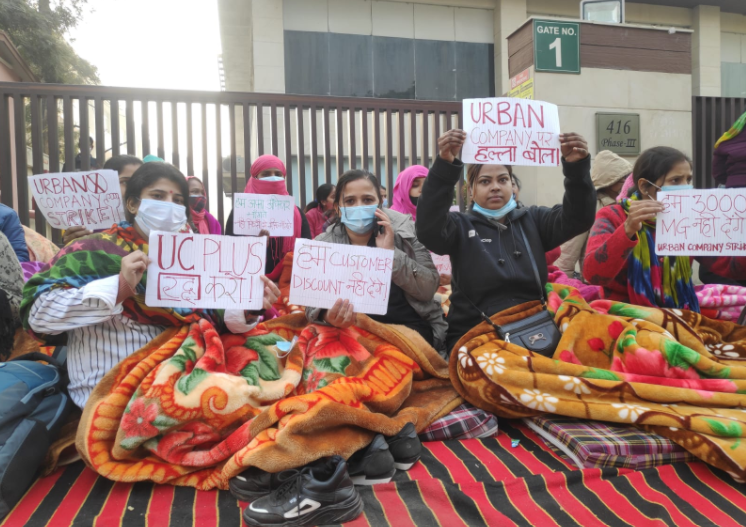
On 25 December, the Indian Federation of App-Based Transport Workers (IFAT) mobilised a nationwide flash strike, with nearly 40,000 delivery workers from platforms like Swiggy, Zomato, and Amazon participating across major Indian cities. Additionally, TGPWU and IFAT urged the public, trade unions, civil society organisations, and the media to stand in solidarity with delivery workers in their ongoing fight for just, safe, and dignified work.
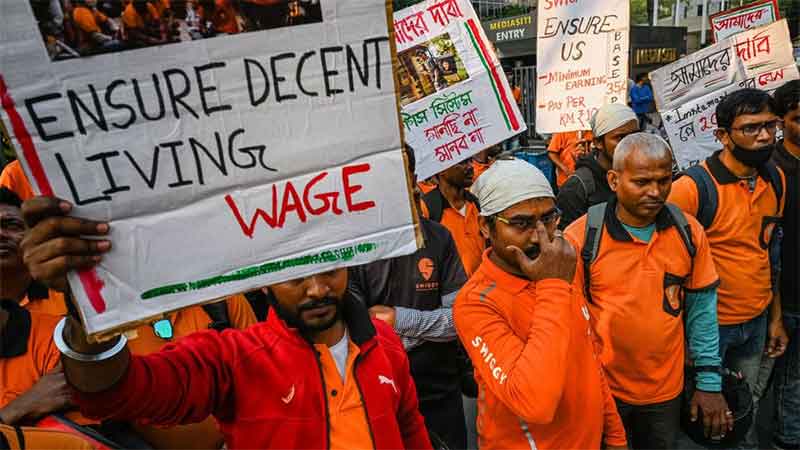
Shaikh Salauddin, Founder President of the Telangana Gig and Platform Workers Union (TGPWU) and Co-Founder and National General Secretary of IFAT, said, ‘Delivery workers are being pushed to the breaking point by unsafe work models, falling incomes, and the total absence of social protection. This strike was a collective call for justice, dignity, and accountability. The government can no longer remain a silent spectator while platform companies profit at the cost of workers’ lives.’ This is a concern the union had been voicing for a long time.
Tracing a trail of snippets
In the backdrop of engaging with the strike, Raghav Chadha, an AAP MP, tailored a trail of snippets, visuals, and trailers leading up to his new profile picture updated on his X account on January 16, 2026, captioned #NewProfilePic. He was widely criticised on the platform for using an AI-generated image of workers. Many wondered what possible prompt was used for such attention to detail. After all, the Zepto T-shirt read “Delivery Delivery“.
The use of AI and its scrutiny might be gaining attention recently in virtual campaigns but there is a familiar script unfolding: an inconvenient history of remembering and convenient forgetting. The profile picture marks a moment of looking back uneasily from the track he had been on for a couple weeks. The image places him at the centre and foreground, while the workers themselves marked all the same, recede into the background, while he shines upfront.
The image places him at the centre and foreground, while the workers themselves marked all the same, recede into the background, while he shines upfront.
This is not to oversimplify the complex interplay between political engagement, digital activities, media, strike, and the longer history of labour politics in highlighting the issue and broadening the reach, afterall, his visual trail did leave a mark. However, this visual hierarchy also holds a mirror to a long-standing pattern of engagement with labour issues overriding its complex history. While the picture could be used as a gateway, the problem needs to be reflected beyond the mirror surface.
The politics of ignorance
Nancy Tuana, demonstrating the importance of including epistemologies of ignorance within feminist epistemologies, talks about something that can be applied across areas of intersectionality:
‘Ignorance is not a simple lack. It is often constructed, maintained, and disseminated, and is linked to issues of cognitive authority, doubt, trust, silencing, and uncertainty.’
News cycles and readers together, hand in hand, slip into a pattern of this convenient ignorance. When Raghav Chadha invited Himanshu, a Blinkit delivery rider over for lunch at the very least, Himanshu’s name could be found in the video’s description; however, the repost by The Indian Express, buries such efforts under a convenient decision of erasure. Himanshu is not named anywhere.
The responsibility also lies with the readers, often discussing the gig workers’ strikes as some abstract idea, without undertaking the work to know the names and who is behind them—a hypocrisy that also reflects in Raghav’s new profile picture, where workers with whom he interacted and those who were actually at the forefront of organising the strike, bearing risks to their source of income and facing consequences of ID bans and deactivation, were visually marginalised.
It is also important to remember that Raghav Chadha does not “become” a delivery rider himself—he quite literally rides on the labour of Shivam, an actually gig worker.
In a conversation with Sanket Upadhyay, Raghav Chadha points out the change in his understanding after becoming a delivery rider himself for a night. It is also important to remember that Raghav Chadha does not “become” a delivery rider himself—he quite literally rides on the labour of Shivam, an actually gig worker. Will the names of Himanshu, Shivam, and many more who risked their IDs for visibility, all to be declared as “miscreants” be etched in the public memory of the strike at all? How about Shaikh Salauddin? How about Chandrika, whose sustained protests and everyday acts of resistance laid the groundwork for larger mobilisations, yet remain largely uncredited?
When I reported this piece on the problem of insurance payouts and algorithmic aggravation, everyone talked to me in between fleeting breaks—sitting for a moment to charge their phones as the background filled with shrill alarms alerting them to a new order. The store manager and gig pickers gave references while sifting through mounds of Sharbati and Basmati to match the order description.
Many, who in between returning from delivering orders, helped trace the timeline of their strike in Pune that was organised in mid December, before the news of the nationwide strike became known. Their strike did not find much coverage locally, yet many recalled ID bans resulting in no work for days. Many constantly checked with the store manager if I had been inquiring on behalf of the company.
The credit lies as much with many who preferred anonymity, in the face of this scepticism, but took time from their constant routine to give interviews, answer questions, and provide detailed explanations of the algorithms to the media and individual journalists when each order and incentive time shift holds value and visibility through participation was driven by the risk of punishment.
As small as these changes might appear, they are not negligible—the removal of the 10-minute branding or the installation of clean drinking water after the strike, were consolidated through this labour, which, without acknowledgment, reproduces hierarchy even when framed as solidarity, reflecting a politics where one stands “in front” of workers rather than with them.