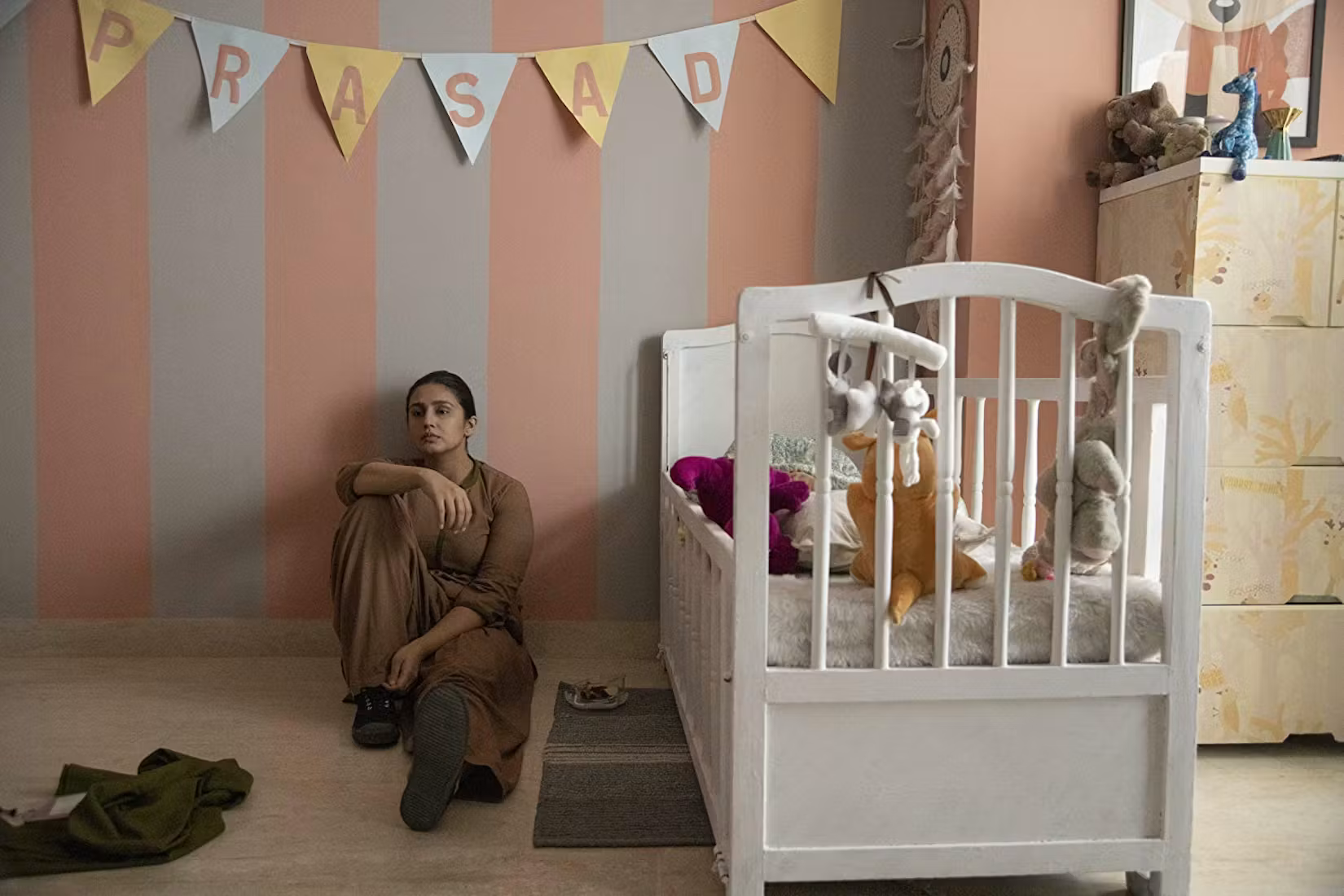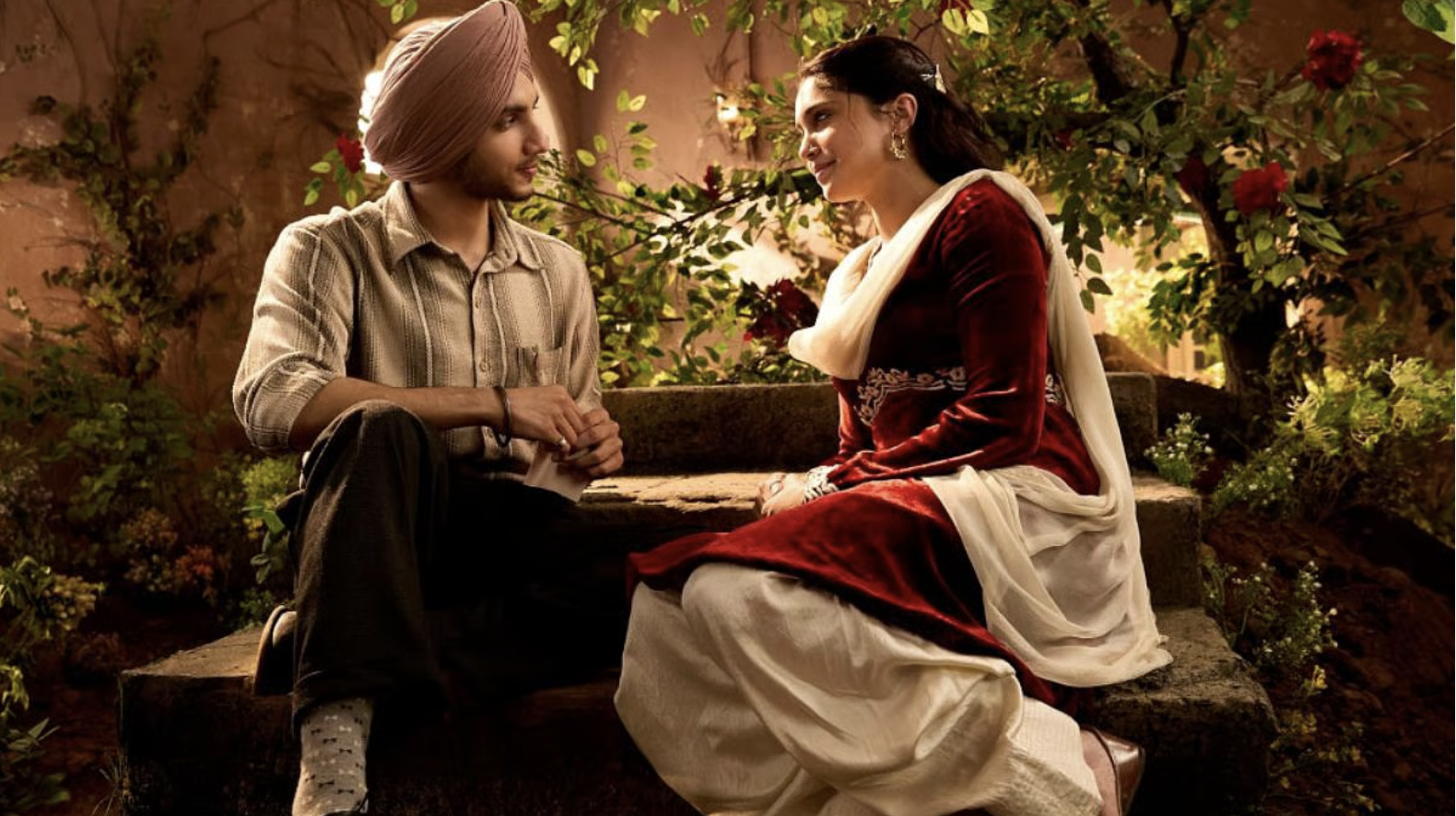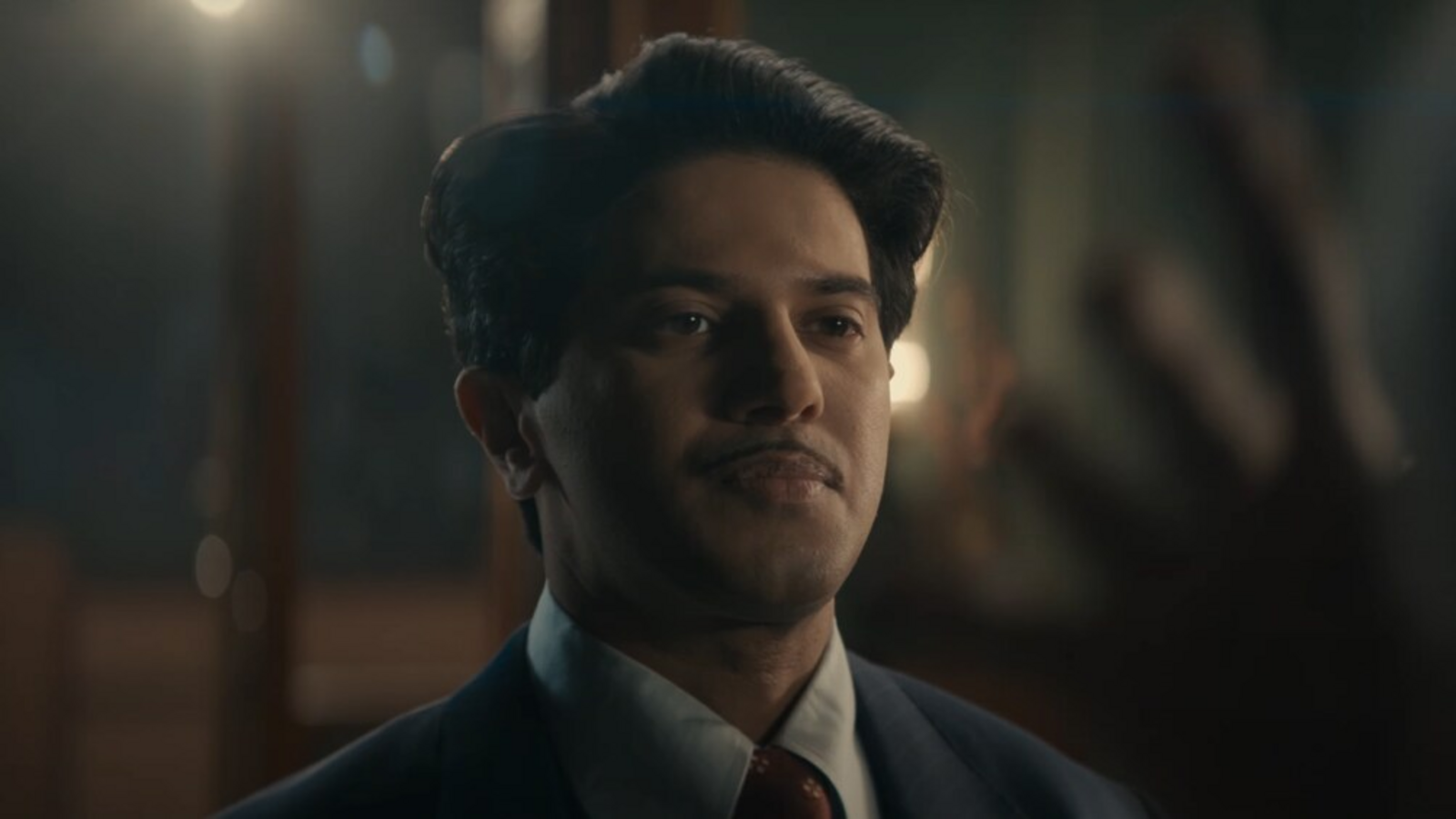
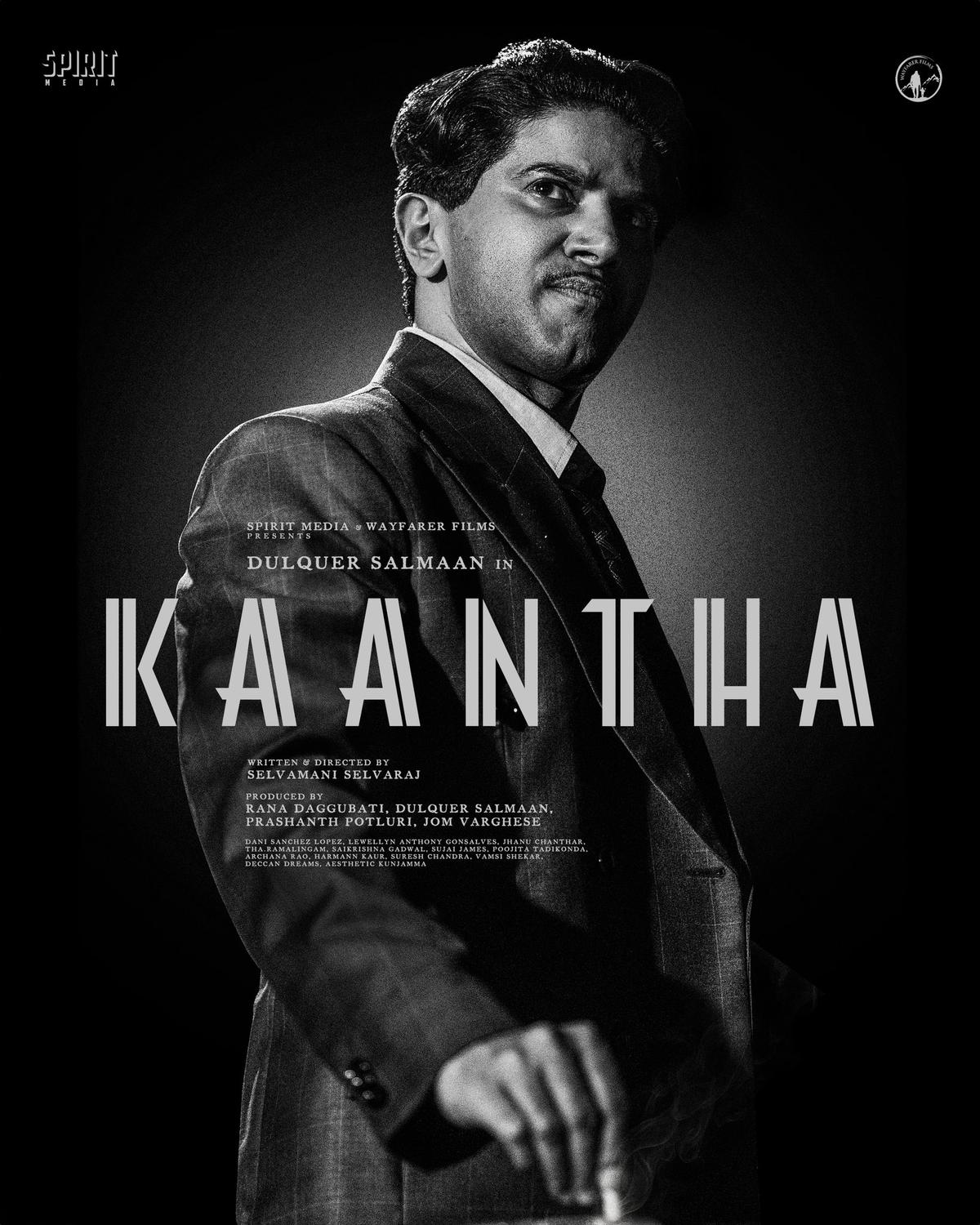
Selvamani Selvaraj’s Kaantha opens ambitiously within the period aesthetics and glamour of the 1950s Tamil film industry. A commentary of life in cinema, crime, and the effects of stardom on an actor’s ego and its frailty, the story is presented as a power play between a filmmaker and a superstar who was once his star disciple. At its heart however, is a murder mystery. Dulquer Salmaan plays ‘Nadippu Chakravarthy’ Thiruchengode Kalidasa Mahadevan (T.K Mahadevan/Mahadevan), a superstar destined towards downfall and Samuthirakani plays Ayya, an allegedly genius filmmaker whose towering ego and desire for power, especially over T.K Mahadevan, destroys himself, Mahadevan and the complex web of relationships he has created. While the duel between the two men, T.K Mahadevan and Ayya, remains the primary storyline of the film, Kumari, played by Bhagyashree Borse ends up functioning as the medium through which the men settle their ambitions once and for all. A trope that was quite oncoming yet anticlimactic.
Of agency, audience and Saantha
T.K Mahadevan is Ayya’s protege, who found and scouted him. The conflict in what was once an endearing relationship begins when Mahadevan’s rise to stardom begins to alleviate him from Ayya’s shadows to a reigning star of Tamil cinema. When their paths cross for a collaboration in Ayya’s once shelved magnum opus, Saantha, the real drama off-screen unfolds. Saantha was once already in the making with Mahadevan playing the lead role.
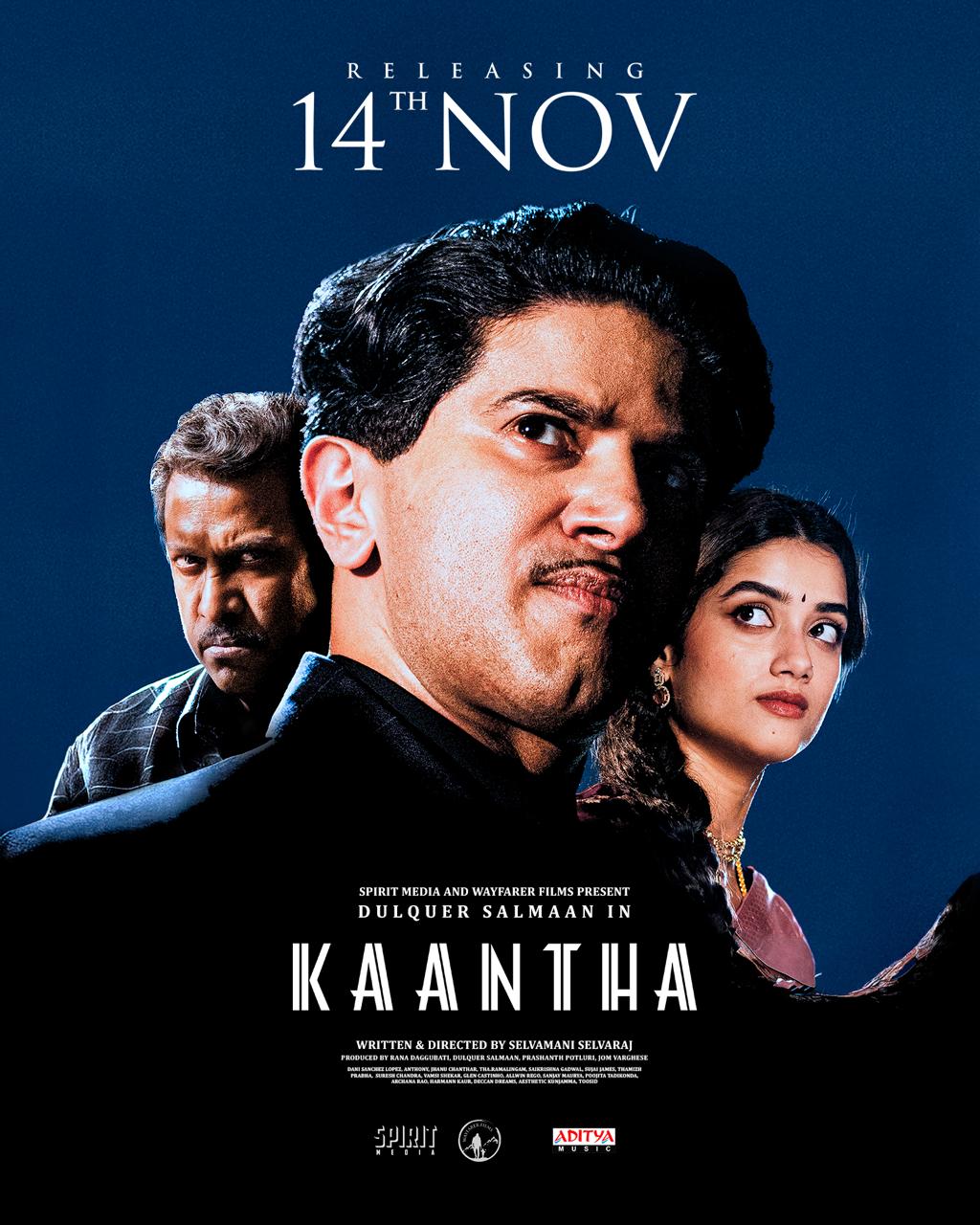
However, due to ego clashes between the director and the actor, the film was tragically shelved. Saantha, in the present day 50’s, is pitched as Tamil cinema’s first horror film with Mahadevan reprising his lead role, this time, however, alongside Kumari, a debutante and the current protege of Ayya who eventually comes in between the two men and their long-standing rivalry. Much to Ayya’s dismay, Mahadevan, now a superstar with great influence and command, interferes extensively with the limits stipulated by the script, including the title, which he changes to Kaantha.
Ayya, a purist in his filmmaking style, demonstrates a loathing towards Mahadevan’s intention to cater to the audience’s taste, to serve his fans. One such altercation has given way to an increasingly relevant and almost poetic dialogue in the film. In a shot between the two, Ayya says: ‘the audience that you speak of will not exist in 50 years, but the film will endure‘, suggesting that viewership and morality of the audience might change and tastes may dissolve but the work will remain and speak for itself.
In a shot between the two, Ayya says: ‘the audience that you speak of will not exist in 50 years, but the film will endure‘,suggesting that viewership and morality of the audience might change and tastes may dissolve but the work will remain and speak for itself.
In Kaantha as well as in Saantha, Mahadevan is portrayed as a “panivai marandha sandharpavaadhi” (ill-mannered opportunist) who is troubled by themes of “kutra unarchi” (guilt), “vetri” (success) and “garvam” (ego). It is worth mentioning at this juncture that though the makers have attempted to draw parallels between T.K Mahadevan and the character he plays in Saantha, Dulquer manages to draw a distinction between the both seamlessly.
The film aspires to depict Kumari’s agency in an otherwise subjugating environment that women in ’50s cinema, especially debutantes were thrown into, but fails in effectiveness. Kumari certainly has her moments of resistance and grit, but these moments further reduce her to a passive medium through which the two men communicate. Her resistance, too much like her person, is used as a tool to project the egos of Ayya at first and then to pacify that of Mahadevan’s.
Her small acts of autonomy might initially look like a promising trajectory for her character, but it fails to hit that mark as it was never intended to. She is forced to perform such agency to maintain the very structure that limits personal and private acts of resistance. For a viewer in 2025, when measured against the backdrop of the treatment of women in cinema, it begs the question, just how much has changed since the ’50s, both, in terms of depiction and treatment of women in cinema?
Almost Kaantha
In Kaantha, we hear so much about Ayya’s genius yet, we are left wondering what exactly is the stature of this star-filmmaker. He is shown to go to any extent to teach Mahadevan a lesson without justifying the means he deploys to achieve this result. What we end up receiving, instead, is a character, though conceptually tight, in execution, written to be a petty and egotistic man without articulating his moral underpinnings. As the story progresses, one only goes further and further away from its core and characters.
The narrative creates an inordinate disconnect between the characters and their intentions. The key emotions such as love, admiration, and guilt are only spoken of and rarely shown. By the time the two lead characters arrive at a window which poses the possibility of exploring their moral dilemma, neither are we as audience invested, nor does Rana Daggubati’s waggish character, Inspector “Phoenix” allow them to do so.
The narrative creates an inordinate disconnect between the characters and their intentions. The key emotions such as love, admiration, and guilt are only spoken of and rarely shown.
Visually, the makers have attempted to mirror the style and filters from the ’50s. Through this attempt, they also have created almost tedious visuals which remain dark, hazy and repetitive.
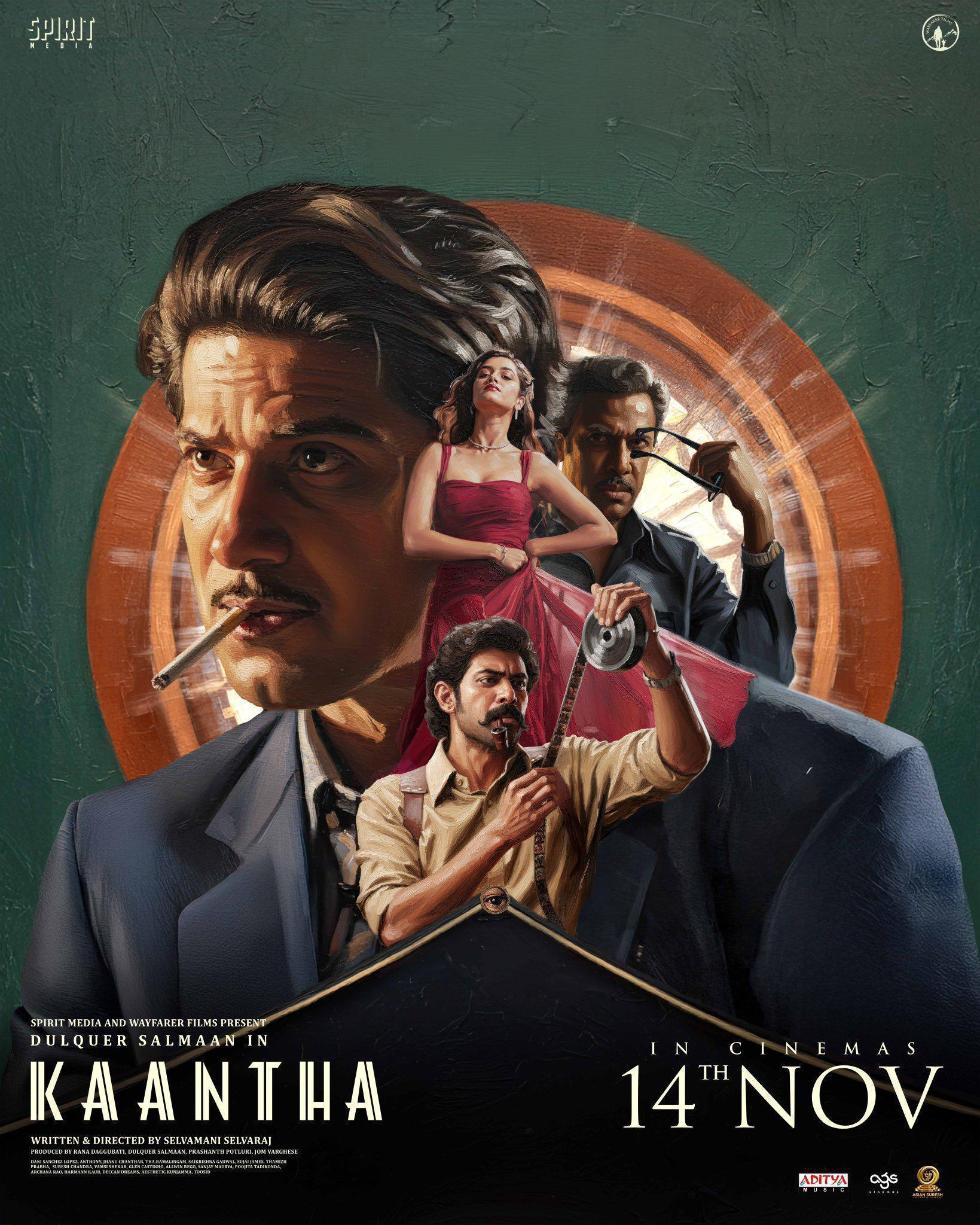
Eventually, we are reunited with the murder that was the opening shot of the film. What comes after is more than an hour of tension and drama building up only for the characters to confess to the crime so apathetically. The use of noir elements both visually and emotionally is never fully explored rendering the result a flat and mundane watch.
Parting thoughts
Dulquer dazzled the screens as Gemini Ganesan in Nag Ashwin’s Mahanati (2018) and he has once again returned to reprise the role of Mahadevan, a superstar, also set in the 1950s. Through this performance, he convinces the audience of his natural flair in playing iconic roles, albeit of a similar nature, and yet emerging through them distinctively. Dulquer’s prowess as an actor is left to shoulder the film, at times entirely. Kaantha gives us an inside look into the unforgiving world of the film industry and its implications on filmstars who are driven to the edge of self-destruction.
Perhaps what can be observed through Kaantha is its staging of the politics of visibility. We are reminded of who wields the power to control visibility and who benefits from it, whose labour is erased and whose suffering becomes a spectacle. However, it still fails to fulfil its conceptual design and initial aspirations. Kaantha promises so many possibilities in theory but in practice, injects anticlimactic execution, nipping the potential of the characters and the story in the bud.
About the author(s)

Shreenithi Annadurai is a lawyer based out of India. Her areas of interest include art as political expression and questions of representation and resistance, drawing on rights-based perspectives and feminist media practices.