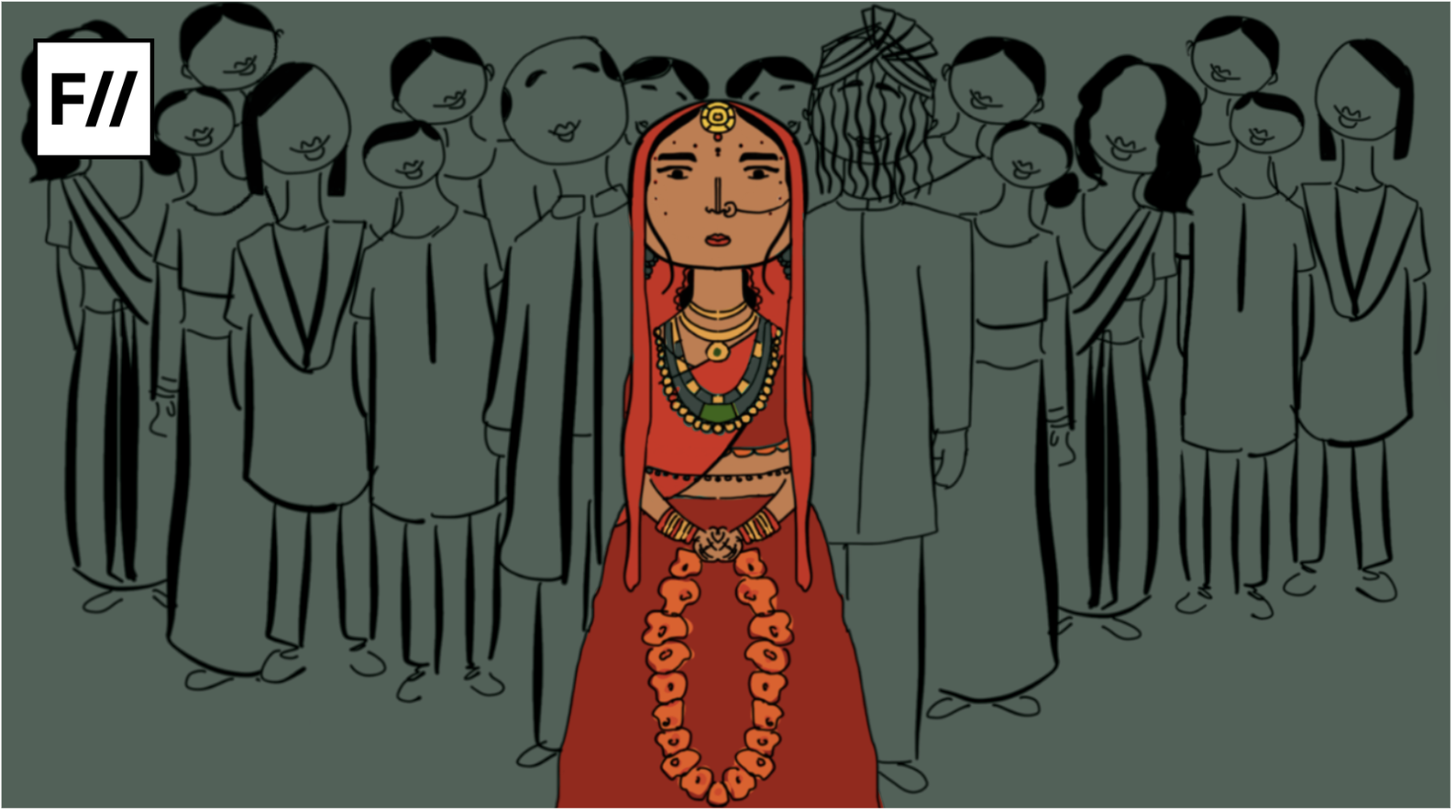
The Karnataka Freedom of Choice in Marriage and Prevention and Prohibition of Crimes in the
Name of Honour and Tradition (Eva Nammava Eva Nammava) Act, 2026, passed by the Karnataka legislature, criminalises honour-based violence. It’s aimed at preventing harassment, coercion, or threats by family or community members that hinder personal choice in marriage. The case of Manya Patil, a pregnant woman who was beaten to death by her family for her marriage to a Dalit man, prompted the government to enact the legislation.
The case of Manya Patil, a pregnant woman who was beaten to death by her family for her marriage to a Dalit man, prompted the government to enact the legislation.
The Act seeks to ensure that the constitutional promise of individual freedom, autonomy, and the right to choose one’s partner is accessible to all. This is especially important in a country like India, where honour-based violence is justified in the name of caste and patriarchal notions of familial shame and honour. Young couples who marry outside their caste often face social boycott, alienation, and harassment. Women are disproportionately impacted by such honour-based violence due to patriarchal notions of honour being associated with marriages, which results in their individual choices being given little regard. Men from marginalised communities are also at risk due to unequal power structures.

The Act acknowledges that endogamy upholds the caste system and recognises the role of intercaste marriages in overcoming casteism and reinforcing social equality. Under the Act, honour-based violence is a non-bailable offence, and it also provides for the creation of fast-track courts. The Act also requires public servants to be accountable for protecting at-risk couples, enforcing the law effectively, and investigating cases adequately. It also mandates that the government should maintain safe houses, helplines, monitoring committees, and Eva Nammava Vedikes — district-level bodies comprising officials who will assist with solemnising intercaste marriages — to ensure that couples can marry as per their wishes.
The limits of legal interventions
Honour-based violence in India is deeply entrenched in structural inequalities, patriarchal norms, endogamy, and gender constructs. Women’s freedom in terms of choosing whom to marry is dictated by notions of social and cultural hierarchies rather than individual rights. Studies indicate that endorsement of caste endogamy by Khap panchayats often buttresses oppressive social structures that facilitate instances of honour-based violence.
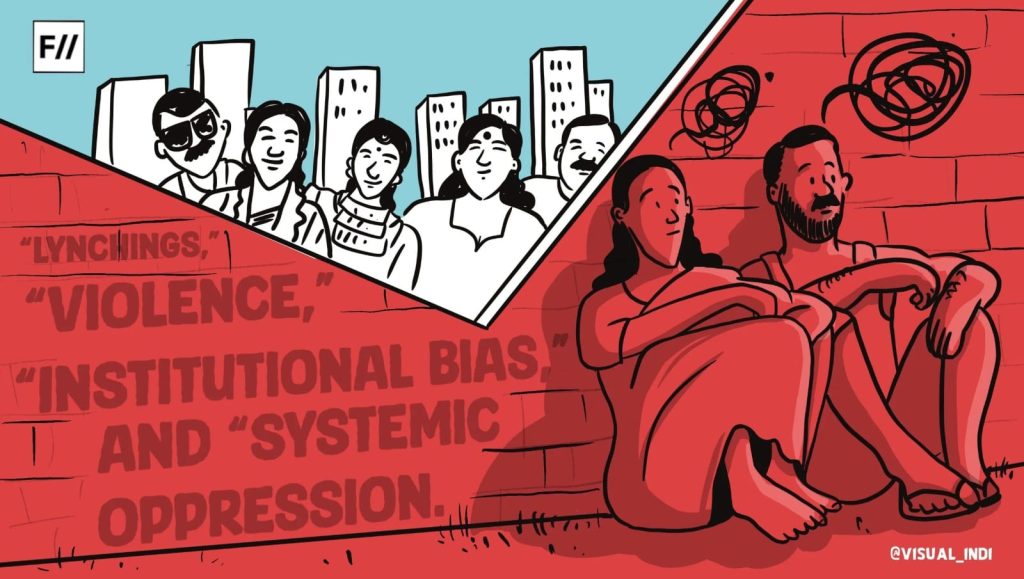
Cultural nationalism valorises caste purity and control over female sexuality. Addressing honour-based violence requires culturally sensitive, participatory interventions that actively involve women, as the law has limitations in deterring offences that find socio-cultural sanction. Karnataka’s law is oriented towards institutional responsiveness, which poses limits on feminist governance if not complemented by structural interventions. The backlash faced by the state of Kerala while facilitating women’s entry into the Sabarimala temple post judicial intervention, without socio-cultural engagement, is a notable example of such limitations.
Karnataka’s law is oriented towards institutional responsiveness, which poses limits on feminist governance if not complemented by structural interventions.
The Karnataka Act does not create a separate criminal offence to combat honour-based violence, as Indian law already punishes such violence, coercion, and harassment. But in its current form, the Act refrains from giving clear definitions of concepts such as family, tradition, honour, consent, coercion, and community, among others.
Hence, identifying cases of honour-based violence has a limited scope with such legal ambiguity. For instance, what constitutes coercion becomes difficult to prove if such coercion is in the form of psychological pressure exerted over a period of time over victims. Such ambiguities discourage reporting and create enforcement gaps.
Learnings from the United Kingdom
The efficacy of such a law can be understood through the United Kingdom’s experience of criminalising forced marriages. The case of a 17-year-old British-Pakistani girl, Shafilea Ahmed, who was murdered by her parents for resisting a forced marriage in 2003, drew considerable legal and public attention in Britain. In 2012, Ahmed’s parents were tried for murder and found guilty.
However, while the police understood the murder to be an act of honour killing, the perpetrators couldn’t be tried for honour-based violence because the United Kingdom does not have a standalone law to prosecute such crimes. Although earlier this year, a new legal definition formally clarified what constitutes ‘honour-based abuse‘, which includes forced marriages, domestic violence, and sexual harassment, among other offences.
As per government data from the United Kingdom, the majority of the victims of forced marriages and honour-based abuse in the country are women from South Asian immigrant communities. Forced marriage has been a criminal offence in the United Kingdom since 2014. The law is enforced through the Forced Marriage Unit (FMU), which provides support in cases of forced marriage, and a multi-agency model that involves police, schools, courts, and social services, with clear protocols and coordination. But the Karnataka Act does not provide for such a coordinating body or a mandatory multi-agency strategy.
In the UK, through Forced Marriage Protection Orders (FMPOs), courts can remove victims from dangerous situations by restricting contact and travel imposed by the perpetrators, allowing them to act before harm occurs. Karnataka also offers civil protections through injunctions and protection orders. However, such injunctions are civil court orders meant to prevent interference in intercaste marriages through police protection, whereas FMPOs are specialised legal orders which can confiscate passports and restrict movement, thereby ensuring robust and integrated enforcement.
As the Karnataka Act establishes fast-track courts, the state could potentially mandate these courts to issue FMPO-style protection orders to prevent honour-based violence. However, whether this will be the case remains to be seen. The Karnataka law also mandates safe houses for rehabilitation, but monitoring the effectiveness of such shelters is a key concern. Couples facing threats from families or communities may also be reluctant to approach state-run safe houses due to fear of being identified and having to confront stigma. Further, Eva Nammava Vedikes may face limitations in solemnising intercaste marriages as well, as its effectiveness depends heavily on local officials who themselves are subject to prevailing socio-cultural bias.
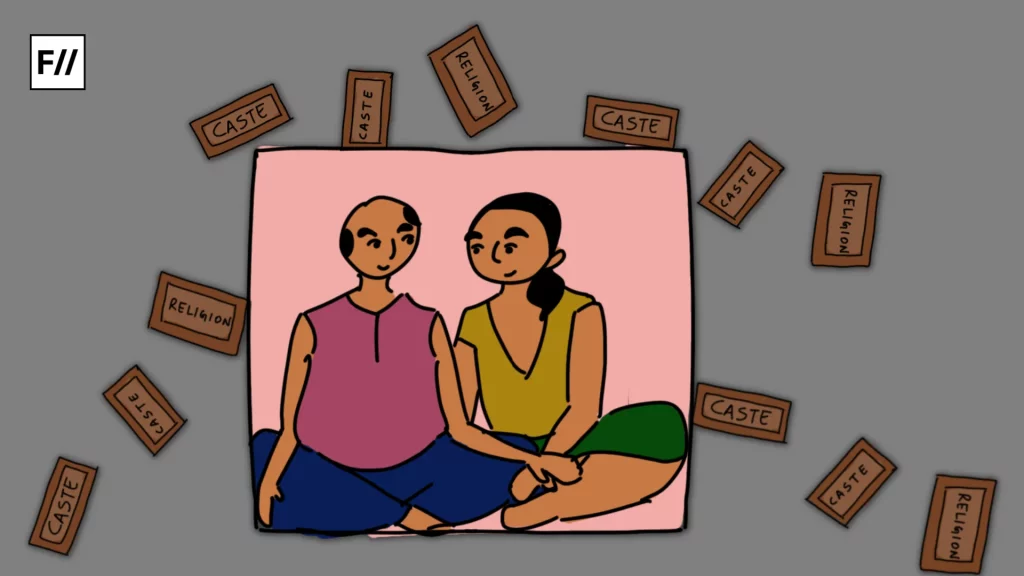
However, the Karnataka Act also has another glaring limitation. It focuses on heterosexual intercaste marriages only, and such selective protection inadvertently indicates which kinds of relationships are legitimate by reinforcing social hierarchies around acceptable forms of love.
The Karnataka Act also has another glaring limitation. It focuses on heterosexual intercaste marriages only, and such selective protection inadvertently indicates which kinds of relationships are legitimate by reinforcing social hierarchies around acceptable forms of love.
The Karnataka law must clarify definitions of concepts through amendments to prevent inconsistent interpretation. The law must mandate emergency protection orders to restrict perpetrators and prevent honour-based violence. Helplines, safe houses, and counselling must be facilitated through coordinated actions at schools and colleges with the help of non-governmental organisations and other stakeholders. A multi-agency framework must be instituted for cultural sensitisation, timely reporting, and effective enforcement. Ultimately, for the law to be truly beneficial to all, it should look to broaden its definition of intercaste marriages beyond heterosexual couples.
About the author(s)

Dr Parvathy Poornima teaches at St Joseph’s University, Bengaluru. Her research areas includediaspora studies and the experiences of South Asians in the United Kingdom. She holds a PhD from JNU.She’s a full-time mom who navigates her career and passion with perseverance.