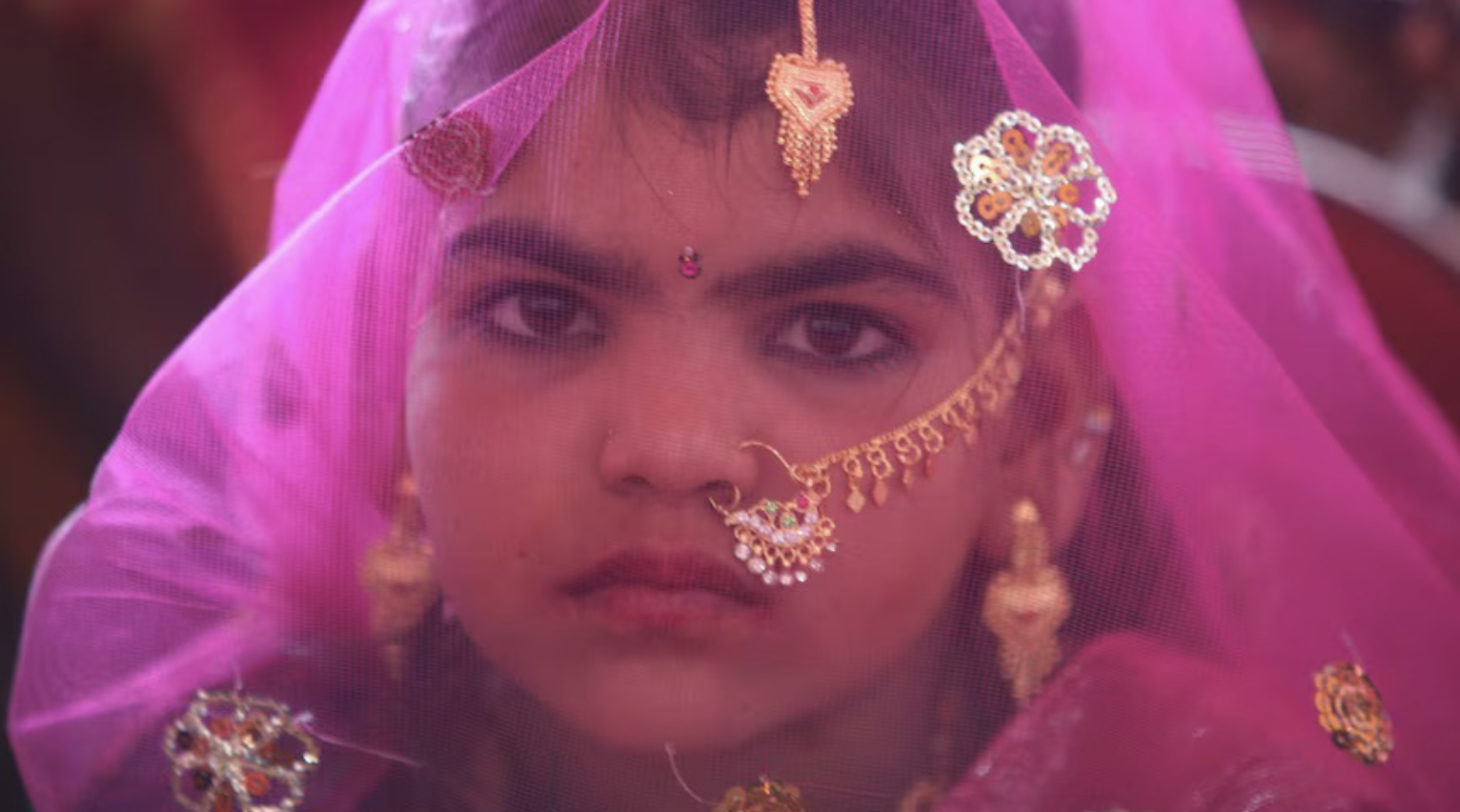
In December 2025, the Ministry of Women and Child Development marked the first anniversary of the Bal Vivah Mukt Bharat mission with a 100‑day awareness campaign to push for a ‘Child Marriage Free Bharat’. According to the ministry, 38,000 Child Marriage Prohibition Officers (CMPOs) have been linked to a centralised portal in an effort to curb the practice. Further, around 40 lakh online pledges were collected, and over 11.81 crore people were reached through the campaign. The goal was to make child marriage ‘almost non‑existent’.
In Madhya Pradesh, child marriage cases rose from 366 in 2020 to 538 in 2025, with roughly two child marriages taking place per day. In Maharashtra, authorities prevented 13 child marriages on Akshaya Tritiya alone.
Yet in Madhya Pradesh, child marriage cases rose from 366 in 2020 to 538 in 2025, with roughly two child marriages taking place per day. In Maharashtra, authorities prevented 13 child marriages on Akshaya Tritiya alone, a day considered ‘auspicious’ for weddings, across districts such as Ahilyanagar, Yavatmal, and others. In April 2026, Frontline profiled a woman named Khushbu from Rajasthan, who, in her 20s, filed a petition under the Prohibition of Child Marriage Act, 2006, to annul her marriage that had been forced on her when she was 12 years old.
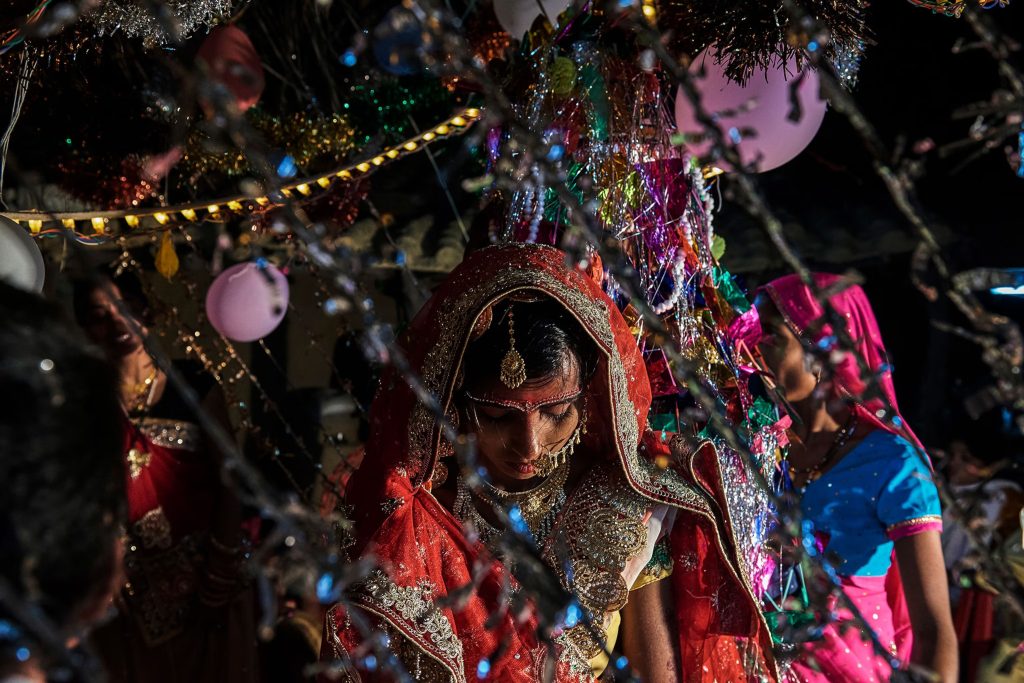
Given these realities, can we then merely ‘pledge away’ child marriage without on‑ground support for girls?
The stubborn grip of practice
The Bal Vivah Mukt Bharat campaign took a three-pronged approach. First, Gram Panchayats and municipal wards were asked to pass ‘child‑marriage‑free’ resolutions; second, religious leaders and marriage‑service providers were engaged; third, schools and colleges were mobilised for awareness drives. The campaign, therefore, leaned heavily on centralised platforms for measurable indicators.
But the field shows how fragile the situation really is. The documented jump in child marriage cases in Madhya Pradesh, even in districts where officials say they are on high alert around festivals like Akshaya Tritiya, indicates how entrenched the practice is in the state. In Maharashtra’s Nanded district, authorities say they have prevented 11 child marriages since April 19, 2026, using the 1098 Childline helpline and special monitoring committees during Akshaya Tritiya. These efforts reveal that the ‘spikes’ in child marriages are predictable and recurrent.
Official slogans like ‘Beti Bachao, Beti Padhao (Save the girl, educate the girl)‘ uneasily co-exist with the ground reality of child marriages in many regions where Akshaya Tritiya or Dev Uthani Ekadashi are treated as ideal ‘auspicious’ dates for mass weddings, including underage ones.
Official slogans like ‘Beti Bachao, Beti Padhao (Save the girl, educate the girl)‘ uneasily co-exist with the ground reality of child marriages in many regions where Akshaya Tritiya or Dev Uthani Ekadashi are treated as ideal ‘auspicious’ dates for mass weddings, including underage ones.
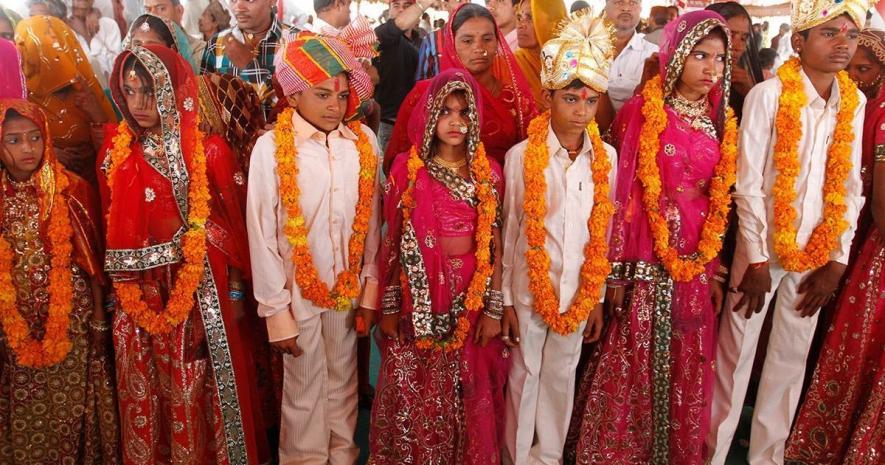
In parts of Maharashtra and Rajasthan, Akshaya Tritiya has become a de facto mass wedding festival, with dozens of families seeing the day as a once‑in‑a‑year window for marriages. In Madhya Pradesh and Haryana, police and Women and Child Development (WCD) officials now monitor ‘planned’ weddings on Dev Uthani Ekadashi and act only if a child marriage is suspected, which means that the law is being treated as a last‑minute safety net.
The ‘rational’ choice of early marriage
The Bal Vivah Mukt Bharat campaign emphasises pledges and public commitments, but does not confront the economic logic behind child marriages conducted at these mass wedding events. The idea that mass weddings save money on dowry and logistics prevails and, combined with social pressure, ensures that daughters’ futures are sacrificed through one ritualised ‘investment’.
The idea that mass weddings save money on dowry and logistics prevails and, combined with social pressure, ensures that daughters’ futures are sacrificed through one ritualised ‘investment’.
Data from the National Family Health Survey (NFHS-5) shows that the percentage of women aged 20–24 who were married before turning 18 fell from 47.4 per cent in 2005–06 to 23.3 per cent in 2019–21. However, between 2015–16 and 2019–21, the drop was only about 3.5 percentage points, as the practice of child marriage solidified in certain pockets. States such as West Bengal, Bihar, and Tripura still report child marriage rates above the national average, and as per an UNICEF report, over 40 per cent of young women were married before turning 18 in Bihar and West Bengal.
Poverty and caste‑class dynamics come into play here as well. NFHS‑5 data shows that around 40 per cent of girls from the poorest wealth quintile were married before 18, compared with only about 8 per cent in the richest quintile. This happens mainly because for many low‑income families, early marriage becomes a ‘rational’ choice that transfers the responsibility of raising a girl child to another family, reduces dowry pressure, and ‘secures’ a girl’s future before she is seen as ‘spoiled’ or ‘too independent’.
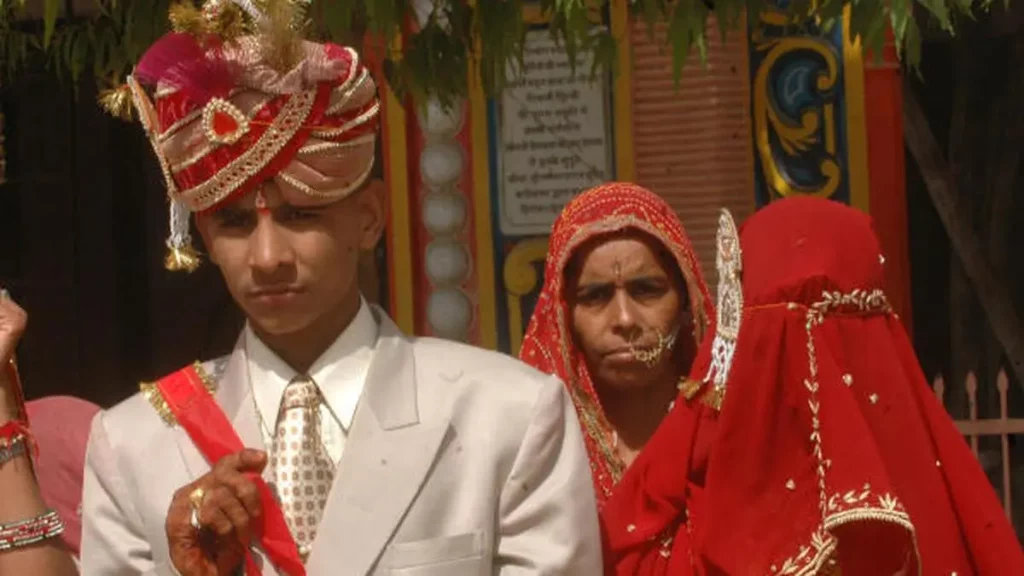
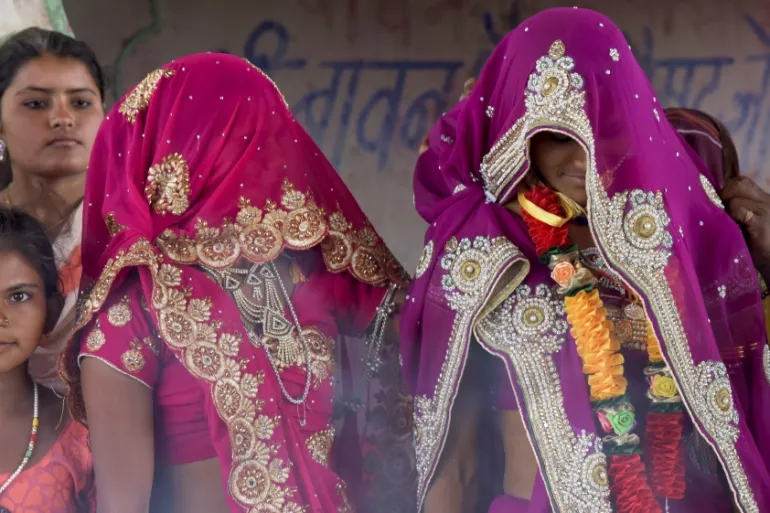
Image Credit: Sandeep Saxena/Frontline
At the same time, girls’ education is often treated as a financial burden. The Bal Vivah Mukt Bharat campaign, in its aforementioned press release, hails increases in school enrolment, INR 1,827 crore in scholarships for girls, and the fact that women now make up about 43 per cent of India’s STEM workforce; however, these statistics rarely change the lived realities of girls in many rural and semi‑rural communities.
The hidden rise of child marriages
The Bal Vivah Mukt Bharat campaign hardly considers the everyday feminist praxis on the ground. Change is not only about pledge‑driven awareness but also about creating spaces where girls can build friendships and futures that make early marriage feel like a loss, and ultimately, discourage it.
Change is not only about pledge‑driven awareness but also about creating spaces where girls can build friendships and futures that make early marriage feel like a loss, and ultimately, discourage it.
The BBC’s coverage of girls’ football programmes in Rajasthan offers one such example. In the case of two sisters, one of whom is fourteen, the mother initially agreed to a marriage proposal but later refused after seeing how training through NGOs like Football for Freedom elevated the girls’ confidence and social standing. The girls’ daily practice on the field helped them get the social capital they needed to make it harder for the family to treat them as passive property.
Khushbu’s story, reported by Frontline, helps expose the long‑term cost of child marriage. She describes herself as ‘sold’ like property, with no say over her own future. Her case shows that the stigma and emotional labour of reclaiming one’s life are rarely acknowledged or included in government interventions aimed at preventing child marriage, which often prefer to only speak of prevention.
The Bal Vivah Mukt Bharat campaign’s current target is to reduce child marriage rates to below 5 per cent by 2029. According to a report by Just Rights for Children, child marriage has declined by 69 per cent among girls and 72 per cent among boys in recent years. However, until the campaign addresses patriarchy and its impacts on who controls land, dowry, education budgets, and migration decisions for girls, it might stop the odd wedding on Akshaya Tritiya, but it won’t dismantle the normalisation of early and child marriage on the ground.
About the author(s)

Sohini (they/she) hails from Calcutta and loves to explore and write about all things society, culture, gender. With a background in journalism and English literature - they have finally been able to make having heartfelt conversations a huge part of their life outside of boxes.