In April 2026, workers from the Bharatiya Janata Party (BJP) went door to door in West Bengal and promised every woman receiving INR 1,500 under former Chief Minister Mamata Banerjee’s Lakshmir Bhandar scheme that they would now receive double that amount. What they conspicuously left out was the fact that there would be paperwork involved, so much of it.
The Lakshmir Bhandar scheme was introduced by the Trinamool Congress (TMC) in 2021. Its application form was a single-page document that asked only for a woman’s name, address, marital status, Aadhaar card number, bank details, and Swasthya Saathi card number (the West Bengal government’s health insurance card), along with a self-declaration stating that the applicant was a resident of West Bengal and did not earn a government salary. Additionally, applicants had to attach a passport-sized photograph and a caste certificate, if applicable.
When the BJP won the West Bengal assembly elections in May 2026, the Lakshmir Bhandar scheme was rebranded as the Annapurna Yojana, which promised INR 3,000 to eligible beneficiaries. The scheme’s application form was released on May 27, 2026. But unlike the Lakshmir Bhandar form, this one was 12 pages long.
The state’s intention was to provide financial assistance to eligible women, and this form contained all the information needed to legally process their applications. However, when the BJP won the West Bengal assembly elections in May 2026, the Lakshmir Bhandar scheme was rebranded as the Annapurna Yojana, which promised INR 3,000 to eligible beneficiaries. The scheme’s application form was released on May 27, 2026. But unlike the Lakshmir Bhandar form, this one was 12 pages long.
What is the Annapurna Yojana form asking for?
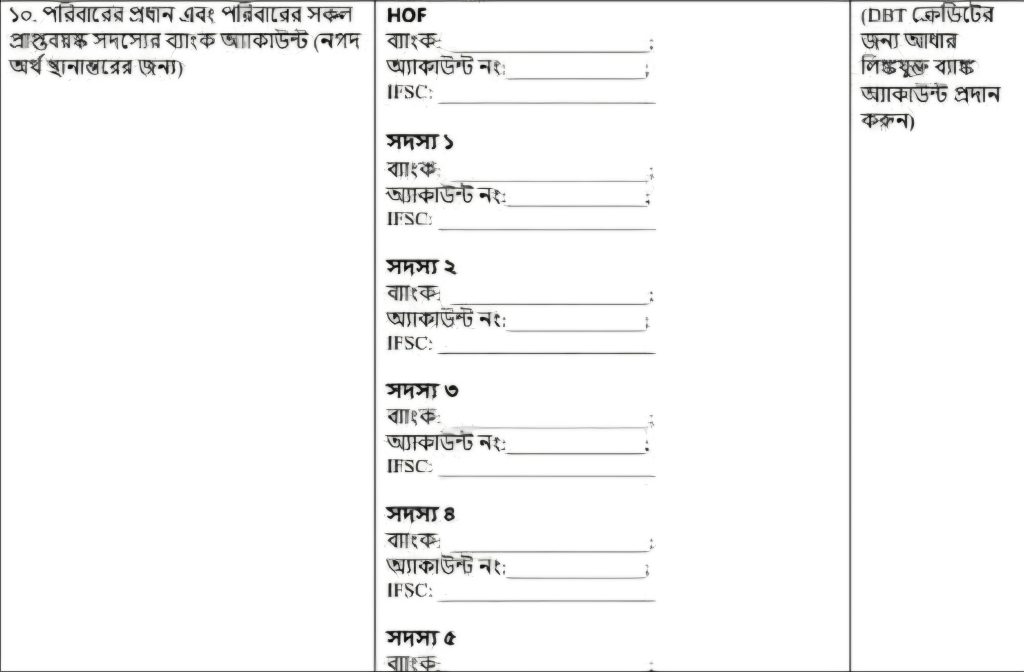
The form for the Annapurna scheme is titled the ‘Annapurna Yojana Family Level Data Collection Form’. It not only asks for details pertaining to the applicant but also seeks information about every single member of her household. The sheer amount of information the government requires from those seeking to benefit from the scheme is perplexing, and it risks leaving the most vulnerable out of the scheme because women who are not educated may not be able to fill out such an elaborate form themselves.
Here’s a simple breakdown of what the BJP government is asking for:
Identity: Full name, date of birth, gender, Aadhar card number, voter ID number, assembly constituency, and electoral roll part number. All of this has to be added, not just for the applicant, but for every adult family member in her household.
Assets: The form seeks information on whether the applicant’s home consists of three or more pucca rooms. Additionally, the exact size of any landholdings, down to the decimal point, must be verified against the Record of Rights. It also requires details of any non-commercial motorised four-wheeler owned by any member of the household, including the model name and vehicle registration number.
Income/profession: The form also requires details of the household’s annual income, the sector of employment, and the educational qualifications of every adult family member. In addition, applicants must provide the PAN details of all adults and disclose whether any family member pays income tax or professional tax, or is registered under the GST system.

Political status: Applicants must disclose whether any family member is or has been an MP, MLA, or Panchayat representative. The form also asks whether any household member receives a government pension or holds a teaching or non-teaching post in a government-aided institution.
Welfare status: The form requires applicants to disclose details of all health insurance coverage within the household, including the policy type, premium amount, and sum assured for every family member.
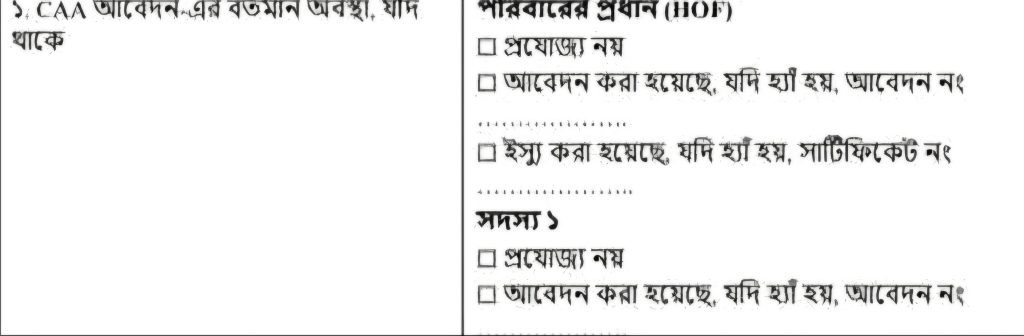
Additionally, the form asks whether the applicant has asserted citizenship under the Citizenship (Amendment) Act, 2019. However, the question remains: if the purpose of the Annapurna Yojana is to deposit money into poor women’s bank accounts, why is this information relevant?
Data breach and privacy concerns
There is a principle in data governance known as data minimisation, which holds that the personal information collected for a given purpose should be limited to the minimum necessary to achieve the stated objective. The Annapurna Bhandar form fails this test in almost every respect.
There is a principle in data governance known as data minimisation, which holds that the personal information collected for a given purpose should be limited to the minimum necessary to achieve the stated objective. The Annapurna Bhandar form fails this test in almost every respect.
Why does the government need to know whether a woman’s son owns a vehicle, and why should that determine whether she qualifies for the promised INR 3,000? Or does it matter if her daughter-in-law has private health insurance, or how much she pays in premiums? And why does the government need the PAN details of every adult when their income tax status can already be verified through government databases?
In 2023, India passed the Digital Personal Data Protection Act, which was the country’s first comprehensive data law. It mandates that such data can only be collected when the stated purpose is logical. But the Act also has an exemption that is reserved solely for the government: its citizen-side protections will not come into effect until mid-2027. And this gives the government the freedom to collect as much data as possible in the meantime, because the public doesn’t have the right to contest it. But for women who don’t wish to disclose much information about their already vulnerable position in society, this form is a wall. And an insurmountable one at that.
The BJP government justifies the new form by claiming that 30 lakh Lakhshmir Bhandar beneficiaries included deceased women or non-citizens. Now, only women whose names appeared on the electoral rolls after the Special Intensive Revision (SIR) in Bengal will be eligible for the Annapurna Yojana. In late 2025, several thousand women were removed from the Bengal electoral rolls. Some of them were in informal marriages, had their names misspelt, or shared addresses with other people. These are precisely the people that a welfare scheme of this sort should protect, but this 12-page form will make sure to exclude them categorically.
What should a welfare form ideally look like, then?
If a scheme is designed to transfer money to economically and socially vulnerable women, it only needs to know four things: (a) Is the applicant a woman? (b) Is she a resident of West Bengal? (c) Is she a member of a household that does not receive a government salary? (d) What are her bank account details?
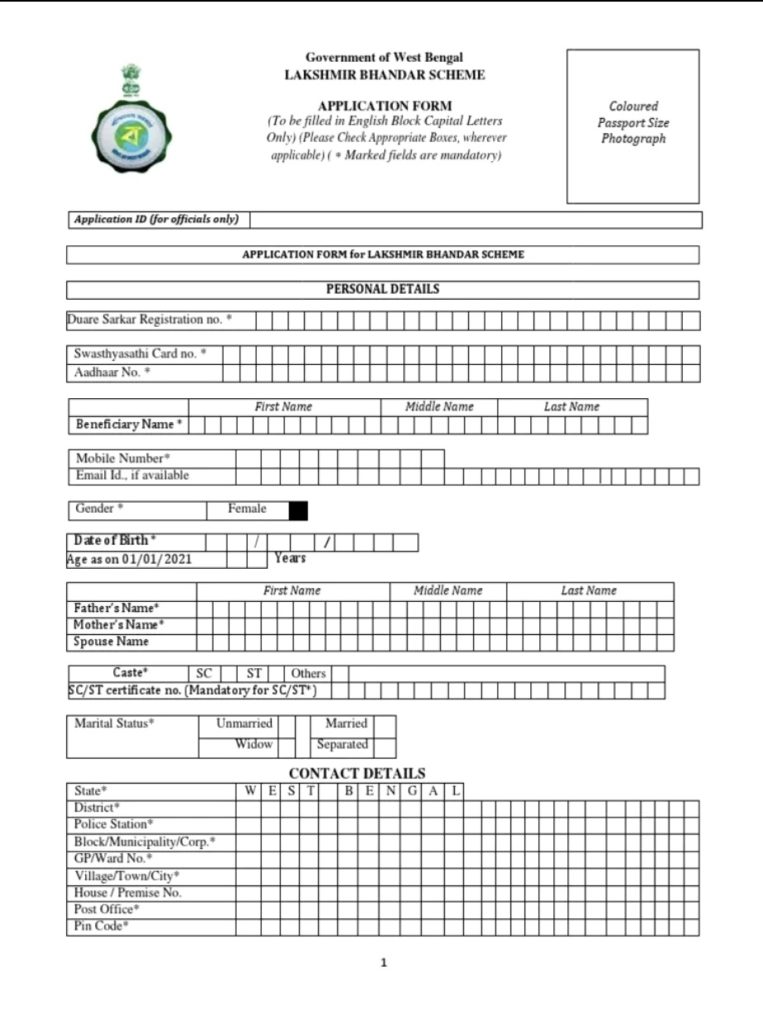
Despite its shortcomings, that is exactly what the TMC government asked for in the Lakshmir Bhandar application form. But the Annapurna Bhandar form feels like an immigration check disguised as data collection. This welfare form, therefore, focuses far more on identifying whom to exclude than on determining who should benefit from it.
About the author(s)

Sohini (they/she) hails from Calcutta and loves to explore and write about all things society, culture, gender. With a background in journalism and English literature - they have finally been able to make having heartfelt conversations a huge part of their life outside of boxes.