Apologies that, despite the title, this story will have to start with a man. Anthony Bourdain was the reason I travelled to Vietnam. To millions like me, he is the internet’s favourite posthumous traveller, chef, TV host or accidental philosopher. And perhaps he will be the coolest political eater there ever was. In one of his earliest grainy old episodes of No Reservations, he described Vietnam as his happy fix, sweating at an alien street stall on a red plastic stool with an unfamiliar bowl of soup & noodles. Tony understood the weight of being a self-confronting American in a country that America wrecked over 20 years of war. He used his voice to eat and tell how deliciously Vietnam had endured to feed itself.
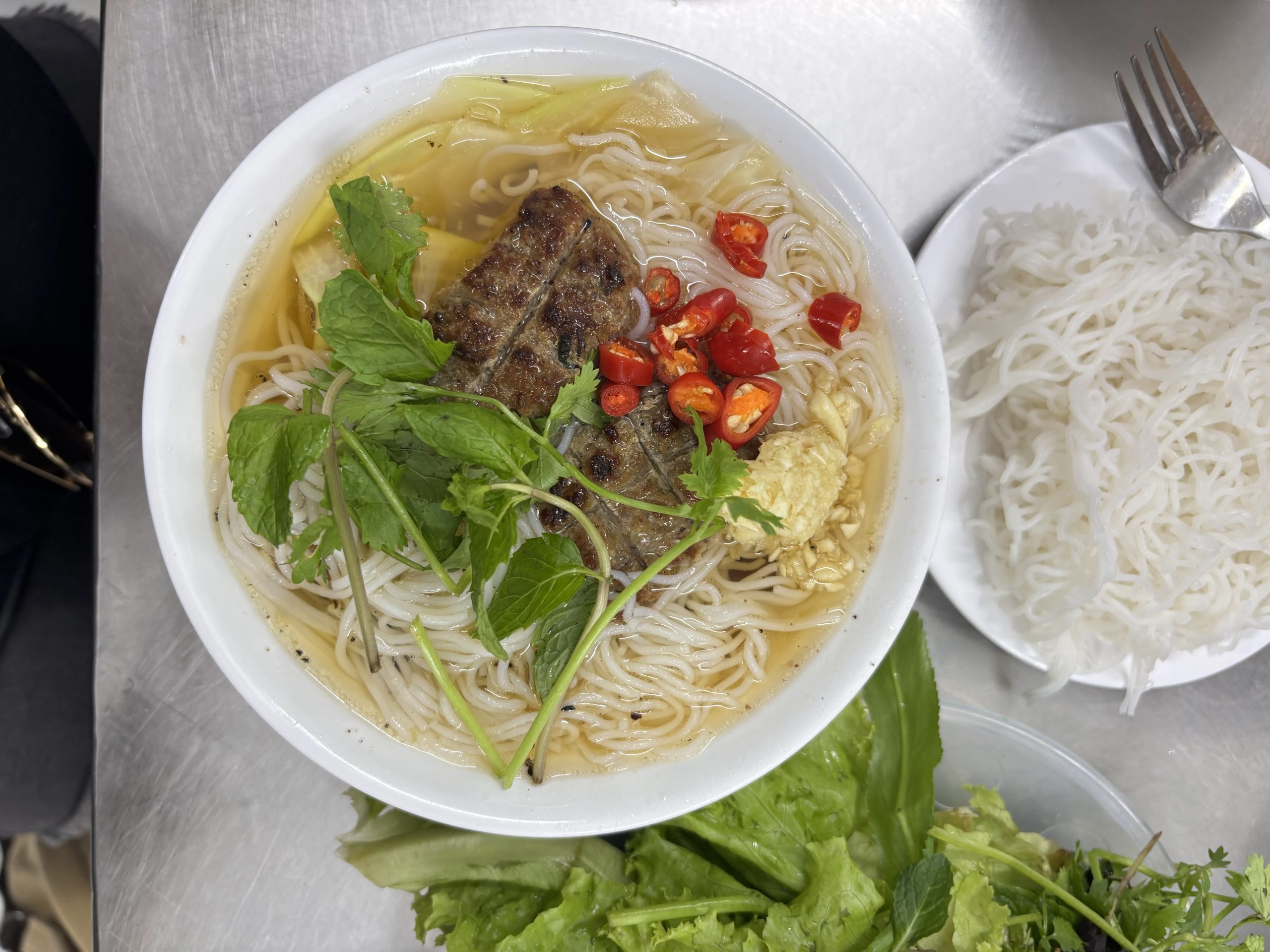
Then he got Obama in on the conversation. There was this famous episode where these two men, the US President and a world-traveller, both over 6ft, hunched humbly over a bowl of bún chả, on a $6 date. They discuss everything, from the political climate to parenting, and between bites, Anthony asks, “As the father of a young girl, is it all going to be OK?“
That image did something to me. So there I was, in Vietnam.
And, the first thing I did was lose my passport!
No, this was not a cinematic misadventure like an Eat Pray Love sort of a breakdown. I lost my passport the way tourists lose important things, via too much beer before boarding. So at the reception desk of my hotel in Hanoi, I had the sickening realisation that my nationality was now but a concept. This is where I met Ha.
The first woman to feed me in Hanoi and other portraits
Ha introduced herself to us first as the chief caretaker, and then kept on re-introducing herself throughout the entire trip as a bartender, bar manager, restaurant guide, mother and a dear friend.
She was stocky, bob-haired, wore only black polo shirts and answered with an over-animated “OKAY!” to everything. I realised that “OKAY!” was the full extent of her English, and I was convinced that there was no way she could help me over this language barrier. But within minutes, she was on a call with the airline in aggressive Vietnamese, as if she could coerce them into handing out national-security-level information. My passport, which I had left in the seat pocket of the plane like a gifted sloth, was recovered within six hours. SIX!
To celebrate that night, Ha invited us over to an underground pub she ran after hours. The criminally bright neon board was the only suspicious sign of its possibly unlicensed existence in a tiny alleyway.
Ha offered us speciality cocktails and teeny peeled oranges to start off with. We spoke through Google Translate. She heard about our excursions with childlike wonder. The pub eventually filled with backpackers, locals, smoke, and beer bottles sweating onto tiny tables.
At dawn, Ha waved us off with the same enthusiastic “Okay”.
This became our ritual to end every over-intinerarised day in Hanoi. Beers and bar food that ranged from peeled oranges, to fish-flavoured puffed rice, to chicken feet, to godzillian bowls of phở when our bodies would be sore with summer excursions. The life of Ha unfolded little by little in that small refuge in the chaotic city. tables. At 2 am, she would sit outside with her girlfriends smoking beside parked scooters while the alley slept. At 4 am, she would disappear behind the billing counter and sleep for exactly 20 mins before resuming work, like this was a hobby she no longer had the time for.
The image Western tourists often receive of Vietnamese women — graceful, done and delicate — collapses quickly once you spend actual time there. The women I met felt less decorative and more infrastructural.
That energy exists in the food, too.
Sorority and scarcity as the culinary philosophy
The word salad the world often uses to describe Vietnamese cuisine is: fresh, balanced, vibrant, herbaceous and more besides. This might be accurate, but not the whole of it. The food tastes the way history has constructed it that way; to become brilliant at making very little feel plenty.
Let’s start with phở, pronounced by some like a yoga position and regarded by many as the mother supreme of soups. The broth originated during the French rule, where the slaughter of cattle shot more heavily than ever recorded in history to satiate the consumption of the colonisers. Leftovers from the colonial appetites; bones and undesirable scraps of meat with hours of simmering to make it appetising, were mobilised by the Vietnamese to form the foundation of phở. Onion charred black over open flame. Ginger blistered. Star anise. Cinnamon. Fish sauce. Full herbs for the pop. Those were added later, but would you still call it a soup?
Generations learned extraction as survival tactic. Make use of everything possible and waste nothing. Bún Bò Huế (Spicy Beef Noodle Soup), Hủ Tiếu (Pork and Seafood Noodle Soup), Phở Gà (Chicken Noodle Soup) are all variations of this philosophy.
Next is cơm tấm, the Vietnamese cousin of dal chawal. The name translates to “broken rice” and is an exposé of exactly where it came from. Around the 1930s, Vietnamese farmers who grew the much-prized long-grain rice were largely starved of its consumption because it was exported across French Indochina. The same farmers swept broken fragments off the floor, washed them again and again, then boiled them with dried fish and fermented shrimp paste. The “damaged” rice turned out soft, aromatic, with a nutty undertone—perfect fuel for long days in the fields. When street stalls sprang up in the 1950s and ’70s to feed a growing city with quick, filling meals, women improvised on the dish, adding fried eggs and sizzling pork on top. Ask a local today what a Saigonese home tastes like, and the answer is almost inevitable: cơm tấm at sunrise.
On the street, the rhythm is hypnotic: the clang of spoons, the hiss of grills, the vendor’s gentle shout—”Một dĩa sườn trứng bì nha em ơi!” (“One pork-egg-skin combo here!”)
Even egg coffee is actually an invention of war shortages. That small, decadent cup of custard-y caffeine came into existence because milk was difficult to obtain in Hanoi. Yolks replaced dairy. That’s the history that has influenced the influencer.
And of course, there’s bánh mì. The world considers it the greatest sandwich. The French brought baguettes, pâté and terrines to Vietnam. Vietnam looked at those ingredients, shrugged, and proceeded to make a sandwich so good that nobody remembers who brought what anymore. A proper bánh mì thit is loaded with pork in more forms than seems strictly necessary—belly, floss, head cheese—along with pâté, mayonnaise, pickles, chilli and herbs. It shouldn’t work. It works spectacularly.
You know, it’s like the kind of food that’s just a part of daily life, not something fancy or expensive. Like how a hot dog is a staple in New York, or a vada pav is in Mumbai. Not just because it’s lip-smacking, but it’s cheap and economical for the working class who never had the privilege to eat with a seat at the table.
French colonialism only extracted from Vietnam for decades in terms of rice, labour, rubber, resources and a life of dignity. Then came the Japanese occupation during World War II and a famine so catastrophic that millions died. The American War and its bombing campaigns flattened villages till many disappeared. Supply chains collapsed. Men fought, died, vanished.
Women kept daily life functioning. And to taste Vietnam is to read these margins and centre at once.
During and after the war years, women dominated huge parts of Vietnam’s informal economy. Markets, street vending, food distribution, and mobile trading routes. Formal systems failed often enough that survival shifted into unofficial hands. Mostly female ones.
Vietnamese street food developed partly through mobility. Also, because the women who had to work could not sit around to serve a hot piping meal to the men.
The deeper I travelled into Vietnam, the more obvious something became: everybody eats outside.
The great social equaliser is the stool on the streets
Food is attached to labour, and dining has not fully detached itself from the people doing the work. You see people chopping herbs, hauling crates, crouched over broth at six in the morning.
People crouch shoulder-to-shoulder on tiny stools, sweating through soup together; office workers, fanning grandparents, hustling Grab drivers, merrily jobless teenagers, all together. It gives the streets a strange democratic feeling. Nobody looks elevated while aggressively slurping noodles under fluorescent lighting.
The stool democratises everyone slightly.
And that matters more than it sounds, especially if you look at it as an Indian woman.
I had long normalised negotiating my place in public spaces. Mothers, grandmothers and aunties would cook in closed chambers of the kitchen. But it’s men who have been strangely allowed to occupy the visible architecture of public eating. A mother can cook and eat after the family does at 11pm but God forbid if you see a woman outside running a tea stall at midnight. Late-night shacks, roadside stalls, tapris, dhabas, become male territory after hours.
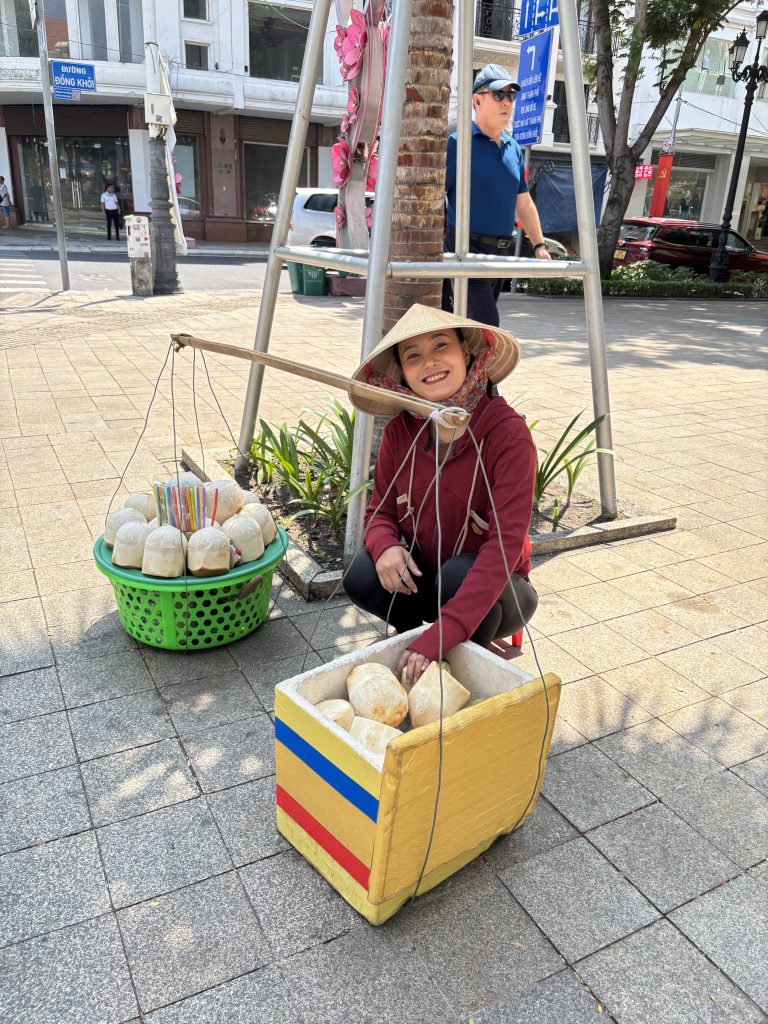
Vietnam felt different.
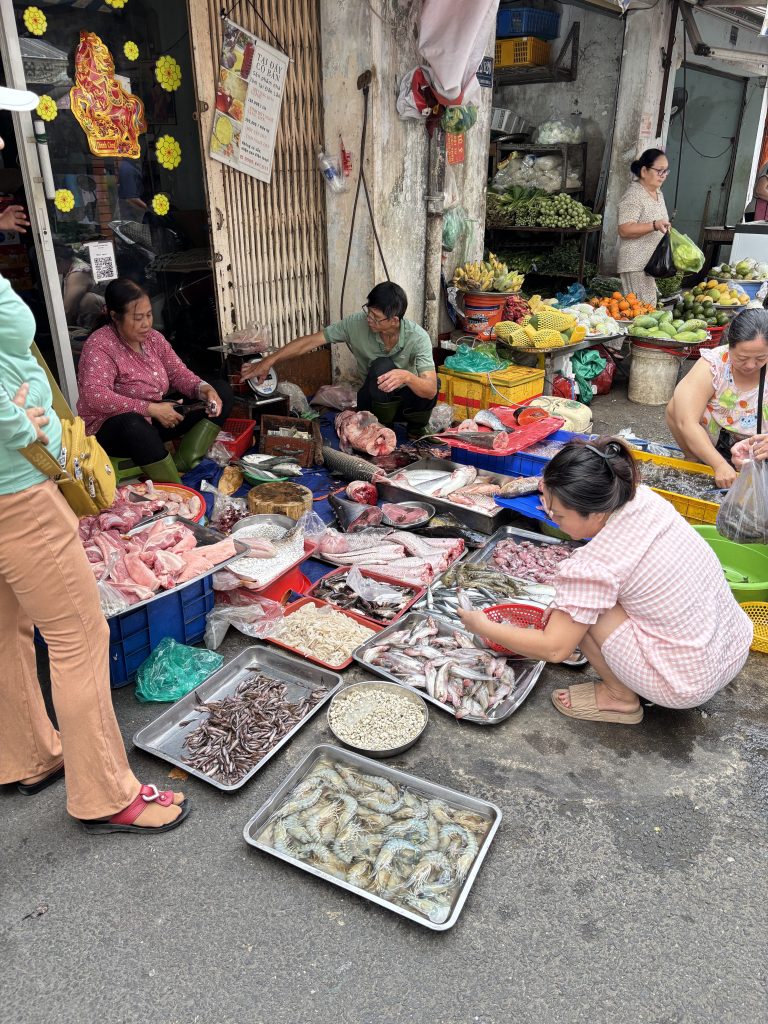
Women occupied the streets with an ease I kept noticing because I am not used to it. They sold fruit. Ran bars. Managed food stalls. Smoked openly. Yelled across the street. Negotiated prices. Sat outside late into the night with their legs stretched out as the city belonged to them, too.
One afternoon in Ho Chi Minh City, a woman sitting at her food stall, outside our stay, looked me up and down in a summer dress and shouted at me, “So pretty!” I knew that neckline would have garnered not-so-polite comments, especially from market vendors back in India. But this woman just won’t go back to fan herself in the heat. And from that day onward, I freed the nipple when I went out. It was an insurgent sort of feminism.
Snails were on my bucket list for this trip. At Ben Thanh Market, a tattooed woman sold me snails drowning in garlic butter and chilli. She barked instructions when I struggled with the shells and laughed at my incompetence with the confidence of somebody who had absolutely no interest in protecting strangers from embarrassment.
I loved her moxie.
Then there was another woman running a noodle stall near the market. She told me she had been making the same broth for thirty years. Her daughter worked nights at a café. Her grandson went to school nearby. She had a cigarette tucked behind one ear and hands that moved automatically between bowls, herbs, cash, and boiling water.
Then there was Lee, the caretaker of our stay at Saigon named Jan Casa. He looked at my male best friend and me and assumed we were married. Travelling as women tends to produce this confusion repeatedly, as though intimacy between women must eventually resolve into romance for the comfort of observers. I asked him who Jan was.
“My wife,” he said, smiling. “I’m only a worker.”
That stayed with me longer than it should have.
The wife’s name on the building. The husband being casual about her authority.
What I took back home
One night, through Google Translate, Ha told me not to get married too young.
“Travel first” she said. “Do lot of fun” She told me she missed being young and partying too much. Then showed me her 16-year-old daughter on her phone wallpaper, who doesn’t make her regret her decisions anyway.
There are moments while travelling when the performance of travel collapses completely. I told Ha she was one of the kindest women I had ever met. She cried. Then I cried. Then we both became embarrassed by the crying and continued anyway. We gave her a tote bag as a parting gift. She gave us a bag of oranges. Travel produces these unequal exchanges sometimes.
I thought about Bourdain constantly while moving through Vietnam because he understood something many travel writers do not. Eating is one of the few ways human beings voluntarily absorb another culture into their bodies. A shared table demands intimacy.
A bowl of noodles.
The woman behind it.
Feminism levelling your worldview on that red plastic stool.
About the author(s)

Harshala makes decks for a living and consumes stories for survival. A content and brand strategist at SOCIAL, she comes from a background in advertising and copywriting and has a habit of going slightly off brief. She's interested in queer stories, internet culture, and the ways people make meaning of the world around them. She is also the author of The Boy in the Cupboard, a tender and imaginative picture book.