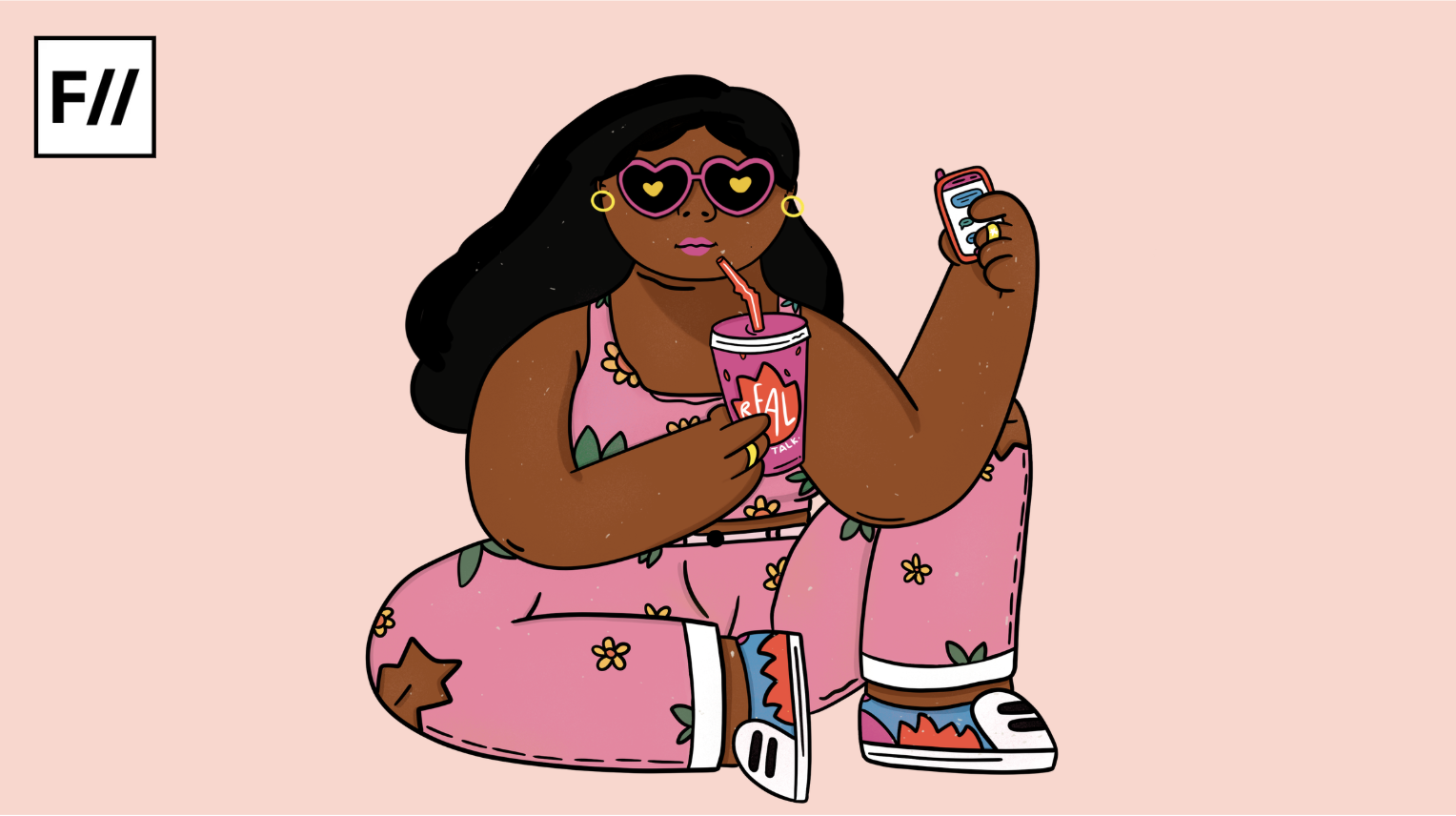
It is often tempting to dismiss everyday forms of entertainment as trivial. Different forms of media, such as films, books, and advertisements, are frequently deemed as sources of amusement and escape from the ‘real’ world. Feminist scholarship, however, has frequently shown that the reel is intertwined with real i.e. the representation of ‘reality’ doesn’t only represent it but also aids in reconstituting it. Thus, the significance of media lies not only in what it represents but also in its ability to shape ‘commonsense’. Over time, repeated images and narratives can make particular experiences and meanings normal, natural, and even desirable.
These regimes of meaning-making and social formation do not remain confined to traditional institutions but travel, adapt, and intensify across new sites of public life. In contemporary contexts, digital platforms have become key sites for the circulation of sexual and romantic norms. Social media does not merely reflect existing ideas about love, intimacy, desire and ‘femininity’; it actively participates in producing and normalising them.
By framing softness, dependence, and being cared for as ‘girly’ and natural to women, these phrases produce and reinforce gender stereotypes that feminism has fought hard against. So how does Instagram’s ‘soft girl’ trend shape gendered expectations?
It is this production and normalisation of certain norms that is worth exploring by looking at some commonly circulating digital phrases, such as ‘girl math’, ‘feminine urge’, ‘I am just a girl’, and ‘soft girl era’, that each of us can find easily if we spend some time on Instagram. At first glance, these phrases may appear politically innocent and devoid of any social importance. However, these seemingly neutral and innocent phrases serve a purpose. They shape certain gendered expectations and normalise certain ideas around desire, love, intimacy, care, and romantic relationships.
By framing softness, dependence, and being cared for as ‘girly’ and natural to women, these phrases produce and reinforce gender stereotypes that feminism has fought hard against. So how does Instagram’s ‘soft girl’ trend shape gendered expectations?
‘Soft girl’ as a publicly formed figure
Expressions such as ‘soft girl era’ and ‘I am just a girl’ can be found easily on Instagram. ‘Soft Girl Era’ is generally used to signal a turn toward softness and emotional ease, while ‘I am just a girl’ frames retreat from assertiveness and reduced seriousness as natural to women. While these phrases are used casually, they produce a certain type of publicly recognisable figure. Their repeated circulation across users and contexts gives them shared intelligibility. Rather than viewing them as innocent trends followed by individuals on Instagram, they must be treated as media that produce and propagate a particular type of ‘soft girl’ — one who continues to be ‘feminine’ and caters to the capitalist wellness industry.
While these phrases are used casually, they produce a certain type of publicly recognisable figure. Their repeated circulation across users and contexts gives them shared intelligibility.
A search for ‘Soft Girl Era’ on Instagram leads one to a certain aesthetic: pastel tones, emphasis on self-care, and femininity, of course. The problem is not softness itself but rather how it is made into a commodity. Moreover, as British sociologist Beverly Skeggs argues, femininity is not an essence but a set of socially produced dispositions that become meaningful through recognition and valuation. In this sense, femininity itself is not a fixed set of attributes that women must aspire to. It is constructed, largely by patriarchal standards and by our own society. Similarly, ‘I am just a girl’ reels on Instagram demonstrate forgetfulness, eluding accountability, and silliness as ‘girly’, and thus, desirable traits.
These trends don’t just create particular desires but also normalise and consolidate them. This is reinforced through platform-specific modes of response. Comments such as ‘this is literally me’ or ‘so real’ do more than express personal identification; they participate in stabilising the figure itself.
These trends don’t just create particular desires but also normalise and consolidate them. This is reinforced through platform-specific modes of response. Comments such as ‘this is literally me’ or ‘so real’ do more than express personal identification; they participate in stabilising the figure itself. As social theorist Michael Warner suggests, publics are formed through circulation and address, and it is through such moments of recognition that norms take shape.
‘Soft girl’ discourses and desire
Having established the ‘soft girl’ as a publicly recognisable figure, we must now turn to how these discourses and relational expectations normalise and naturalise certain forms of desire. Within Instagram reels, desire is frequently articulated through phrases such as ‘the feminine urge’, which frame wanting, caring, or aspiring as inherently gendered impulses. We must turn attention to not simply what these urges express, but how the very act of naming them as ‘feminine’ stabilises certain assumptions about gender, desire and agency.
The problem lies less in the content of individual reels and more in the formation of categories. By using the label ‘feminine’, these formulations reassert that there is a way to be feminine. The problem is not what is deemed feminine, but rather the term itself.
Reels using the phrase ‘the feminine urge’ vary widely in content. Some invoke care, such as ‘the feminine urge to adopt a child’, while others gesture toward autonomy, for instance, ‘the feminine urge to learn every skill that makes me unstoppable‘. The presence of such variation makes it clear that the trend is not uniformly regressive. However, the problem lies less in the content of individual reels and more in the formation of categories. By using the label ‘feminine’, these formulations reassert that there is a way to be feminine. The problem is not what is deemed feminine, but rather the term itself.
A similar logic is at work in reels using the phrase ‘girl math’. Such reels frame careless spending as acceptable by playfully framing financial decisions through gendered self-mockery. Common examples include claims such as ‘if you pay in cash, it’s basically free’ or ‘if you buy nothing on sale, then you are losing money‘. While framed as playful, these formulations draw on and reinforce the long-standing stereotype that women are irrational or unserious when it comes to math and money matters.
It is important to note that these discourses do not deny agency outright. Instead, they reorganise agency. Only particular desires are made acceptable.
It is important to note that these discourses do not deny agency outright. Instead, they reorganise agency. Only particular desires are made acceptable. As French philosopher Michel Foucault argues, power does not merely constrain individuals; it also shapes how people understand themselves. In this sense, power is omnipresent. Extending that, governance becomes not just restrictive or state-induced but also subtle.
Subtle governance in digital publics
The normalisation of ‘soft girl’ discourses can lead to a subtle form of governance. As phrases such as ‘soft girl era’, ‘feminine urge’, and ‘girl math’ recur across reels, they come to appear self-evident. Governance, in this context, does not occur through constraints, but rather through repeatedly portraying a certain type of behaviour as ‘girly’. Reels become a medium through which women are guided to become more ‘feminine’. The issue with using labels, in general, is that it is based on some form of exclusion. If some behaviours are deemed ‘girly’ and ‘feminine’, then one must question what is not. And isn’t this also how gender stereotypes work?
The issue with using labels, in general, is that it is based on some form of exclusion. If some behaviours are deemed ‘girly’ and ‘feminine’, then one must question what is not. And isn’t this also how gender stereotypes work?
Social media platforms intensify this process. Algorithms favour familiar formats. As Michael Warner suggests, publics are constituted through circulation; the more an idea is repeated and shared, the more legitimacy it attains. Comments such as ‘so real’ become small acts of approval, rewarding and reinforcing particular ways of being a woman. Even though no one is being forced to participate, as Antonio Gramsci suggests, consent is built through everyday habits rather than force. Governance, in this sense, becomes subtle. It works here without the state, through repetition and enjoyment.
The aim is not to ‘cancel’ these trends but to add nuance to the conversations surrounding them and to show that governance is not always a matter of restriction. Sometimes, it works by legitimising certain behaviours, desires, and expectations. Patriarchy-like structures of power do not rely on the same strategies to maintain themselves. They adapt and rebrand. As the social, economic, and political landscape changes, so do the forms through which power operates.
If governance today often works through subtle forms of influence, then feminist politics must become equally attentive to those subtleties. Thus, it is important for feminist politics to keep reminding us that everyday forms of entertainment are not as trivial as they sometimes appear to be.
Yet feminism has been good at adapting, too. From demanding a seat at the table to questioning who built the table and for whom in the first place (and imagining newer possibilities), feminist politics has redefined its techniques according to contemporary needs. If governance today often works through subtle forms of influence, then feminist politics must become equally attentive to those subtleties. Thus, it is important for feminist politics to keep reminding us that everyday forms of entertainment are not as trivial as they sometimes appear to be.
References
Foucault, Michel. The History of Sexuality, Volume I: An Introduction. New York: Vintage Books, 1978.
Gramsci, Antonio. Selections from the Prison Notebooks. New York: International Publishers, 1971.
Skeggs, Beverley. Formations of Class and Gender: Becoming Respectable. London: Sage, 1997.
Warner, Michael. ‘Publics and Counterpublics’. Public Culture 14, no. 1 (2002): 49–90.
About the author(s)

Plaksha is pursuing a PhD in Women's Studies at Jawaharlal Nehru University. Her interests span gender, language, feminism, popular culture, politics, and poetry.




Plaksha ?