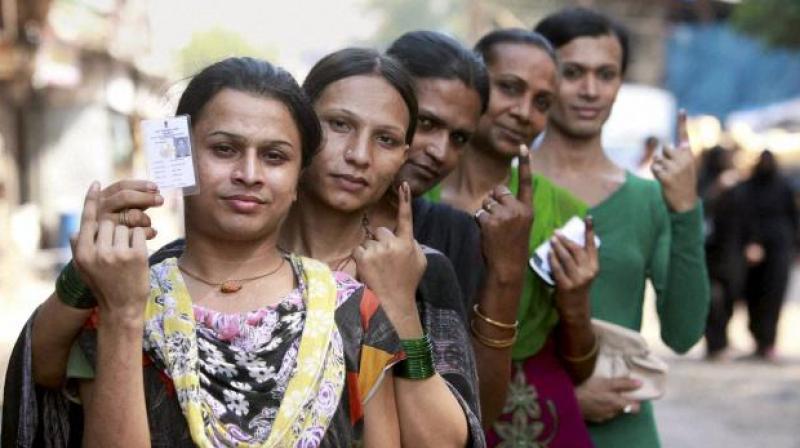
Voting rights are often defined as equal and neutral. However, in practice, they can remind a large number of transgender, intersex, and queer people living in India that they have had to reconstruct their entire lives after social and/or physical disruptions.
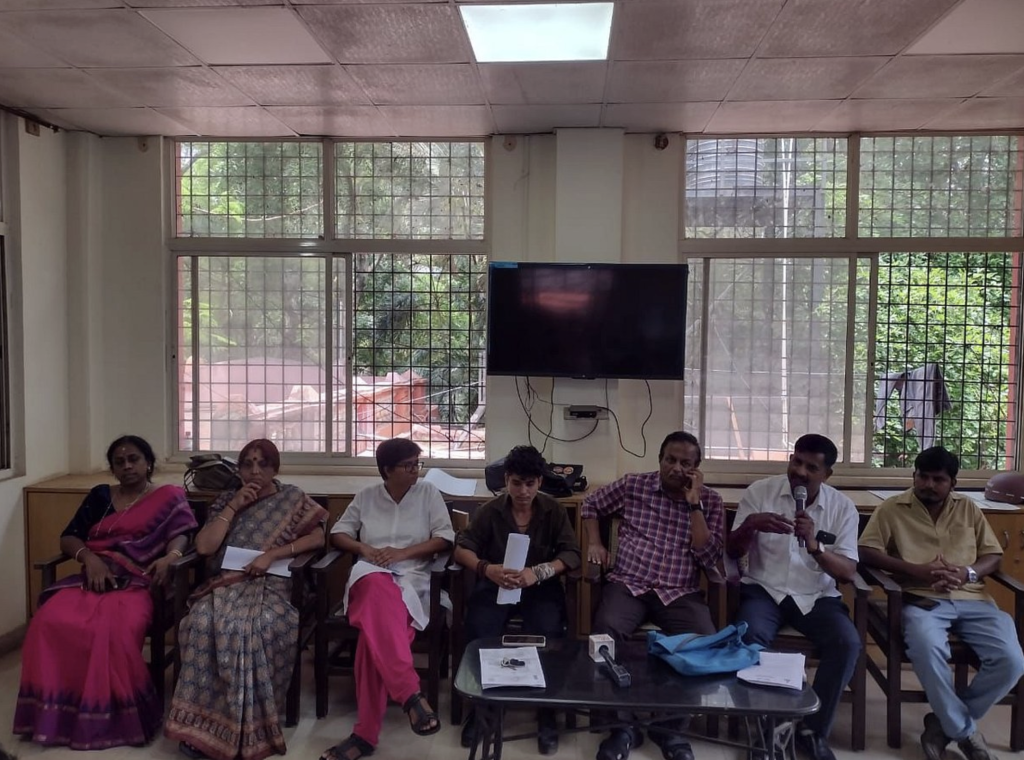
After being conducted in 13 states and Union Territories like Bihar and Bengal, the Election Commission’s Special Intensive Revision, or SIR, is now taking place in Karnataka. And trans and/or queer people there are now facing the same issues. Though on paper the exercise cleans up electoral rolls, a letter submitted to the Karnataka Chief Electoral Officer by My Vote, My Right (MVMR) shows how exclusionary such a process can be, as reported by The News Minute.
To prove their point, MVMR surveyed 74 transgender and intersex people from various districts in Karnataka, and the results showed that respondents could not determine where their parents or grandparents would have been registered, or where they had cast their ballots in 2002. According to a July 3 report by Citizen Matters, using a family member’s past electoral record to establish voter eligibility is known as ‘progeny mapping’. But the family is not a secure or reachable institution for many trans and/or queer people.
While documentation comes naturally to cisgender, heterosexual citizens whose lives have often been validated by family and the state — from birth certificates and school records to address proofs and voter IDs — many trans people do not inherit documents in that way. They have to leave households; some are disowned or declared dead. The few documents they once had may also become unusable because they carry a name and gender that no longer represent them.
Worse yet, Karnataka Chief Minister D. K. Shivakumar has said that those who cannot update their SIR records this time might also lose government benefits in general. Hence, trans people are disproportionately affected by this decision.
When Documentation Becomes a Barrier to Voting
Then, can SIR simply be defined as an electoral exercise? If a person’s current Aadhaar card lists a chosen name but an older school certificate lists a deadname, what exactly is the state asking them to prove? If a trans woman has a voter card in one identity, an Aadhaar card in another, and a transgender certificate that reflects her present self, why do bureaucratic differences become a reason for suspicion?
This mismatch affects their right to vote, sometimes taking it away entirely. Many respondents had income certificates, voter IDs, or ration cards, but not the specific historical documents required by SIR, such as birth certificates, caste certificates, or matriculation records. Even when they do possess older documents, gender-affirming transitions may mean those records no longer reflect their current appearance or identity.
The SIR process, willingly or not, can therefore create a form of psychological distress. Asking queer and transgender individuals who were driven away from their families to produce records tied to those same households can put them back in dangerous or coercive situations. It may also unintentionally reveal their gender identity or sexual orientation to relatives they are no longer in contact with or do not feel safe approaching.
Similarly, in West Bengal, the SIR update exercise conducted between Nov. 4, 2025, and Feb. 21, 2026, as reported by BehanBox, excluded lakhs of people who were unable to return to hostile environments they had fled — putting their safety at risk simply to retain their right to vote in their own country.
Legal Recognition vs. The Reality of Inclusion
Legally, India has expanded protections for transgender and queer citizens over the past decade through landmark developments such as the Supreme Court’s 2014 judgment in National Legal Services Authority v. Union of India (NALSA), the 2018 Navtej Singh Johar v. Union of India ruling, and the Transgender Persons (Protection of Rights) Act, 2019.
But how meaningful are these rights if electoral systems continue to treat gender-diverse citizens as effectively ineligible to vote unless they can produce records created under the very conditions of exclusion and discrimination they have fought against?
As the Maharashtra Directorate General of Information and Public Relations noted in a Facebook post on June 29, a person only needs to fulfil four criteria—be an Indian citizen, be at least 18 years of age, be a resident of the constituency they wish to vote in, and not be disqualified under any law. Yet with multiple indirect disqualifications and the inaccessibility of historical electoral records or family links, how easy is compliance in reality?
The risk is not limited to transgender people. Many LGBTQ+ individuals, particularly those from lower-income and marginalised caste backgrounds, are rejected by their families because of their sexual orientation or gender identity. Some heterosexual people, too, experience family exclusion after marrying outside their caste or religion. Ultimately, anyone whose life has been disrupted by social punishment can be disadvantaged by a system like SIR that relies heavily on uninterrupted family ties.
To remedy this, the government must build processes that align with the realities of vulnerable communities rather than the assumptions of those whose identities and histories have always been documented and accepted.
About the author(s)

Sohini (they/she) hails from Calcutta and loves to explore and write about all things society, culture, gender. With a background in journalism and English literature - they have finally been able to make having heartfelt conversations a huge part of their life outside of boxes.