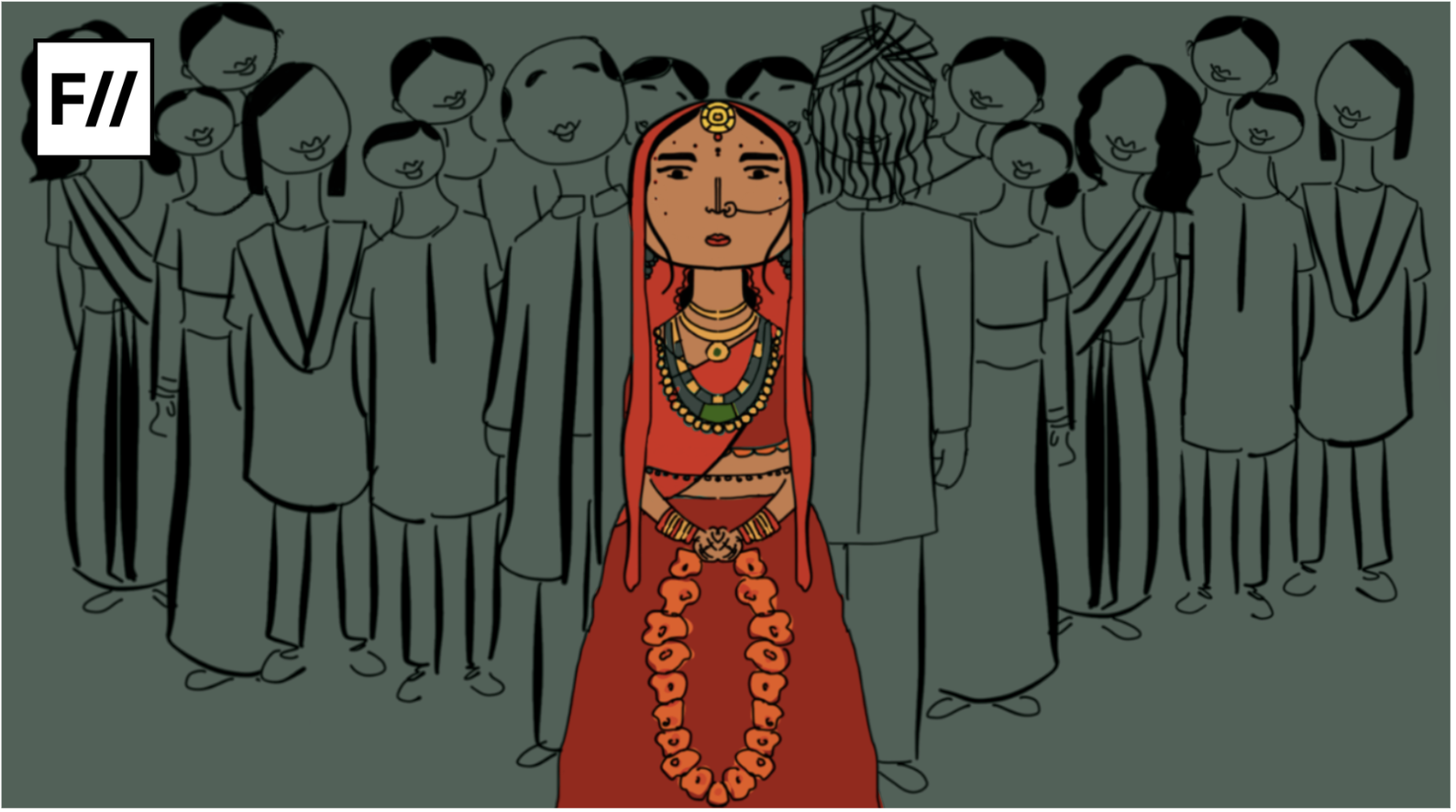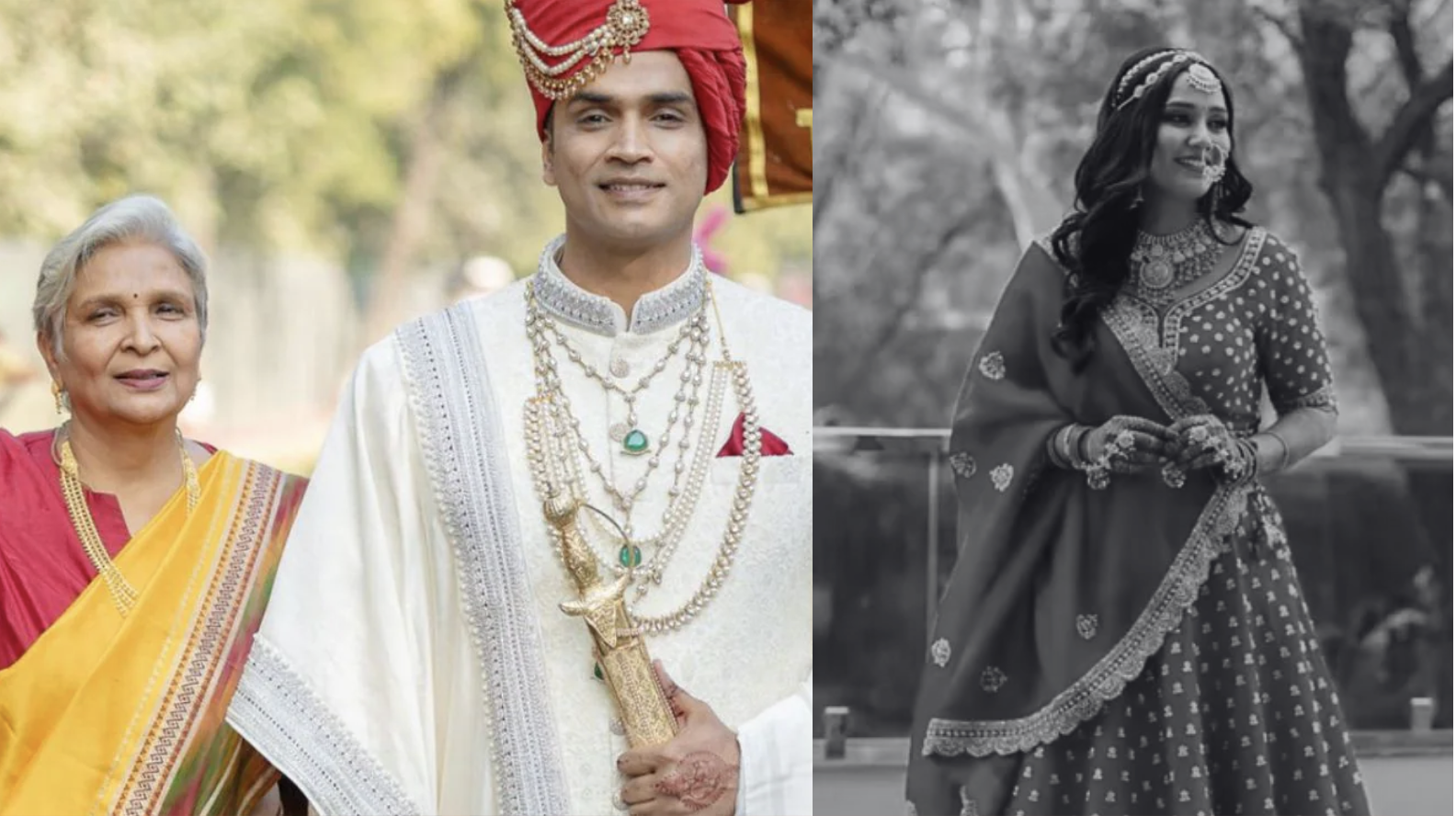
Every society reveals something about itself through the lives it mourns. Over the past several weeks, the death of Twisha Sharma has led to widespread grief, relentless media attention, and demands for justice. As allegations of dowry harassment and domestic abuse surfaced alongside an ongoing criminal investigation, the case garnered national attention and sparked public conversation. Yet what makes this particular case significant is not the violence itself, but rather the intensity of the public response it has generated.
The case presents itself as an opportunity to ask a deeper question: why do certain moments of exceptional violence against women become immediately legible as tragedies to the country, while countless other incidents remain socially invisible?
The case presents itself as an opportunity to ask a deeper question: why do certain moments of exceptional violence against women become immediately legible as tragedies to the country, while countless other incidents remain socially invisible? For there are women in this country for whom violence does not arrive as an exceptional rupture; it exists as an everyday fact of life. This is hardly a revelation for women whose lived experiences have been shaped by the intersections of caste, class, gender, and religion. Dalit, Adivasi, and Muslim women have long lived with forms of violence that rarely acquire the status of exceptional tragedies.
The question, we must therefore ask, is not why India is grieving Twisha Sharma, but why India does not grieve like this all the time. Violence against women is widespread and normalised. Yet this language of universality conceals more than it reveals. Not all women experience the same social realities or occupy the same social locations, and not all women experience violence through the same structures of power, hierarchy, and oppression. Nor are all women granted equal access to public sympathy when violence occurs.
Not all women experience the same social realities or occupy the same social locations, and not all women experience violence through the same structures of power, hierarchy, and oppression. Nor are all women granted equal access to public sympathy when violence occurs.
Long before contemporary feminist and human rights scholarship challenged the universality of the category ‘woman’, B. R. Ambedkar in 1916 had demonstrated how caste survives through the regulation of women’s sexuality, marriage, and reproduction. In his 1916 essay, Ambedkar unpacks endogamy and argues that the regulation of women’s sexuality is the very process through which caste reproduces itself. Decades later, feminist scholar Uma Chakravarti elaborated on this insight through her theorisation of Brahmanical patriarchy, elucidating how caste hierarchy and patriarchal control are mutually constitutive.
The public resonance of the Twisha Sharma case lies in this precise theorisation. The shock it generated reveals less about the exceptionality of violence and more about whose vulnerability is recognised as a national crisis. While Ambedkar provided the diagnosis, Chakravarti situated it through language.
Confronting Brahmanical patriarchy
The question is why Indian society continues to erase both. Brahmanical patriarchy does not produce a singular category of ‘Indian womanhood’. Rather, it produces graded womanhood (an expression borrowed from Ambedkar’s idea of graded inequality). Brahmanical patriarchy, therefore, does not produce a common lived experience of womanhood. Instead, womanhood is distributed and differentiated through hierarchies of dignity, protection, vulnerability, and social value.
Brahmanical patriarchy, therefore, does not produce a common lived experience of womanhood. Instead, womanhood is distributed and differentiated through hierarchies of dignity, protection, vulnerability, and social value.
Some women are positioned as bearers of caste honour, whose ‘protection’ becomes central to the preservation of family and community honour. Others are located outside these structures, where respectability is not a given and where violence is more easily normalised, embedded, and erased. The category of ‘woman’, therefore, occludes the hierarchies that Brahmanical patriarchy insidiously sustains.
Dalit women, historically and currently, continue to be situated outside the protections afforded by ‘upper’-caste honour and respectability. Their labour sustains day-to-day social life, while their bodies remain vulnerable to its violence. Sexual violence against Dalit women is not simply gendered violence; it is often a performance and outcome of caste power itself. It functions as punishment, discipline, and social control.
When violence is inflicted on a woman who belongs to the social location of those who dominate; media institutions, public discourse, and the national narrative collectively recognise themselves in her suffering. However, when violence is inflicted upon women from the margins, recognition is uncertain.
This particular difference matters because it unpacks something disconcerting about public outrage. When violence is inflicted on a woman who belongs to the social location of those who dominate; media institutions, public discourse, and the national narrative collectively recognise themselves in her suffering. However, when violence is inflicted upon women from the margins, recognition is uncertain.
The crucial question, then, is who is recognised as a victim in the first place. Whose suffering is seen as an exceptional moment of violence that can garner national rage, and whose pain is capable of becoming a unified event rather than being confined to the realm of the ordinary? The politics of recognition decides not only whose violence is visible, but also whose bodies and lives become publicly grievable.
The intersection of caste and patriarchy
Dalit feminist theory has long argued that the lived experiences of Dalit women don’t merely expand feminist analysis; rather, they restructure it. Sharmila Rege argues that Dalit women’s experiences expose the limitations of dominant feminist frameworks themselves. The universal category of ‘woman’ in India is too often constructed through and for upper-caste experiences while positioning itself as politically universal or neutral.
From a Dalit woman’s standpoint, what dominant feminist praxis names as patriarchy is instead the complex structure of Brahmanical patriarchy, a structure in which caste and gender hierarchies are intertwined. The distinction is not merely semantic. It changes how violence is understood and even experienced, and it changes conceptions of victimhood.
From a Dalit woman’s standpoint, what dominant feminist praxis names as patriarchy is instead the complex structure of Brahmanical patriarchy, a structure in which caste and gender hierarchies are intertwined. The distinction is not merely semantic. It changes how violence is understood and even experienced, and it changes conceptions of victimhood.
The violence experienced by Dalit women is documented in state records and data, but is rarely mourned nationally. It appears in NCRB data, fact-finding reports, court proceedings, and activist interventions. Yet it seldom acquires the status of a national catastrophe. Its repetition and persistence are normalised. Women situated at the intersections of caste, religion, tribe, and economic marginalisation are excluded from the boundaries of the national imagination. This is why the response to Twisha Sharma’s case deserves self-reflexivity as a social process, not because her suffering matters any less. Rather, the public response to the case reveals a deeper structural dysfunction. It lays bare our inability to recognise the social order that produces such violence.
The shock surrounding the case is revealing not because violence has entered the home, but because it exposes the enduring belief that caste, family, marriage, kinship, honour, and respectability are institutions that protect women. However, violence is reproduced through these intimate spaces.
The shock surrounding the case is revealing not because violence has entered the home, but because it exposes the enduring belief that caste, family, marriage, kinship, honour, and respectability are institutions that protect women. However, violence is reproduced through these intimate spaces.
The violence experienced by an ‘upper’-caste woman within an ‘upper’-caste household and the violence experienced by a Dalit woman at the intersection of caste, gender, labour, and social exclusion are not the same lived experiences of patriarchy. They emerge from different social locations within the same social structures and hierarchies. One is often recognised as a tragedy because it disrupts the fantasy of ‘protection’. The other is normalised because vulnerability itself has been caste-assigned. This is why the national conversation cannot end with Twisha Sharma. If all we produce from this moment is another cycle of outrage, we will have learned nothing. The task is not merely to condemn violence but to understand the architecture that makes such violence possible, permissible, and predictable.
Brahmanical patriarchy continues to govern our everyday lives. It shapes the very terms through which we imagine protection, family, honour, and violence. We struggle even to see it because it has become so ordinary. Until that idea of ordinariness is disrupted, justice will remain episodic, and violence will remain structurally inevitable.
Until Brahmanical patriarchy is understood, recognised, and acknowledged as a living social order rather than merely an academic theory, there will be more Twishas, and Dalit, Adivasi, and Muslim women will continue to be denied justice, not because their suffering is invisible, but because the structures that produce it have been normalised.
Brahmanical patriarchy continues to govern our everyday lives. It shapes the very terms through which we imagine protection, family, honour, and violence. We struggle even to see it because it has become so ordinary. Until that idea of ordinariness is disrupted, justice will remain episodic, and violence will remain structurally inevitable.
References
Ambedkar, B.R. (1916). “Castes in India: Their Mechanism, Genesis and Development.” Indian Antiquary, XLI.
Chakravarti, Uma. (1993). “Conceptualising Brahmanical Patriarchy in Early India: Gender, Caste, Class and State.” Economic and Political Weekly, 28(14), 579–585.
Crenshaw, Kimberlé. (1991). “Mapping the Margins: Intersectionality, Identity Politics, and Violence Against Women of Color.” Stanford Law Review, 43(6), 1241–1299.
Irudayam, Aloysius S.J., Mangubhai, Jayshree P., & Lee, Joel G. (2015). Dalit Women Speak Out: Caste, Class and Gender Violence in India. New Delhi: Zubaan.
Jamil, Ghazala. (2018). Muslim Women Speak: Of Dreams and Shackles. New Delhi: Sage Publications.
Rege, Sharmila. (2006). Writing Caste/Writing Gender: Narrating Dalit Women’s Testimonios. New Delhi: Zubaan.
About the author(s)

Dr. Santvana Kumar is an Assistant Professor at Jindal Global Law School. Her work sits at the intersections of caste, gender, law, identity, and social justice, drawing on critical feminist and socio-legal perspectives. She writes on caste, gender-based violence, constitutionalism, and inequality, with the aim of making critical scholarship accessible to wider public audiences.