The Cockroach Janata Party (CJP) protests gave people a shared cause and the conviction to resist injustice, bringing together people from diverse backgrounds — a rare sight in increasingly fragmented times. The protests have since been called off, with Education Minister Dharmendra Pradhan’s resignation on July 25 marking the fulfilment of their central demand. But reading the movement closely, through its own words and slogans, reveals something else: we are still nowhere close to becoming a gender-sensitive society.
A recurring lack of imagination in the protest’s slogans became hard to ignore: sloganeering built around gendered curse words. At first, it can perhaps be ignored. But then it became a pattern that was hard to overlook.
One can’t help but think of the potential such a protest held: a place of brute resistance by day, and by night, one where people sat, talked, and danced together. Lest we forget, this joyful space belonged to everyone on paper. But presence at a protest does not necessarily translate into inclusivity.
A man drenched in sweat waved his gamchha (a South Asian scarf) at passers-by to offer them some relief. These were the moments that stayed with us, the kind of solidarity that made us smile. But within moments, a recurring lack of imagination in the protest’s slogans became hard to ignore: sloganeering built around gendered curse words. At first, it can perhaps be ignored. But then it became a pattern that was hard to overlook.
What exclusion looked like
On the one hand, there was exclusion that came from those who sought to delegitimise the cause by indulging in what they knew best: bigotry. Many queer protesters were subjected to slurs such as ‘meetha’; however, most of them pushed back against such homophobia.
On the other hand, there was another form of exclusion from within. The protest gave us genuinely pause-worthy moments of protest creativity, but it also resorted to sexist, homophobic, and transphobic slurs with an unusually high frequency—partly because many participants were engaging with active politics for the first time. But that is exactly why it could have become a moment of transformational learning; instead, that opportunity was lost.
Misogynistic remarks not only reproduce rape culture but also shape how women who participate in politics, including women politicians themselves, are perceived and discussed.
Misogynistic remarks not only reproduce rape culture but also shape how women who participate in politics, including women politicians themselves, are perceived and discussed. Dimple Yadav, the Samajwadi Party Member of Parliament from Mainpuri, was repeatedly reduced to a familial identity rather than recognised as a political leader in her own right. She was referred to simply as the family’s daughter-in-law—’Dimple Bhabhi’—and denied an independent political identity.
How can one not feel disgusted when Dimple reached out to help a protester, only to be reduced to a ‘pretty wife’? Some comments on social media read, ‘If I knew she’d be giving CPR, I’d go to the protest’. Some dismissed these as harmless jokes. But such ‘jokes’ reinforce the idea that women’s value lies in their appearance rather than in their political agency.
Women and gender-diverse people are not mere ornaments that add vibrancy to a protest; they are citizens in their own right. But presence at a protest doesn’t necessarily translate into inclusivity.
Maybe we no longer feel disgust at such misogyny because we consume this culture everywhere: online, in films, in schools and workplaces, in relationships, and now at protests, where it emerges as rage unfairly directed at women and gender-diverse people. Women and gender-diverse people are not mere ornaments that add vibrancy to a protest; they are citizens in their own right. But presence at a protest doesn’t necessarily translate into inclusivity.
When rage is directed at fellow protesters
American writer and professor Audre Lorde makes a distinction between anger and hate that matters here: anger, unlike hatred, is loaded with information. It tells us where we disagree with people who share our goals—a difficult but necessary conversation. But it remains useful only when it is directed correctly. When emasculation became the movement’s go-to form of mockery, a question emerges: why are feminine markers used to humiliate fellow protestors and male politicians?
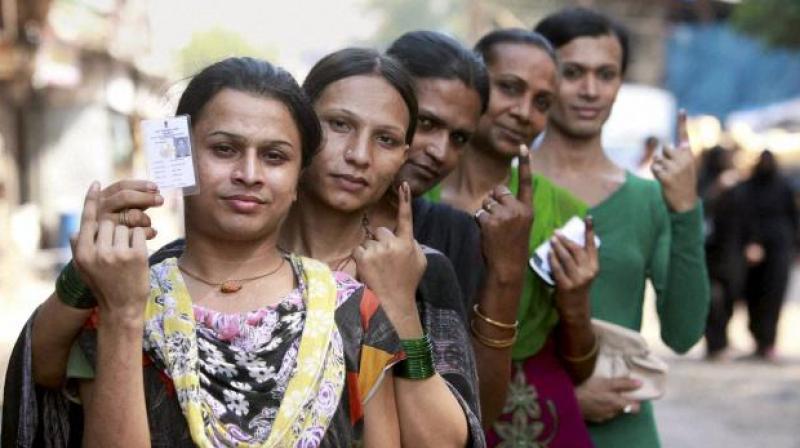
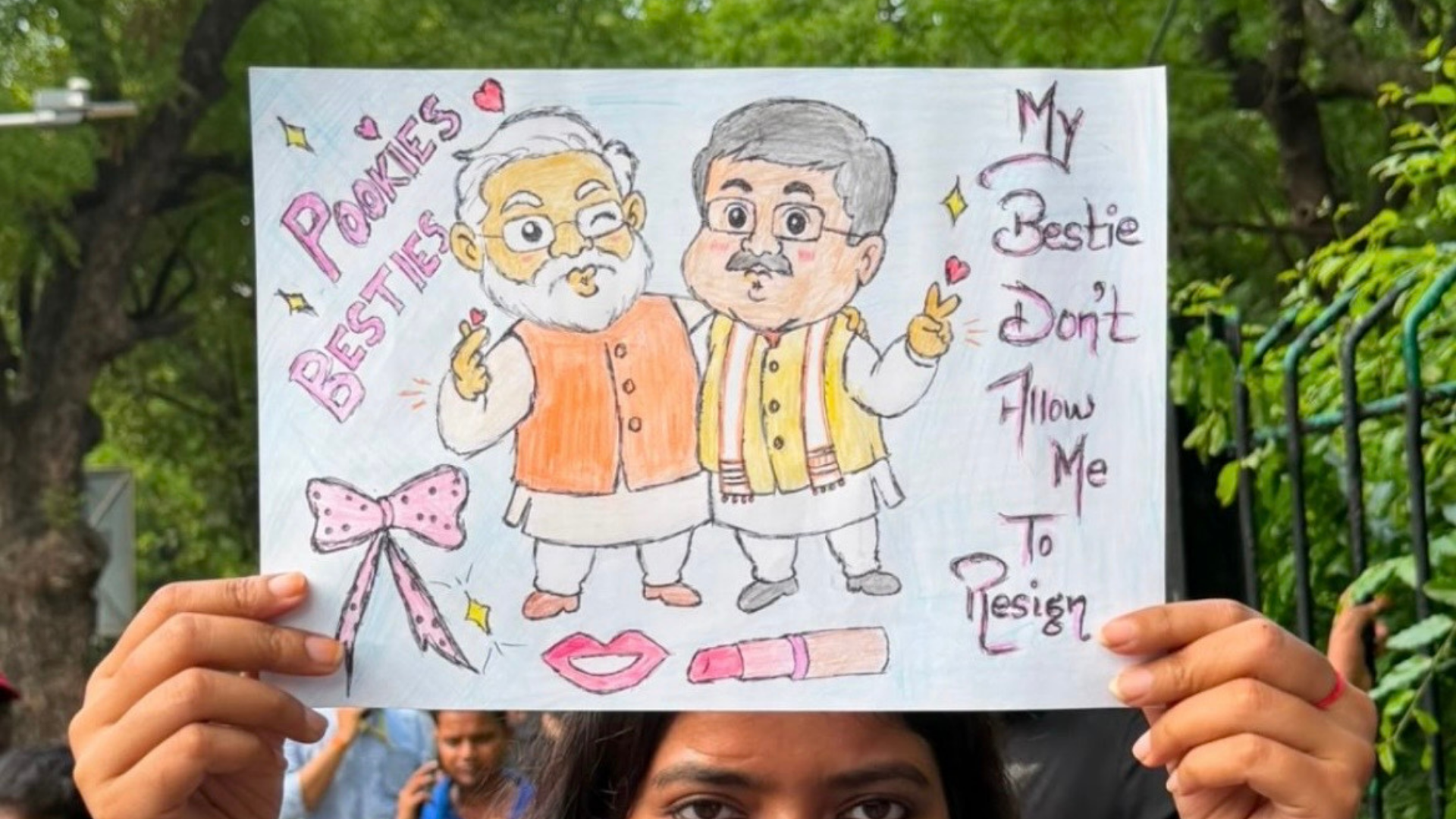
People experienced frustration that quickly curdled into rage. That rage deserved to be held, not misdirected at fellow protesters. For instance, videos showed members of the Kinnar community showing up in support of students, the same community that has fought for dignified visibility for years. Meanwhile, a series of memes circulated AI-generated images of Narendra Modi and Dharmendra Pradhan cross-dressing and using other transphobic slurs. In directing rage towards the State, some protesters ended up mocking a community that had shown up in solidarity, in a space that was already unsafe for them.
Claiming that Dharmendra Pradhan should wear bangles implied that he was somehow less of a man, because it rested on the assumption that being a man is the ultimate measure of worth.
There was no need for anger at the State’s brutality to turn into anger against women and gender-diverse people. Claiming that Dharmendra Pradhan should wear bangles implied that he was somehow less of a man, because it rested on the assumption that being a man is the ultimate measure of worth. That was a moment to reflect on the underlying bigotry, not defend it as harmless venting.
When true inclusion looks like
On 22 July, a CJP spokesperson briefed protesters to use only four slogans and to avoid the Azadi slogan as a precaution, given how the mainstream media had previously weaponised it. But this missed an opportunity not only for raising political consciousness but also for addressing misogyny within the protest.
On the one hand, Azadi (liberation) is perhaps one of the most misunderstood slogans we have. Kamla Bhasin reclaimed it as a feminist anthem. Avoiding the word didn’t protect the movement in any way. Instead, it reinforced the stigma around a slogan that has voiced the struggles of marginalised communities time and again. That avoidance itself is a pattern worth noticing.
Even within the CJP, former spokesperson Vijeta Dahiya has expressed transphobic views, yet he remained part of the organisation and was removed only over a controversy involving a burger.
On the other hand, the same platform should have been used to tell protesters, plainly, to drop the sexist, homophobic, and transphobic sloganeering. Since this was left unsaid, that silence became its own signal. Even within the CJP, former spokesperson Vijeta Dahiya has expressed transphobic views, yet he remained part of the organisation and was removed only over a controversy involving a burger.
And it isn’t that organisers didn’t try. Videos circulated of speakers calling for a safe protest environment ‘for women and children’ — a phrase American political theorist and feminist writer Cynthia Enloe would argue flattens women into a category to be protected. Women came to this protest as full citizens, not as people on the sidelines to be kept safe. Dignity and safety shouldn’t be owed because ‘we must keep our mothers and sisters safe here’. It is owed because they are people with dignity and equal rights.
The next political movement should know this: don’t frame a citizen as someone’s mother or sister who needs protecting. Recognise her as a full citizen who demands accountability.
Safety at that protest site, however, doesn’t look like azadi from unsolicited touch alone. It also meant azadi from oppressive language. Slurs aimed at gender-diverse people and rape threats dressed up as slogans needed to leave our protest sites and our language altogether. The next political movement should know this: don’t frame a citizen as someone’s mother or sister who needs protecting. Recognise her as a full citizen who demands accountability.
About the author(s)

Sanskruti is an Associate at the Founder’s Office of Femfuture Collective, a non-profit working at the intersection of gender, health, and climate. She holds a postgraduate degree in Politics and International Studies from Jawaharlal Nehru University, Delhi. With three years of experience in the non-profit sector, her work engages with gender, agency among youth, and politics, informed by feminist and community-led approaches to justice and collective action.