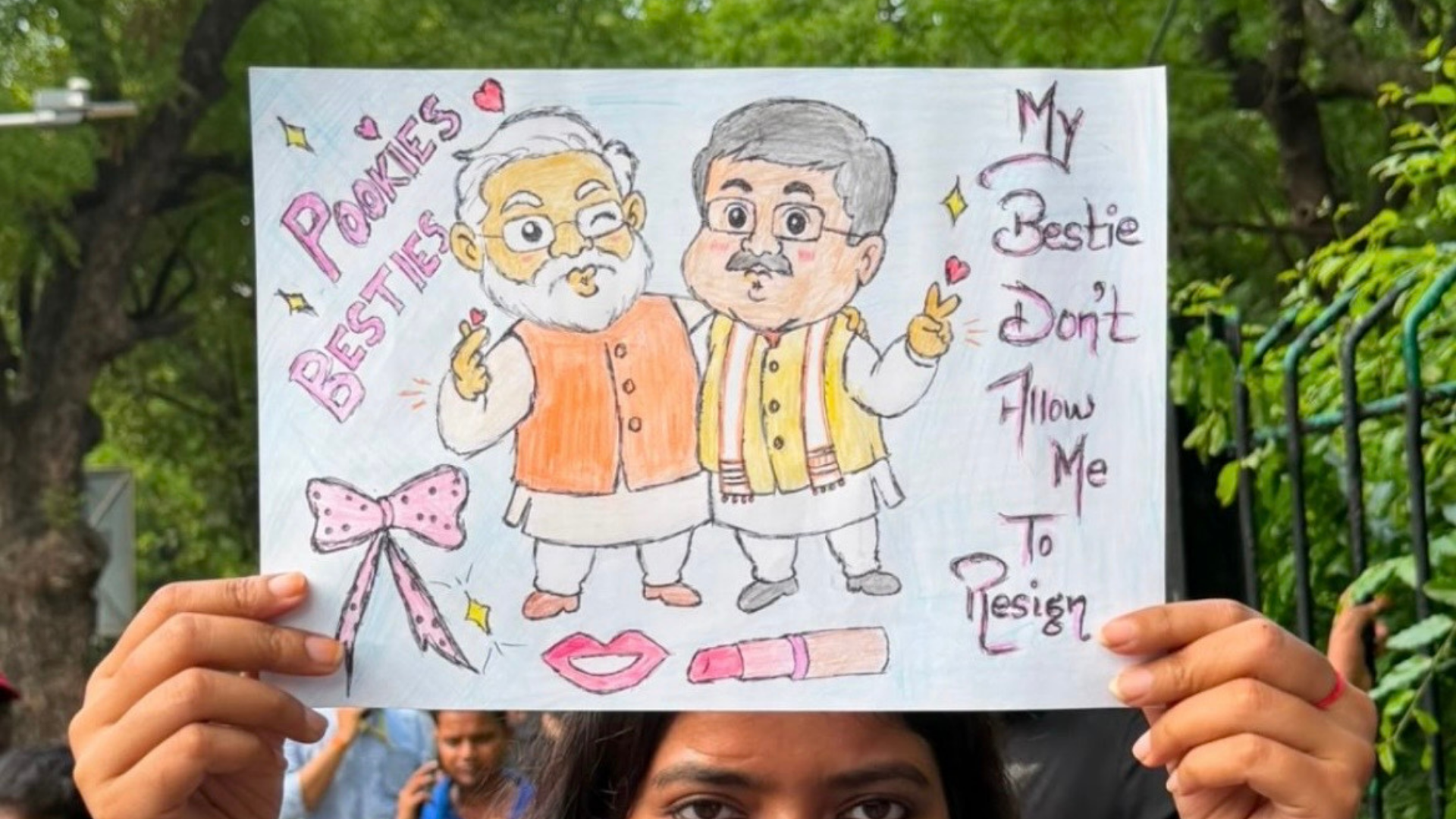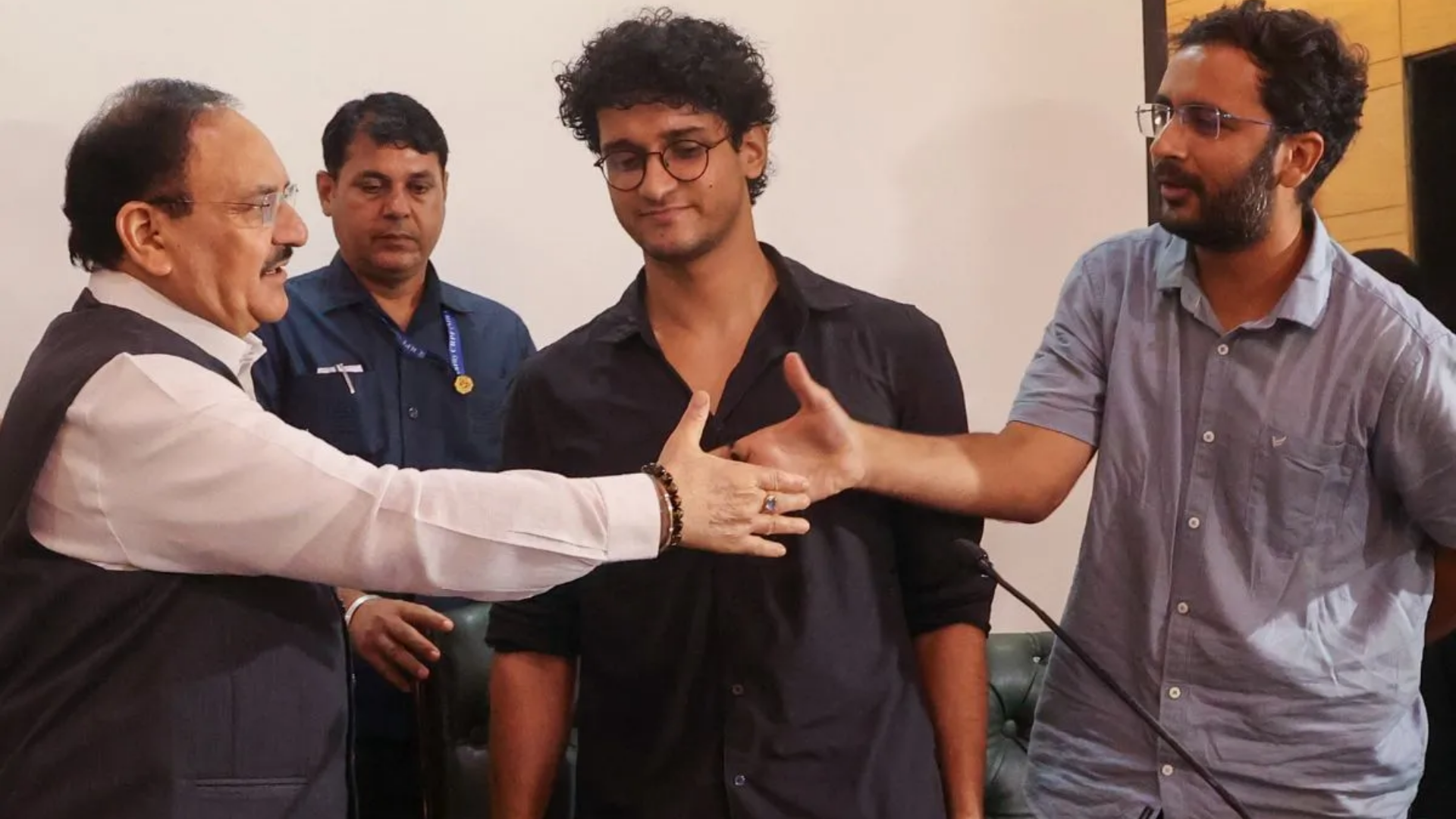
What does the recent Jantar Mantar mobilisation that led to Education Minister Dharmendra Pradhan’s resignation mean? For most mainstream and progressive political commentariat, it seems to signify the birth of a nascent — though yet inchoate — dissident political consciousness amongst the country’s hitherto apathetic urbanised youth, who, owing to the policy failures of the Modi regime around exam leaks, finally decided to take to the streets. First through a hunger strike, and then amid baton charges, tear gas, and alleged pellet use by the authorities, they forced the resignation of a sitting Union Minister for the first time in over a decade.
A remarkable concession indeed to extract from a regime infamous for its intransigence. Despite the ongoing crackdown by the police, there is an air of triumph and a sense of exhilaration that pervades the streets of Delhi, Patna, and Mumbai. For the first time in over a decade, Modi’s aura of invincibility has been breached.
The record of violence
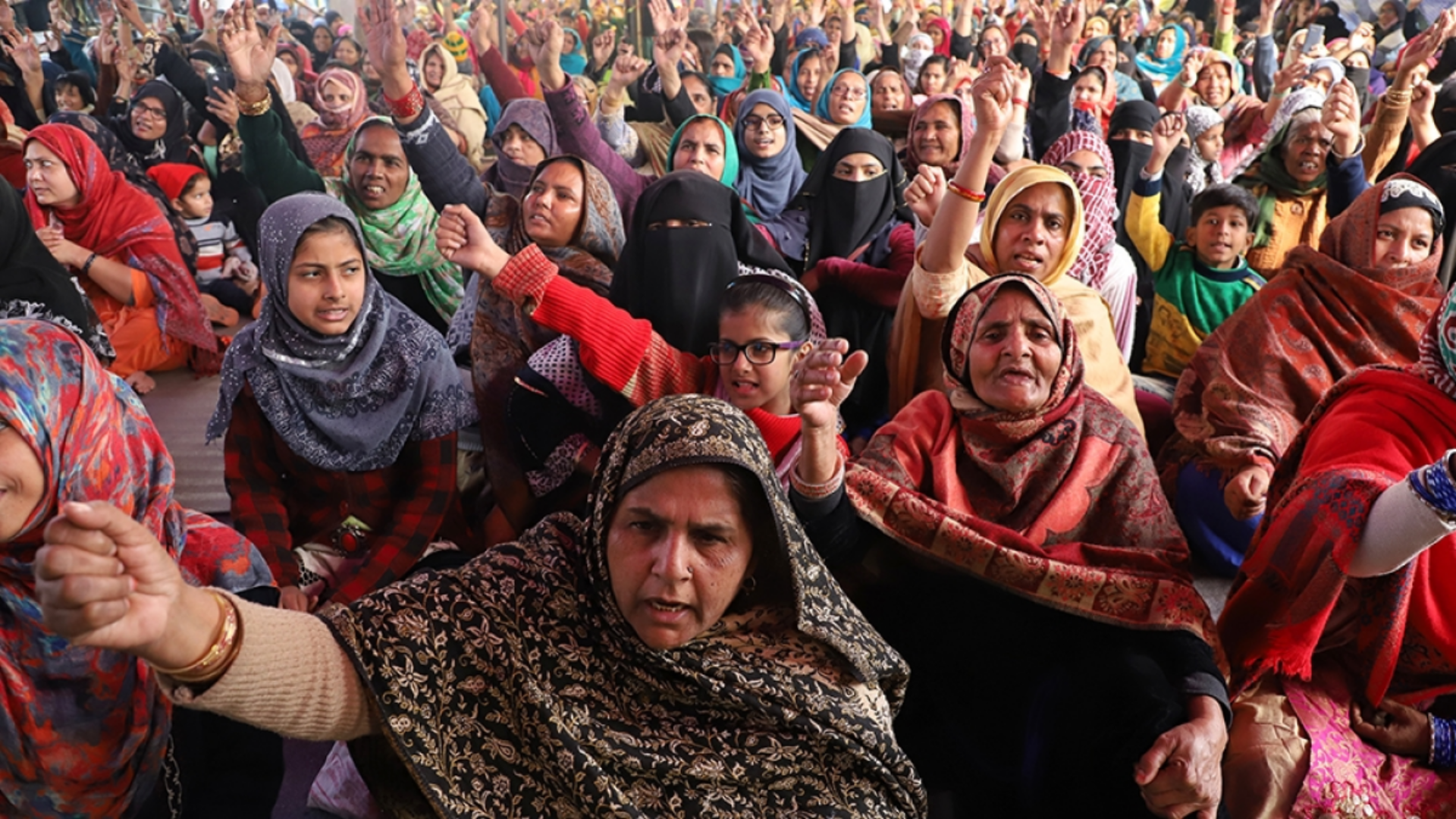
The question is why? The 2019-2020 CAA-NRC movement was arguably one of the largest sustained mobilisations in recent South Asian history that spanned several months. And while it managed to put a stop to the mass disenfranchisement of Muslims that loomed over the horizon at the time, in hindsight it only managed to delay it.
The CAA was easily passed through Parliament, and the NRC came back a little over half a decade later in the form of the Special Intensive Revision (SIR) of electoral rolls, which, at the time of this writing, has effectively reduced millions of the state’s mostly Muslim population to second-class citizens and will push millions more into that category in the coming months and years.
Despite the CAA-NRC protests being peaceful, they were met with uninhibited force by the state authorities, particularly in Uttar Pradesh, where 23 Muslims were killed due to police action. The final response came in February 2020 in the form of a pogrom in northeast Delhi. Out of 53 people killed, two-thirds were Muslim. The student leaders and activists who emerged at the time of the movement continue to rot in jail without trial to this day. Despite the sheer scale and scope of the movement, it failed to gain a policy reversal from the political establishment.
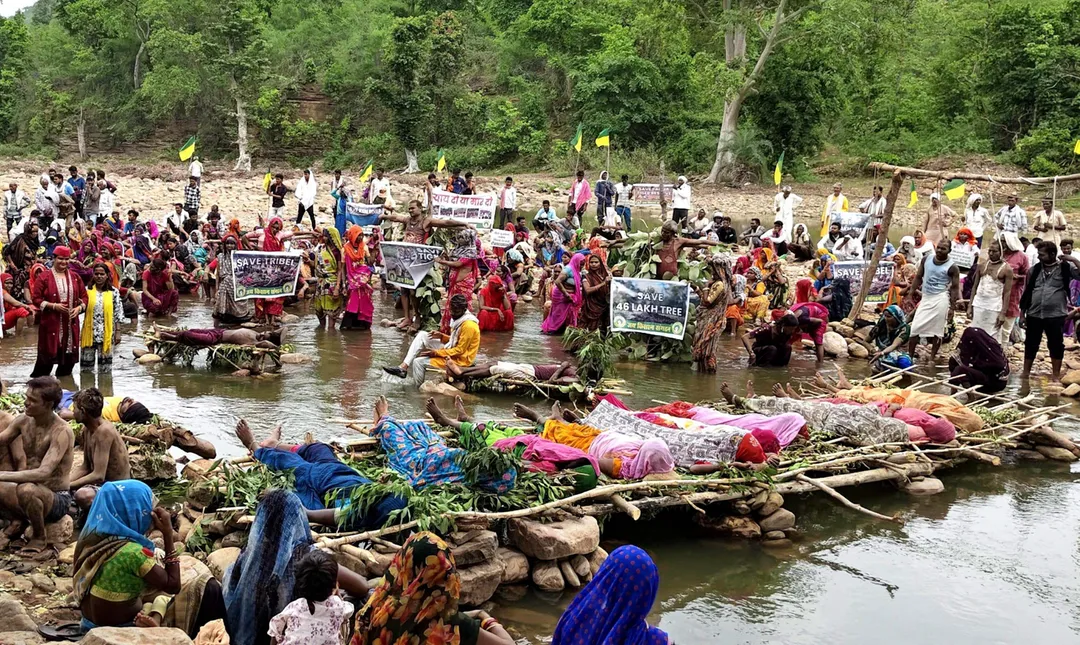
Adivasi land movements have also seen similar failures. Decades — not weeks or years — of opposition to dispossession have been met with the criminalisation of resistance itself by the state. Protesters have been labelled ‘Maoist sympathisers’, and their movements have been policed under laws built for insurgency rather than dissent.
To cite only a couple of instances, on January 2, 2006, in Odisha’s Kalinganagar, police opened fire on around 800 Munda tribespeople protesting the construction of a Tata Steel plant on their land. Twelve to thirteen people were killed, including three women and a twelve-year-old boy. Police mutilated the bodies afterwards, severing the palms of the dead without authorisation. A government inquiry later concluded the firing was justified and categorised it as self-defence. No one has ever been prosecuted.
In Sarkeguda on June 28, 2012, Central Reserve Police Force (CRPF) and Chhattisgarh Police killed seventeen tribals — six or seven of them children — in Bijapur district, and immediately labelled all of them Maoists killed in a retaliatory gun battle. It took a judicial commission seven years to conclude that the encounter was staged. The security personnel who led the operation, it later turned out, hadn’t fired a single bullet, which meant they were never actually under attack, and the dead had been shot at close range.
The officer who led the operation was decorated for the ‘success’ and celebrated by the CRPF in a comic book. The two villages were left so terrorised that much of the population fled to neighbouring states, abandoning their fields. Numerous reports around the case have noted that this sits inside a much larger pattern — well over a thousand people have been killed in ‘encounters’ in the region that rights groups and villagers say are routinely staged.
Differential politics and the moral economy
So why did the ‘cockroaches’ succeed where the Muslims and Adivasis keep failing? Mainstream commentary treats Pradhan’s resignation as evidence that Indian civil society can still discipline state power and that the streets retain the capacity to hold the government accountable. Perhaps a deeper question to ask would be: for whom does protesting work, and more importantly, why?
The answer is likely to ruffle quite a few feathers. Pradhan’s resignation reveals a profound truth about the differential political and moral economy of protests in India and the apartheid-esque logic that governs them. Pradhan was made to resign because the BJP calculated the electoral and reputational cost of continued Hindu middle-class unrest against the cost of losing a minister, and it concluded it wasn’t worth losing the loyalty of the social base that has been the principal pillar of their dominance since it came to power over a decade ago.
Adivasi land claims have never been able to extract equivalent concessions because tribals don’t have the same leverage or legitimacy in the calculus. They figure at the bottom of the citizenship hierarchy, have no swing-vote weight, no capital-city visibility, and no capacity to disrupt the circuits that matter to the ruling bloc. They are, in a sense, invisible. The state’s political calculus, thus, refuses to budge.
Moral economy is a slightly different currency. A moral economy is a normative consensus about mutual obligation between the rulers and the ruled. It is the breach of this consensus on the part of the ruling regime that brought the apathetic Hindu middle-class onto the streets. That years of Muslim, Dalit, and Adivasi bloodletting and structural violence could not move this class out of its apathy, but persistent exam leaks that jeopardised its future prospects immediately brought them on the streets is itself revealing of the moral compass that guides it.
The NEET protesters figure at the top of the citizenship hierarchy. They got recognised as legitimate claimants by the state because their grievance — ‘merit’ betrayed by corruption — sits inside a moral economy the Hindu middle class and the state both already subscribe to. Muslim protesters against a citizenship law didn’t get that recognition because the dominant moral economy codes them as outside the community to whom fairness is owed.
In the popular imagination, both Muslims and Adivasis are coded as outside the social contract of the Indian state. Their grievances are thus illegitimate and unworthy of being redressed. This is why Muslims resisting a bill that would render them stateless and Adivasis protesting the usurpation of their lands are met with guns, bullets, tanks, and truncheons, and yet barely manage to cause a ripple in the political establishment. But a moderate protest by upper- and middle-class Hindus leads to the resignation of a sitting Union Minister in little over a month. The latter’s objections are read as legitimate; the former’s as an assault on the sovereignty of the nation itself.
Pradhan’s resignation doesn’t rupture the differential political and moral economy of legibility; it reproduces and re-legitimises it. The Indian state can afford to concede on grievances that pose no threat to its structural core because the said concession functions precisely to demonstrate — to the demographic whose electoral and moral consent actually matters — that the system is responsive, fair, and still ‘working’.
It is precisely this demonstration effect which is worth more to the state than a minister’s job. Pradhan’s departure won’t resolve the structural issues that plague the entirety of the Indian education system. The NEET protests did not and could not threaten the government’s core project of the Hindu Rashtra, which is slowly advanced through every subsequent piece of legislation, because their demands were never structural. The protesters, in essence, were demanding that the system work properly for those who already belong inside it.
The mainstream commentariat has mistaken maintenance by the government for a crack in its edifice. In this sense, the NEET protests do something worse than simply fail. They have re-persuaded the exact demographic capable of building solidarity across caste, class, and communal lines that the system is sound and just needs better management.
The government has restored faith in the state’s fundamental legitimacy at the exact historical moment it should be most in question. With Pradhan’s resignation, the state has pre-empted the actual politicisation of the masses that was otherwise underway. The protest succeeded for the state, not for the protesters. It produced legitimacy at a moment of accumulating discontent, and it did so without costing the ruling regime anything it actually values.
A rupture from the status quo would have required the state to concede something inside the moral and political economies it doesn’t already share with the claimants, such as recognising Muslim claims to citizenship and equality, Dalit claims to dignity, and Adivasi claims to land sovereignty. Conceding to NEET protesters costs nothing. The whole affair can be read as a family feud that got resolved, as it were, inside the family. The mainstream reading has mistaken a concession within the boundary the government has drawn for evidence that the boundary itself is unstable. Pradhan’s resignation is evidence of how well-defended the boundary is, not how permeable it is.
About the author(s)

Intzar Saifi is a writer based in India whose writing focuses on religion, minority politics, and the state in South Asia.