A poignant quote that was popularised by UK-based artist and activist Banksy says: ‘Art should comfort the disturbed and disturb the comfortable‘. In an age marked by disturbing cases of violence against marginalised communities, this statement holds especially true, for, what is art, if not a tool to heal as well as provoke?
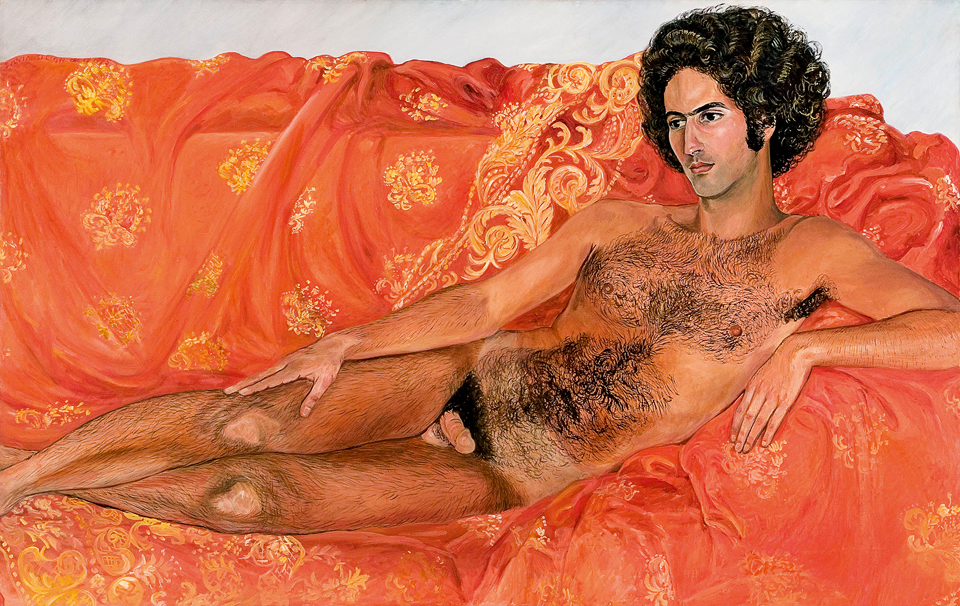
For long, “high art” has been monopolised by men, relegating women and queer artists to oblivion, invisibilising their practice, trivialising their artistic production and at times, even stealing their work. Male artists have controlled conversations on women in art. Female figures have been portrayed, filtered through the objectifying male gaze, time and again. Talking about Western art and male artists, John Berger writes in Ways of Seeing:
‘Men act and women appear. Men look at women. Women watch themselves being looked at. This determines not only most relations between men and women but also the relation of women to themselves. The surveyor of woman in herself is male: the surveyed is female. Thus she turns herself into an object of vision: a sight.‘
Taking on from this, Laura Mulvey talks of the male gaze in films where women are the ‘bearers of meaning, not makers of meaning‘.
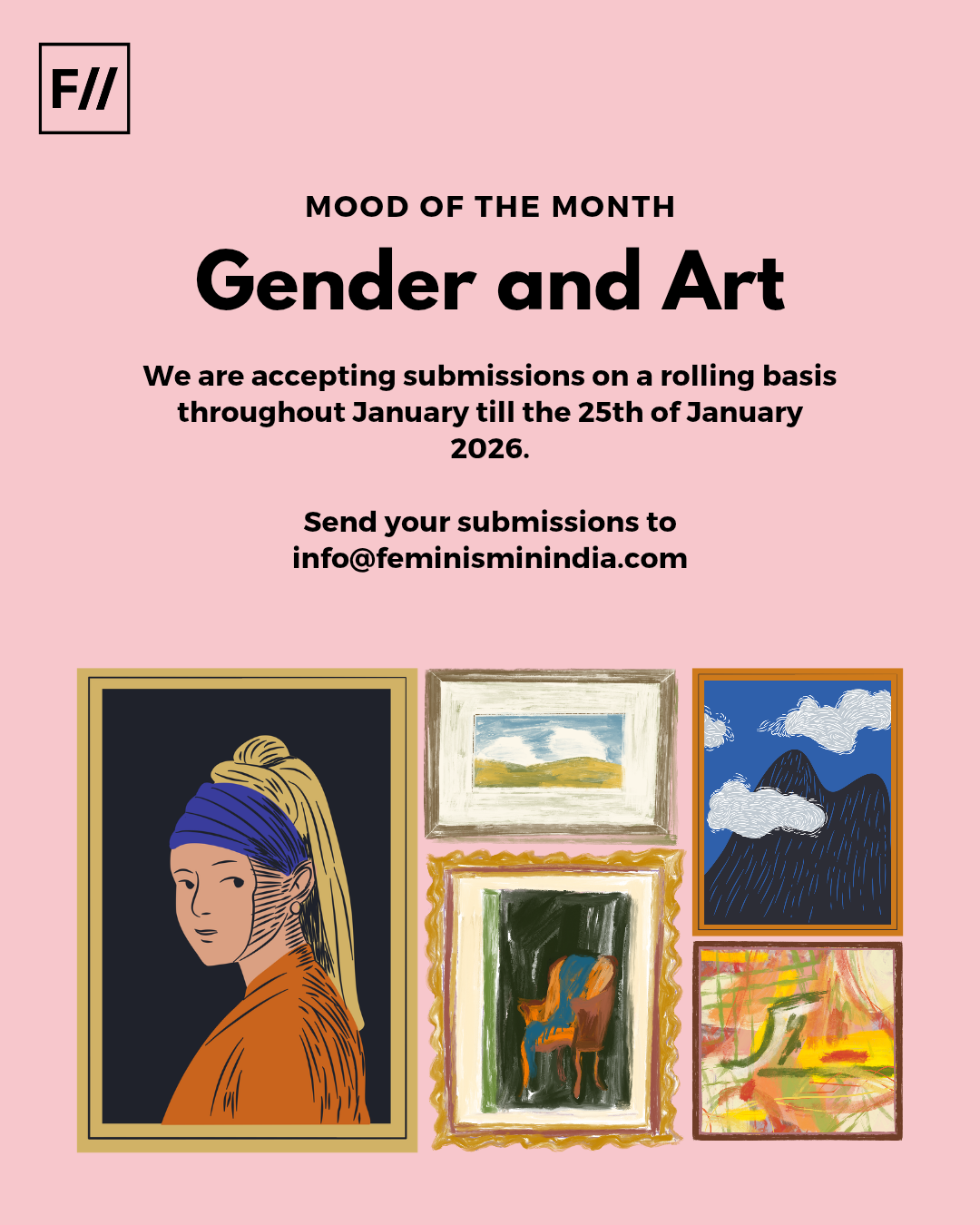
However, the transformative power of art can not only be empowering but also revolutionary. For as long as men have dominated highbrow artistic circles and conversations, women and queer people have produced their own art as well. This art is sublime, yet subversive. From embroidered stories told through Chilean arpilleras, Bengali nakshi kantha, Hmong Paj Ntaub, Gujarati Kutch embroidery and Punjabi phulkari to women led folk art forms like the Bengali Alpana, Odia Pattachitra, Kumaoni Aipan, pookalam from Kerala and Tamil Nadu, Madhubani painting from Bihar, Worli art by Worli tribal women in Maharashtra, Gond painting by Central Indian Adivasi women and Kalamkari from Telangana/Andhra, women have led folk art communities and movements, even as large corporations continue stealing these indigenous creations to claim them as their own without any credit.
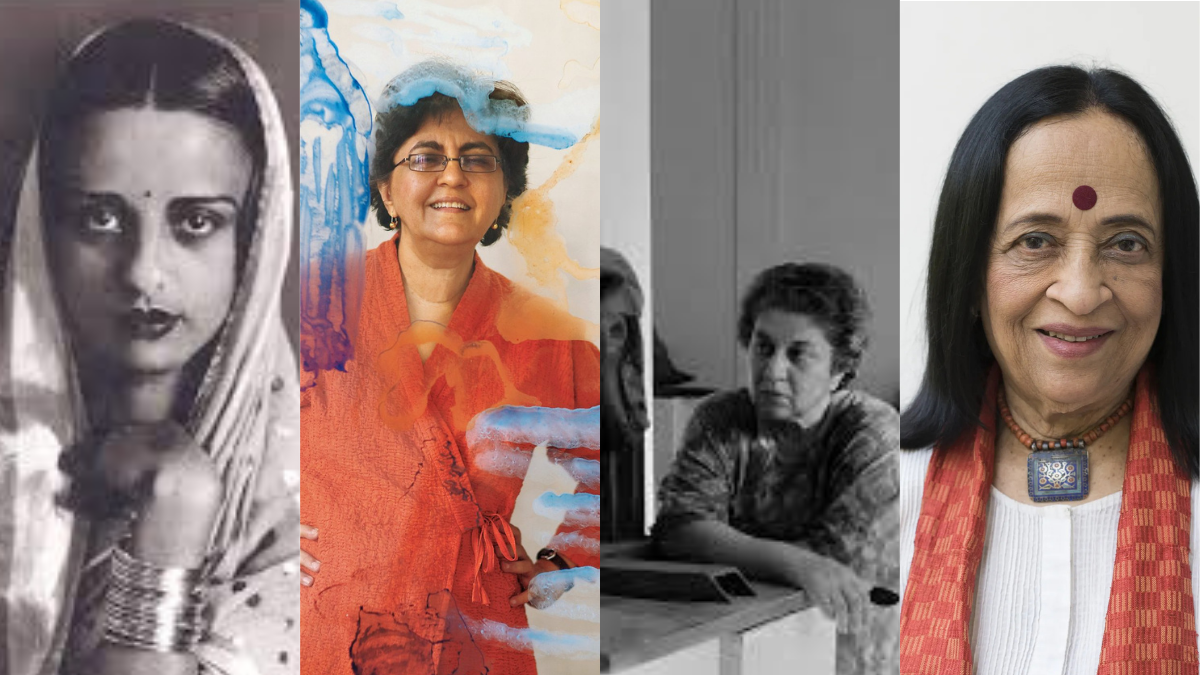
Feminist protest, historically, has also been associated with art, which has been a cornerstone of activism. From street graffiti, zine illustrations and rally posters, to fashion, face painting and makeup, art is essential to social justice movements, invigorating them with life and colour, quite literally. From painters like Artemisia Gentileschi, Frida Kahlo, Amrita Sher-gil, Sunayani Devi, Ottilie Roederstein, Malak Mattar, Georgia O’Keeffe, to sculptors like Louise Bourgeois, Sarah Bernhardt (who is better known as an actress), Yayoi Kusama and Huma Bhaba, women artists have asked questions which have been often ignored by their male counterparts. The body as an artistic medium is also crucial, especially in queer feminist art, right from drag which uses makeup, clothes and stylised body movements, voguing as queer resistance to Marina Abramović’s Rhythm O, a six hour long performance-cum-social experiment with her body as an object and Yoko Ono’s Cut Piece, a mediation on objectification and the body.
In this context, art becomes what gives life blood to social justice movements like feminist and queer rights activism. To create a discourse about gender and art, FII is looking for submissions throughout the month of January for our Mood of the Month. We shall be reviewing and publishing articles on a rolling basis till the 25th of January. Please send us your pitches as soon as possible.
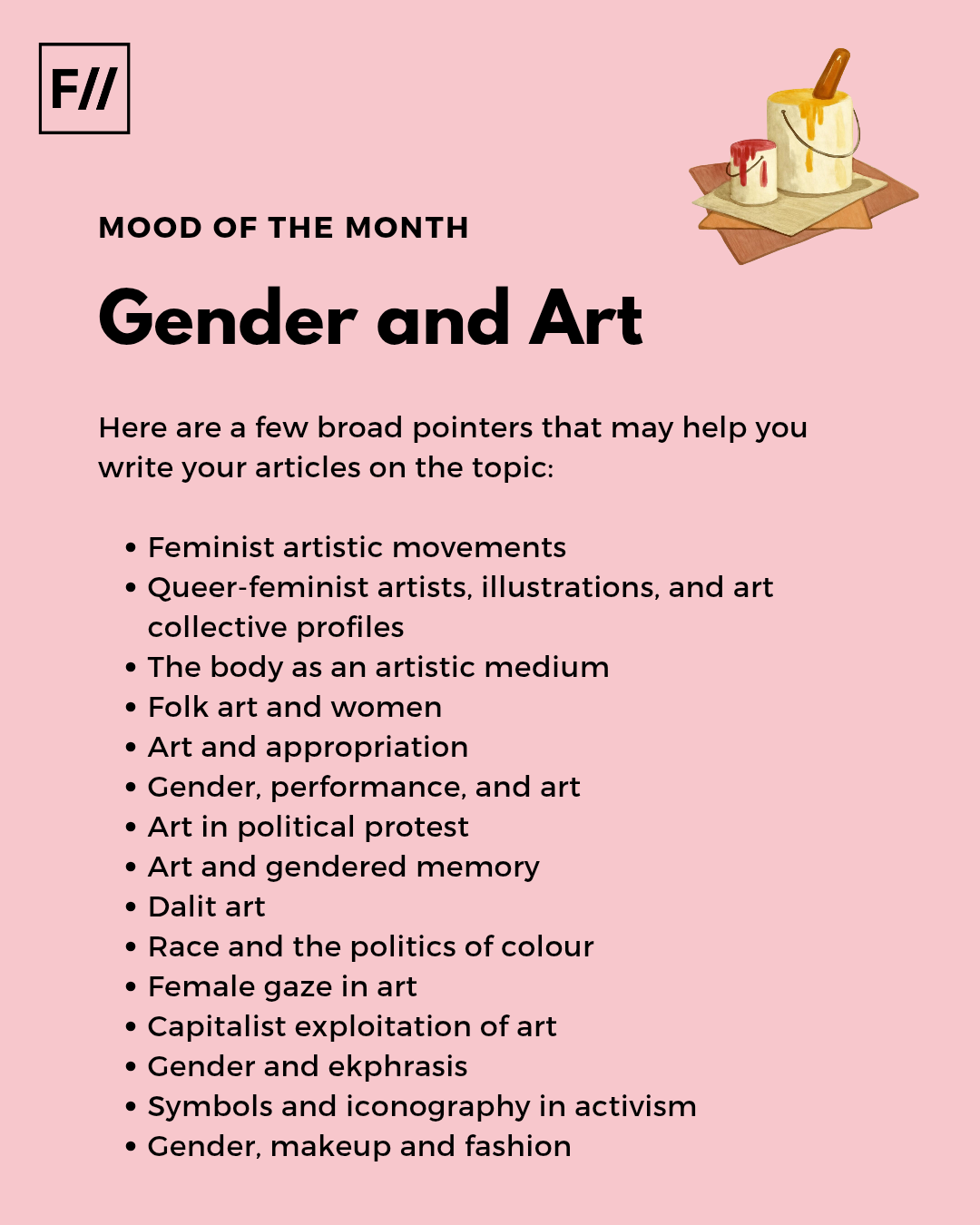
Some of the themes that you may find helpful are listed below:
- Feminist artistic movements
- Queer-Feminist artists, Illustrations and art collective profiles
- Queer art cultures
- The body as an artistic medium
- Folk art and women
- Art and women’s entrepreneurship
- Art and appropriation
- Art and indigeneity
- Gender, performance and art
- Art in political protest
- Art and gendered memory
- Dalit art
- Race and the politics of colour
- Lesser known artists and art movements from global history
- Female gaze in art
- Capitalist exploitation of art
- Gender and ekphrasis
- Gender and digital art
- Art in the age of AI and social media
- Gender and comics
- Gender, curation and the politics of taste
- Gender and the gallery space
- Art, eco-consciousness and sustainability
- Art as a profession
- Gender, art and architecture
- Gender, animation and design
- Symbols and iconography in activism
- Gender, makeup and fashion
This list is not exhaustive and you may feel free to write on topics within the theme that we may have missed out here. Please refer to our submission guidelines before you send us your entries. You may email your submissions to info@feminisminindia.com.
We look forward to your drafts and hope you enjoy writing them!
About the author(s)

Feminism In India is an award-winning digital intersectional feminist media organisation to learn, educate and develop a feminist sensibility and unravel the F-word among the youth in India.