We have all heard of women playing passive parts or assistants in art forms across the subcontinent, such as the ‘torch bearing’ wives of the Bhopo bards or storytellers in Rajasthan, fondly called Bhopi by the locals – who would hold a lamp and illuminate the par from where their husbands would narrate the epic anecdotes. John D. Smith in The Epic of Pabuji writes about Parbu Bhopo and the tradition of the bards singing, dancing and telling tales from the Pabuji epic, depicted in the cloth Par or Phad with elaborate paintings.
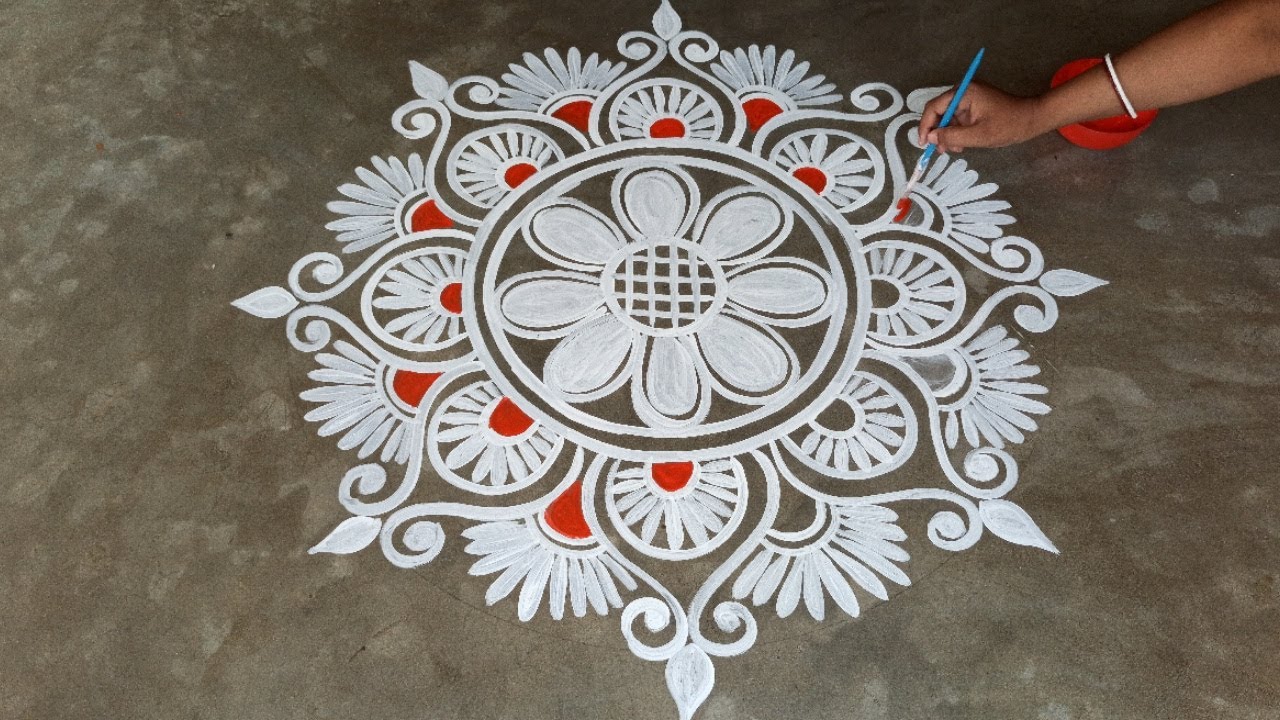
Smith describes how Parbu Bhopo’s wife would also sometimes sing with him. Women have always participated in art that have gone unnoticed in the mundanity of life – they have traditionally been custodians of making rangolis and arranging flowers in festivals and ordinary mornings across the length and breadth of the subcontinent. But they have not just been contained to “mundane art”.
Art, tradition and mathematics
Women across Assam have tirelessly woven intricate motifs and patterns on cotton, eri, muga and Pat silk – an art form which is part of the core heritage of the state. Weaving for these women has always been more than a means of livelihood – it is a marker of their identity – a means that connects them to their roots, to their mothers and grandmothers, who passed the craft across generations.
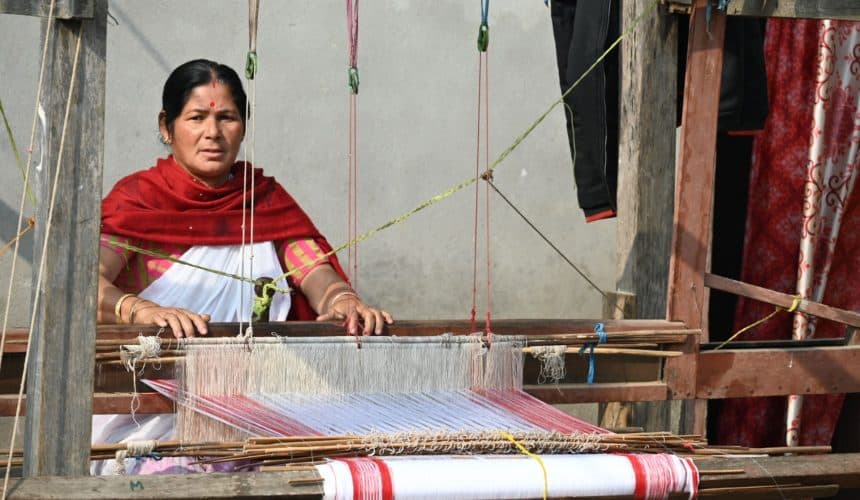
From the rhythm of the loom emerge designs and motifs inspired by nature, folklore, and everyday life, each carrying symbolic meaning and regional distinctiveness, and a set geometrical pattern carrying both art and calculation. A fellow scholar at JNU who worked on traditional mathematics has spoken about the involvement of mathematics in these crafts, a fact that we ignore while admiring the designs. Women have traditionally mastered the art forms of Warli, Pattachitra, Madhubani, patchwork, embroidery work and more, all being excellent mediums of art, craft, skill and mathematics.
The craftswoman and her craft: Nayika at work
While women have been mostly been bookended by tales of male greatness in the world of arts as anywhere else, in recent times, there have been works that have started highlighting their contributions to folk art forms. In an article on Outlook entitled ‘Celebrating the women who shaped India’s Folk Traditions‘, Sukhada Khandge talks extensively about the amazing contributions of women towards the development of multiple folk-art forms.
In an article on Outlook entitled ‘Celebrating the women who shaped India’s Folk Traditions‘, Sukhada Khandge talks extensively about the amazing contributions of women towards the development of multiple folk-art forms.
She mentions about female theatre artists and dancers in Maharashtra, as mentioned in the book Lokrang Nayika written by her father, Dr. Prakash Khandge, celebrating the lives of women coming from small towns, and humble and oftentimes challenging backgrounds who made their mark in the world of theatre, art and dance.
Khandge talks about the folk artist and Tamasha performer, Vithabai Narayangaonkar, who supposedly was so dedicated to her art that during one of her performances, when she was nine months pregnant, she began the show with the bump, went backstage in between, delivered the baby, cut the cord and came back to stage to continue with the performance.
Frida Kahlo, folk art and the pleasure of pain
This theme of resilience and passion echoes in the lives of trailblazing women artists beyond India, such as Frida Kahlo, who excelled not only in art but also in science and literature, being taught by her father ‘to think for herself‘, unusual for a woman in the 1930s. A driving force behind all art is pain. In Frida’s case, it was both physical and emotional, from polio, an almost broken spine, to a limping leg and a near fatal accident that left her paralysed for months.
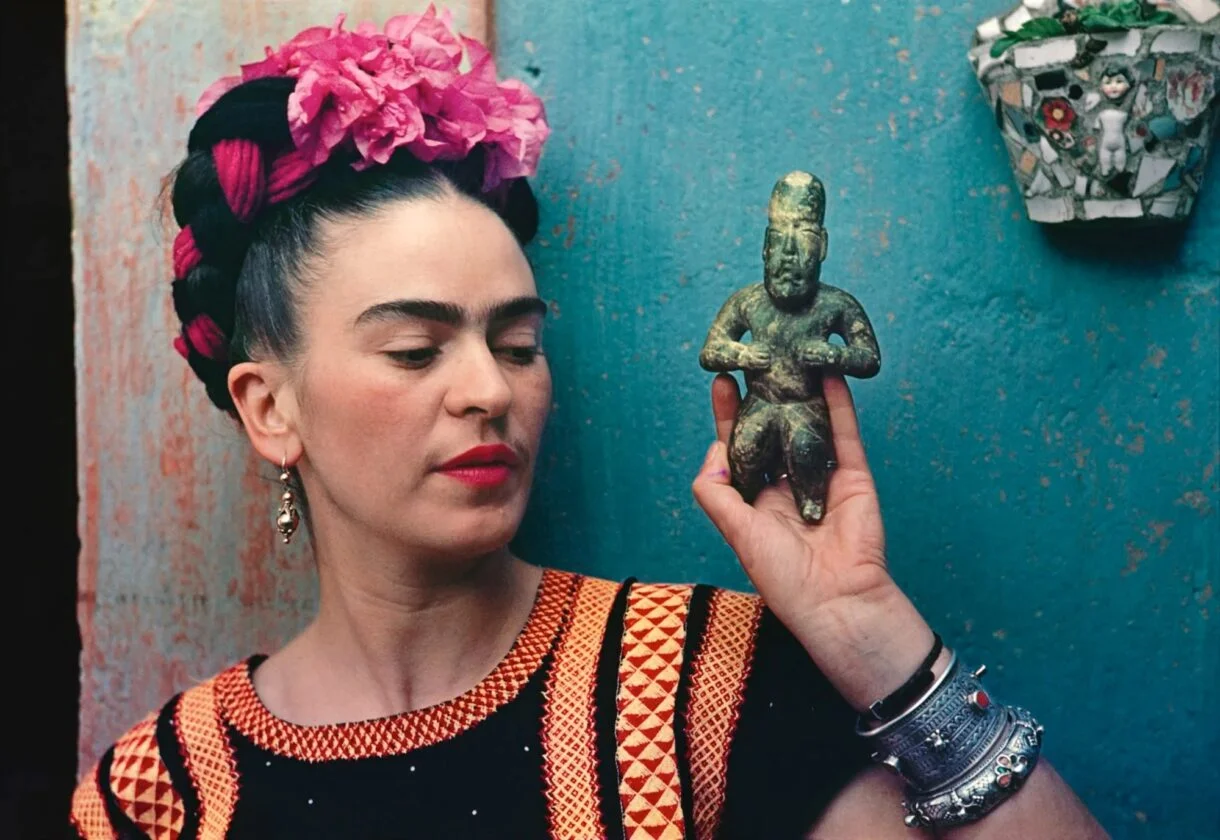
Uncertain whether she would live or die, she began painting. She soon began to “live”, interacting with communist activists and exploring the world. She met Diego Rivera, a socialist painter. After her marriage to Rivera, Frida continued painting, but became drawn more to folk art – Mexican folk art, incorporating these elements into her work and personal expression, mostly through her style of dressing and accessorising.
She identified and made a mark for herself, as a “disobedient” young woman, being expelled from school.
But art requires women to be disobedient, sometimes rebellious, and even revolutionary, freeing themselves from the shackles of family and societal life.
But art requires women to be disobedient, sometimes rebellious, and even revolutionary, freeing themselves from the shackles of family and societal life. Women artists also experience an all-encompassing pain that cannot be expressed, nor concealed. It is a perennial, life threatening, yet faithful kind of pain that promises to stay, that helps one create, that liberates, acts as the supreme form of catharsis, and is present in some form or the other, throughout their lives, till the time they live, are forced to live, or are not hunted down after being branded as witches.
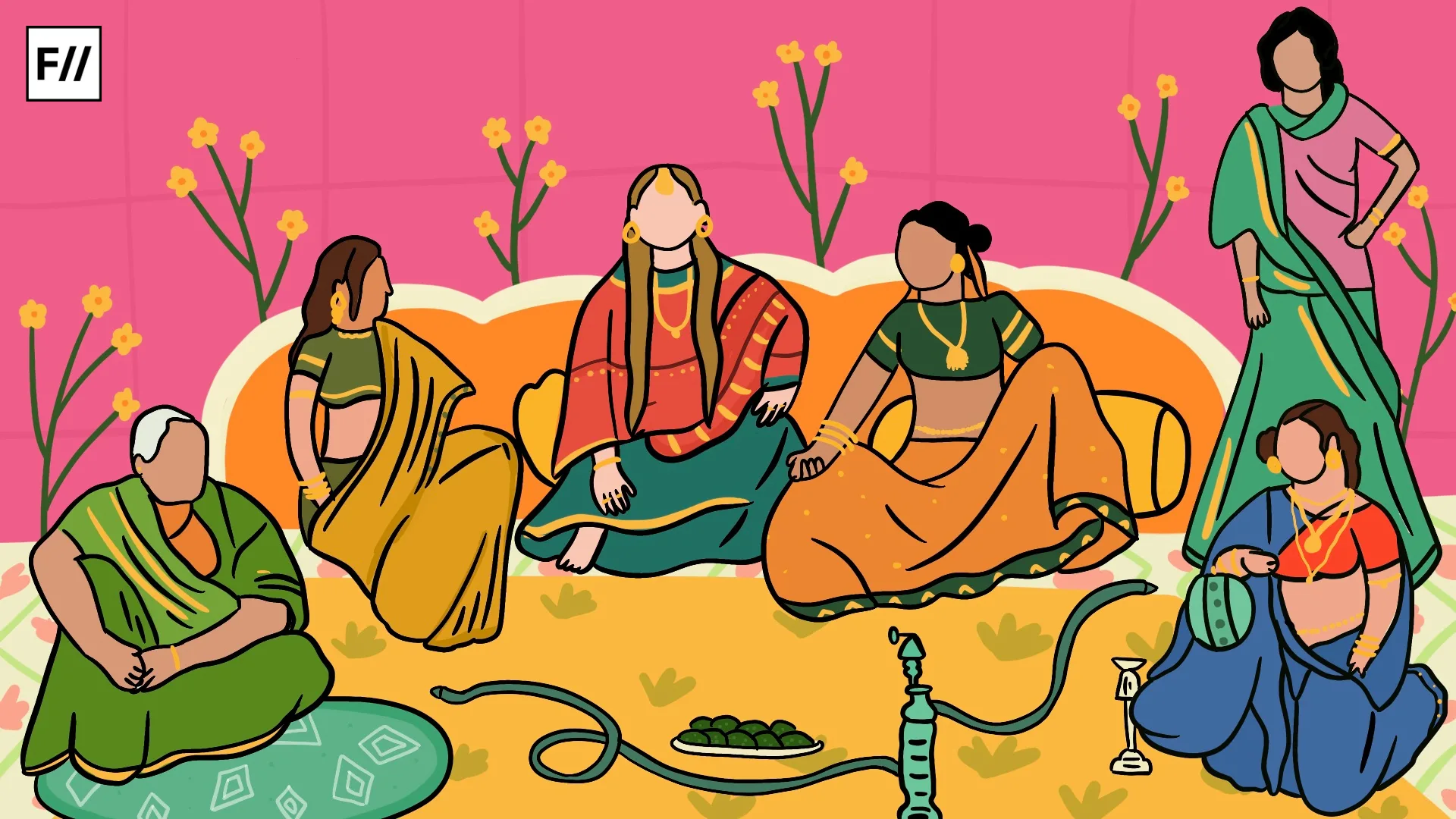
But their art forms remain, or are preserved perhaps by friends and family, who remember them after years of their passing, in gatherings where they once made their presence felt, through their Lavani or tango, or their songs, or the strings of the lyre they strum, or the strokes of their brush painting pleasure and pain on canvases of hope.
About the author(s)

Dr. Swaswati Borkataki is a freelance writer and editor. She has completed her PhD from Jawaharlal Nehru University and her interest areas include religion and folklore, Women and gender history, Food and culinary history among others.