The Voice of Hind Rajab, an internationally acclaimed film, was banned in India by the Central Board of Film Certification (CBFC) because of the state’s anxiety about its release. Written and directed by Kaouther Ben Hania, the film premiered at the 82nd Venice International Film Festival on September 3, 2025, winning the Grand Jury Prize. It was also nominated at both the 98th Academy Awards and the 83rd Golden Globe Awards for Best International Feature Film and Best Non-English Language Film, respectively.
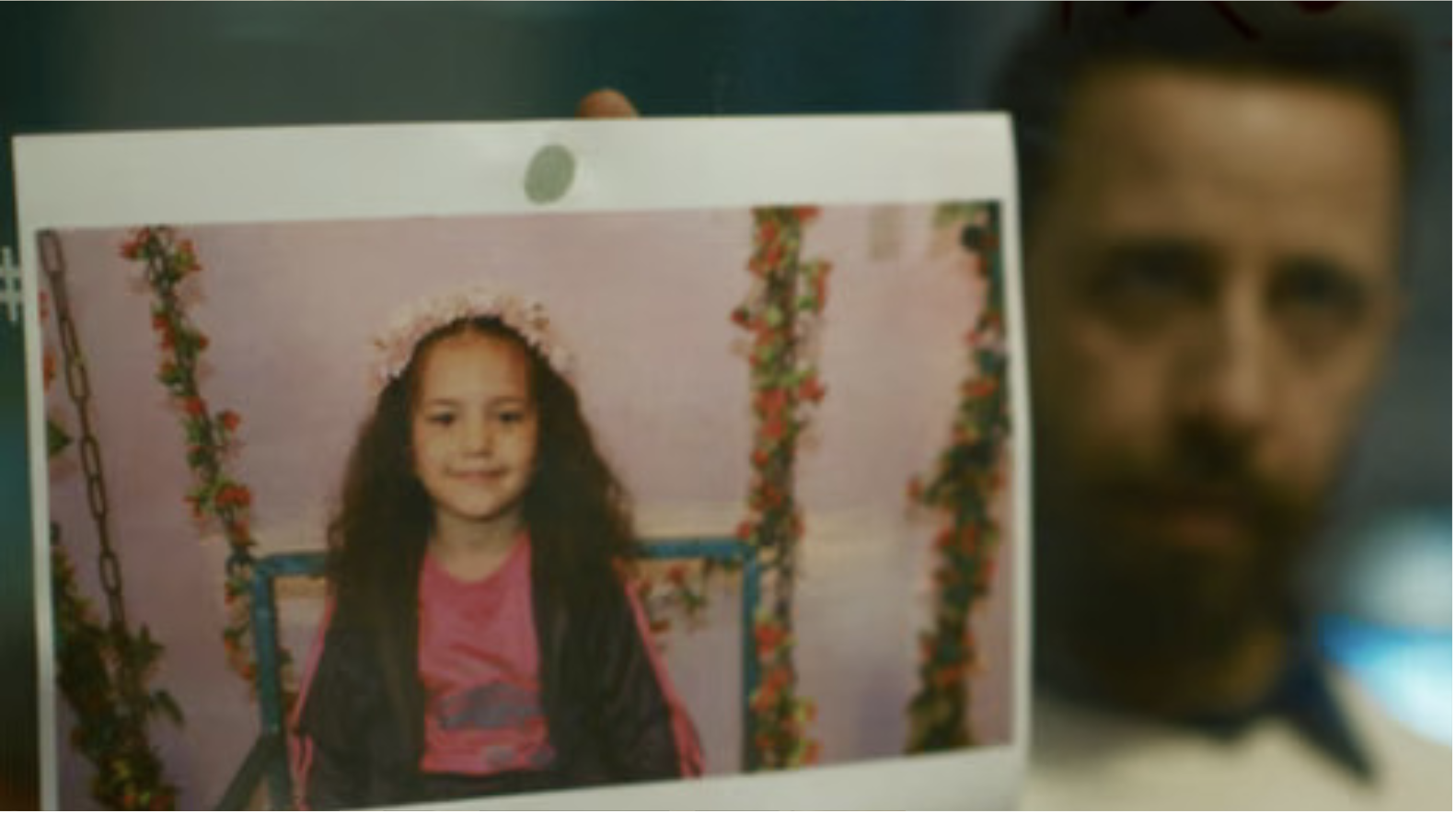
The film is a reconstruction of the final hours of Hind Rajab, a 5-year-old Palestinian child who was surrounded by Israeli fire in Gaza and was murdered by Israeli forces.
The film is a reconstruction of the final hours of Hind Rajab, a 5-year-old Palestinian child who was surrounded by Israeli fire in Gaza and was murdered by Israeli forces. The film unfolds over phone calls between Hind and the members of the Red Crescent Society, who tried to send an ambulance to rescue her. However, their rescue efforts were thwarted by Israeli security forces, and the two volunteer paramedics sent to rescue her were also murdered.
An honest and emotionally intense retelling
The film builds on the actual voice recordings between Hind and the members of the Red Crescent Society, laying bare the tragedy without any agenda-driven embellishments. The absence of visual excess intensifies the emotional experience, placing the viewer in the position of a helpless witness. The film does not dramatise violence; it merely makes us witness the real-life violence Hind experienced. As a viewer, one feels exasperation, despair, and helplessness, but nothing even remotely comparable to what Hind must have gone through.
Hania’s ethical commitment towards the story of Hind Rajab is reflected through her refusal to sensationalise the tragedy. She does not exploit suffering, but rather corroborates it.
In The Voice Of Hind Rajab, Kaouther Ben Hania merges elements of fiction and non-fiction filmmaking. The real voice recordings form a solid backbone, with delicately and ethically staged sequences creating a spatial and emotional context. The other aspects that the filmmaker focuses on are sound, duration, and absence. By refusing the visual re-creation of violence, the film makes way for a sensorial and psychological experience. Hania’s ethical commitment towards the story of Hind Rajab is reflected through her refusal to sensationalise the tragedy. She does not exploit suffering, but rather corroborates it.
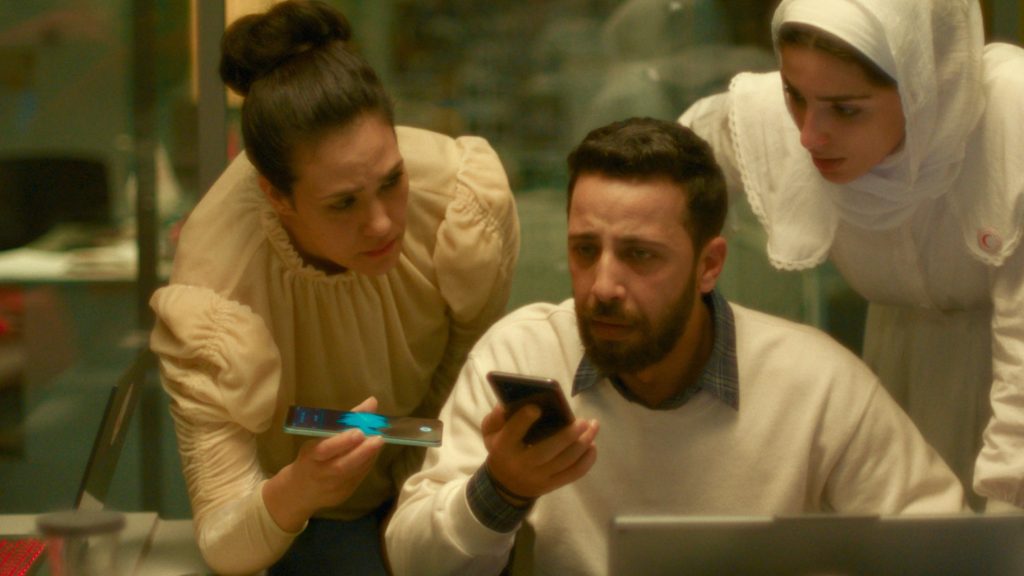
In the film, the efforts by members of the Red Crescent Society, namely Omar (played by Motaz Malhee) and Rana (played by Saja Kilani), to rescue Hind are layered with their own frustrating, tumultuous reality. The film highlights the fact that only limited humanitarian aid has been possible amidst the Gaza genocide, given the brutal repression by the Israeli army and the condoning of such actions by Israel’s supporters. Through the members of the Red Crescent Society, the film also explores the broader condition of civilian vulnerability.
Cinema, geopolitics, and ideological state apparatuses
The CBFC arbitrarily reasoned that the release of the film might ‘break up the India–Israel relationship’. The ban has emerged as a politically charged cultural movement revealing tensions between artistic freedom, state censorship, and foreign policy alignment. The ban has treated a humanitarian story and a testimony of war as a geopolitical object.
Earlier, the CBFC used to censor films on moral grounds; however, it has now turned to strategic-political censorship. This is owing to the government of India’s open diplomatic alignment with Israel, particularly during the Gaza genocide. This decision envisages a future in which censorship is used as a tool to serve the interests of foreign powers.
Earlier, the CBFC used to censor films on moral grounds; however, it has now turned to strategic-political censorship. This is owing to the government of India’s open diplomatic alignment with Israel, particularly during the Gaza genocide.
The CBFC’s decision to ban the release of the film can be understood with French Marxist philosopher Louis Althusser’s 1970 essay, Ideology and Ideological State Apparatuses. Althusser’s theory posits how power is reproduced through ideology and not just the force of the state.
He divides the mechanisms through which state power is reproduced into two: first is the repressive state apparatus (RSA), which includes the police, the military, the courts, and the prisons; the second is the ideological state apparatus (ISA), which includes the education system, family, religion, media, culture (including cinema), and the political system.
The latter functions primarily through ideology, not force. Governments influence funding, censorship, permissions, and distribution, determining which stories are told and which are silenced. The ISA reinforces the dominant ideology, making the viewer a passive subject. The state’s clear ideological position to ban the film should be considered undesirable and irresponsible because it seeks to shape the limits of public imagination.
In a democratic framework, the interpretation of art and artistic expression should foster diversity, critical reflection, and emotional engagement. However, the representation of diverse narratives, critiquing power structures, and discourse on global and domestic issues through cinema is blocked through bans and censorship.

Therefore, it takes away access to human narratives, which is centred on a Palestinian child in this case, and obstructs the articulation of a political viewpoint on the issue. The selective limiting of the freedom of expression politicises art. It imposes state ideology and disrupts dialogue that can shape the audience’s viewpoint.
The dual mechanisms behind the politicisation of art
Access to cinema is shaped by the state and its allied forces. This is done by managing visibility, circulation, and legitimacy of narratives. The ban on The Voice of Hind Rajab is an example of the mechanism of suppression, as there is no scope left for engagement with the work and for any possibility for interpretation or dissent.
On the contrary, films like The Kashmir Files, The Kerala Story, and Dhurandhar are examples of the mechanism of amplification. Their themes, such as ultranationalism and religious or cultural conflict, resonate with dominant political sentiments. Thus, such films are allowed theatrical release and, in some cases, even tax-free screenings.
The politicisation of cinema is not a single act of censorship or propaganda, but a coordinated dual process. In such a system, cinema takes the form of state power and ideology rather than simply reflecting reality.
When the mechanisms of selective suppression and selective amplification operate together, they create a controlled cultural ecosystem. Hence, the risk of censorship and self-censorship increases, creating a narrow public viewpoint with uneven and asymmetrical public debate. The politicisation of cinema is not a single act of censorship or propaganda, but a coordinated dual process. In such a system, cinema takes the form of state power and ideology rather than simply reflecting reality.
The Voice of Hind Rajab foregrounds human vulnerability and civilian suffering, narratives that are often marginalised in the dominant geopolitical landscape. Further, bans and censorship of other films, such as All That’s Left Of You, Once Upon A Time In Gaza, and many others, point to the control state and global politics have on cinema. The absence of The Voice of Hind Rajab from Indian theatres is not just about censorship; it’s an exemplification of how the state exercises power over us and everything about us.
About the author(s)

Vansh is a film graduate from AJK MCRC, Jamia Milia Islamia, exploring the cinematic world through archives and the lenses of political history, gender, culture, and social movements. He takes inspiration from the eccentricities of everyday life, blurring the boundaries between fiction and non-fiction.