In 2016 or 2017, I was visiting Kerala with my family when something happened that my teenage mind struggled to fully understand. While staying at a relative’s house, we came up with a spontaneous plan to visit a mall in Kochi with one of their daughters. At the time, she was in her early twenties and had lived in the state all her life.
Before we were set to leave, I watched my aunt pull her aside and ask her to take her brother along as well. This ‘brother’, in fact, was not a brother at all, but a young neighbour who had grown up acting as her unofficial brother figure. She was the younger of the family’s two daughters, and this man, who was probably only a few years older than her, had taken it upon himself to be her ‘protector’. Throughout my stay, I watched him take her to college, to the market, picking her up and dropping her off as though he were delivering shipping consignments.
When I watched Amma Ariyaan a few days ago, this is all I could think about.
A movie that embodies revolution
Amma Ariyaan is a 1986 Malayalam film directed by John Abraham as part of the Odessa Collective. It was the last film he made before his untimely death in 1987. It is widely regarded as his magnum opus, distilling his ideas about left-wing politics, class struggle, collective activism, and institutional resistance into a single work that was made of the people, for the people, and by the people.
Moreover, the film was not only produced by the people but also distributed directly to them. Rather than relying on distributors or screening it in cinema halls, John returned to the road, taking the completed film from village to village and screening it for the very people who had helped fund its production.
Amma Ariyaan was a truly revolutionary film, not just because of its content, but also because of how it was made. It is one of the earliest examples of crowdfunding in Indian cinema. Decades before Kickstarter and GoFundMe, Abraham raised the funds required to make the film by taking a 16mm projector and prints of a few well-known films from village to village, holding independent screenings. Anyone who wished to contribute was free to do so; those who didn’t could simply watch the films and walk away.
Moreover, the film was not only produced by the people but also distributed directly to them. Rather than relying on distributors or screening it in cinema halls, John returned to the road, taking the completed film from village to village and screening it for the very people who had helped fund its production.
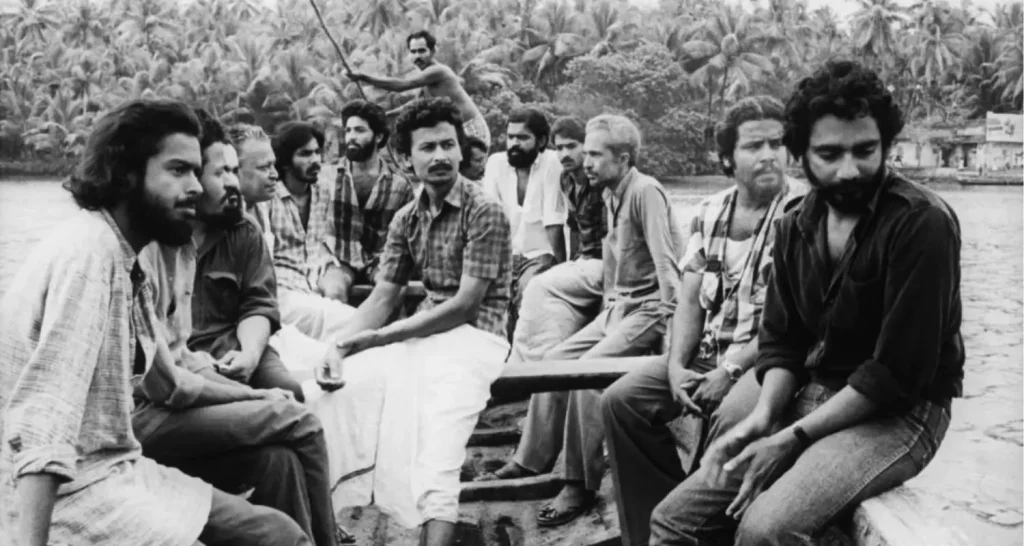
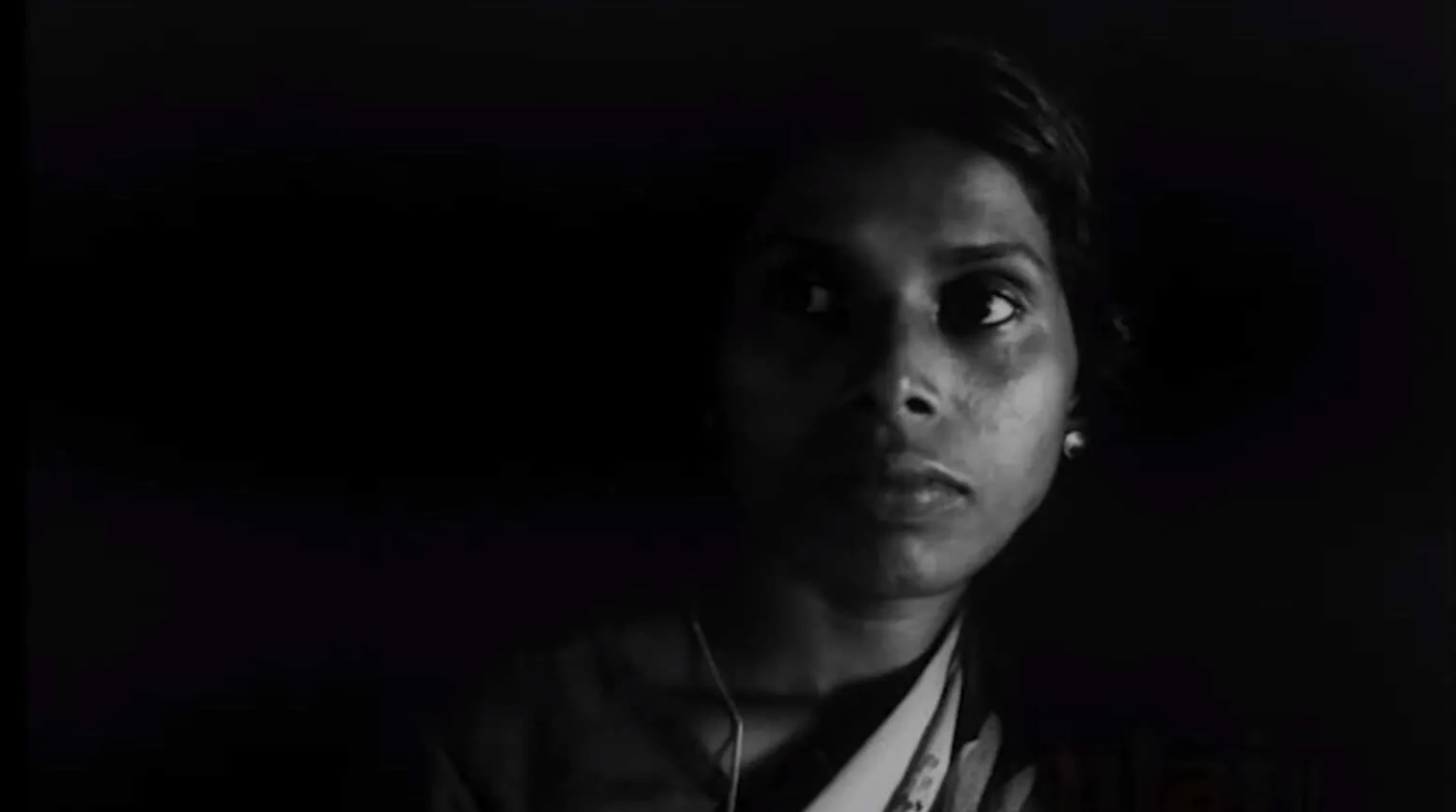
Today, the film has been restored by the Film Heritage Foundation and was showcased at the Cannes Film Festival this year. When I sat down to watch it, what stood out to me was not the deep loneliness of Purushan (played by Joy Mathew) walking alone down the road with his travel bag in hand, but the forlorn, longing look on his mother’s (played by Kunhulakshmi Amma) face before he left.
The women of Amma Ariyaan
The film’s cinematography is unique for its time. Rather than relying on traditional camera work, it consists of sweeping wide shots, with the camera constantly moving alongside the characters. There are only two moments in which the camera holds still on a single subject: the first is Hari (played by Harinarayan), the tabla player whose death is the catalyst for the film’s plot; the second is the women of Amma Ariyaan.
There are only two moments in which the camera holds still on a single subject: the first is Hari (played by Harinarayan), the tabla player whose death is the catalyst for the film’s plot; the second is the women of Amma Ariyaan.
The camera makes you look at their pain. Mothers, wives, and sisters linger in their homes, watching as their husbands, sons, and brothers go out into the world. They watch as these men are brutalised by the police, by the state, by the factories, and by the very institutions that claim to protect them. And they pick up the pieces, nurse the wounds, feed the hungry, and sometimes lose themselves in the process.
The protagonist of the film is Purushan. The name literally translates to ‘man’ in Malayalam, and it is fitting because the protagonist of this film could only ever be a man. No woman living in Kerala at the time would have been able to abandon her domestic role and venture into the world on a quest for revolution and self-discovery. The painful proof of this is Hari’s mother — the woman whom Purushan set out seeking. The titular mother of the film.
Upon hearing of her son’s death, she asks whether he died by suicide. This woman, this mother, knew her son’s desperation. She knew how disenfranchised he felt. She understood his anger and rebellion. And yet, there was nothing she could do to save him. She had to watch her son’s life from the sidelines, as a spectator, unable to intervene, unable to act because of the position her role placed her in.
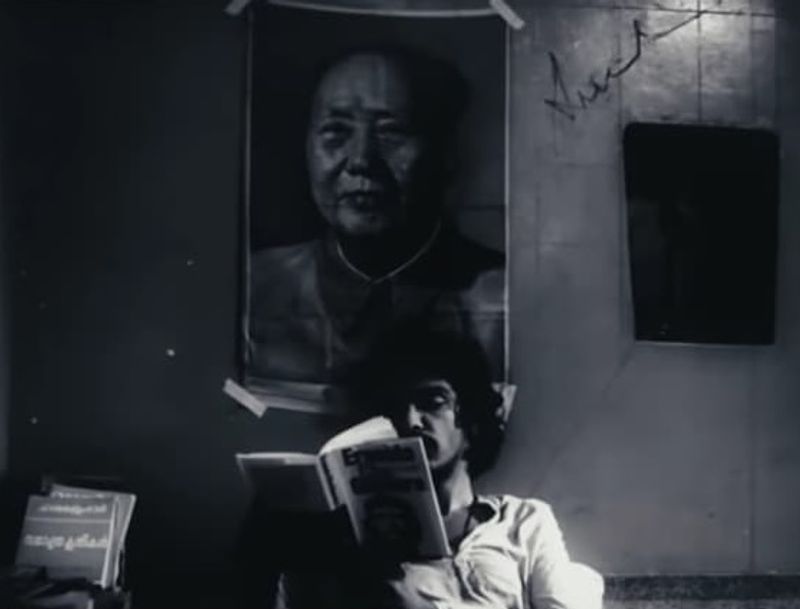
Hari’s father, on the other hand, openly disowns his son, calling him and his friends scoundrels and ‘good-for-nothing fellows’ who are running around wasting their time in the name of revolution. It can be presumed that Hari did not have a good relationship with his father. However, his mother chose to remain by her husband’s side, choosing to isolate her son even further, because that was what respectable women did. ‘Good women’ at the time did not abandon their husbands, no matter what they did.
The women of Kerala
The English translation of the title Amma Ariyaan is ‘Report to Mother’, and the title is fitting because, in the simplest sense, the film is indeed a report: an account a son gives his mother of the things he sees on the road as he travels from the highlands of Wayanad to the docks of Kochi. The film opens and closes with the image of the mother — a simple, frail woman, emotionally entwined with her son, waiting for him to write to her. That image of the mother resonated deeply with me because it is so familiar. It is my mother.
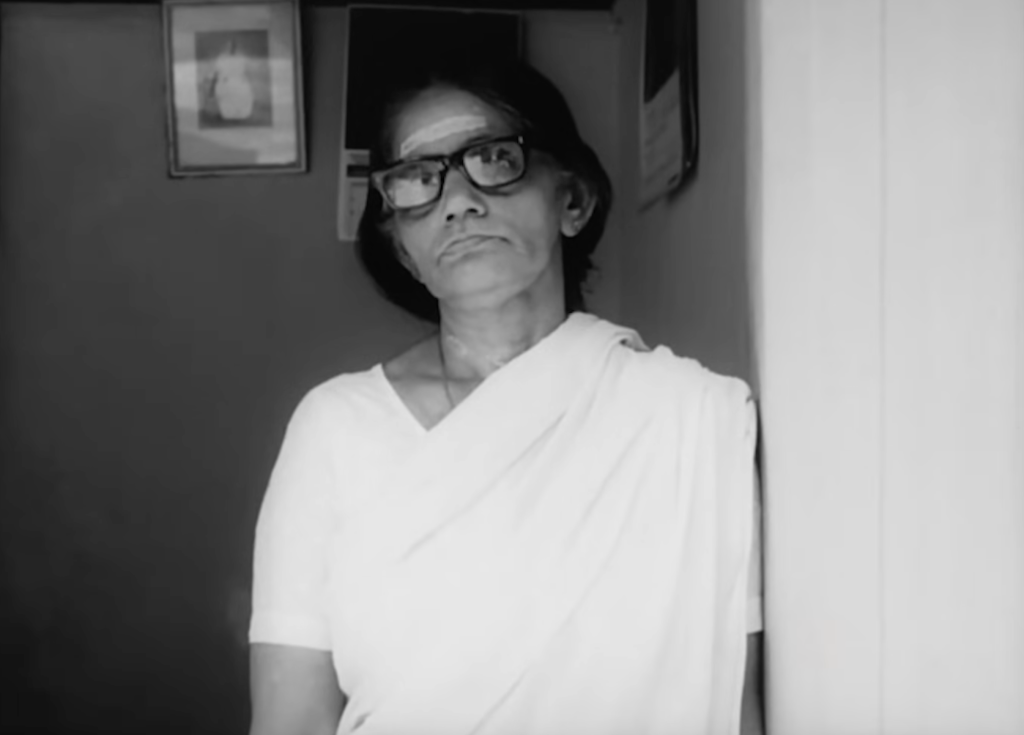
My mother grew up in a Kerala not very different from the one depicted in the film. I grew up on stories of her childhood, vicariously collecting rubber sap and running through paddy fields through her words. She would often tell me, ‘When someone came to meet my father, all of us girls were quickly ushered inside, into the kitchen, or one of the inner rooms.‘
So many young women of her generation grew up like her, sheltered from society for their supposed ‘protection’, but in truth relegated to the only sphere that even ‘progressive’ Malayali men considered appropriate for women: the home. This tradition is not unique to Kerala. All over the world, across regimes of different structures and ideologies, the one constant has been how women are viewed and treated. Our roles as mothers, caregivers, healers, and nurturers have become so deeply ingrained that these qualities are often treated as synonymous with our gender itself. The director understood this, too.
Women in progressive societies
This was not uncommon in Marxist and post-Marxist societies. Most notably, it can be seen in Soviet Russia. The promise of the Bolshevik Revolution to Russian women was that it would free them from their domestic shackles. Vladimir Lenin and his party sought to reinvent the family unit itself, aiming to create a more egalitarian model in which children were raised collectively by the neighbourhood, thereby reducing the burden of domestic duties on Russian women.
Rather than creating a class of Russian women who were equal to men, it created an entirely new standard for women altogether — one in which they were expected to be gainfully employed and contribute to the economy while also holding up the domestic sphere, having children, and raising them.
The realities of how this played out, though, particularly under Lenin’s successor, Stalin, are almost tragic. Rather than creating a class of Russian women who were equal to men, it created an entirely new standard for women altogether — one in which they were expected to be gainfully employed and contribute to the economy while also holding up the domestic sphere, having children, and raising them. Sadly, that is also how Kerala has progressed since the time of the film’s release.
According to the 2011 Census, Kerala has the highest female literacy rate in the country, at nearly 92 per cent. However, according to the 2025 Periodic Labour Force Survey, the Workforce Population Ratio for women in Kerala is only 31 per cent, which is below the national average of 33.8 per cent. Moreover, the social expectation for women to get married and settle into a domestic routine continues to remain.
This makes it evident that, for most women in Kerala, education might be a necessity, but employment is not. Moreover, for the women who need to or choose to enter the workforce, marriage and having children remain expectations. Without them, they will always be seen as anomalies in need of ‘correction’.
This makes it evident that, for most women in Kerala, education might be a necessity, but employment is not. Moreover, for the women who need to or choose to enter the workforce, marriage and having children remain expectations. Without them, they will always be seen as anomalies in need of ‘correction’. Maybe that is the greatest tragedy of being a woman: that even those who fight for progressivism and equality in other spheres will not fight for gender equality, at least not until we force them to.
About the author(s)

Jay (she/they) is a writer and filmmaker whose work primarily focuses on the intersection of feminism and queerness. Over the past eight years, their work has spanned different genres and forms, including short stories, poems, novels, short films, screenplays, and long-form articles. Currently, they are working on building BlueMoon Films, a creator-first media company and film community with the aim of platforming diverse voices in cinema.