Over the past few weeks, the dominant discourse in mainstream news, digital media, and social platforms has been the murder of Ketan Agarwal, the son of an affluent real-estate family in Pune. The alleged killing of 26-year-old Ketan at Lohagad Fort near Pune is deeply troubling and rightly calls for condemnation from all sides.
According to media reports and the police, Ketan’s fiancée, 20-year-old Siya Goyal, along with her alleged partner, 22-year-old Chetan Chaudhary, pushed him from the fort on June 18. As the case is currently under judicial consideration, the allegation must be established through due process of law. However, if the accused are found guilty, they must be punished, as violence in any form should not be tolerated. The Maharashtra Government, acting promptly, has already appointed senior advocate Ujjwal Nikam as the Special Public Prosecutor and has directed that the case be handled through a fast-track process.
The government’s actions demonstrate that, when the state chooses to act, it can do so swiftly. The bigger question is why such promptness in the administration of justice is not seen when the victims are women, gender minorities, or people with less economic influence.
The government’s actions demonstrate that, when the state chooses to act, it can do so swiftly. The bigger question is why such promptness in the administration of justice is not seen when the victims are women, gender minorities, or people with less economic influence.
As per the National Crime Records Bureau (NCRB) 2024 data, Maharashtra recorded 47,954 cases of violence against women, the second-highest figure after Uttar Pradesh. The NCRB report of 2023 paints a more concerning picture, where the conviction rate in dowry death cases was as low as 4.5 per cent in Maharashtra. Moreover, violence associated with inter-caste relationships (such as honour killings) and interfaith relationships (often framed as ‘love jihad’) is not tracked as a separate category by the NCRB, which means that the actual extent of coercion affecting marginalised groups, particularly women, remains underreported.
These incidents are often exploited by a patriarchal society to craft misogynistic spectacles that stereotype women as evil through memes and jokes, while downplaying the broader history of violence against women by relying on selective examples.
This article is not intended to downplay the alleged brutal killing of Ketan or to create a gender-based binary within social justice discourse. Instead, it emphasises the need for the government and media to be more sensitive in such cases. These incidents are often exploited by a patriarchal society to craft misogynistic spectacles that stereotype women as evil through memes and jokes, while downplaying the broader history of violence against women by relying on selective examples.
A more responsible way to contextualise the Ketan-Siya case is to view it as a reflection of India’s patriarchal, caste-based, and class-conscious society, where women struggle to exercise their agency because families and institutions don’t offer a safe psychological and sociological space for them to say ‘no’.
Why ‘no’ is not an assertive lexicon for women in Indian society
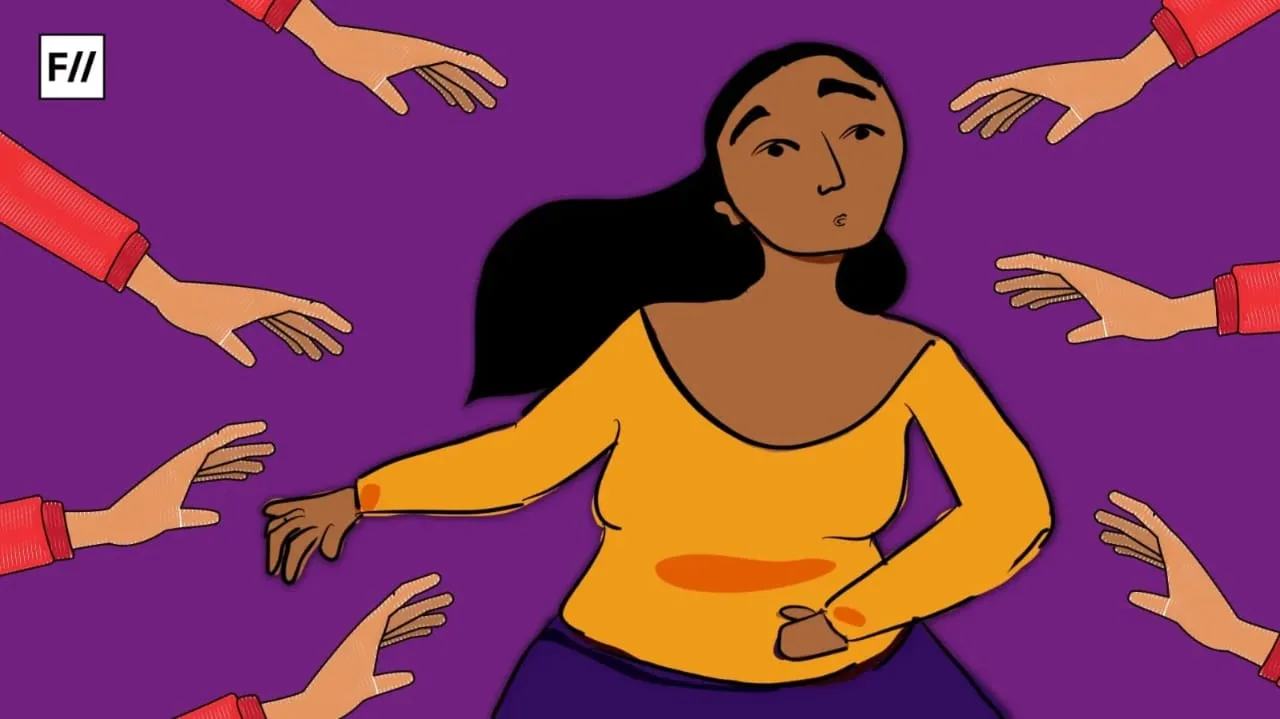
Following the Ketan Agarwal murder, and even after the 2025 Raja Raghuvanshi case, a populist discourse arose around a recurring question: why kill their husband when these women could have said ‘no’ to the marriage proposal? This question might at first appear significant. However, in India’s patriarchal, caste-embedded, and class-conscious social structure, saying no has never been a safe option for women.
In a caste- and class-segregated society, the word ‘no’ remains a privilege and does not carry equal weight for subaltern groups such as women.
The history of violence against women in India reveals that their ‘no’ has never truly been acknowledged. Jesica Lal said no, but her refusal led to her murder. Phoolan Devi’s no was suppressed through caste- and gender-based violence, turning her body into a symbol of upper-caste dominance. Jyoti Singh Pandey’s no in the 2012 Delhi rape and murder case was ignored, and she was brutally attacked in a public space in Delhi. Furthermore, women face a similar pattern of violence in cases of honour killings and dowry-related abuse when they refuse to conform to patriarchal norms. In a caste- and class-segregated society, the word ‘no’ remains a privilege and does not carry equal weight for subaltern groups such as women.
Arundhati Roy, analysing the legitimacy of ‘no’, stated in an interview that Mahatma Gandhi was able to oppose British imperialism because his caste and social position justified his dissent during the Civil Disobedience movement. In contrast, when Adivasi and Dalit communities oppose land theft and forest dispossession, their resistance is often viewed through the radicalised lens of Naxalism. This reveals how caste and class shape which forms of resistance are considered legitimate. And such institutional biases silence marginalised communities and take away their agency.
This is why, until women’s ‘no’ is recognised as a substantive right and protected through institutional trust and family support, women’s marginalisation will lead to occasional violence and collateral damage — as seen in other radical movements — because these issues stem from structural failures rooted in patriarchy and caste/class consciousness.
Making ‘no’ a part of women’s vocabulary
Making ‘no’ an accepted term requires creating psychologically safe conditions where women can refuse without fear. Institutions such as the judiciary play a significant role: low conviction rates in cases of violence against women foster hopelessness, while timely trials and better conviction rates can restore faith in the system. Only then can women’s agency shift from theory to lived experience.
Making ‘no’ an accepted term requires creating psychologically safe conditions where women can refuse without fear.
This must be supported by families and through education. For instance, the Netherlands aims to foster understanding among both children and parents about early boundaries, consent, and choice. Indian parents need to adapt to a culture where women’s refusal is not seen as shameful or immoral. If this change does not occur soon, women’s subjugation will result in such violence and collateral damage from time to time. After all, society often ignores individuals until they are pushed to the edge of rebellion.
About the author(s)

Dr Satkirti Sinha is a Graduate Teaching Assistant and a research scholar in the Performing Arts Department at DMU University, Leicester. His areas of expertise are Performance Theory, Folk Culture, Dalit Theology, Performance Politics, Feminist Theory, Postcolonial Theory, and Sexual Politics.