One sometimes wonders if social media has made filmmaking more difficult. In this world as it is now, audiences are inundated with content—much of it stories. Many people have the opportunity to tell their side of the story (if they choose) thanks to social media and the internet as a whole. This means films now have to be something more than just documenting the everyday lives of everyday people, because non-professional storytellers on social media are already doing a pretty good job of it.
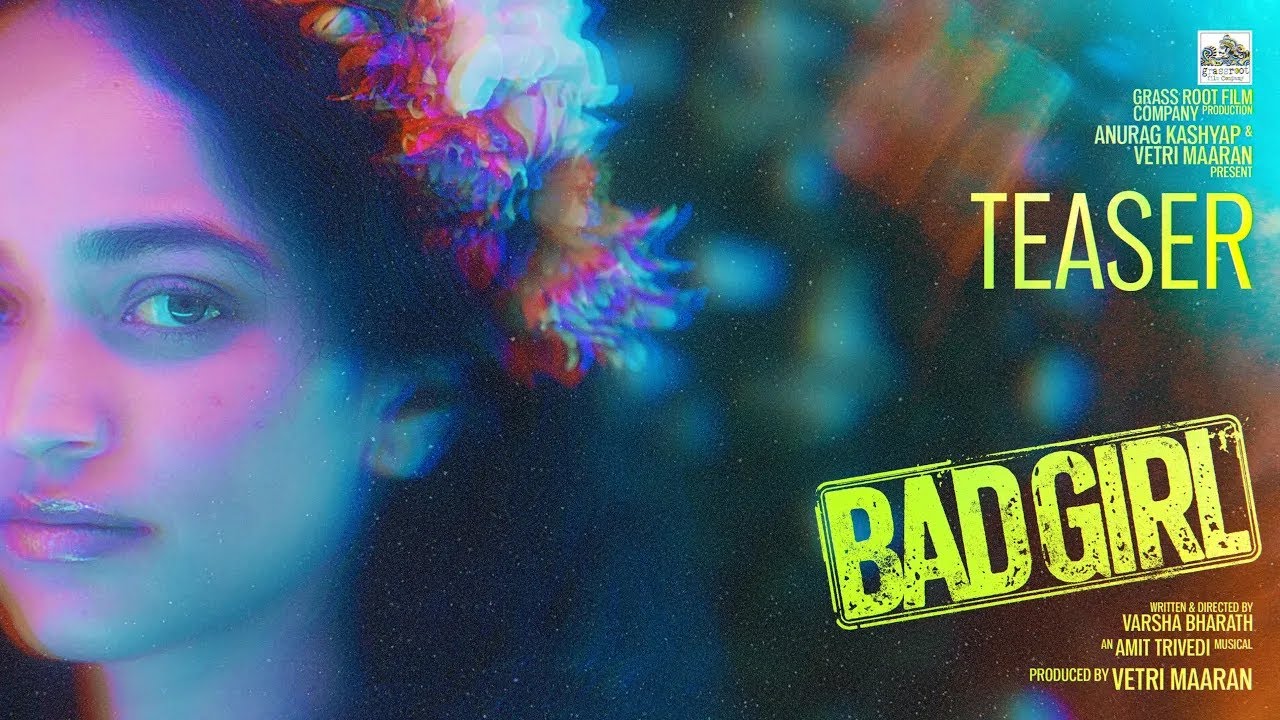
So, when watching the recent film ‘Bad Girl’ (Tamil, 2025, directed by Varsha Bharath), it seemed legitimate to question whether the space called women-telling-women’s-stories needs to take some bold steps forward, precisely because of the stories already being told on social media by real-life women.
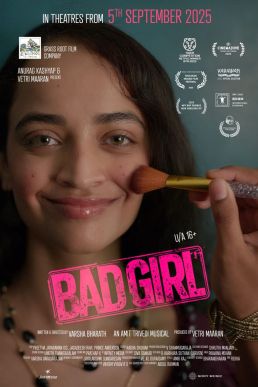
Many of those who have engaged in feminist discourse already know that a ‘bad girl’ is just a normal girl. A normal person. A human being who breathes, lives, and takes up space. If she is a she, she is a bad girl. Now, make her an Indian girl from a conservative family, and the implications become clearer. Her body, her thoughts, her desires, her choices, and her existence can all be sins. This is a lived reality for many Indian girls and women.
One is tempted to state “unpopular opinion” as a disclaimer at this point, as is often done when people go on to share relatively safe and commonplace opinions on the internet. Suffice to say, Ramya S., the protagonist of “Bad Girl”, is not the bad girl she is made out to be.
‘Bad Girl’ is a coming-of-age story. The audience sees Ramya S.’s teenage hormonal angst as she discovers boys. She goes to college, and she discovers alcohol and more boys. She gets a job and has more bad boyfriends. Ramya resents her mother and grandmother for being strict and conservative. But the film does not show whether she feels as vehemently about her father, who thinks nothing of his mother being mean to his wife, or whether she waits to be served water and food, as he takes the women in his life for granted.
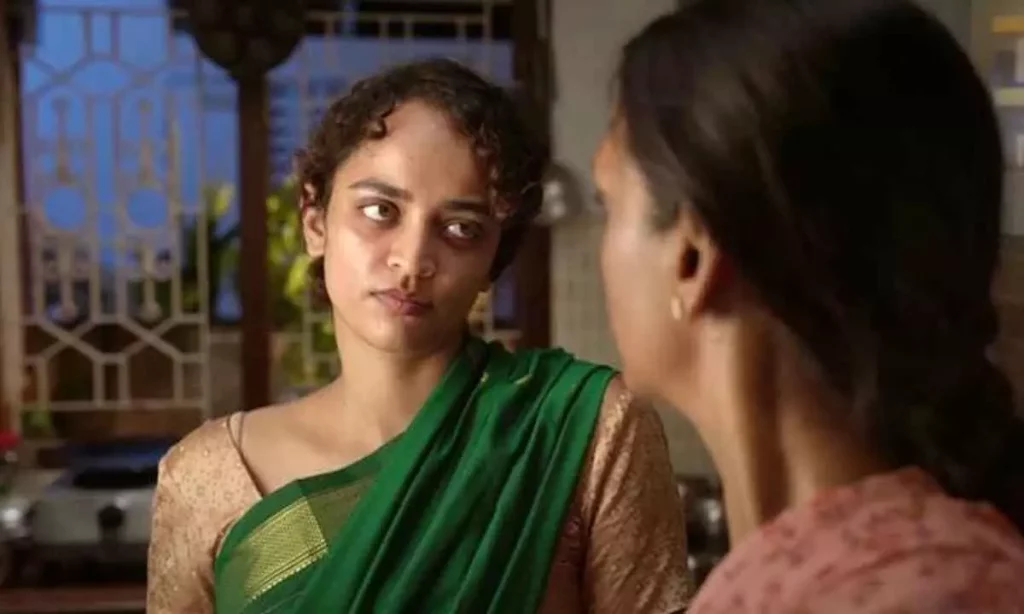
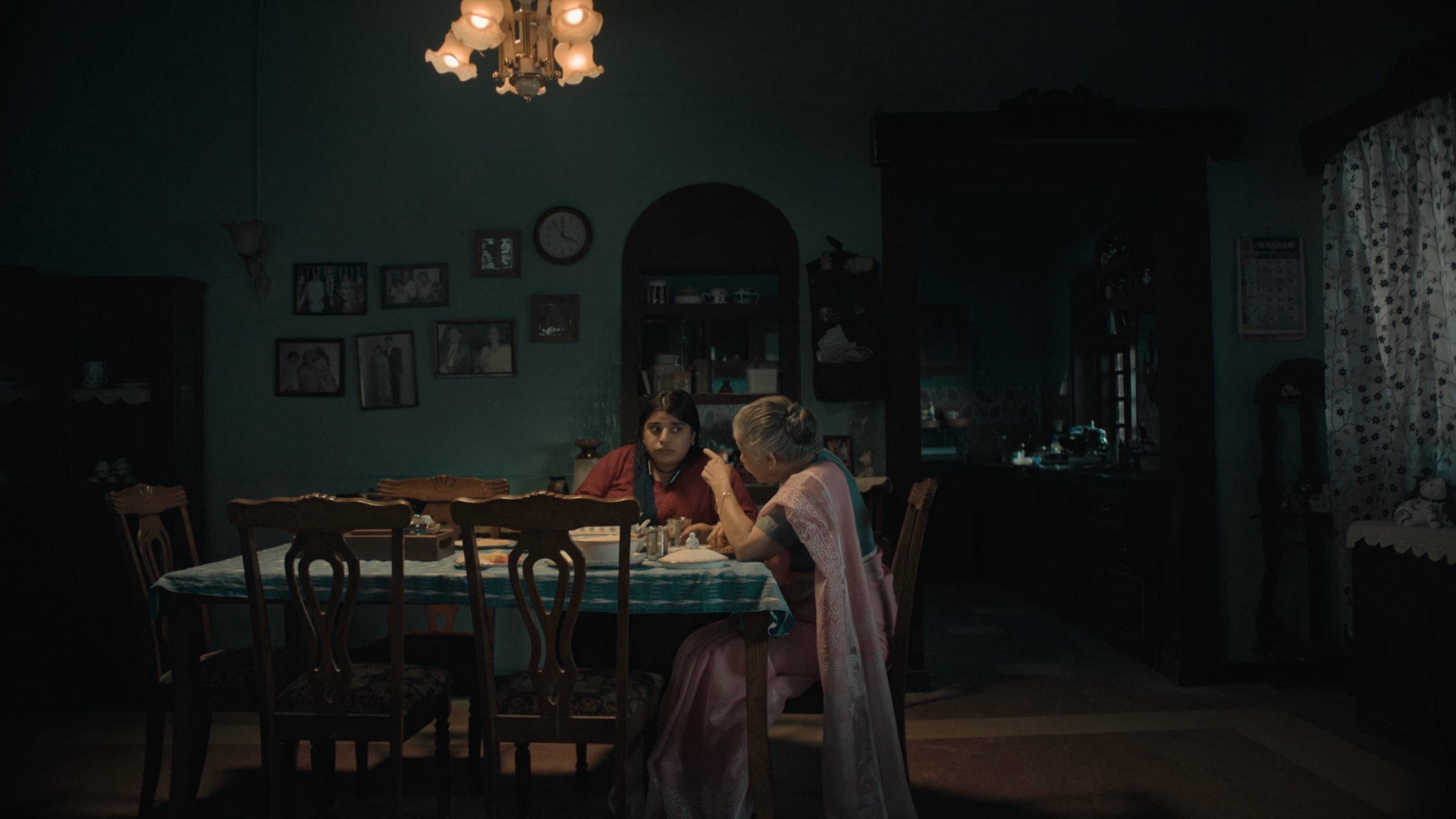
Ramya’s anguish is not new or difficult to understand. Her school is suffocating. Her parents are orthodox. But she is allowed to sit with her legs up on a chair as she dials up to the internet (this is the early 2000s) and chats with a boy, while her grandmother feeds her with her own hands. Indian households can be weird for Indian girls. Love and discrimination are woven together in ways that make it hard to spot where one starts and the other ends. The setup makes it easier to blame the very women who are victims of the system and forgive the men who fortify it.
Young Ramya’s school life is not difficult, per se. It is mediocre. It is mostly uneventful, except for a somewhat legitimate teenage romance that is cut short by interfering adults. She is at loggerheads with her parents, especially her mother, as she continues down this path of being unloved by unnoteworthy men. Her journey is relatable. Older women will spot shades of the mistakes they have made themselves as they witness Ramya spiral and make poor choices.
While the film is entertaining and well-made, it does make one wonder why Ramya is a bad girl at all. The filmmaker probably wants to make that very point: all women are bad girls in this patriarchal reality. But can the bar for being a bad girl be so low when feminists themselves are setting it?
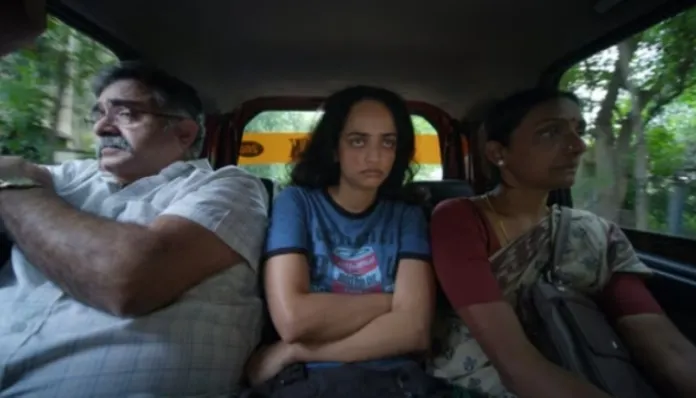
Throughout the film, viewers hardly get to know anyone else in Ramya’s world. The spotlight is always on Ramya. The audience sees her world through her eyes, as they should. And because the viewer gets the opportunity to sit by her as she goes through each of her breakups, it begins to look like she is not a bad girl because she has premarital sex and drinks alcohol. Instead, she might be a bad person because she seems entirely incapable of looking up from her own dreary problems to think about anyone else.
As the story moves forward with her, a question does arise: How much can one empathise with an upper-caste, middle-class, English-speaking, small-bodied, fair-skinned urban woman with friends who care for her well-being and a job that seems to be paying the bills? She has comfortable access to a mobile phone as a teenager, alcohol and sex as a college student, and her own apartment and curly hair cream as a woman in her 30s.
What really is the problem then?
At best, Ramya’s life is ordinary. She is like anybody else. She blames her mother for her problems. The decisions she takes are cliched, and their consequences are equally lacklustre. Not once does the audience see her show up for any of her friends, who take care of her every time she is distraught. On the contrary, she actively ignores their sensible guidance and continues to make poor choices. By the end, one is tired of Ramya and her non-problems. The bad girl begins to transform into a boring girl, one who seems in denial about her own privileges, lack of problem-solving skills, and mediocrity.
Perhaps that is the great coming-of-age story for many women who grew up tackling and trying to make sense of patriarchy. Many adult women have reached a place where they realise that patriarchy is here to stay, but what can definitely change is their definition of what a bad girl is. And how they choose to live their lives as one. One only has to spend enough time on the internet to learn that there are so many different kinds of women on this journey, navigating the patriarchy with whatever tools and knowledge they might have access to.
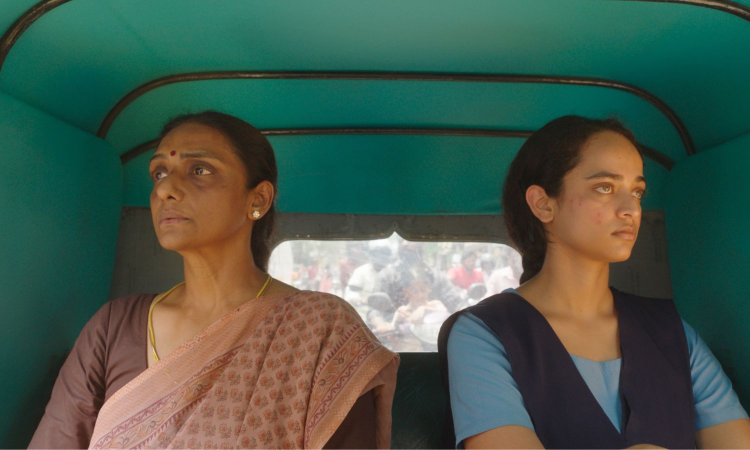
Feminists agree, disagree, and agree to disagree with each other. Many feminists have also come to the understanding that there is no right way to do feminism. Acknowledging one’s privileges and internalised misogyny might be a start, if one so wishes to begin there. The enemy is not a person, or a structure, or a thought. It is so much more than all of that put together. And much of the struggle is without pomp and fair. It is banal, much like Ramya’s life.
And if that is the case, then the proverbial bad girl might need to up her game if she wants to get to a better place, which is why the film ‘Bad Girl’ feels like a lost opportunity and one that repeats a story that has been told and shared many times, rather than digging into the place where the bad girl in real-life women actually lives.
About the author(s)

Remya Sasindran is a feminist, a development communications professional, and a movie buff. In that order.