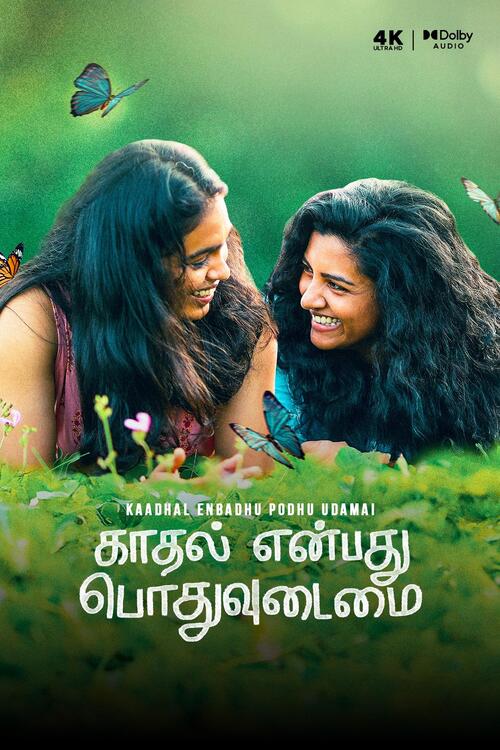
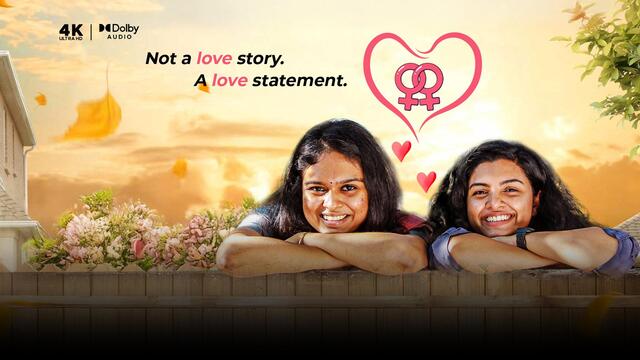
Kadhal Enbadhu Podhu Udamai (KEPU) is Tamil cinema’s second lesbian feature film, a milestone signalling a long-overdue shift toward better queer representation, rather than reducing queer characters to a laughing stock. However, while well-intentioned and opening space for conversation, it ultimately falls short. It is superficial, generic, and overtly didactic, often slipping into a Public Service Announcement (PSA) tone rather than a lived, layered story.
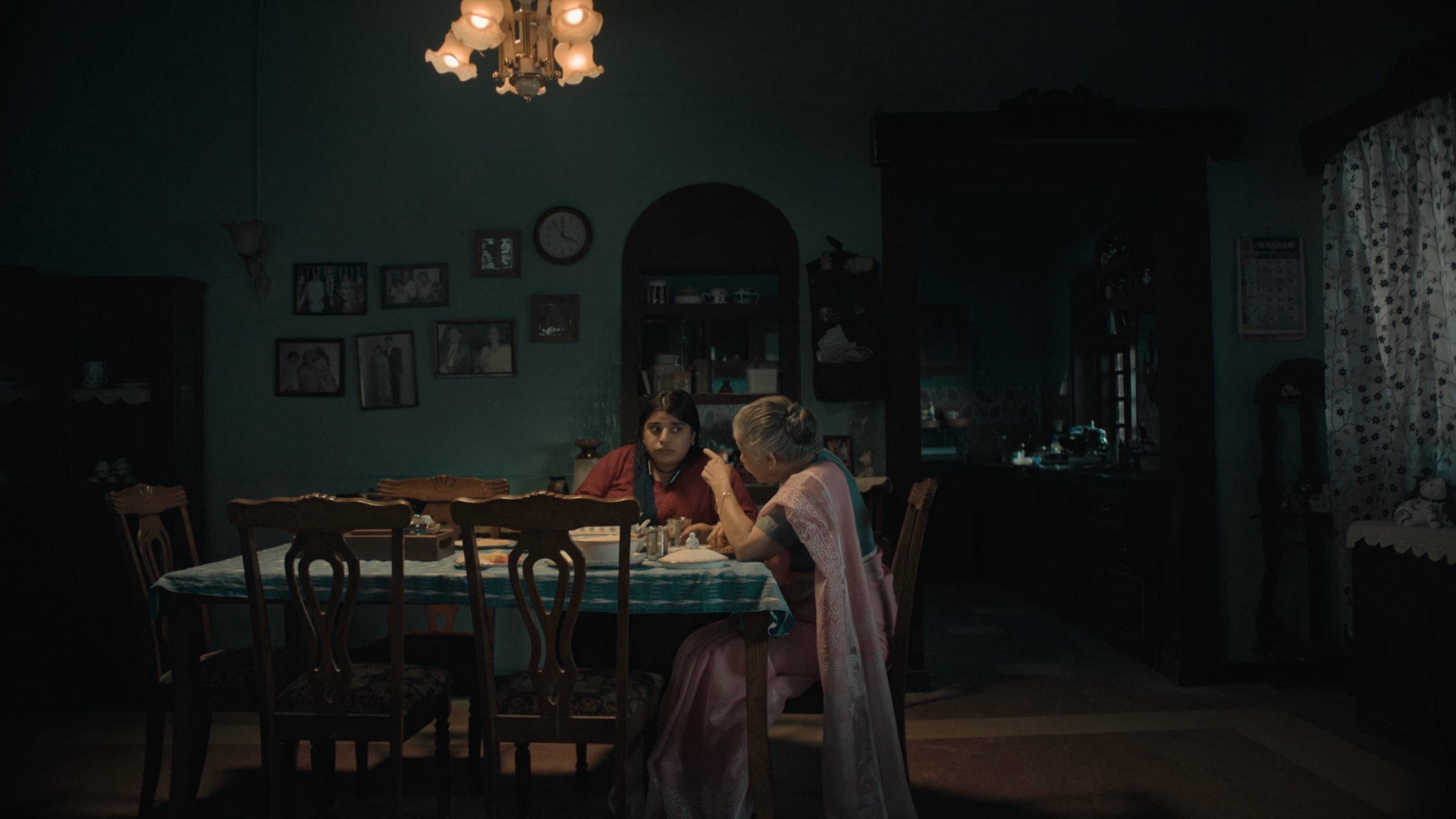
KEPU follows Sam (Lijomol Jose) as she confesses her love for Nandhini (Anusha Prabhu) to her mother, Lakshmi (Rohini), a motivational speaker who advocates feminism and freedom and has a strong YouTube presence. Set in an upper-class urban milieu, the narrative focuses entirely on the couple’s trauma without offering insight into what Sam and Nandhini do, whether they’re graduates, their interests, dislikes, political leanings, or backgrounds, or anything about them to care for. It’s like two lesbians lecturing a cisgender couple about their identity.
Even Mary (Deepa Shankar), the stereotypical “kind” domestic worker, exists mainly to offer supportive reactions or ask who will tie the thaali and take on the roles of husband and wife — an allusion to King Bhagiratha’s birth to two queens, Chandra and Mala, who were co-wives and became lovers after being widowed in the Hindu text. In Krittivasa Ramayana, one queen is advised to adopt the ‘bhava’ of a man. Still, instead of the instructed ritualised intimacy to have a son, the couple makes love spontaneously during the romantic monsoon season.
Rekhti, an Urdu erotic poetry, written in a feminine voice by male poets (with a minuscule woman) in ‘begamati zubaan’ during the late 18th–19th century, depicts lesbian sexuality through lovemaking, longing, sexual desire, and women’s social realities. Urdu scholar Carla Petievich quotes an opening stanza from Shaikh Qalandar Baksh’s Chapti Nama (‘Tribad Testimonies’) translated by Ruth Vanita and Saleem Kidwai: ‘There’s no love lost between women and men these days: New ways of being intimate are seen all around. Everyone knows about women who love women — At night, these words are always to be heard: ‘The way you rub me, ah! It drives my heart wild. Stroke me a little more, my sweet other.’
Mary also recounts neighbourhood gossip about two women assumed lovers, reflecting how cis men perceive, treat, and discuss lesbians. In a household where Lakshmi scolds her for being late despite managing a family crisis, Mary, brushing it off cheerfully, reflects Tamil cinema’s forced optimism typecasting.
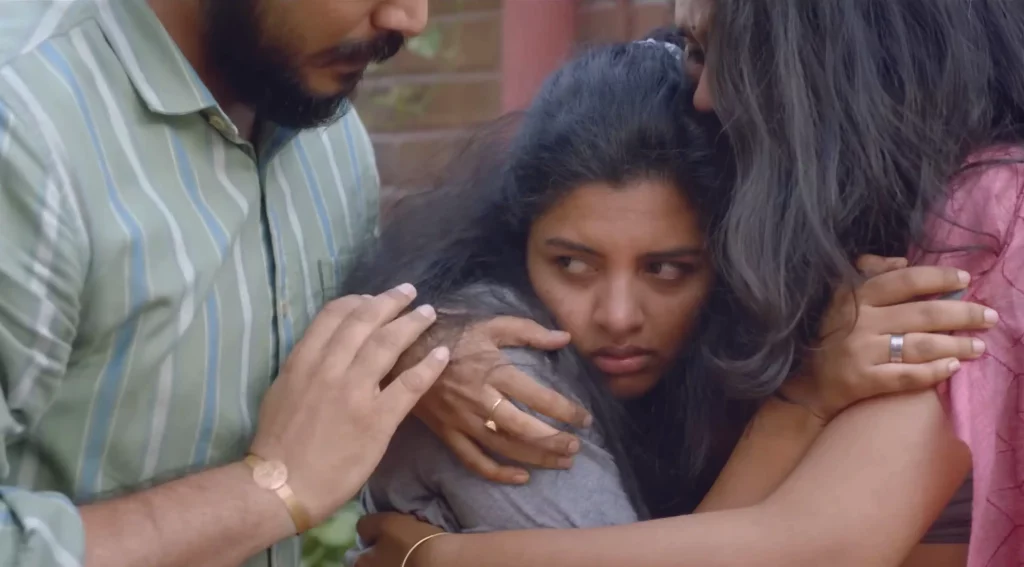
Lakshmi’s reaction to Sam’s confession is muted compared to what many queer women in India face. She gets angry, yes, but quickly softens, though in many Indian homes, such a confession could escalate to violence, house arrest, or emotional blackmail, and wouldn’t be softened by Sam standing in the rain. Perhaps Lakshmi’s restraint echoes an upper-middle-class queer parent who once said, “Acceptance is a ‘private’ thing, not something to be made public.”
Director Jayaprakash wobbles between artistic and commercial filmmaking, creating tonal inconsistency. While shots like the fish-tank angle and smooth pans in Sam’s home are visually refreshing, others feel soap-opera-ish, relying on melodramatic dialogue, with the closing shot feeling tokenistic. Kannan Narayanan’s repetitive flute motif undercuts emotional depth, and the use of ‘mangalyam thanthunanena’ with mallipoo visual feels out of place.
Kadhal Enbadhu Podhu Udamai‘s depiction of sexual violence borders on voyeuristic, especially in a climate where Tamil cinema often sensationalises rape (as in ‘Maharaja’ and ‘Vettaiyan’). Subtler portrayals, like in ‘Chithha’, where Su Arun Kumar chose not to depict or, like in ‘Raayan,’ the assault in conversation, could have conveyed trauma without graphic imagery.
In one scene, Devaraj (Vineeth) asks Ravindra (Kalesh Ramanand) if he is gay for being a queer ally. Ravindra reflexively responds with “cha cha,” implying gayness is something ‘shameful’ rather than simply answering no. Though the film later offers a self-aware callback, Ravindra’s response still conveys internalised stigma.
Later, Ravindra reveals his one-sided long-lost love for Sam and that he can only be her best friend, labelling the couple as “not normal”. “You know, right?” he asks Devaraj, seeking affirmation. His ignorance of bisexuality or pansexuality is puzzling, given that KEPU paints him as a staunch ally helping Sam’s parents understand queerness, creating a clash with the film’s core message of acceptance.
Award-winning lesbian activist Susan Hawthorne reflects her experience in 2004, critiquing the misconception that lesbians are “all comfortable, middle-class, and well-educated.” This critique is relevant to KEPU, where lesbian narratives’ absence from rural, economically disadvantaged, or marginalised caste backgrounds underscores the community’s neglect.
Similarly, activist Maya Sharma writes in ‘Loving Women’, that the “aim was to dispel the myth that all Indian lesbians are urban, westernised, from upper or middle classes,” insisting on space for voices with little or no privilege.
Prof Pushpesh Kumar, alongside researchers Sayantan Datta and Neha Mishra, argue that queer films, including Bollywood, often reflect more Brahmin and upper-caste interests, frequently failing to represent working-class queers, especially lower castes, depicting characters with caste and class privileges and familial acceptance, thereby reinforcing homonormative narratives.
“For working-class lesbian subjects, the disadvantages of class, gender, and sexuality are simultaneous; suffering on account of sexuality becomes more intense due to stigma, community policing, and lack of familial love and privacy in congested settlements. They are invisible publics whose perspective needs sociological imagination stretching its boundary to accommodate and incorporate their voice in its social justice project,” says Prof Pushpesh Kumar.
Gurpreet Kaur finds a similar issue in ‘I Can’t Think Straight,’ where elite cosmopolitan framing makes lesbianism appear like an indulgence of the affluent. PRISM, a Delhi-based LGBTQ+ group, observes that even urban lesbians live in constant fear of discovery, citing at least 21 suicides of young women from non-privileged Kerala backgrounds between 1995 and 2001.
Kadhal Enbadhu Podhu Udamai also blends themes like abortion, divorce, remarriage, class, and bodily autonomy, sometimes blurring its focus as a queer love film. Remaining at a surface level, it unintentionally reinforces certain stereotypes. For example, the couple’s montage of them chasing each other and kissing in a forest reinforces the idea that their love must be hidden and taboo. Why must the kiss occur only in a secluded forest? Why not in public or private, like a café, park, bookstore, or a quiet bar corner — places where cis couples routinely express affection? KEPU seems more committed to checking boxes — homophobia, stigma, myths — than developing characters organically.
Another limitation is the absence of queer actors in queer roles. As scholars argue, “When non-queer performers take on LGBTQ+ roles without community involvement, portrayals risk becoming problematic caricatures and harmful stereotypes.” Jayaprakash acknowledges this, citing industry limitations, but the impact remains. In contrast, Faraz Arif Ansari notes that most of the cast of ‘Sheer Qorma’ were queer, emphasising behind-the-scenes representation crucial for authentic storytelling through a queer gaze.
Still, Anusha Prabhu and Rohini deliver strong performances, adding emotional depth to underwritten characters. ‘Theeyai’ song evokes ’80s–’90s vibe with nostalgic light music, sung by a woman singer, Uthara Unnikrishnan, while cleverly subverting the film’s title meaning. The couple’s first meeting is refreshingly simple and free of melodrama.
Gregory Herek observes that even when queer characters are portrayed positively, they often appear in narratives only because they are queer. KEPU reflects this as queerness becomes the plot rather than the characters’ foundation.
Media scholars show how queer representation shapes public perception, offering mirrors for queer viewers. Sociologist Jyoti Puri highlights how even privileged Indian women live under heteronormative control, and audience studies note that many South Indians still avoid queer films, finding them “uncomfortable” or “inappropriate.”
A poignant echo of this invisibility appears in AIDS Bhedbhav Virodhi Andolan (ABVA) 1991 report, where an anonymous lesbian paramedic asks: “Why can’t two girls get married? Why does society not recognise, support, and sanction lesbian relationships? Why must our relationships and even our break-ups or marriages remain invisible? How many more must undergo this trauma silently? And why?“
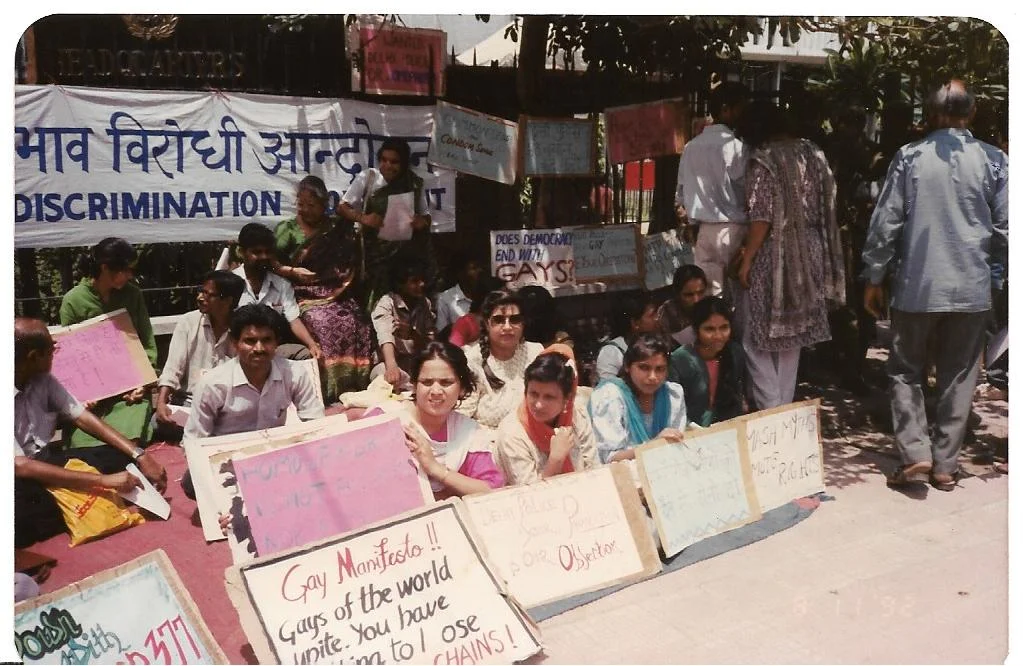
Actor-producer Hannah Jarrett-Scott told The Guardian that queer characters are often given tragic arcs and that joyful representation would have made her own coming-out easier. Activist Giti Thadani argues that Indian lesbian identity is shaped by a ‘politics of invisibility’ and calls for independent feminine narratives. Kaustav Bakshi and Parjanya Sen add that even after Section 377’s reading down, mainstream cinema continues to uphold older traditions of ridicule and villainisation.
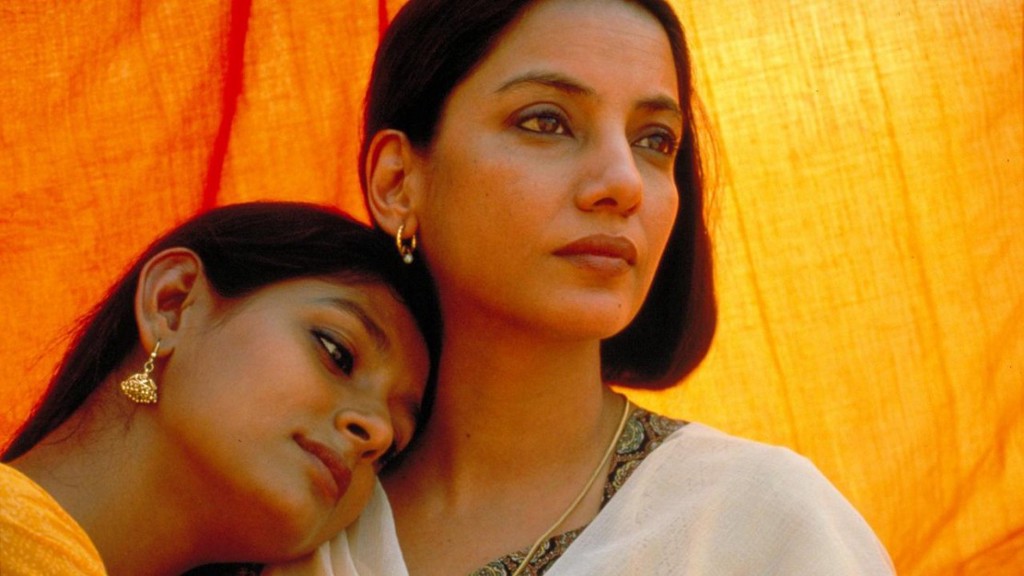
Scholars state that some parallel cinema portray queerness authentically; many lesbian themed and mainstream films from ‘Sancharram’ to ‘Nina’s Heavenly Delights,’ including ‘Fire’ and ‘Girlfriend’, still reinforce stereotypes, naturalise heterosexual norms, and perpetuate age-old taboos.
As Manjusha Babu Pallivathukkal writes, normalising same-sex love requires replacing exclusivity and stereotyping with everyday portrayals, and repeating inclusivity until filmmaking itself becomes queer.
Before Kadhal Enbadhu Podhu Udamai, Kollywood had only a few portrayals of lesbians. Jayaraj Palani’s ‘Vaazhvu Thodangumidam Neethanae,’ depicted love between a conservative Muslim woman and a cosmopolitan filmmaker, and Magizhini(2021), a music video about two Bharatanatyam dancers.
In Bollywood, Deepa Mehta’s ‘Fire’ sparked violent protests, death threats, bans, and vandalism by right-wing Hindu groups like the Shiv Sena. Earlier, ‘Razia Sultan’ (1983) featured a kiss between Hema Malini and Parveen Babi, while Umbartha (1982), Mitrachi Goshta (1981), and Randu Penkuttikal (1978) offered notable earlier portrayals outside Bollywood.
About the author(s)

Vijaya Shankar O is a Chennai-based journalist with nearly three years of experience covering cinema, gender, and social issues. His work has appeared in DT Next and High On Films.