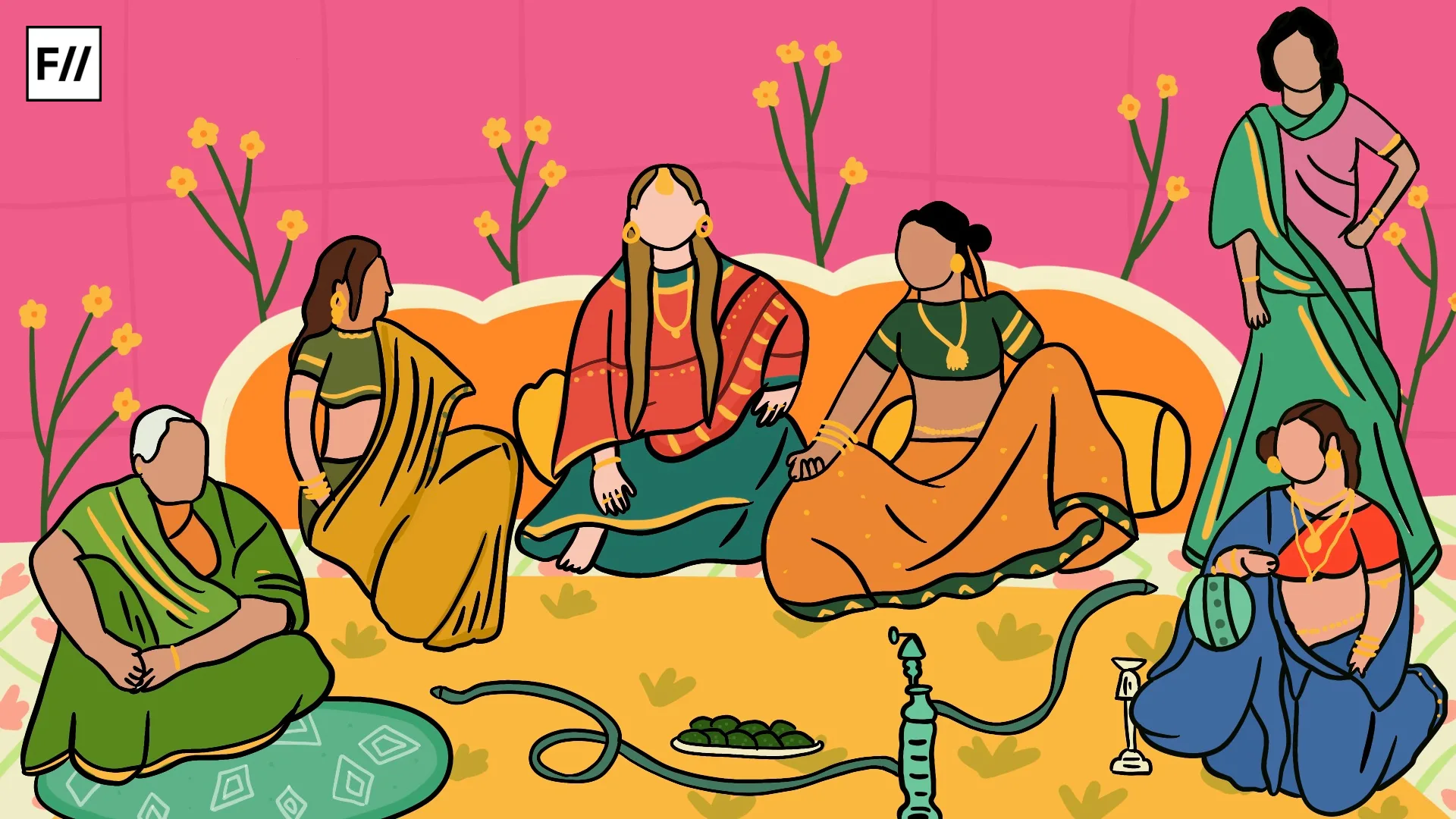
Power in medieval India has always been seen as analogous to shining crowns, thunderous battles, and sweeping edicts and ishtehars of emperors engraved in stones or proclaimed from elephant howdahs. Yet the empire’s most remarkable political architects were rather forged in silent realms – the veiled corridors of the Andarun – inner courtyards of the Mughal household where the whispers held more weight than war cries.
Such was the case for Empress Nur Jahan, the foremost lady of the empire during the reign of Emperor Jahangir, whose growing indulgence in wine and opium often distanced him from the direct conduct of governance. Nur Jahan issued farmans (royal decrees) in her own name, created her own political faction at the Mughal court, and actively participated in imperial decision-making. While Nur Jahan enjoyed a rather direct authority over the daily apparatus of the Empire, the case wasn’t the same for Princess Jahanara Begum, the daughter of Emperor Shah Jahan. Despite the tremendous role she played at the time of fitna (crisis) within the empire, she largely remained in the shadows of formal power. Contemporary historiography merely frames Jahanara as the daughter of the emperor, and later the Sahebat al-Zamani (Lady of the Age) and Padshah Begum (Chief Consort) after the death of Mallika-e-Hindustani (Empress of Hindustan) Mumataz Mahal when Jahanara was just seventeen years old.
Yet behind this subdued image, Jahanara emerged as a crucial political actor in reforging the crisis-ridden empire by not only mediating between the rival princesses but also playing a significant role in managing imperial relations and court politics, quietly contributing to the preservation and recalibration of Mughal authority.
Yet behind this subdued image, Jahanara emerged as a crucial political actor in reforging the crisis-ridden empire by not only mediating between the rival princesses in a bloody War of Succession (1657-59) following Shah Jahan’s illness but also playing a significant role in managing imperial relations and court politics, quietly contributing to the preservation and recalibration of Mughal authority during a period of profound uncertainty, even after Aurangzeb ascended the throne. This essay explores how the seventeen-year-old Padshah Begum wielded influence without a formal throne, drawing upon contemporary feminist theory to reveal gender as not a mere identity but, as Joan Scott (1986) describes, a “category of historical analysis”—a structural force of power itself.
The Padshah Begum and the Politics of Succession
What is mostly highlighted about Jahanara Begum is her role of mediating the rivalrous princes Dara Shikoh, the apparent heir of the peacock throne and Aurangzeb, who was the nominal governor of Deccan during the War of Succession, which ultimately left Dara Shikoh defeated in the Battle of Samugarh (1659) and led to the eventual capture and execution of him. As her father, Shah Jahan, languished in prison, her daughter Jahanara became his confidante and caretaker. Far from the Zenana’s stereotype as a cage, it pulsed with a political life, where women like Jahanara navigated fitna – those seismic crises of succession and loyalty that could topple empires.
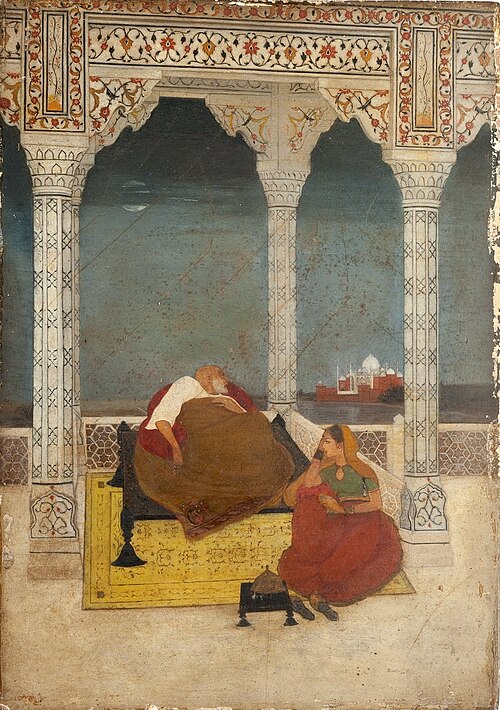
Jahanara’s open support for the secular, rationalist, and philosophically oriented Dara Shikoh over her fanatic younger brother Aurangzeb left her politically isolated after the latter emerged victorious. Aurangzeb, backed at court by his sister Roshanara Begum, consequently stripped her of the title of Padshah Begum, which Roshanara briefly assumed. However, this arrangement proved short-lived, as Jahanara reassumed the position after the death of Shah Jahan, restoring the prominent place she once held in the Mughal household. Contemporary accounts, including the Shah Jahan Nama of Inayat Khan, suggest that she attempted to communicate between factions of the royal family, even as the empire moved steadily towards open conflict.
Wealth, Patronage, and Urban Power
Jahanara’s influence was not inherited; it was achieved through wealth and patronage. Her personal fortune funded a transformation of Shahjanabad. She commissioned the famous Chandi Chowk bazaar, which became the city’s most bustling public and commercial space. The grandeur of the bazaar wasn’t philanthropy but a conscious project which won her the loyalty of not only the urban commercial elites but also of the ulema, ensuring her moral capital flowed through the veins of the Mughal society. As historian Ruby Lal (2005) remarks in “Domesticity and Power in the Early Mughal World”, such patronage blurred the lines between household and polity, making the andarun a fulcrum of statecraft.
Contemporary feminist theory, like that of Joan Scott, offers a powerful lens through which Jahanara’s unique form of wielding power can be analysed. As she described gender as a “useful category of historical analysis”, emphasising that gender reflects structures of power rather than mere identity, Jahanara’s life reflects a similar framework where Mughal women exercised influence through the andarun, or inner courtyards. Far from being a passive or isolated domain, the andarun functioned as a dynamic place where royal women managed resources, cultivated alliances, and participated in the empire’s political life.
Spiritual Authority and Sufi Networks
Jahanara’s authority wasn’t limited to the political sphere; she also deeply entrenched herself in spiritual networks. A devoted murad (disciple) of the Sufi Qadiri order, she penned down a comprehensive biography of the revered Sufi priest, Khwaja Moinuddin Chisti, in her Munis-al-Arwah (The Confidant of the Spirits, 1640) – charting a mystical itinerary towards divine union, weaving Quranic ethics with Persian poetic flourish.
Jahanara represented a politics based upon moral trust, and not warmongering, encouraging a new understanding of Indian medieval politics that goes beyond kings and their drive for glory and militarism.
Through her celebrated work Risalah-i-Sahibiyah (Treatise of a Lady, 1641), she outlines her entire spiritual journey in the Qadiri Sufi order, extolling adl (justice), akhlaq (moral conduct), and leadership as amanah (trust), framing rulership not as dominion but stewardship. The text later reflects the political-social landscape of the Mughal court, merging her personal Sufi journey with her family’s Timurid-Persian heritage. This becomes important because, despite being a high-ranking Mughal princess living in a patriarchal society, Jahanara asserts her own spiritual authority. She positions herself as a devotee rather than just a royal, navigating Sufi practices within strict Muslim constraints.
Reform Within Tradition: A Proto-Liberal Feminist Framework
This power, however, requires a crucial analysis. Jahanara was no rebel in trampling the patriarchal base of the imperial governance, but rather acted as a reformist agent within the system, possessing a proto-liberal feminist undercurrent with her. Saba Mahmood (2011), in her “Politics of Piety”, effectively analyses such phenomena: the system is reformed and not ruptured. And for Jahanara, this reform was possible by employing the Islamic ethics of hikmat (practical wisdom), honoured with persuasion, social capital, and resource command. Even in the defeat of Dara Shikoh, Jahanara remained a vital asset for the empire. As Audrey Truscke (2018) in her “Aurangzeb: The Man and the Myth” highlights, Jahanara’s immense reverence in the Sufi order allowed her to tamper with Aurangzeb’s orthodoxy. She refused to get invisible even when her closest associates – her mother, her father, and her most beloved brother Dara Shikoh – were dead. For Jahanara, power was accrued through ethical engagements rather than isolation.
Rethinking Medieval Political Culture
In a crisis-ridden empire, like the Portuguese naval actions, Rajput rebellions, and frequent unrest in the Deccan, Jahanara’s subtle actions provided stability to the empire. She represented a politics based upon moral trust, and not warmongering, encouraging a new understanding of Indian medieval politics that goes beyond kings and their drive for glory and militarism.
Therefore, the figure of Jahanara isn’t just “another woman” in the feminist historiography of India. Rather, she encompasses a new kind of politics, which was indeed revolutionary given the socio-political culture of medieval politics in India. By laying down a new definition of power, not in the vocabulary of wars, battles, kingship, or rivalries, but of trust, morality, ethics, and stewardship, she would follow what, many centuries later, one might claim, figures like Mahatma Gandhi would champion. Jahanara was not a political philosopher or an official chronicler of the Mughal empire, but it is by rearranging the dispersed fragments of her life and her activities that we get to fathom a newer lens of medieval political thought in India, which essentially complicates and challenges the persistent narrative of “medieval barbarism” among the contemporary Hindu right.
References
- Lal, R. (2005). Domesticity and power in the early Mughal world. Cambridge University Press.
- Truschke, A. (2018). Aurangzeb: The Man and the Myth. Penguin Books.
- Scott, J. W. (1986). Gender: a useful category of historical analysis. The American Historical Review, 91(5), 1053. https://doi.org/10.2307/1864376
- Mahmood, S. (2011). Politics of Piety. In Princeton University Press eBooks. https://doi.org/10.2307/j.ctvct00cf