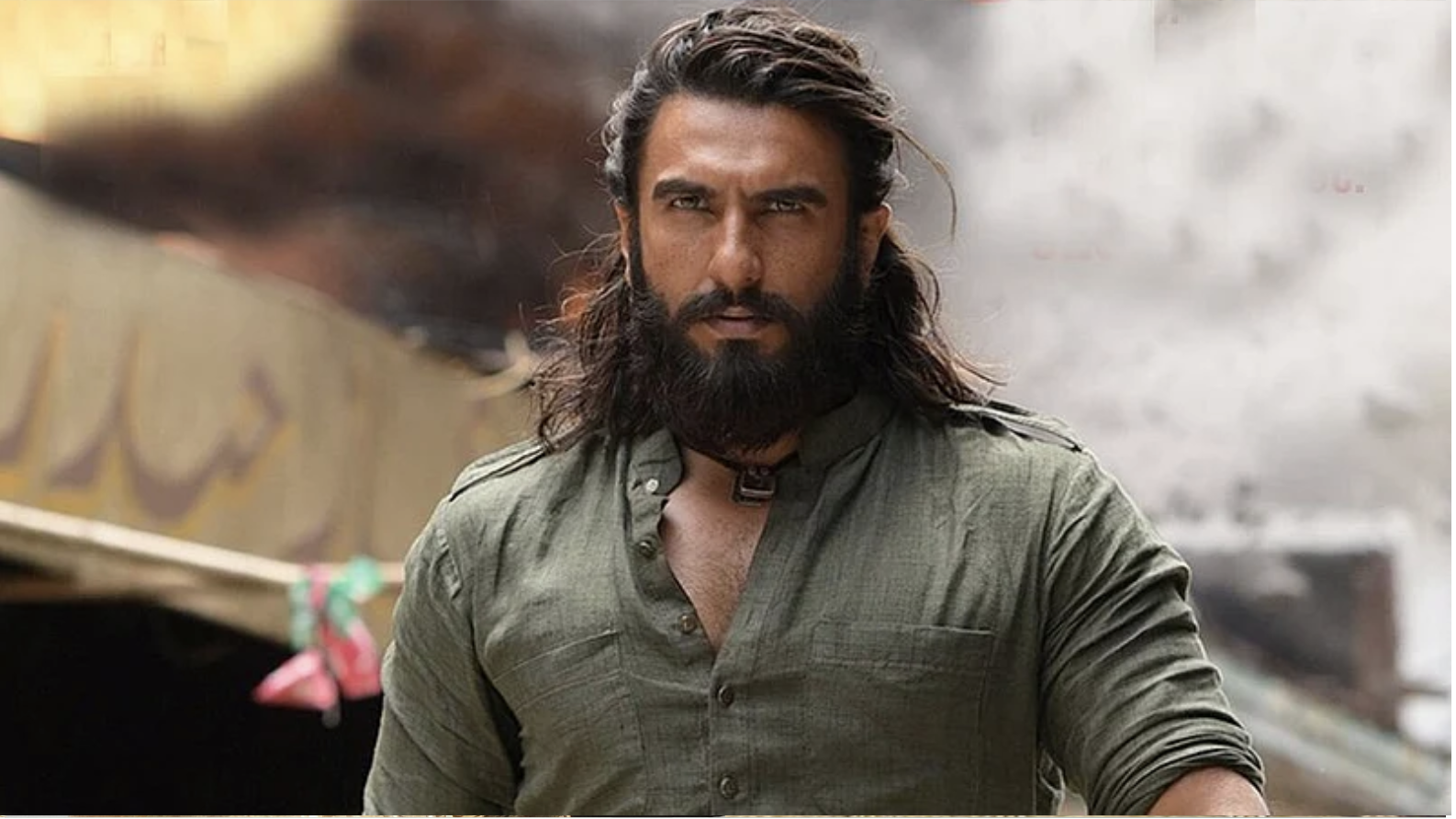
‘Yeh naya Hindustan hain, yeh ghar me ghusega bhi aur maarega bhi’ (This is the new India; it will barge into your house and will beat you up too).
Director and writer Aditya Dhar’s Dhurandhar, which released in December 2025, ended on a high note with this dialogue. A dialogue which looked to incite and excite the audience into feeling the same national pride as our hero, Jaskirat Singh aka Hamza Ali Mazari (played by Ranveer Singh). Hamza enters Pakistan’s Lyari as an agent and sets it on fire, quite literally.
As the first instalment of the film laid out the big players in Pakistani politics—the men who, in a bid to remain in power, infiltrate India in ways you cannot even imagine—the second film promises revenge, nay, retribution. The story begins right after the death of charismatic leader Rehman Dakait (Akshaye Khanna), and the focus shifts to bigger fish, ISI officer Major Iqbal (Arjun Rampal) and his minions. We also get more of Rakesh Bedi, Danish Pandor, and Sanjay Dutt. New characters include a ghost from Hamza’s past and ‘Bade Sahab‘. Who might that be, you wonder? Why, Bombay’s own Dawood Ibrahim (Danish Iqbal), of course.
The much-awaited sequel, Dhurandhar: The Revenge, was released on March 19 and has already broken several box office records. It is not only the biggest opener in Ranveer Singh’s career but has also entered the 1000 Crore Club, slowly inching its way to become one of the top ten movies with the highest domestic collections. Dhurandar: The Revenge also replaced the long-running morning screening of Dilwale Dulhania Le Jayenge (DDLJ) at Mumbai’s Maratha Mandir theatre, a first in 30 years. As the weeks go by, Dhurandhar: The Revenge is touted to achieve more firsts in the industry.
The good, the bad, and the ugly
While Dhurandhar gave us eight chapters and ran for 3 hours and 32 minutes, Dhurandhar: The Revenge is just as long, with seven chapters and a run-time of 3 hours and 49 minutes. If you’re watching it in India, consider five hours of your life spent inside the theatre. However, here comes the most important question—is it worth it? Well, here is what the movie gets right and what it doesn’t.
The good: Dhar spends a good amount of time on Hamza’s backstory, which at times seems too protracted, that is, till he justifies it by bringing Hamza’s childhood best friend and drug dealer, Pinda (Udaybir Sandhu), back into Hamza’s life. The twist serves as the high point before the intermission, which makes you want to stick around for the next two (excruciatingly violent) hours.
Secondly, the score by Shashwat Sachdev—which serves as the film’s background music—helps drive each section of the movie. This album, too, contains a mix of old gems and originals. Remixes include ‘Aari Aari’, ‘Oye Oye (Rang De Lal)’, ‘Hum Pyaar Karne Wale’ and ‘Jaan Se Guzarte Hain’, while Jyoti Nooran, Jasmine Sandlas, and Reble’s pumping Vaari Jaavan and Arijit Singh’s soulful Phir Se stand out.
Sara Arjun’s character also comes to accept Hamza’s revenge a little too easily. One wonders whether she was being sympathetic to the Indian cause, or if she actually doesn’t have any agency in Dhar’s version of Pakistan.
The bad: The revelation that Hamza is indeed an Indian agent left more to be desired. Sara Arjun’s character also comes to accept Hamza’s revenge a little too easily. As he names names and recounts deaths, she just listens with tears in her eyes. One wonders whether she was being sympathetic to the Indian cause, or if she actually doesn’t have any agency in Dhar’s version of Pakistan.
The ugly: The pacing and violence fatigue. By the time the climax rolls around, Hamza vs Major Iqbal doesn’t quite hit the way it should (pun intended).
Dhar’s manosphere and the angry, young ‘mard’
Forget mard ko dard nahi hota (men don’t feel pain). In Dhar’s world, ‘jahan dard hai wahan mard hai’ (where there’s pain, there’s a man), uttered by SP Chaudhary Aslam (Sanjay Dutt) while shooting a man. And ‘ghayal hoon isliye ghatak hoon’ (I’m wounded, therefore I’m lethal), said by both Sanyal and Hamza.
But don’t worry, Dhar’s heroes do not kill women and children, that’s something only Dhar’s Pakistani men do—as if that distinguishes the two. Further, if the absence of women pinched you in the first part, women are almost non-existent in this one, except Hamza’s wife, Yalina.
The making of Dhar’s angry, young man starts with Hamza’s backstory. Chapter 1 opens with Jaskirat Singh, a third-generation army recruit, happily taking a family photo one minute, and then wielding an AK47 the next, brutally killing 12 men. We learn that our hero’s father was murdered by the local MLA’s men over a land dispute, his older sister was raped and murdered, while his surviving younger sister was sexually assaulted as well. Though Dhar alludes to this violence, thankfully, he spares us the graphic details.
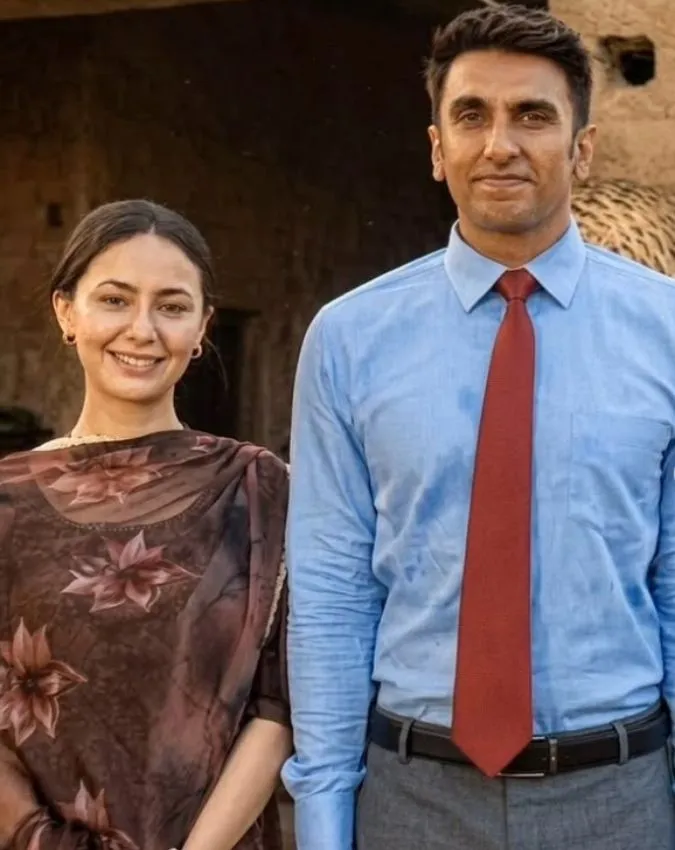
Jaskirat is just a young man betrayed by his own government, forced to take matters into his own hands. The broken Indian justice system puts him in jail, which is when Indian National Security Advisor Ajay Sanyal (R Madhavan) saves him and trains him for Operation Dhurandhar.
Somehow, Sanyal is able to convince Jaskirat to become the ‘King of Beasts’, because only a ‘real man’ can ruin Pakistani terrorists for ‘Bharat Maa’. His exact words: ‘Hum mard hain, Jaskirat. Paida hone se marne tak, hamara farz hai ladna (We are men, Jaskirat. From the moment we’re born till the day we die, it is our duty to fight).’ This is when we learn Hamza means ‘lion’, hence explaining the long and luscious mane on the character.
The present-day Hamza is the manosphere influencer in Lyari (though the film dubs him as Lucifer, the devil), pulling the strings to control Uzair Baloch (Danish Pandor) and telling him not to be emotional, to man up, to assert himself, and take back what’s his – the title of Sher-e-Lyari. Taking advantage of Uzair’s grief, Hamza orchestrates his descent into madness, which ultimately leads to him killing his political rival, Arshad Pappu, and playing football with his head in broad daylight. Hamza then plots to get Uzair arrested in Dubai and brought to Pakistan to be framed and prosecuted as an Indian spy, while Hamza sits on the throne as the King of Lyari.
As Hamza spearheads the destruction of his enemies and the city, throwing one dynamite after another, blowing up one shop after the other, one wonders if Dhar has a habit of assuming everyone in Pakistan is vile.
Meanwhile, Major Iqbal is revealed to have a misogynistic father who attacks and brings out Iqbal’s insecurities, including the fact that he couldn’t have a son. But that’s where the film’s sympathies for its characters stop. In Dhar’s Lyari, everyone is a gangster, and everyone deserves to die.
As Hamza spearheads the destruction of his enemies and the city, throwing one dynamite after another, blowing up one shop after the other, one wonders if Dhar has a habit of assuming everyone in Pakistan is vile. The film tells us that if this is the new India, then this is the new angry, young man: it is his duty to fight. He doesn’t fight the system; he becomes the system. And thus begins this long takeover of power, which puts Indian nationalism at the forefront.
Propaganda and the New India
There has been plenty of online debate about whether this film is propaganda or not. The answer arrives within the first few seconds of the movie. As the screen turns to black and text appears, a voice reads the disclaimer: This is a work of fiction. Dhurandhar is a lesson in how to manufacture communal hate for political gain. Tell the Hindus in India that the Muslims built a masjid by destroying a temple, and tell the Muslims in Pakistan that someone burnt the Quran, then watch the chaos unfold.
While the first instalment explicitly focused on the failures of Indian intelligence, the second one celebrates wins, namely, Modi’s general election victory in 2014 and demonetisation, as efforts to counteract Pakistan’s plans to subdue India. Meanwhile, the story also explores party politics in Pakistan in depth, which it claims even extends to influencing UP elections back home.
The prominence of the Bharatiya Janata Party (BJP) in state elections also shows the decline of Muslim candidates from the seat of power in India (who the film presumes support Muslim extremist ideals and collude with Pakistan’s leaders). All of this alludes to a very deliberate and controlled Islamophobic narrative. Aap chronology samajhiye.
However, what is terrifying is our caricaturised version of Pakistan that is used to justify Islamophobia.
The jarring real-life footage from the first film is replaced by a montage depicting the killing of terrorists who had planned attacks in India. The lingering images on screen, set to fast-paced music, show that the ‘problems’ are being taken care of, almost giving the audience room to rejoice. More jarringly, the movie ends with Sanyal’s final message, where he clarifies that Hinduism is not a cowardly religion. In fact, Dhurandhar, both parts, ask us to be terrified of Hindus. However, what is terrifying is our caricaturised version of Pakistan that is used to justify Islamophobia.
About the author(s)

Aarthi (she/they) is a young feminist, currently based out of Jodhpur, who enjoys writing on pop culture and art-related subjects. Through her writings, she attempts to position herself between self-reflection and social conversation leading to the exploration of unconventional ideas. In her free time, she travels, writes poetry, watches films and anime

Comments:
Comments are closed.