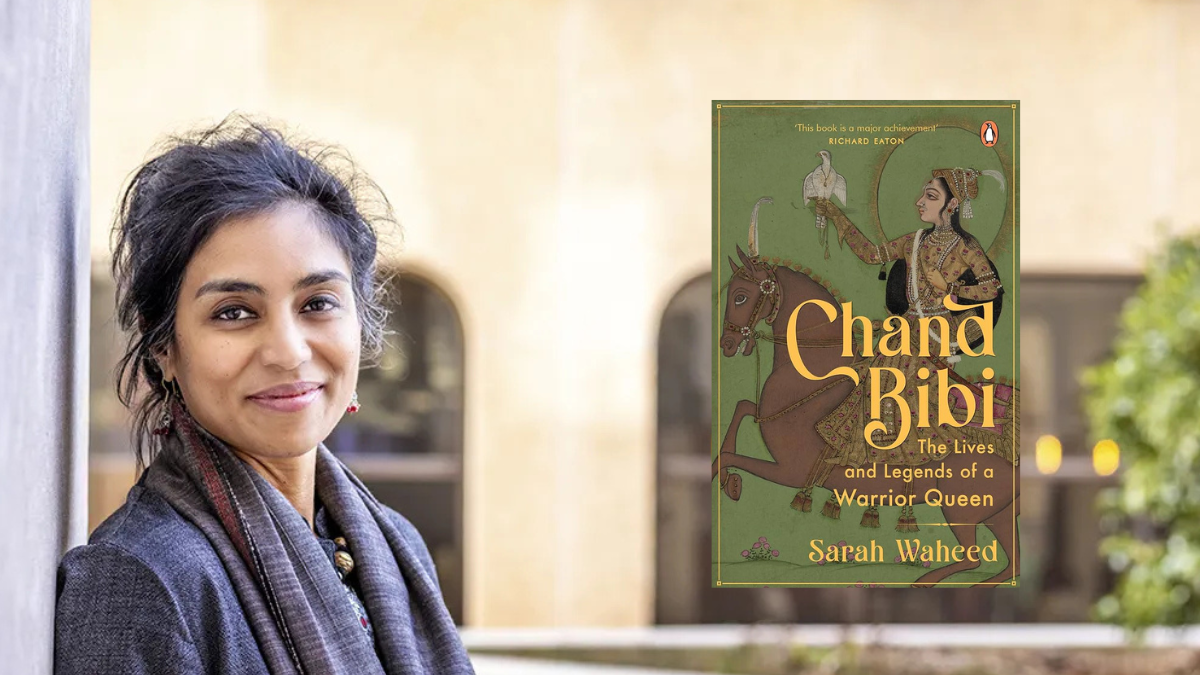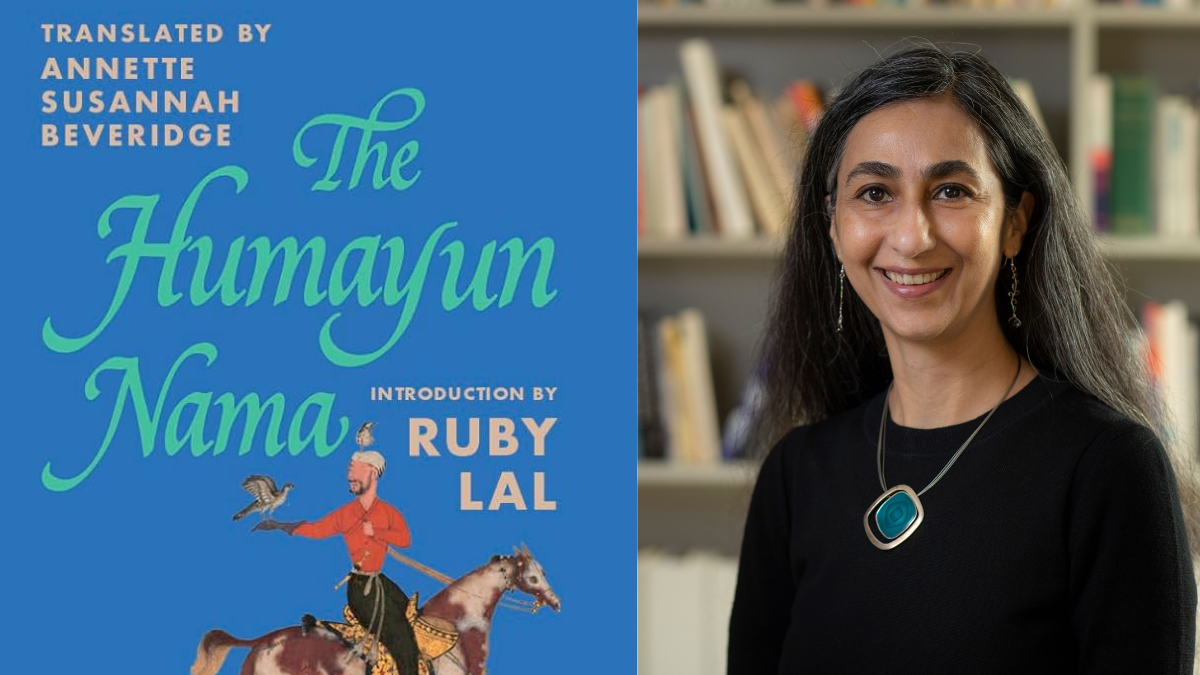
Mughal history in India has largely been seen as a great imperialist project, based on the emperor’s war achievements. It always had an obsession with battles, cannons and the expansion of territory across the subcontinent. But behind these grand tales, something less evident but more powerful and subtle is revealed in the book ‘The Humayun Nama’. The historical account is written by Mughal Princess Gulbadan Begum who was the half-sister of Emperor Humayun. Her account details the daily life of the Mughal court and the Zenana, going beyond the typical hyper-focused battleground and fort-seizing narratives about those times. The new edition of The Humayun Nama by Juggernaut Books with an introduction by the historian Ruby Lal brings the two women connected to the historical work, but from different centuries finally into the same frame: Gulbadan Begum and Annette Susannah Beveridge, the Victorian era scholar who rescued the historical work and then translated it.
The domestic sphere as political
In the historical text, Gulbadan prioritizes the everyday lives, relationships, and emotions of those who occupied the courtly spaces, rather than a plain record of dates and events. The standard histories of the Mughal era often positioned the domestic sphere in the background. But Gulbadan’s writing brings people’s lived experiences into sharp focus. The translation by Annette Susannah Beveridge serves as a bridge, inviting modern readers to step into a space that has historically been hidden or dismissed by conventional historians. Through her evocative prose, Gulbadan strongly highlights that the household was never truly a private sanctuary detached from the world of men. Rather, she describes it as a space deeply connected to the high-stakes world of politics, power, and empire-building.
By applying a gender lens to Humayun Nama, we can see that Mughal history was not merely a pedestal for kings, but a collaborative effort in which women were active participants in shaping the dynasty’s destiny.
By applying a gender lens to Humayun Nama, we can see that Mughal history was not merely a pedestal for kings, but a collaborative effort in which women were active participants in shaping the dynasty’s destiny.
What is unique about Gulbadan’s writing is how she treats home life as something tied to power. Instead of battles or decrees, her eyes settle on the quiet moments among kin. Through her words, marriage customs take shape, birth pains are felt, and bonds inside the palace grow heavy with feeling. Her account reveals politics woven into private lives, especially when women entered royal circles through arranged unions. There’s one scene where a woman, eager for Humayun to have an heir, searches far and wide for young women deemed pleasant and fair, bringing them close to him. This moment shows care and calculation tangled together. A ‘son’ meant more than family happiness because the stability of the Mughal rule depended on it. Marriages are rarely based on personal choice, as they are intended to secure bloodline continuity. Furthermore, the household served as a crucial site for maintaining alliances. Women were often the primary managers of the delicate relationships among the various branches of the royal family, ensuring that the court’s internal social fabric remained intact. Gulbadan’s narrative makes it clear that the functioning of imperial power was inextricably linked to these domestic negotiations.
Agency of the royal women
Contrary to the persistent stereotype of women as passive, secluded figures behind curtains, Gulbadan’s account creates a vivid picture of agency and active participation of Mughal women. Her work challenges the notion that these women were confined by their surroundings and instead shows that they were integral to the court’s movement and life. She describes a world of constant motion, including journeys, grand gatherings, and the mass movement of people across the landscape. Gulbadan mentions that a notable instance of female agency was probably the pilgrimage to Mecca organized by the women of the Mughal court. It was not a small task because it involved extensive logistical preparation, mobilizing huge resources, and a strong leader to implement it. This expedition is also the ultimate evidence that royal women could organize and lead big operations without the direct control of men.
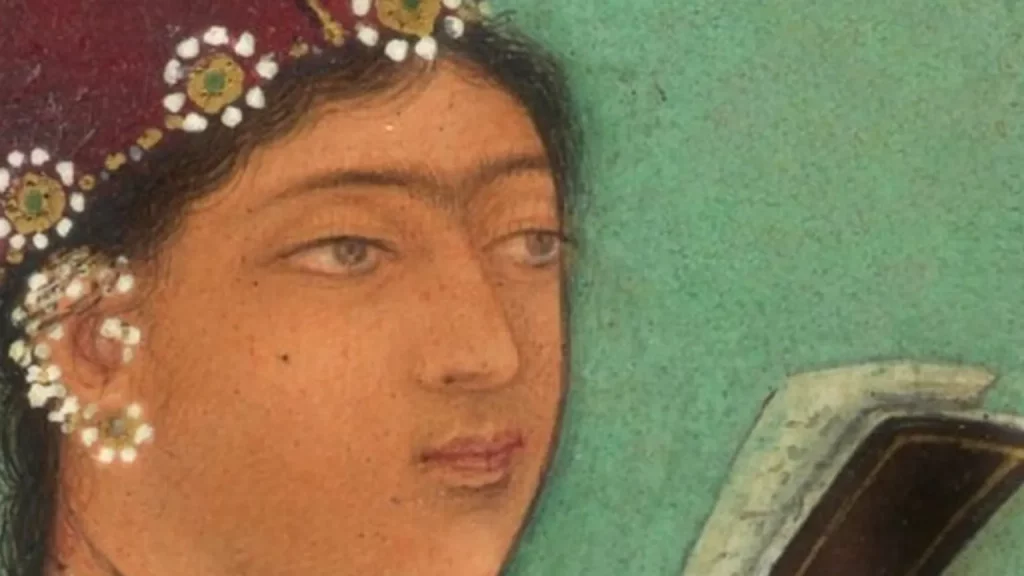
The reading also mentions that the women were very conspicuous during this pilgrimage, giving charity to the locals. They were so significant that their presence and actions were noticed by the various political authorities of the time and even raised concerns. Gulbadan herself is the bearer of this agency in the writing itself. She asserted some power by documenting history, which was traditionally the preserve of men in her society. Her voice does not merely supplement the record; it adds a necessary and transformative dimension to our understanding of the Mughal era.
Navigating patriarchy and gender norms
Gulbadan writes about the overwhelming power of patriarchy and the strong gender roles that shaped their lives. The story recognises that a woman’s value was commonly judged by her ability to perform certain roles, especially those of marriage and motherhood. The social and political pressure to have male heirs was intense and a common motif that portrays the gendered expectations. The marriage was influenced primarily by the family’s needs and the empire’s strategic interests. Although the women had well-developed opinions and wishes, they were frequently mediated by the hierarchical power structure that ruled their world. This prose also offers slight indications of the growing trend of seclusion and the separation of women into physical areas known as ‘zenana’. These limitations inherently restricted women’s physical movements and sought to regulate their contact with the external world. But the life of Gulbadan and the stories she gives indicate that such patriarchal rules were not absolute. The book gives a more intricate and delicate image of women being compelled to manoeuvre through a system meant to restrain them, yet they always managed to do, manipulate, and impose their will through those same means. This contradiction of existing within a system and being on its edge at the same time is one of the major themes of the female experience in the Mughal court.
Intersection of gender with class, empire, and religion
Gulbadan demonstrates how gender crosses the boundaries of class, imperial status, and religious identity. As a Mughal princess, Gulbadan was in a very privileged position, which enabled her to receive education, resources, and social mobility that most women of her era did not. Humayun Nama does not disregard this inequality, but it notes that there were other women in the courtly ecosystem, some of whom were taken as prisoners in military conquests and others who worked in more subservient positions to the royal family. These women led lives totally contrasting to those of the princesses, and it was a testament to the fact that status and class were equally defining as gender.
Contrary to the persistent stereotype of women as passive, secluded figures behind curtains, Gulbadan’s account creates a vivid picture of agency and active participation of Mughal women. Her work challenges the notion that these women were confined by their surroundings and instead shows that they were integral to the court’s movement and life.
These experiences were also influenced by the imperial context, with the Mughal court being a rich melting pot of wealth, power, and cultural exchange. Women in this setting were not isolated, and they were connected to the larger political and economic structures of the empire. Religion was also critical in determining their behaviours and motivations. The pilgrimage to Mecca underscores how religion can offer an avenue for women to exercise leadership and visibility. By combining all these threads, Gulbadan provides an intersectional approach to identity formation grounded in overlapping factors.
Emotional histories and alternative knowledge
In addition to the political and social formations, the Humayun Nama is a treasure trove of non-traditional history, offering a form of knowledge that is not always reflected in official state records. Gulbadan does not limit her account of the time to the great and significant events. Rather, she includes the mundane and glamorous aspects of everyday life. She documents the pleasures and pains of ambitious men and subversive women, painting a humanized picture of a world that can sometimes seem so far away. With her descriptions of grief, personal loss and the suffering of family separations, she brings the past to life and makes it relatable. These emotional perspectives are the opposite of the classical scholastic view that history must be preoccupied with facts, and with geopolitical facts alone. According to Gulbadan, the inner world of people, their problems, their relations as well as their emotions are also good and valid sources of historical knowledge. In her writing, we can know not only what transpired in the Mughal court but also how it was to experience those times. Such attention to human experience is a much-needed counter-story to the cold histories of kings and battles, reminding us that history is shaped by people whose emotional worlds are not sterile.
The Humayun Nama is a unique historic document because it offers a view of the Mughal world that we cannot find anywhere else. Gulbadan Begum is able to preserve the voices and experiences of women and ensure they do not disappear over time through careful documentation of her world. Her work compels us to acknowledge that the domestic space was a highly active political space and that women were capable of exercising meaningful agency even in a patriarchal society. It also highlights the importance of viewing the intersection of class, religion, and empire to form the human experience. The best thing of all is that Gulbadan helps us to remember that history is not a list of conquests, but a combination of relations, feelings, and the muffled beats of ordinary existence. It also dares us to reconsider our practices of writing history and to always ask whose voices are being represented and whose are being suppressed.
About the author(s)

Dharanesh Ramesh is a native of Coimbatore and a postgraduate student of Gender and Development Studies at the Tata Institute of Social Sciences, Hyderabad. Rooted in the belief that stories shape structures, his study and work explore the intersections of gender, caste, and public policy through an intersectional feminist lens. He is particularly drawn to understanding how power, privilege, and policy weave together to define inclusion and equity in everyday life. Inquisitive by nature, Dharanesh often turns to drawing, painting, photography, and writing as extensions of his reflective practice. His work seeks to bridge thought and experience, analysis and art, in the pursuit of justice and representation.