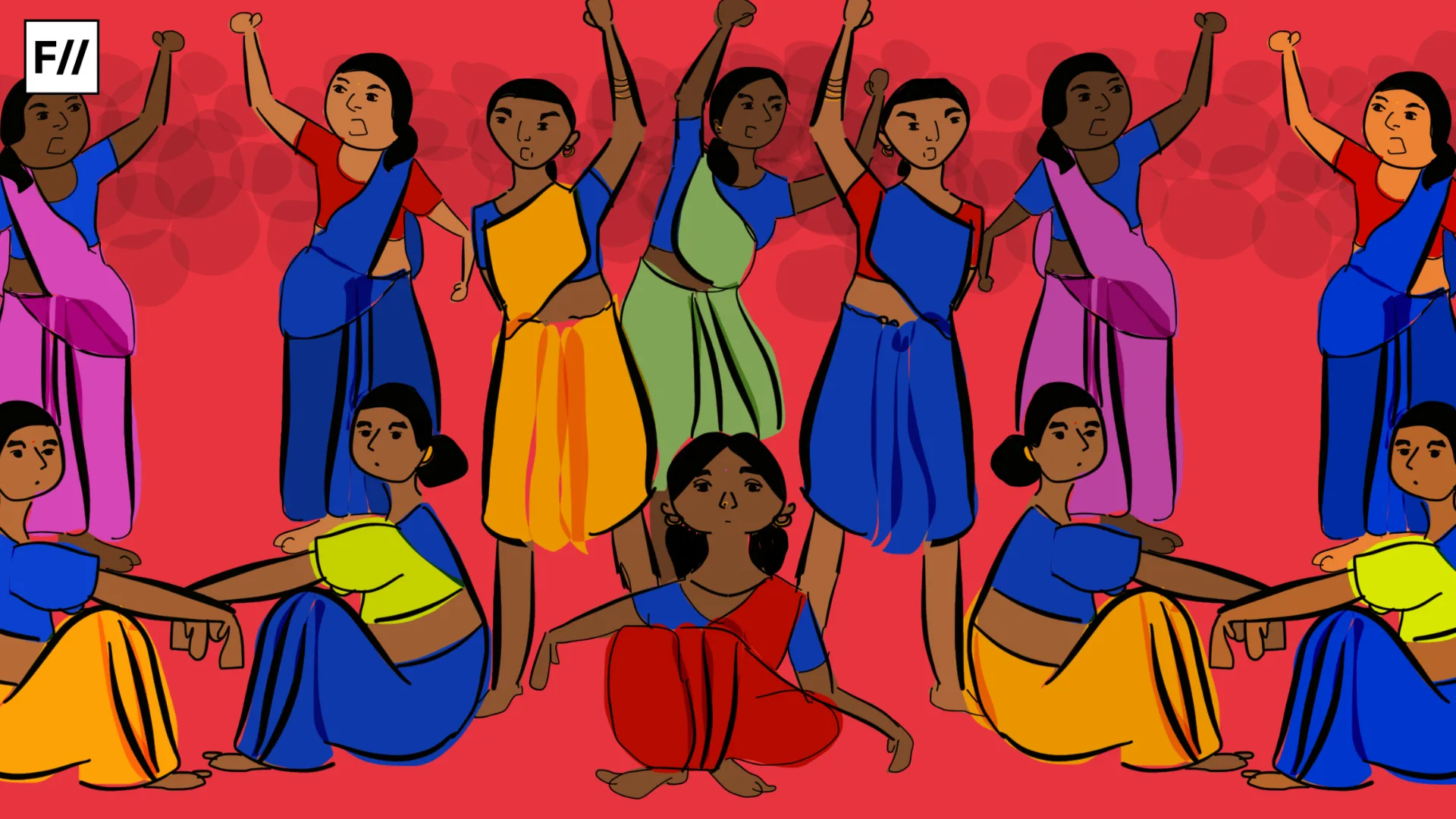
April 8, 2026. Women in Chhatarpur district, Madhya Pradesh, went into the forest around the Daudhan Dam construction site and came back carrying wood. They built funeral pyres from it. Lay down on them. Some had ropes around their necks. Children sat nearby. They called it the Chita Andolan, the funeral pyre movement, and neither word was a figure of speech. The Ken-Betwa Link Project is a central government flagship that connects the Ken and Betwa river basins across Madhya Pradesh and Uttar Pradesh.
Down to Earth reported that the project will put eight villages entirely underwater and break apart twenty-four others across Chhatarpur and Panna. Part of the Panna Tiger Reserve buffer zone goes under with them. But the district administration had already filed a Section 163 order under the Bharatiya Nagarik Suraksha Sanhita before any pyre was built, restricting assembly at the dam site. No surveyor had been dispatched. The compensation process had not started. The restriction came first, and the survey did not follow.
Jal Satyagraha
Amit Bhatnagar, who heads Jai Kisan Sangathan, organized what came next. Twelve days. During those twelve days, the protest forms kept changing, kept escalating in what they demanded of the women’s own bodies. Women went into the Ken River waist-deep and stayed for hours. Jal Satyagraha. They took soil from villages flagged for submergence, pressed it onto their skin, and called it Mitti Satyagraha. Then fasts under the open sky. Hangings performed with rope.
Down to Earth reported that the project will put eight villages entirely underwater and break apart twenty-four others across Chhatarpur and Panna. Part of the Panna Tiger Reserve buffer zone goes under with them. But the district administration had already filed a Section 163 order under the Bharatiya Nagarik Suraksha Sanhita before any pyre was built, restricting assembly at the dam site.
Each act positioned the body against the specific piece of terrain the project intended to take, and by the end of the first week, nobody from the administration had come to the site. Food and water supply to the camp were cut during this period, according to reports. The women stayed through all of it. On April 16, the district administration responded. Door-to-door surveys and a review of compensation figures. Nothing binding. Protesters accepted and gave the administration ten days. At the time of writing, nothing has come of it.
Night of April 6, a day before the Chhatarpur pyres. Police went into Kantamal village in the Sijimali hills, Rayagada district, Odisha. They cut the electricity first. By morning, seventy people were injured in the confrontation that followed, fifty-eight of them police, the Indian Express reported. The trigger was a three-kilometre access road under construction for a bauxite mine sitting on 1,549 hectares, 699 of them forest, allocated to Vedanta Limited in 2023. But the road was the surface. Underneath it sat something more corrosive. Communities around Sijimali say the Gram Sabha resolutions approving the mine were fabricated. Signatures forged. Consent meetings that villagers say never took place are recorded in official documents as having been completed.
2013 Supreme Court ruling
The Wire reported these allegations at length, and they carry institutional weight given what happened at Niyamgiri. In 2013, the Supreme Court ruled that Gram Sabhas held final authority over mining in scheduled areas, and all twelve Gram Sabhas of the Dongria Kondh community unanimously rejected Vedanta’s bauxite proposal. Vedanta is the same company and the legal framework has not changed. In Sijimali, however, the consent appears to have been manufactured rather than sought, effectively repurposing a law designed to protect Adivasi authority into a procedure for faking it. And so the women of Kantamal walked toward the construction road before dawn on April 7, carrying axes alongside bows and arrows. An axe in Adivasi Odisha is a farming tool and a household implement before it registers as anything else. Women in this region have carried them to confrontations with mining operations at least a dozen times since 2014, and each time the state reads the implement as a weapon, producing FIRs rather than conversations. Cases were filed against residents, including minors. The National Commission for Scheduled Tribes opened an inquiry after BJD Rajya Sabha MP Dr. Sasmit Patra petitioned it. The road has not stopped. In Noida, the body shows up asking for less.
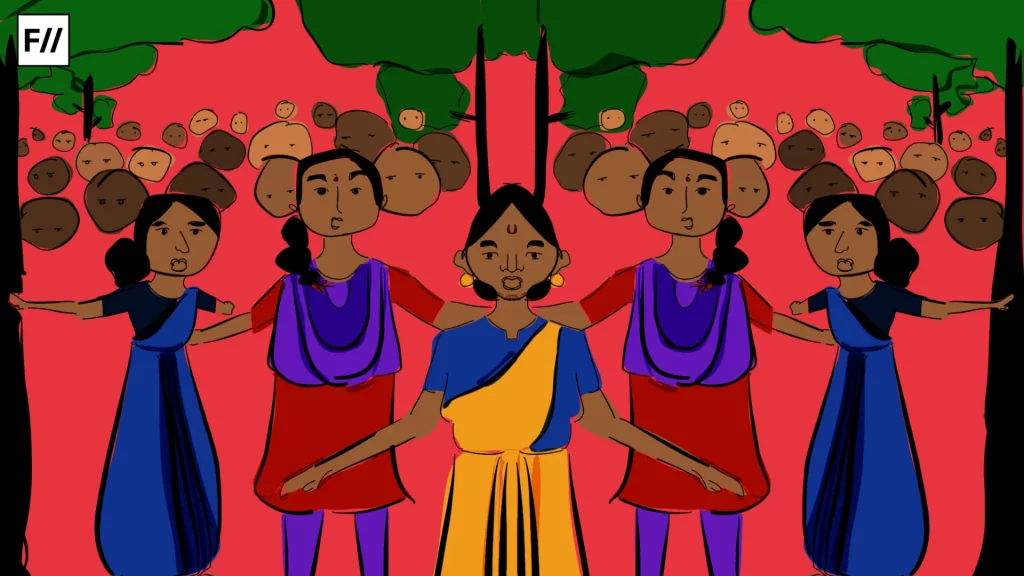
On April 14, domestic workers gathered outside the gates of Cleo County, a gated residential society in Sector 121, demanding a monthly wage increase of ₹1,000 to ₹1,500 per household and a weekly day off. Police dispersed them. Next day, April 15. Forty beauty workers operating through Urban Company arrived at a Sector 60 training centre and occupied the floor. They gave a highly specific list of demands. Capped eight-hour shifts. A single day off per week. Access to drinking water and a usable toilet between client visits. The toilet demand was subsequently ignored in broader press coverage. The mechanics of the sit-in centered on algorithmic management. Take-home pay fluctuated heavily based on unilateral customer ratings.
Workers had no digital interface to dispute an unfair review. Automated punctuality systems handed out wage penalties when delays were caused by absentee clients or routine traffic on the Noida expressway. Connecting to a human supervisor by phone rarely worked. One worker described waking up to find her account permanently disabled without verbal or written warning. Her booking screen was simply blank. Because the platform operates without physical help desks for gig staff in the district, the women had no building they could walk into for reinstatement. Police units packed the protesters onto buses and cleared the lot. The official incident summary filed by Noida police characterized the gathering as the result of a “misleading message” spreading among the workers. Not an industrial dispute. By framing the event as a rumor-control incident, the administrative record successfully bypassed the sanitation complaint. These protests were soon eclipsed by adjacent factory strikes. Between April 10 and April 13, thousands of factory floor workers mobilizing for a ₹20,000 minimum wage swept the district. State forces arrested over 350 people and filed seven First Information Reports. That larger wage conflict dominated the regional media cycle. The localized complaints of the beauty workers disappeared entirely.
These three protests did not coordinate. Chhatarpur, Sijimali, and Sector 60 had no pamphlet in common, no organizational thread. The thing that runs underneath all three is the paperwork.
These three protests did not coordinate. Chhatarpur, Sijimali, and Sector 60 had no pamphlet in common, no organizational thread. The thing that runs underneath all three is the paperwork. Forest Rights Act and PESA require tribal consent before displacement, with rehabilitation preceding construction. In Chhatarpur what came before the pyres was a Section 163 order restricting assembly and a set of Gram Sabha records the women say were put together without them. In Rayagada the failure is the same but the fabrication is worse. Consent records for the mine were manufactured outright. Legal protections for Adivasi land have survived every legislative session since the Forest Rights Act passed in 2006 and sit intact in the gazette. Between the gazette and Rayagada block office they dissolve. Noida had no legal architecture to come apart.
Gig workers are not employees under Indian labour law. Domestic workers have welfare board protections so thin that no agency in Uttar Pradesh has treated them as enforceable. In each place, the petition had already gone in. Filed, or forged, or found to apply to no existing statute. Then the body. A photograph from the Chhatarpur camp shows a woman lying inside a pyre and looking directly at the camera lens. Mahasweta Devi wrote something that lands in the same structural place. “Draupadi,” 1978. Dopdi Mejhen, tribal woman arrested during counterinsurgency operations, walks naked toward the officer who ordered her assault. He cannot look at what he is seeing. The women in Chhatarpur might not have read Devi. The connection runs through procedure, not literature. Every avenue of petition had been sealed or had never existed, and the body became what the filing system had no category for receiving. The coverage pattern tells the rest. Chhatarpur pyres ran in ANI, Down to Earth, Newsgram, the Free Press Journal, the India Times for days. Follow-up editorial was commissioned. The Sijimali axe photographs carried their own three-day cycle in the Indian Express and The Hindu. No wire service sent a photographer to Sector 60. Forty women sitting in a parking lot, asking for a toilet between gig shifts, is not, by the sorting logic that Indian newsrooms actually operate on, a photograph.
The Chhatarpur deadline is April 21. The district administration initially promised to dispatch surveyors to the site. The camp has seen no one.
About the author(s)

Roshan is a Senior Research Fellow at the Centre for Political Studies, Jawaharlal Nehru University, New Delhi. His doctoral research examines witch-hunting as a form of gendered violence in West Bengal, with research interests spanning gendered violence, ritual economy, caste-gender intersectionality, and legal impunity. A recipient of the National Youth Icon Award 2025 in the field of theatre and performance, he has spent over a decade engaging with performance as a site of political and cultural inquiry.