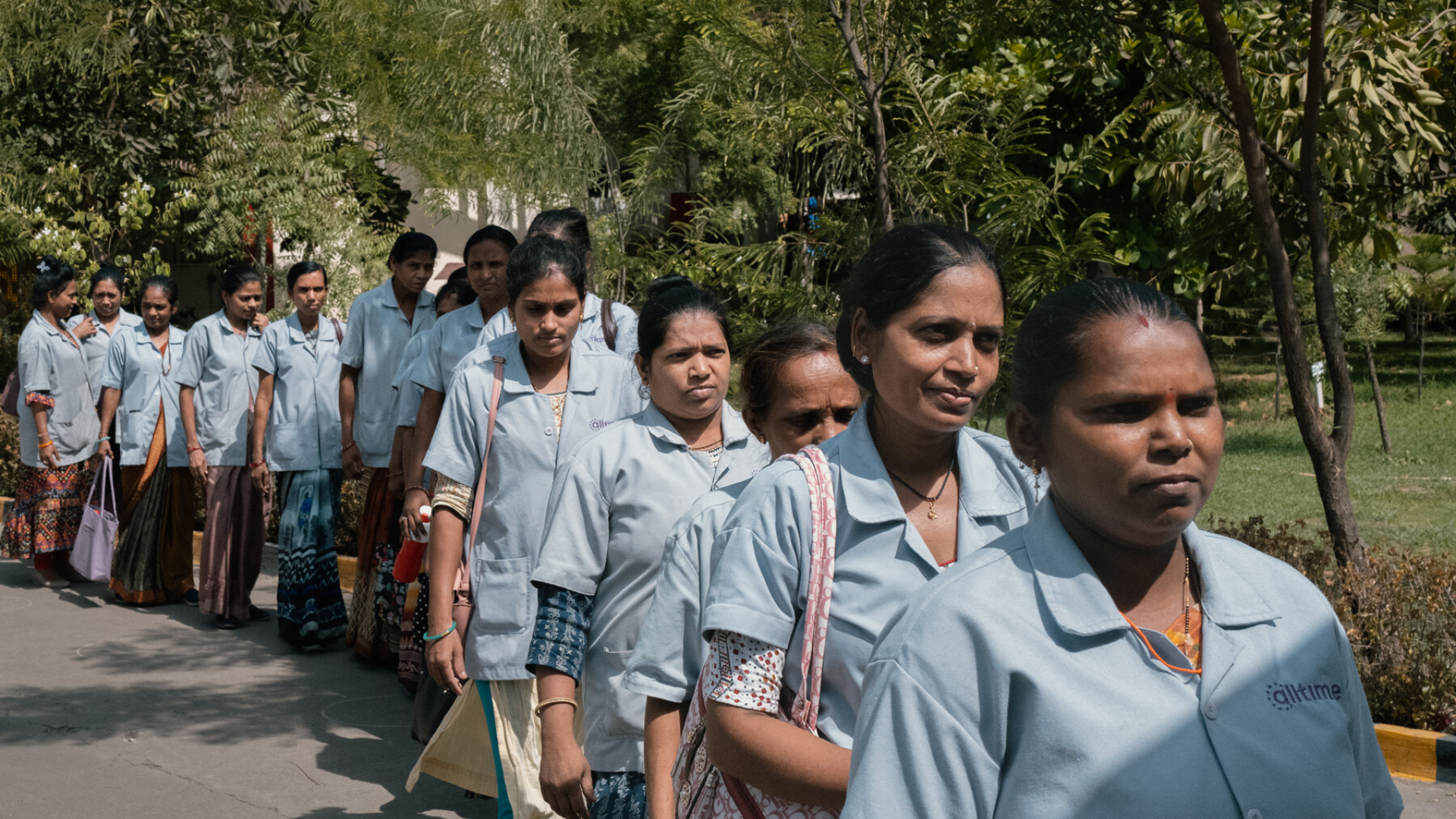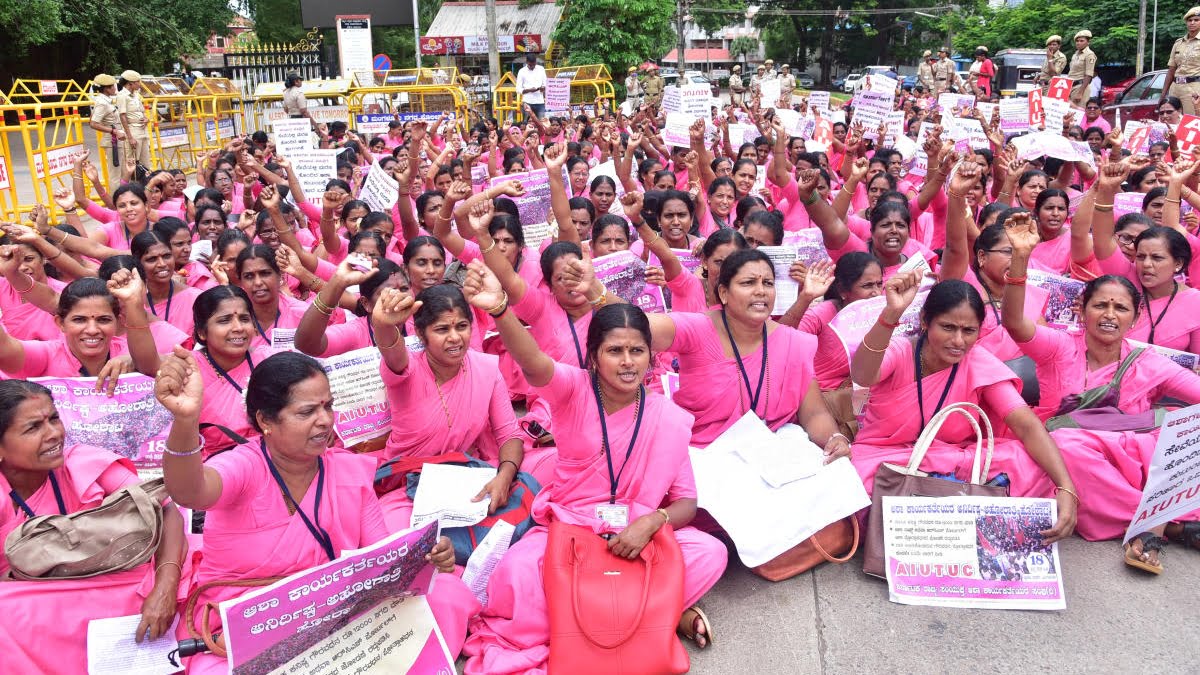
In February 2025, ASHA workers in Kerala went on strike and set up a tent outside the state Secretariat in Thiruvananthapuram. They remained there for over a hundred days, enduring heat, rain, and a 41-day hunger strike. They demanded what they had been seeking since 2005: a fixed salary, social security, and recognition as workers instead of volunteers. The Left Democratic Front government expanded their responsibilities to over 100 tasks per month while preventing them from taking other jobs. They formed a committee of five bureaucrats and refused to negotiate further. The strike continued.
This is not just a story about Kerala. It reflects a broader issue across India that has been developing for two decades. Over 10.22 lakh women serve as accredited social health activists throughout the country, with one per thousand people in rural areas. They work 8 to 12 hours a day on tasks like antenatal checkups, facilitating deliveries, running vaccination drives, monitoring tuberculosis, mapping diseases, and ensuring community sanitation. They are the first point of contact between rural India and its health system. In 2022, the World Health Organization recognized their role in reducing maternal and infant mortality, yet the union government still offers them no fixed salary or employment status. The 2025-26 Union Budget did not even propose an increase in their honorarium. The government labels them as “volunteers”. That term carries significant implications, none of which are accidental.
What ‘Volunteer’ Actually Means in Practice
When the National Rural Health Mission launched in 2005, guidelines described ASHA workers as “community health volunteers” who would contribute only 1 to 2 hours per day. That description has remained unchanged, while everything else has shifted.
Over 10.22 lakh women serve as accredited social health activists throughout the country, with one per thousand people in rural areas. They work 8 to 12 hours a day on tasks like antenatal checkups, facilitating deliveries, running vaccination drives, monitoring tuberculosis, mapping diseases, and ensuring community sanitation.
The NHM now assigns ASHAs 100 tasks per month at the national level, with states adding their own requirements. In Kerala, state orders expanded ASHA duties and explicitly prohibited them from taking other paid jobs that might conflict with their ASHA responsibilities. This approach seems odd for a volunteer. You cannot label someone a volunteer, assign them full-time duties, and then block them from earning income elsewhere, while claiming the designation is anything but a legal fiction meant to avoid wage obligations.
The payment structure highlights this fiction. From the Union government, an ASHA receives a fixed monthly incentive of Rs 2,000 for a defined set of tasks, which has been recently only increased to 3500 rupees. Everything else depends on performance: Rs 300 for facilitating an institutional delivery, Rs 75 for each vaccination, and Rs 50 for each malnutrition case referred. States vary significantly in how they top this up — in West Bengal, total earnings reach about Rs 6,200; in Andhra Pradesh, around Rs 10,000; and in Bihar, approximately Rs 3,000. In many states without added payments, average earnings range from Rs 4,500 to Rs 7,000 per month, which is below the rural minimum wage of Rs 300 per day in most places.
An ANM nurse, who checks an ASHA’s paperwork and co-signs her records, starts with a fixed salary of Rs 35,400 per month, including benefits like a pension and paid leave. Meanwhile, the ASHA who brought a pregnant woman to the clinic at 2 AM receives only Rs 300 for the delivery. Both are part of the same health system, yet one is staff, while the other is classified as a volunteer.
The Gendered Architecture of Exploitation
This issue goes beyond wages. It concerns how certain work is perceived as caregiving while other work is seen as labour. ASHA work constitutes reproductive labour, such as monitoring pregnancies, infant nutrition, antenatal counseling, postnatal visits, and mapping diseases in households. Traditionally, this work has been done by women in their communities for free, as caring for children and the sick is often considered a natural role for women. When the state formalized this work through the NRHM in 2005, it maintained this assumption. The work would be carried out by local women and labelled as volunteering. Task-based payment structures were introduced, avoiding time-based payment that would acknowledge the monetary value of these women’s hours.
Maternal and infant care work is still seen as “women’s work”, which leads to its undervaluation. This bias also impacts policy thinking. There is an ongoing belief that men are the main earners in a household and that women’s earnings are just supplementary. In truth, many ASHA and other scheme workers are the primary breadwinners for their families. The notion that their income is secondary is not only condescending but also incorrect. This misconception has serious consequences for women who rely on earnings that the state keeps below minimum wage.
The intersectional dimensions of this issue compound the problem. Roughly 70 per cent of ASHA workers belong to SC, ST, or OBC communities. They are recruited from the villages and communities they serve, meaning they cannot pursue better-paying jobs without leaving their roles. Their geography, caste, gender, and class are all exploited by a system that requires them to remain in their current positions, doing precisely what they do, for the least amount of compensation.
A Decade of Demands, a Pattern of Tokenism
The national strike in 2018 called for a minimum monthly salary of Rs 15,000. The government’s response was simply to revise task-based incentive rates. The 2022 Bihar satyagraha—69 days of sustained protest—resulted in a Rs 1,000 honorarium increase. Maharashtra’s 75,000 ASHA workers struck for 21 days in early 2024, camping near the chief minister’s residence; they finally received a state top-up after fourteen years of protests. ASHA workers in Karnataka are now demanding alignment with the ILO minimum wage standard of Rs 28,000. The 2025-26 Union Budget didn’t address any of these issues.
A government response in Parliament in August 2024 stated that ASHAs “were envisaged to be community health volunteers entitled to task- and activity-based incentives.” This statement, in light of long hunger strikes and street protests, shows how little the state values the labour it extracts.
The centre-state dynamic sharpens the structural challenges. NHM funding is split 60:40 between the Union government and states, with a 90:10 split for northeastern states. If ASHAs were acknowledged as employees, they would be entitled to 7th Pay Commission scales, starting with a salary of around Rs 35,000, with significant pension liabilities over their careers. Forty percent of that liability would fall on state finances, which are already stretched. The “volunteer” label maintains fiscal flexibility, with states pointing to the Centre for funding. In turn, the centre indicates that states can increase honourariums from their own resources. Ten lakh women are caught in this dilemma, delivering babies at 2 AM for just Rs 300.
The Legal Ground Shifting
The classification of ASHAs as “volunteers” is becoming hard to sustain in court. In the case of Maniben Maganbhai Bhariya v. Union of India (2022), the Supreme Court acknowledged Anganwadi workers’ entitlement to gratuity, a benefit that implies employment status rather than volunteering. A 2025 ruling, Dharam Singh v. State of Uttar Pradesh, determined that essential and permanent work cannot be continuously classified as temporary or honorary. This reasoning directly applies to ASHA work: if the National Health Mission depends on ASHAs, and it does then their work is essential, permanent, and not voluntary.
The Minimum Wages Act, 1948, defines a “worker” in Section 2(g) as anyone doing skilled or unskilled manual work. ASHA work—vaccinations, delivery facilitation, and disease surveillance—is skilled manual work by any reasonable interpretation of that definition. The rural minimum wage of Rs 300 to Rs 450 per day translates to Rs 9,000 to Rs 13,500 per month; most ASHA workers earn below this threshold.
The classification of ASHAs as “volunteers” is becoming hard to sustain in court. In the case of Maniben Maganbhai Bhariya v. Union of India (2022), the Supreme Court acknowledged Anganwadi workers’ entitlement to gratuity, a benefit that implies employment status rather than volunteering.
Article 39(d) of the Constitution directs the state to provide equal pay for equal work. Article 42 mandates provisions for maternity relief and fair working conditions. ASHAs, who spend their working lives facilitating other women’s deliveries and antenatal care, receive no paid maternity leave. The woman who ensures that other mothers reach the hospital on time cannot take paid leave when it’s her turn to give birth.
Advocacy groups are now requesting amendments to the Industrial Relations Code, 2020 to create a separate category for “Scheme Workers” that would provide statutory protections for ASHA and Anganwadi workers without fully integrating them into the civil service. The Code on Wages, 2019 currently does not explicitly include scheme workers, but revising Section 2(k) to encompass them could instantly bring 10 lakh ASHA workers under minimum wage protections.
What Recognition Would Cost and What Continued Denial Does
The cost involved in standardising the salaries of ASHA workers at the minimum level of Rs 21,000 per month, equivalent to the 7th CPC Level 3 pay scale, will involve additional expenditure by the government, but the same is within the financial means of the state. Workers are demanding fair wages and social protection for the workforce, which keeps the public healthcare system functioning for millions. The government yearly expenditure on tax exemptions would be more than what it would take for the government to pay the workers. Because when it is not done, this denial may be harder to measure, but they are easy to see. The women who ensure India’s rural health outcomes have to pay for their own medical care, bike to night calls unpaid, and cover the costs of private transport when they take women to hospitals.
The NHM will celebrate twenty years in 2025. The same ASHA system that the government credits for reducing India’s maternal mortality ratio—from 254 per lakh live births in 2004-06 to 97 in 2018-20—has not provided its workers with a single day of guaranteed paid leave or a pension they can rely on.
Wages Are Not a Reward, They Are a Right
Labelling ASHA workers as volunteers is not a mistake; it is a deliberate policy choice. This choice is maintained and defended with arguments about fiscal constraints, federal complexity, and scheme design. These arguments have been accepted in budget after budget while the workers themselves sleep on pavements outside secretariats. The feminist demand is clear: pay minimum wages, extend Minimum Wages Act coverage, provide maternity benefits and pensions, and recognize the employment relationship that has existed in practice since 2005. The courts are starting to move in this direction. The legal landscape is changing. The only institution that still calls these women volunteers—still insisting that the woman who biked ten kilometers to a night delivery did so out of community spirit rather than because she needed the Rs 300—is the government that created the system.
The next national ASHA strike will not request a Rs 1,000 raise. It will demand wages. When this happens, the question will be whether the state continues to call the labor it cannot survive without “volunteering.”
References
- Global Voices. “Women Health Workers in Kerala, India, Demand Fair Wages and Recognition of Work.” May 23, 2025. https://globalvoices.org/2025/05/23/women-health-workers-in-kerala-india-demand-fair-wages-and-recognition-of-work/
- Organiser. “Salary, Social Security, and Other Benefits for ASHA Workers Demanded.” March 4, 2025. https://organiser.org/2025/03/04/280910/bharat/salary-social-security-and-other-benefits-for-asha-workers-demanded/
- Missing Perspectives. “Frontline Health Workers in Rural India Are Fighting for Better Pay and Permanent Status.” October 22, 2024. https://missingperspectives.com/posts/asha-frontline-workers-india/
- Daily Excelsior. “Issue of Wages to ASHA and Anganwadi Workers.” March 15, 2025. https://www.dailyexcelsior.com/issue-of-wages-to-asha-and-anganwadi-workers/
- Heinrich Böll Stiftung. “Care Without Compensation: How ASHA Workers in India Struggle for Dignity and Justice.” January 31, 2025. https://www.boell.de/en/2025/01/31/care-without-compensation-how-asha-workers-india-struggle-dignity-and-justice/
- Key4Comply. “Beyond Volunteering: Legal Dialogue Over Rights for India’s Scheme Workers.” April 2026. https://www.key4comply.com/beyond-volunteering-legal-dialogue-over-rights-for-indias-scheme-workers
- Insights on India. “ASHA Workers and Honorarium.” March 14, 2025. https://www.insightsonindia.com/2025/03/14/asha-workers-and-honorarium/
- Maniben Maganbhai Bhariya v. Union of India (2022). Supreme Court of India.
- Dharam Singh v. State of Uttar Pradesh (2025). Referenced in Key4Comply (see note 6).
- Ministry of Health and Family Welfare, Government of India. Parliamentary Reply on ASHA Worker Status. August 2024. Referenced in Daily Excelsior (see note 4)