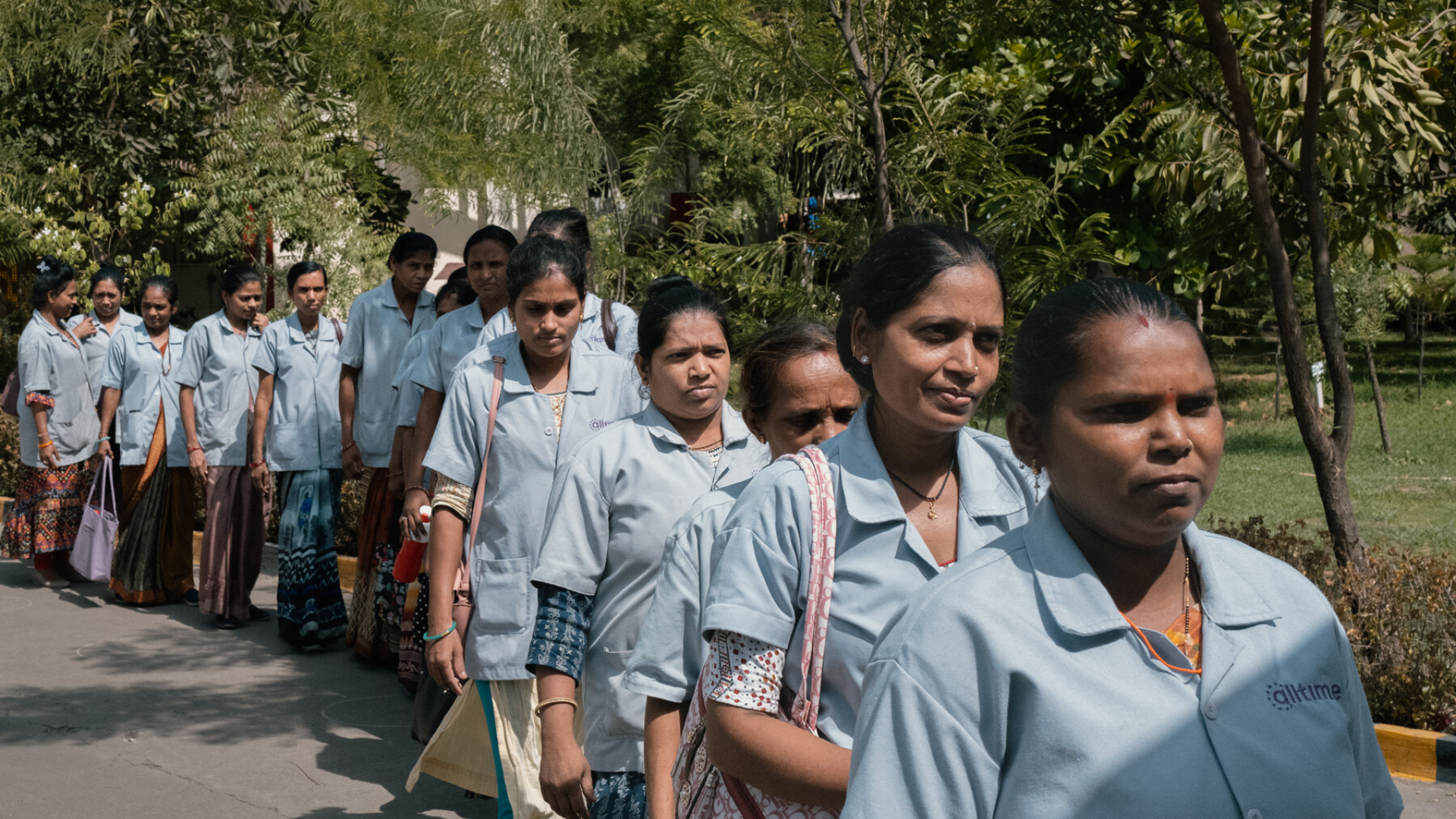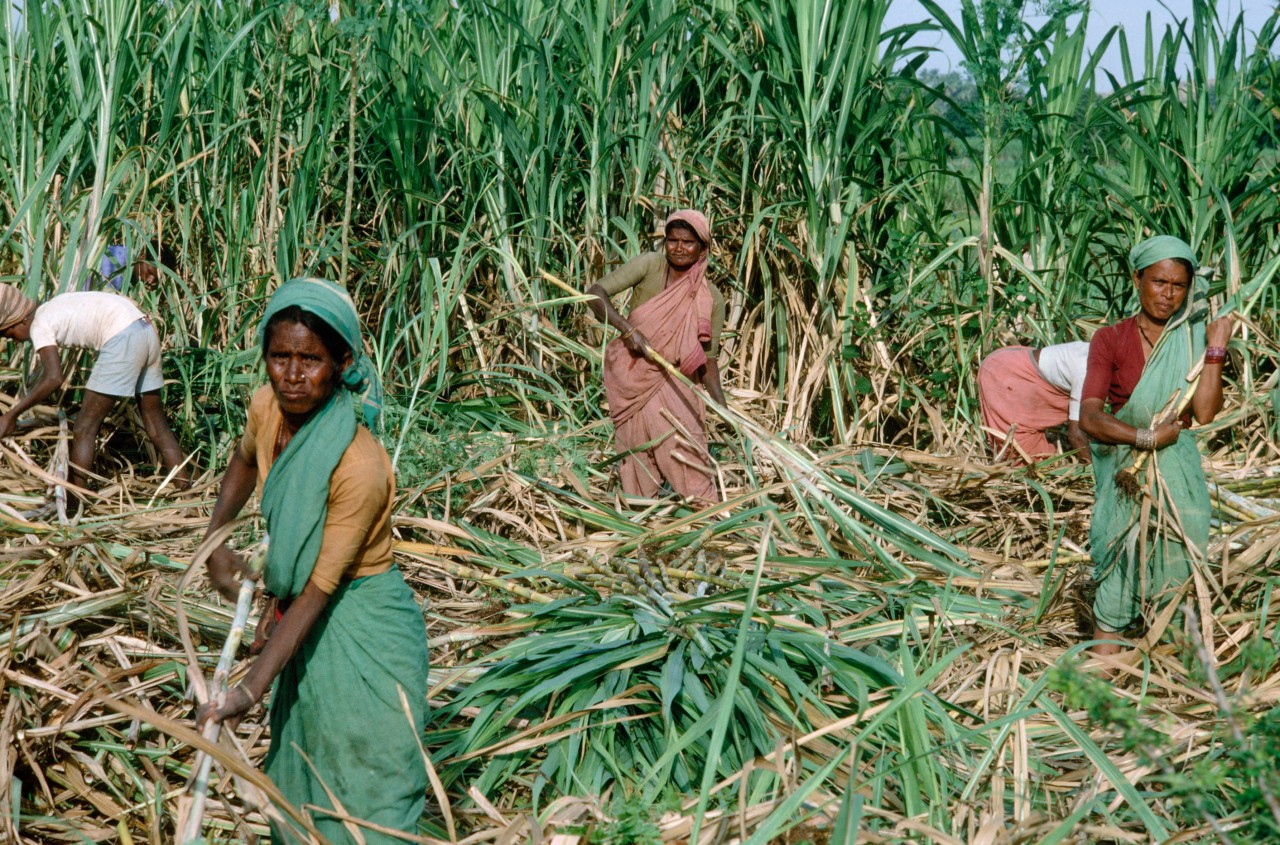
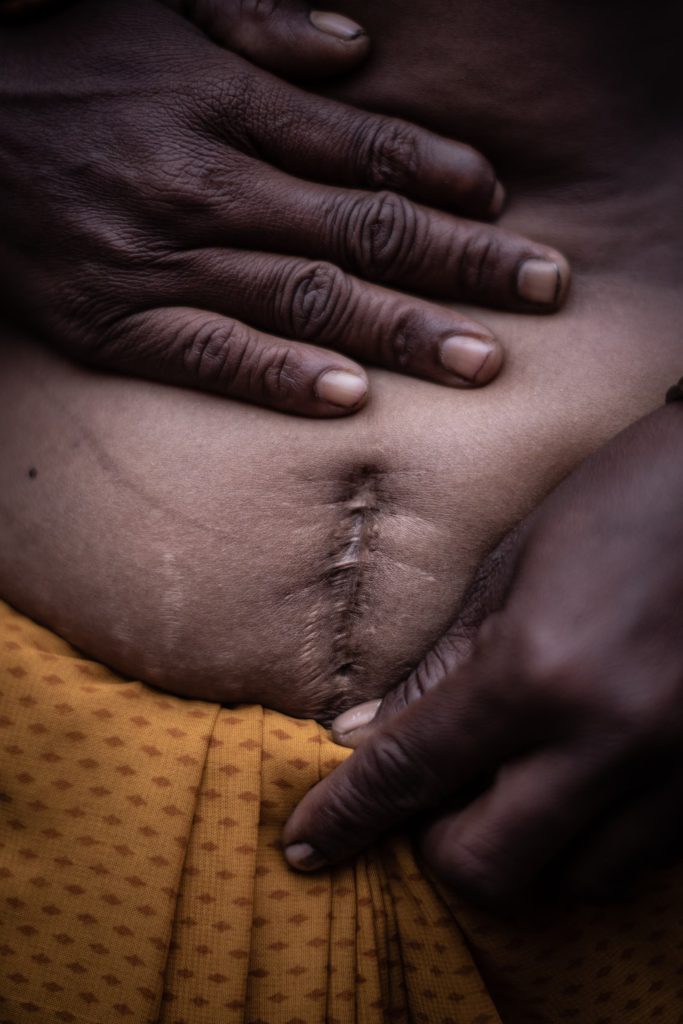
In late 2024, a health report from Maharashtra’s Beed district revealed that 843 women had undergone hysterectomies just before the annual sugarcane migration season. More than half of them were between thirty and thirty-five years old. These women were not ill. However, because they complained of cramps, irregular periods, and routine gynaecological discomfort, doctors labelled their uteruses as diseased and recommended their removal. The women paid between ten and thirty thousand rupees for the surgery, often using their future season’s wages to finance it. Within weeks, they returned to the cane fields, cleared to work twelve to eighteen-hour shifts without menstruating.
These numbers are not new. In 2019, Maharashtra’s health minister stated in the state legislature that private hospitals had performed 4,605 hysterectomies in Beed over a three-year period. The previous year, a study commissioned by the Maharashtra State Commission for Women found that 36 per cent of women sugarcane workers in the state had undergone hysterectomies. The Neelam Gorhe Committee was set up to investigate this and make recommendations. However, the labour system that created the crisis remained unchanged.
Most reports on Beed discuss these high rates of hysterectomies as either a reproductive health crisis or a case of medical exploitation by unqualified practitioners. Both are true, but they only capture part of the issue. They focus on the procedure and the clinic, while the real problem lies in the contract.
The contract that disciplines the body
Sugarcane harvesting in western Maharashtra operates on the mukadam system. Workers are hired in koyta pairs — that is, spouses are employed together. This hiring is made through a contractor known as the mukadam. Before the season begins, each pair gets an advance payment called the uchal, typically between fifty thousand and one lakh rupees. This advance is debt, repayable only through labour in the fields.
Once the cutting season begins in October, workers must work without interruption until March or April. Penalties exist for days of no work. The penalty, known as khada, is deducted from wages. Within this system, menstruation and pregnancy are treated the same way as illnesses and injuries, because they all interrupt work just the same. In Maharashtra’s sugarcane fields, a period means lost productivity. The mukadam does not care why a woman cannot stand in the field for sixteen hours. He only cares that she is not standing. The uchal she owes does not pause because she bleeds.
In Maharashtra’s sugarcane fields, a period means lost productivity. The mukadam does not care why a woman cannot stand in the field for sixteen hours. He only cares that she is not standing. The uchal she owes does not pause because she bleeds.
When a doctor in a private clinic tells a twenty-something worker that her menstrual pain calls for a hysterectomy, the suggestion appears entirely practical within the context of the field. By removing the organ causing missed days, the wage penalty is eliminated, and the woman can get back to work. This logic functions flawlessly from the mukadam’s ledger right down to the surgeon’s table. The woman who leaves that clinic will never again lose a day’s wages to her period. However, she must now navigate early menopause, bone density loss, hormonal disruption, and chronic pain.
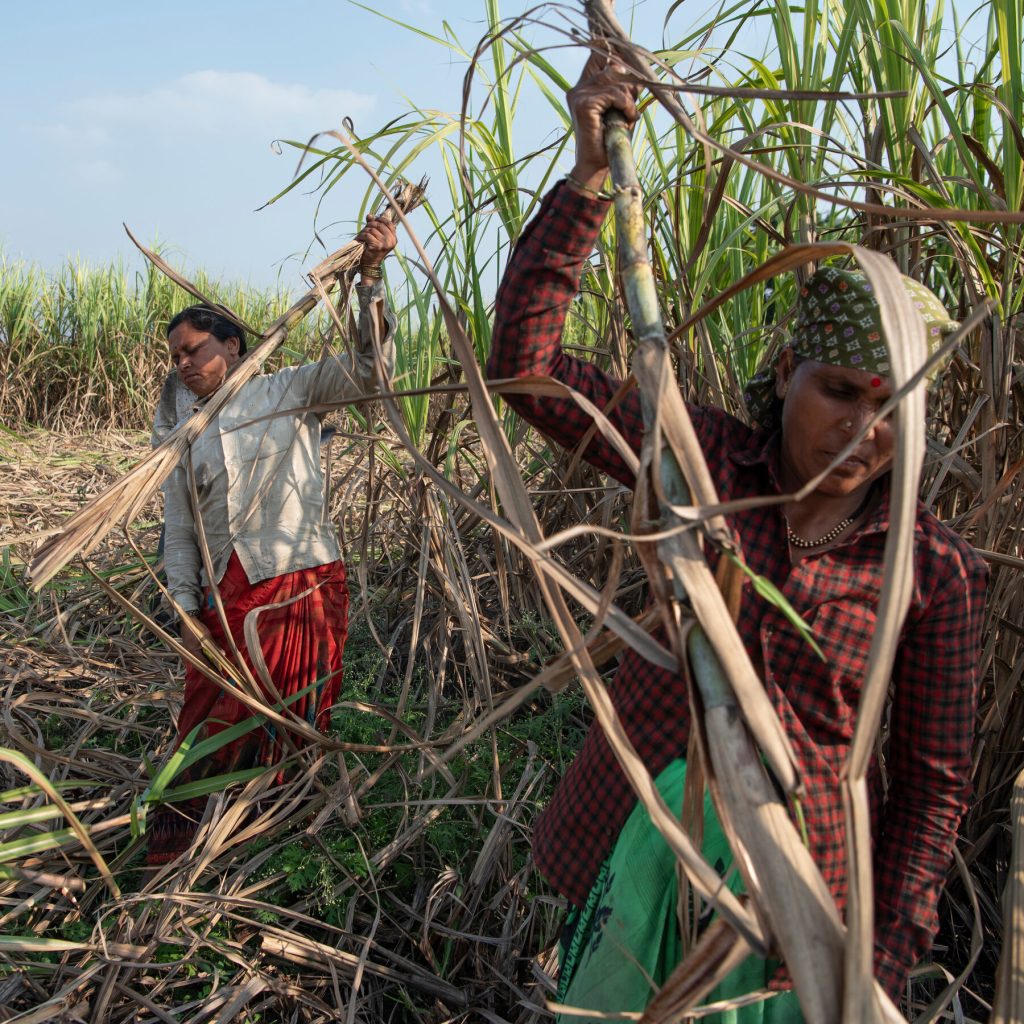
In their 2019 Economic and Political Weekly article, Harvest of Uteruses, Abhay Shukla and Seema Kulkarni described this dynamic as a ‘convergence of oppressions’. Seen closely from the perspective of the body, however, the term ‘convergence’ falls short. This is because it implies a collision of separate issues. The system is operating exactly as intended. By punishing the menstruating body through the contract and having the clinic remove the menstruating organ, the field ultimately secures a worker who will not bleed, allowing productivity to continue without interruption. The ‘harvest’ is therefore not just of sugarcane, but of the very biological futures of the women who cut it.
What Mahasweta Devi already knew
Long before this logic was formalised in health policy or labour economics, author Mahasweta Devi had already identified it. In ‘Dain‘, the final chapter of her book Gehrati Ghatayen, a tribal woman finds herself labelled a witch by her community, for little else other than the fact that her physical presence, fertility, and autonomy disrupt the property arrangements established by men.
The ojha who brands her is acting as an economic operator rather than a naive believer. By using belief to exert control, he channels communal anxiety into a verdict on the woman’s body. Stripped of kinship and often killed, she rarely survives a judgment that fundamentally punishes her body for refusing to behave.
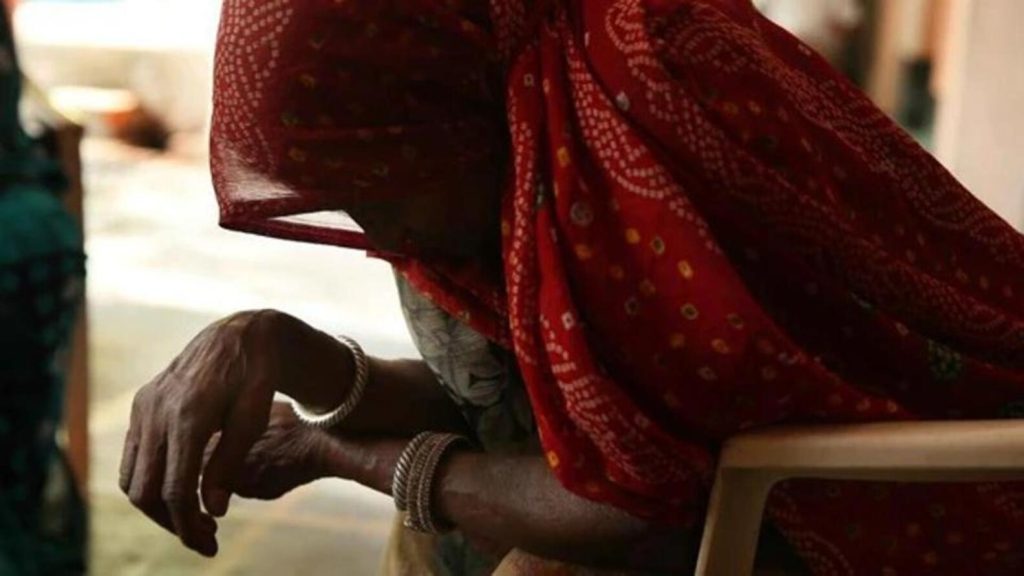
Mahasweta Devi mapped this exact form of extraction decades ago in Stanadayini (translated as Breast-Giver). Through the story of Jashoda, Devi explores an economy that keeps a woman alive just to harvest her breast milk for a wealthy family. However, the moment she is diagnosed with cancer, they abandon her. Devi noticed how the labour market reduces the female body to its most profitable parts. The private clinics in Beed follow the same logic with the uterus, removing it as soon as its natural cycle could interfere with a contractor’s profit.
The shortcomings in menstrual activism
This situation reveals a significant divide in mainstream Indian feminism. For the past decade, it has largely focused on period poverty and the cultural stigma around menstruation. We tirelessly campaign for the rights of women to remain in kitchens and temples when they menstruate. But handing a sanitary pad to a sugarcane worker whose contract fines her for menstruating solves nothing.
The thousands of women undergoing hysterectomies in Maharashtra face the crushing weight of the khada penalty. Their massive uchal debt keeps them tied to continuous physical labour, so any biological pause becomes a direct threat to their survival. You cannot campaign for awareness and change a system that penalises the uterus. The mukadam has a financial reason to use a surgically optimised workforce. This shows what happens when an unregulated economy views human biology as a burden that reduces profits.
From the village clearing to the clinic table
In Caliban and the Witch, Silvia Federici argues that the European witch hunts of the sixteenth and seventeenth centuries were a collective attack on women’s reproductive rights at a time when nascent capitalism required a reliable labour force. The disciplining of the female body into a machine for producing workers was sought by targeting midwives and women with knowledge of fertility.
In Caliban and the Witch, Silvia Federici argues that the European witch hunts of the sixteenth and seventeenth centuries were a collective attack on women’s reproductive rights at a time when nascent capitalism required a reliable labour force.
We don’t need to look for an exact historical parallel to see how a similar arrangement works in modern India. According to NCRB data, 74 people were murdered due to witch-hunting in 2023, with Jharkhand showing a hundred per cent increase from the previous year. While the women killed or expelled from their communities as ‘dains‘ in Jharkhand, Chhattisgarh, and Madhya Pradesh are clearly not the same individuals losing their uteruses in Beed, the systems affecting both groups are not very different.
In villages, an ojha might diagnose a woman’s body as a communal threat and prescribe elimination through exile, branding, or death. In the private clinics of Maharashtra, a surgeon diagnoses a woman’s uterus as a threat to her productivity and prescribes its surgical removal. Both figures serve as intermediaries who gain financially or socially from their judgments of women’s bodies, and both operate under the tacit approval of a state that refuses to intervene decisively. The Prevention of Witch-Hunting Bill, 2016, has stagnated since 2016, much like how the guidelines on performing hysterectomies issued following the Neelam Gorhe Committee remain entirely unenforced.
In villages, an ojha might diagnose a woman’s body as a communal threat and prescribe elimination through exile, branding, or death. In the private clinics of Maharashtra, a surgeon diagnoses a woman’s uterus as a threat to her productivity and prescribes its surgical removal.
Today, though the scalpel has replaced the stake, the fundamental logic has not shifted. When a woman’s body bleeds, ages, or resists in ways that disrupt the economy, it is quickly marked for correction. Whether such correction takes a ritualistic or surgical form, the end goal is always to produce a body that will not interrupt profit.
Devi understood this dynamic long before Beed made headlines, just as Federici documented its roots across four centuries of European history. The mass hysterectomies in Maharashtra confirm that the battle over women’s bodies is far from a settled historical event. It is an active, modernising enterprise, carried out organ by organ inside private rural clinics to ensure the sugarcane harvest remains uninterrupted by biology.
About the author(s)

Roshan is a Senior Research Fellow at the Centre for Political Studies, Jawaharlal Nehru University, New Delhi. His doctoral research examines witch-hunting as a form of gendered violence in West Bengal, with research interests spanning gendered violence, ritual economy, caste-gender intersectionality, and legal impunity. A recipient of the National Youth Icon Award 2025 in the field of theatre and performance, he has spent over a decade engaging with performance as a site of political and cultural inquiry.