When upper-caste individuals, cushioned by years of privilege, casually say that ‘things have changed in our country’, films like Kartavya (2026) expose how casteism continues to thrive, and how power protects itself, the truth is manipulated to safeguard existing hierarchies, and oppression is normalised beneath the illusion of progress.
‘Kartavya’ translates to duty, a word that is constantly under philosophical inquiry. Duty, operating within the frameworks of politics and culture, is never neutral. In India, the notion of duty is tied to caste, class, gender, power, and patriotism.
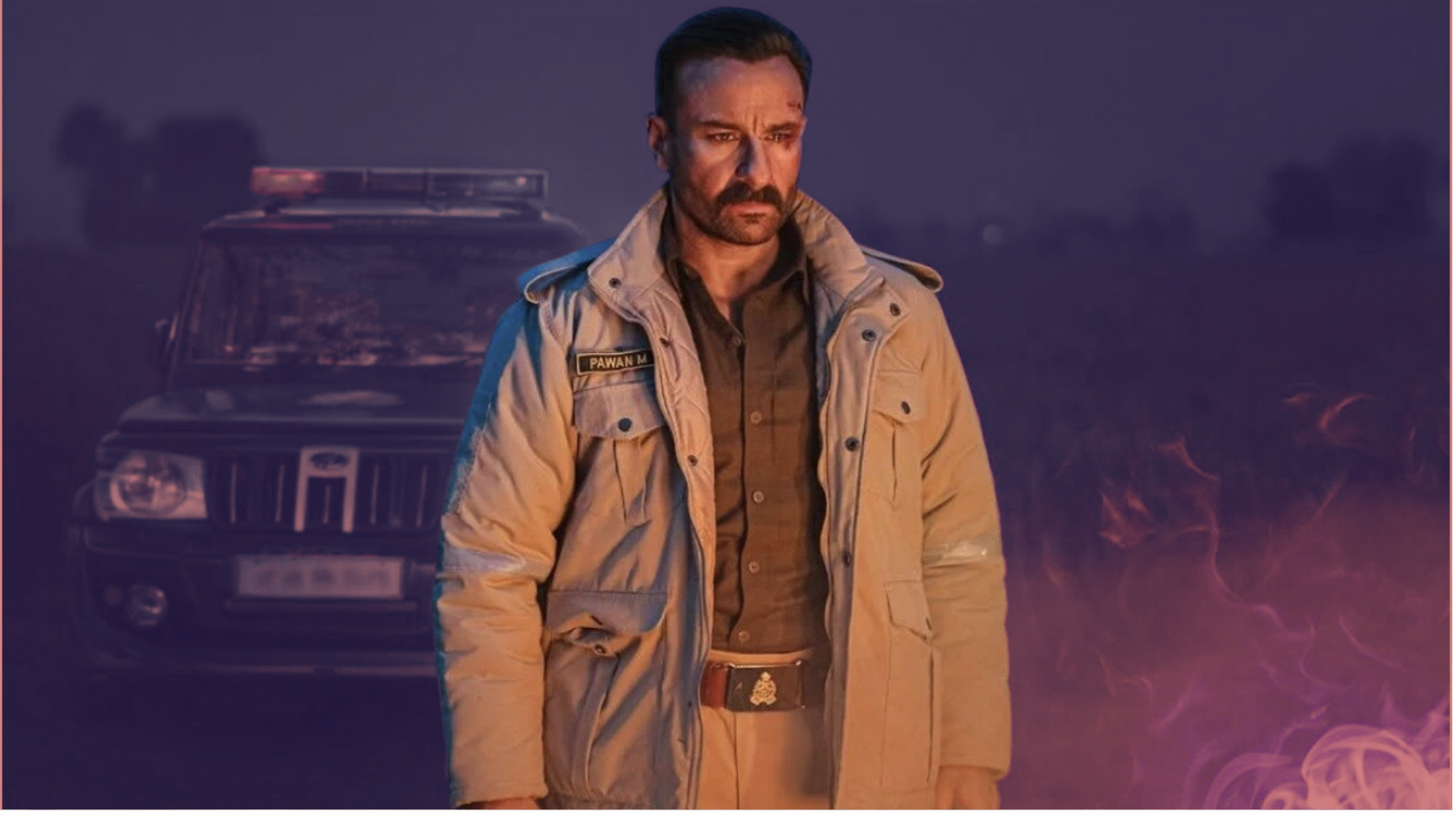
Kartavya is written and directed by Pulkit, the filmmaker behind films such as Bhakshak (2024), Maalik (2025), and Dedh Bigha Zameen (2024). Staying true to his previous work, Kartavya brings socio-justice themes to the forefront through a tale of both oppression and power. The film asks a simple question: What happens to an officer who challenges people in power? Saif Ali Khan portrays Pawan Malik, a police officer who stands for the truth in the face of unchecked power, caste violence, and regressive beliefs.
The screenplay is powerful, yet delicately woven with societal issues such as casteism, honour killings, misuse of power, and the worship of an unscrupulous leader by the villagers. While none of these issues is presented lazily, Kartavya occasionally struggles to fully articulate these ideas.
Given that political neutrality and indifference have been the prevailing tone in cinema over the past several years, one can describe Kartavya as a political avowal. The film does not offer answers, but it highlights important questions and exposes the country’s emotional exhaustion through Khan’s character.
Given that political neutrality and indifference have been the prevailing tone in cinema over the past several years, one can describe Kartavya as a political avowal. The film does not offer answers, but it highlights important questions and exposes the country’s emotional exhaustion through Khan’s character. It posits that justice is an impossibility within systems infected with corruption, caste favours, religious fundamentalism, zealotry, institutional decay, and political opportunism.
Kartavya dismantles the caricaturised righteous, heroic officer
Pawan Malik is a Station House Officer (SHO) and is tasked with investigating a journalist’s murder, a task which brings him face-to-face with caste oppression, child abuse, and spiritual exploitation. However, Malik doesn’t follow Hindi cinema’s template of what a righteous, heroic officer who is morally untainted must be like. He dismantles the idea of heroism by embodying righteous rage while remaining emotionally exhausted, fighting a system he has no faith in, making decisions that dirty his white shoes (literally, in this case), and refusing redemption.
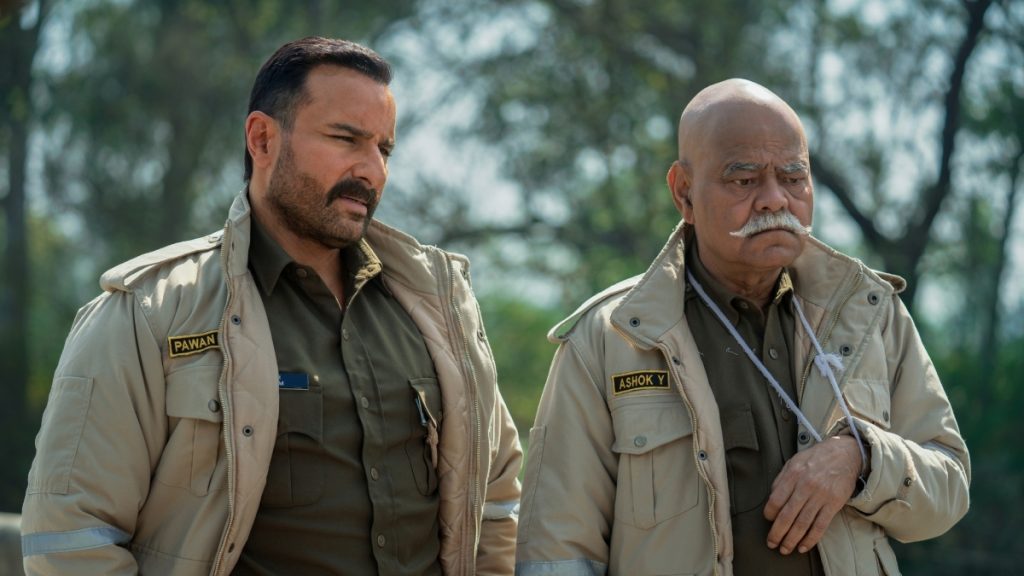
As part of the system, Malik is compelled to negotiate with it from within, exposing how miserably the state’s machinery fails. The film’s emotional architecture is shaped by this confrontation with institutional power. The filmmaker illustrates how faith in these structures is gradually overshadowed by scepticism and distrust of their functioning, mirroring the broader contradictions that define contemporary India.
Caste, godmen, and lost futures
Caste-based political influence and violence appear throughout the film, with upper-caste individuals making decisions for those from marginalised castes by labelling this arbitrary and violent social hierarchy as ‘tradition’ and turning caste into an infrastructure deeply embedded within families and communities, land ownership and rights, and language. This ultimately normalises caste violence; within Kartavya’s world (much like our own), honour killing, for instance, is not an aberration, nor is it treated as such by its characters. Within its rural landscape, such caste violence is utterly ordinary.
Within Kartavya’s world (much like our own), honour killing, for instance, is not an aberration, nor is it treated as such by its characters. Within its rural landscape, such caste violence is utterly ordinary.
Godman Anand Shri (Saurabh Dwivedi) is the puppet master behind much of what unfolds in the film, mirroring today’s Indian political landscape, where spirituality bleeds into politics, and the two are deliberately merged until they become indistinguishable; all the while, celebrity, stature, and power converge.
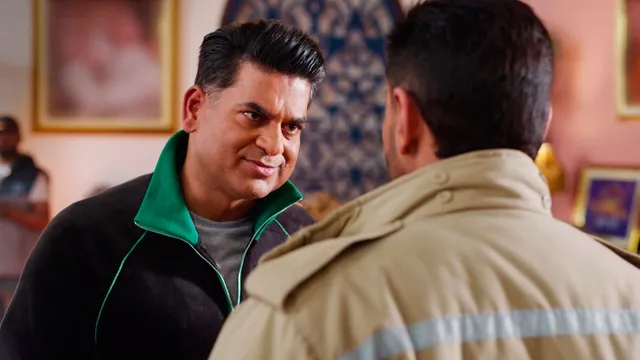
Anand Shri manipulates and exploits the beliefs of the marginalised for his own gain, and because of the power he wields, along with his celebrity stature, he is not held accountable. This mirrors contemporary India, where religious and spiritual leaders are increasingly becoming politicians and political influencers, shielding themselves and their actions from public and institutional scrutiny.
The film also examines the lost futures buried beneath the rubble of such unchecked power and violence. Children, for whom everyone hopes for a better future, become symbols of despair, as the system they are set to inherit is acknowledged to be morally corrupt. And in Kartavya’s bleak world, there is no hope that such systems can be reformed.
The moral fatigue of fighting an unwinnable battle
Pawan Malik is a morally ambiguous character, bringing the fatigue of history through his role. The ageing character embodies structural and institutional decay, presenting him as a witness to systemic failure rather than an invincible hero. Pawan’s desperation and moral collapse mirror the emotional fragility of contemporary India. Khan anchors the film emotionally with his performance, by not turning Pawan Malik into a revolutionary hero, but into one who survives through moral compromise.
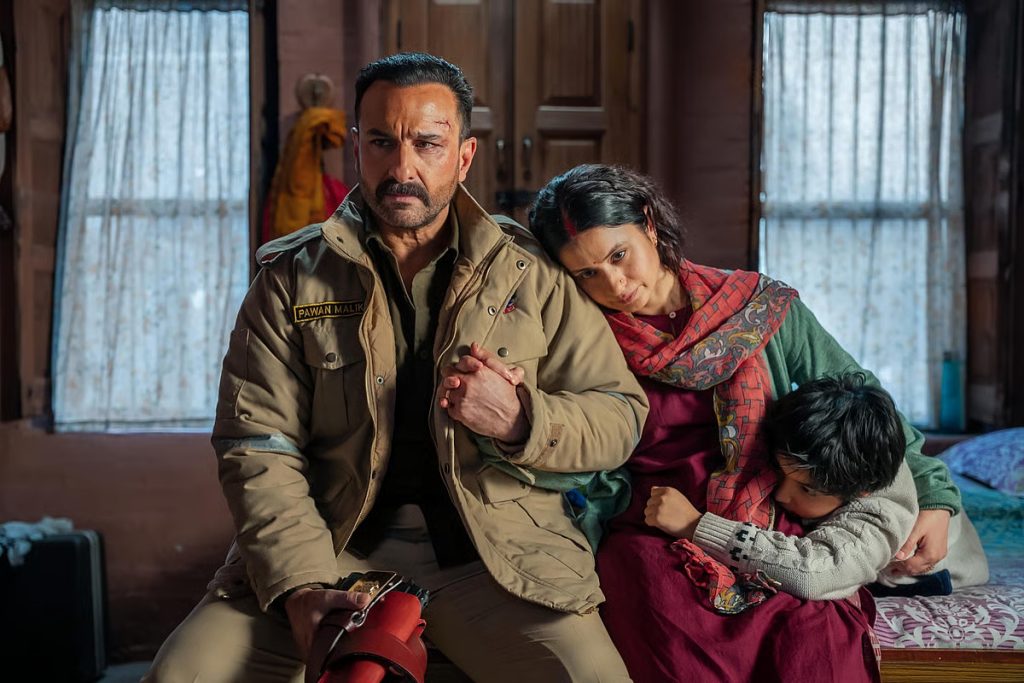
Pawan’s character is not the typical nationalist, masculine hero of films who knows his enemies well, chooses violence to deliver justice, and is powerful and invincible. Pawan is emotionally exhausted; he has a family, is always anxious, and is often incapable of saving lives, including his own. When Pawan chooses to be violent, this decision is not celebrated with amplified music or elaborate action sequences. His character dismantles the masculine celebration of violence and is ultimately incapable of becoming more powerful than the system itself.
Kartavya is not a perfect film; however, it depicts the present, precarious nature of India. Kartavya is fundamentally a film about the emotional exhaustion and moral fatigue that come with navigating systems that were never built to work for the ordinary person without political muscle and power. The film understands something fundamental: authoritarian systems psychologically and emotionally exhaust those within them and do not always rely on physical violence or oppression.
Kartavya leaves you with the hope that good people within the state machinery can bring change; however, it also leaves you questioning whether good people can survive the system, or even the state itself.
About the author(s)

Vansh is a film graduate from AJK MCRC, Jamia Milia Islamia, exploring the cinematic world through archives and the lenses of political history, gender, culture, and social movements. He takes inspiration from the eccentricities of everyday life, blurring the boundaries between fiction and non-fiction.