As a child, I was bullied almost every day in my school in Mumbai for being effeminate and for not being good at sports. I never felt like I belonged. Nor did I feel that any of my teachers were approachable enough for me to talk about what I was going through.
As I grew older, I continued to face exclusion and bullying because of my gender identity. These experiences shaped me and ignited a deep passion for social justice.
I spent seven years in the United States, where I completed my PhD in Chemical Engineering. In 2021, I returned to India to join the Teach for India Fellowship. I wanted to create change at the grassroots level. I wanted to become the teacher I never had. I wanted my students to grow into empathetic individuals, filled with love and compassion.
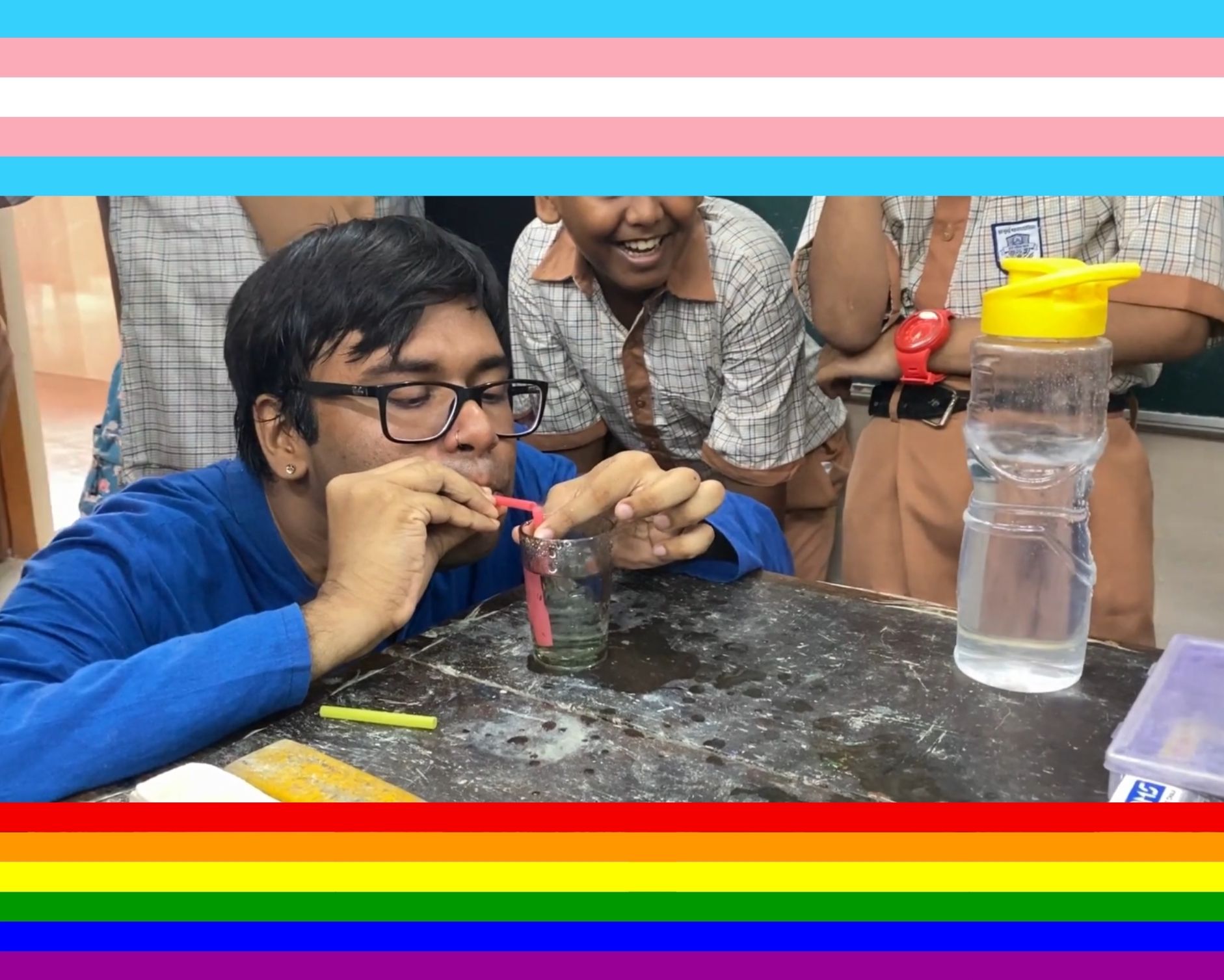
Over the next five years, I taught Science and Mathematics to secondary school students in three different government schools in Mumbai.
Being the only nonbinary teacher in a school was challenging, to say the least. I wear a nose ring, and whenever I entered a new classroom, I would see students staring at me and sniggering. At different instances, students shouted transphobic slurs at me in classrooms and even made comments about my private parts. On a couple of occasions, groups of boys surrounded me outside the school building and yelled slurs at me. It was deeply traumatizing.
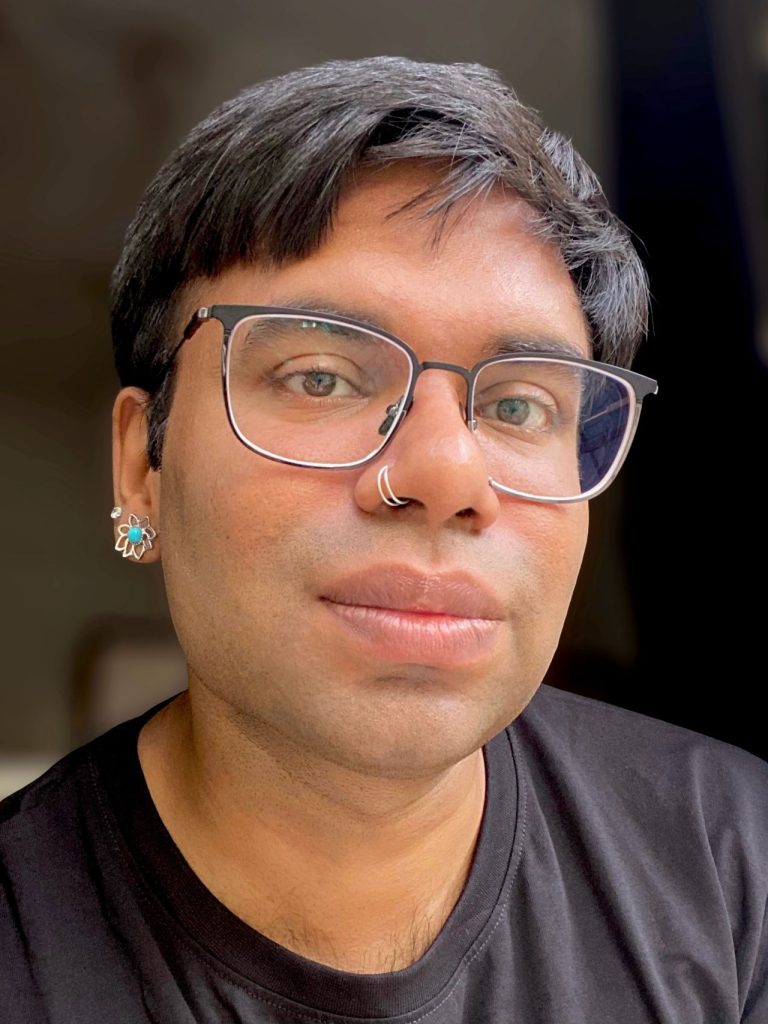
Microaggressions were common in staff rooms. In one school, a teacher told my students to “stay away from me” because I came from a different community.
Our schools are simply not equipped with support systems or mental health resources for trans and nonbinary teachers. How many trans and nonbinary teachers do you find in schools? How many do you see in leadership positions in academia or the education sector? The numbers are close to zero.
And yet, representation matters.
Our students need to see queer, trans, and nonbinary role models. Students who do not fit in need to know that people like them belong in classrooms, schools, laboratories, and leadership positions. They need to know that there is a place for them in the world.
Even in classrooms where I have only been a visitor for a single day, I have consistently witnessed effeminate boys being mocked with slurs such as “chhakka,” “meetha,” “ladies,” and “hijda.” Literally every classroom. I am not exaggerating.
What has disturbed me even more is how often teachers remain passive bystanders, treating this bullying as though it is simply a normal part of school culture.
But what does this do to the children being targeted?
What does an entire classroom internalize when this behavior goes unchallenged?
How does it shape young people’s understanding of gender, masculinity, and self-worth?
As someone who was bullied throughout childhood — and later in life — using the very same slurs, I can say with certainty that the effects run deep. Living with a trauma disorder has shown me just how long-lasting and deeply rooted the impact of childhood bullying can be.
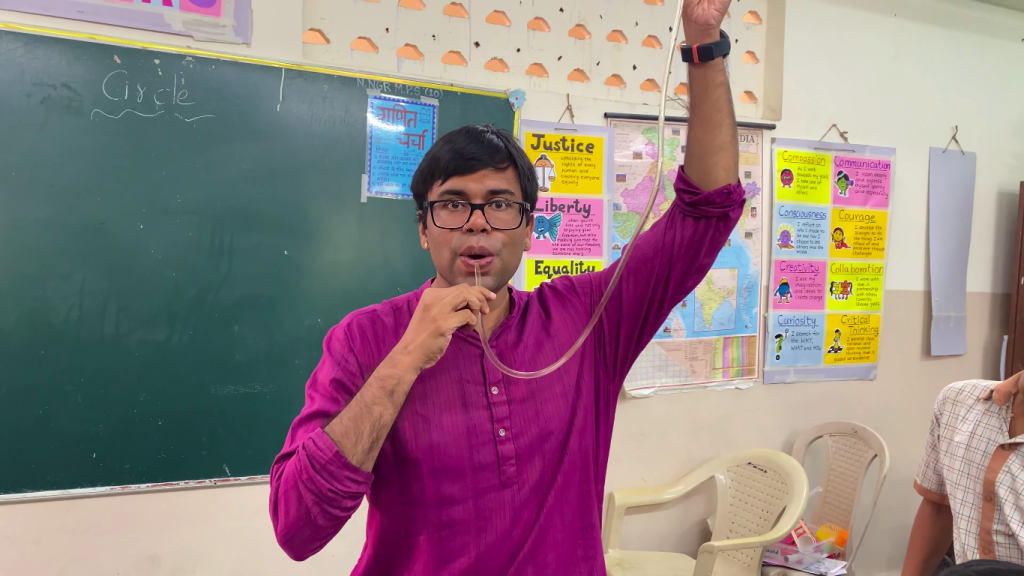
For me, activism is about representation.
For me, activism is about survival within the education system, so that children like me do not get erased.
In my classroom, I was vulnerable and brought my whole self to work every day. I often think about a passage from the book Teaching to Transgress by bell hooks: “Professors who expect students to share confessional narratives but who are themselves unwilling to share are exercising power in a manner that could be coercive. In my classrooms, I do not expect students to take any risks that I would not take, to share in any way that I would not share.”
I shared my personal story and my challenges with my students in every classroom I taught. I educated them about gender and sexuality. I also discussed intersectionality in my classrooms – about how caste, class, gender, sexuality, religion, and many other aspects of identity shape the privileges we enjoy in society, or the barriers we face.
Grades 6 through 10 are especially important years, when young people begin forming their understanding of gender, masculinity, patriarchy, and social norms. I believed it was essential to engage students in these conversations and encourage them to think critically about the world around them.
Despite the challenges I faced, there were also moments that made me feel proud and fulfilled.
Many students who felt like they did not fit in found a safe space in my classroom and felt comfortable sharing their stories with me. Girls felt safe discussing menstruation openly. One Grade 9 student wrote a poem about accepting diverse gender identities, while another created a zine challenging the stigma surrounding menstruation.
These moments reminded me why representation matters.
Every time I faced bullying, exclusion or discrimination at a school, I spoke up.
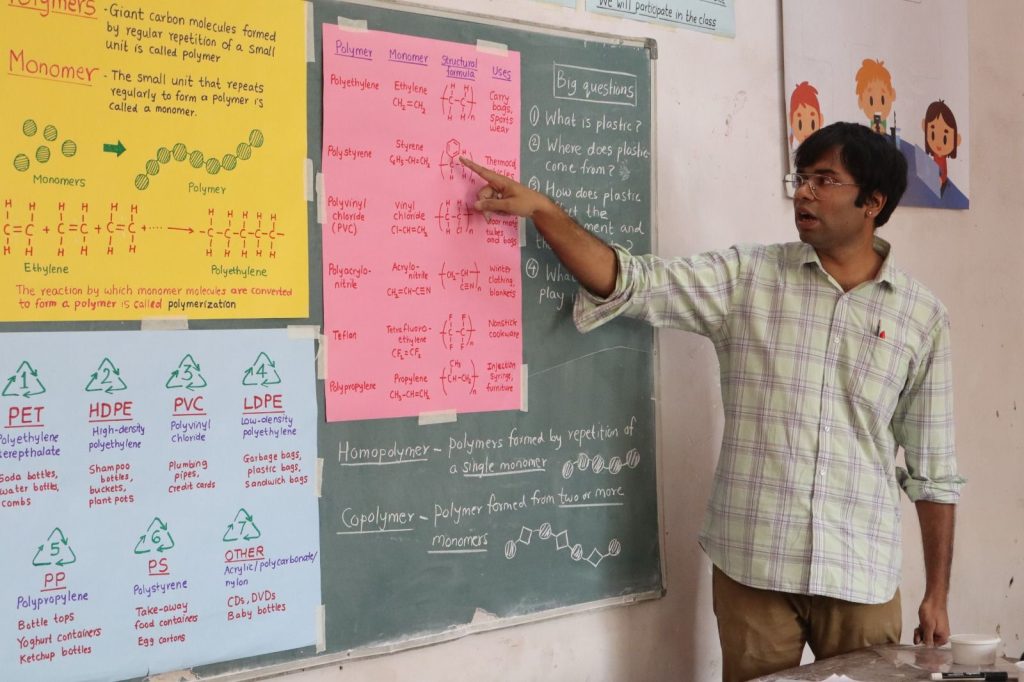
For most of my life, I suppressed my voice and my feelings. I made myself smaller. I tried not to take up space. I stayed quiet, even when I was hurting. My voice was silenced. I prioritized other people’s comfort over my own truth.
Only in the last few years have I begun to find the courage to speak up. To stand up for myself. To say what I think and feel without immediately apologizing for it.
Even now, it takes enormous courage for me to get the words out of my mouth. Every time I speak, I am pushing against years of silence.
When I spoke up at the schools I taught and called out things, a lot of blame was placed on me. The reality is that the groundwork for gender-nonconforming and trans people to exist, belong, and thrive in workplaces has still not been done.
So when I speak up and refuse to stay silent, it is not about creating drama. It is about surviving, being seen.
By being unapologetically myself, I believe I planted seeds in my classrooms- seeds of empathy, courage, and acceptance. I hope those seeds will continue to grow long after my students have left school.
My journey in education has not been easy, but it has reaffirmed my belief that schools can and must become more inclusive spaces.
I will continue this work by remaining in the education system.
Because children deserve to see that they can be fully themselves. Every child deserves to grow up in a world where they can express and live their gender freely, without fear, bullying, or exclusion.
I dream of an India, where our systems will support nonbinary and trans teachers and students.
About the author(s)

Sanket is a STEM educator based in Mumbai. They have a PhD in Chemical Engineering from UMass Amherst. They are passionate about making Science and Math learning fun and relevant. They are also passionate about climate action and social justice.