
Obsession, directed by YouTuber-turned-filmmaker Curry Barker, has taken the box office by storm. The indie horror film has already earned more than $200 million worldwide against an initial budget of just $750,000. While audiences have applauded the film, what is perhaps most laudable is Obsession’s message about consent, coercion, and violence in modern dating.
The ‘nice guy’ and the wish
The film’s protagonist is Baron ‘Bear’ Bailey (Michael Johnston), a music store employee mourning the death of his cat. American writer and educator Kate Millett argued in Sexual Politics that patriarchy often manifests itself in banal, everyday ways rather than through spectacular acts of violence. Bear’s character in Obsession embodies this idea: his violence is neither grotesque nor spectacular; it is subtle, mundane, and all the more unsettling for it.
Bear ostensibly seems like many men we have known and encountered in our daily lives — the shy, sweet, awkward ‘nice guy’ who is hopelessly in love but lacks the confidence to express it. When we first meet Bear, we sympathise with him. That is, until Bear uses a One Wish Willow, an enchanted object that promises to make wishes come true. Bear wishes that Nikki (Inde Navarrette), his colleague at the music store, for whom he has long harboured feelings, will ‘fall in love with him more than anyone else in the entire world‘.
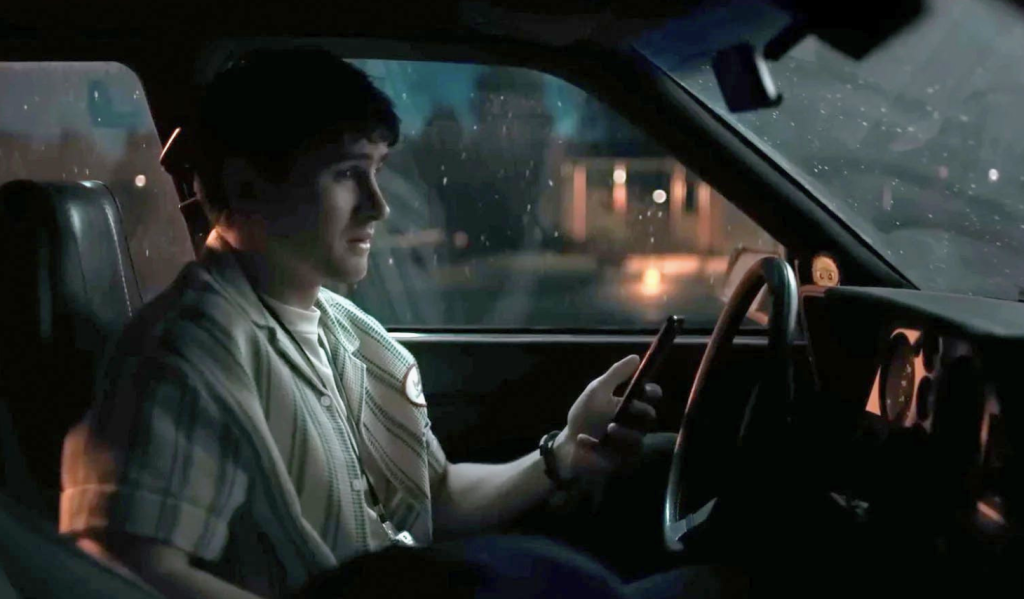
It is clear that Bear does not expect the wish to work, but his decision to wish for Nikki to fall in love with him reveals something far more unsettling. Just before making the wish, Nikki explicitly asks Bear whether he likes her, but he is unable to gather the courage to tell her how he feels, and she walks away. In that moment, frustrated with himself, Bear wishes for Nikki to love him.
Bear’s choice of wish already demonstrates his flippant attitude towards Nikki’s autonomy. Given what had just transpired, he could easily have wished for the courage to confess his feelings. Instead, he chooses to ask for Nikki’s submission, for her to fall in love with him, with little regard for how she actually feels or whether she wants to be with him at all.
American legal scholar Catharine MacKinnon’s theory of desire as power is at work here. MacKinnon argues that male desire is not neutral but is instead structured by relations of dominance. Bear’s wish materialises this dynamic: his desire does not merely reflect a power imbalance; it creates one.
American legal scholar Catharine MacKinnon’s theory of desire as power is at work here. MacKinnon argues that male desire is not neutral but is instead structured by relations of dominance. Bear’s wish materialises this dynamic: his desire does not merely reflect a power imbalance; it creates one.

His wish strips Nikki of her agency and bestows upon her a fate she would never have chosen for herself: becoming Bear’s girlfriend. From the moment he makes the wish, Nikki ceases to be herself and is transformed into someone who exists solely to please Bear. Her identity as a vivacious young woman vanishes, and in its place stands Wish Nikki — an obsessive, insecure woman who will go to any length to secure Bear’s love. There are rare moments in the film when the real Nikki flashes before us, but these moments are few and far between.
Obsession belongs to a subgenre of horror known as body horror, which treats the loss of control over one’s body as a source of terror. In other words, Obsession forces audiences to experience for two hours what many women navigate as a lived reality on a daily basis.
Obsession belongs to a subgenre of horror known as body horror, which treats the loss of control over one’s body as a source of terror. In other words, Obsession forces audiences to experience for two hours what many women navigate as a lived reality on a daily basis. Simone de Beauvoir, in The Second Sex, argued that women are constituted as the ‘other’ by male desire, defined not by her own subjectivity but by her relation to man. Wish Nikki is the logical, nightmarish culmination of this process. She is a woman whose very being and existence are structured around Bear, who has been so thoroughly othered that she can no longer access herself.
Coercion, consent, and the body in Obsession
As the film progresses, Nikki’s behaviour becomes increasingly disturbing, a fact that is not lost on Bear. He begins to suspect that Nikki’s behaviour is a direct consequence of his wish. What is more disturbing than Nikki’s unravelling, however, is how Bear responds to it. When asked by his colleague Ian if they slept together, Bear merely responds that Nikki is ‘acting weird’. Ian floats the idea of drugs as an explanation for Nikki’s bizarre behaviour. Bear, knowing full well that drugs have nothing to do with it, agrees.
It’s a familiar, quiet, and insidious manoeuvre: the kind of narrative-twisting that happens in locker rooms, where a woman’s behaviour is made to appear like ‘madness’, and the man’s role in producing that ‘madness’ is quietly buried. Drugs here offer a convenient justification for Nikki’s behaviour, which stems from Bear taking away her control and autonomy, allowing him to evade accountability for her emotional and mental state.
Obsession establishes beyond doubt that the version of Nikki we see on screen is not the real Nikki at all. In a photograph of her and Bear that she packs with his lunch, she labels them as ‘Bear’ and ‘not me’, something that Bear notices but chooses to promptly ignore.
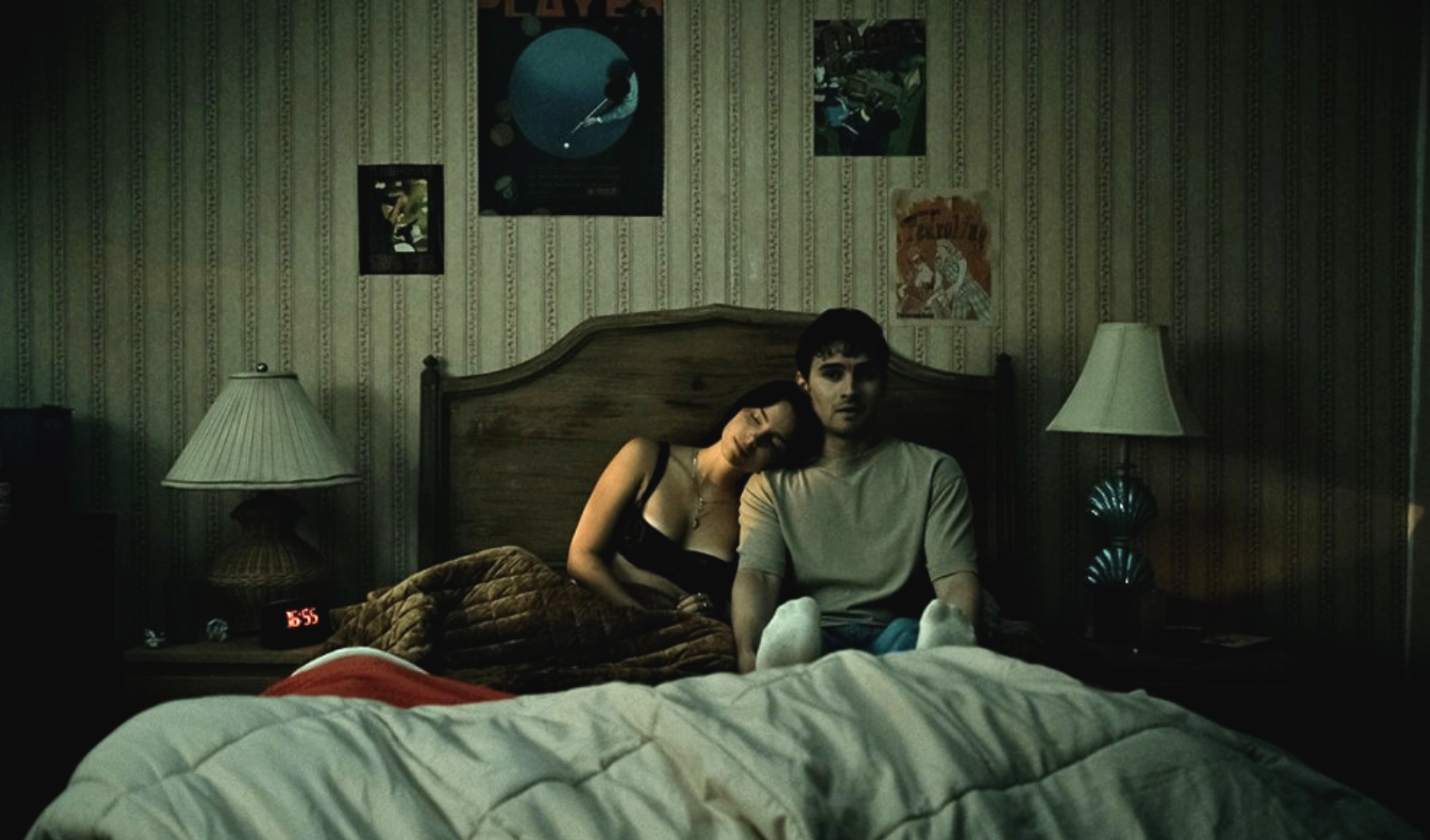
Even when it is established beyond doubt that Nikki is under the influence of the wish and is not acting of her own will, Bear continues to have sex with her. However, during sex, he refuses to look at her. She is not a person to be seen, but a body to be controlled. The film frames this explicitly as a metaphor for sexual assault: Bear uses Nikki for sexual gratification, knowing fully well that she is incapable of consent. Nikki is robbed of autonomy over her own body and has no agency in the situation, a fact of which Bear is aware and yet remains dismissive.
Bear uses Nikki for sexual gratification, knowing fully well that she is incapable of consent. Nikki is robbed of autonomy over her own body and has no agency in the situation, a fact of which Bear is aware and yet remains dismissive.
At one point in the film, the real Nikki asks Bear to kill her because she is no longer herself and is overpowered by Wish Nikki. In this moment, instead of responding with introspection and remorse, Bear asks, ‘What is so bad about being with me?’ Bear’s fragile masculine ego is wounded because, in his mind, the real Nikki would rather choose death than be his girlfriend.

Bear is incapable of recognising the horror he has inflicted on Nikki, having coerced her into giving up control of her mind and body just so that he could be with her. This is what MacKinnon means when she argues that male desire is structured by dominance: Bear cannot conceive of a version of this situation in which Nikki’s agency matters. Her suffering is, to him, a problem of optics, not of ethics.
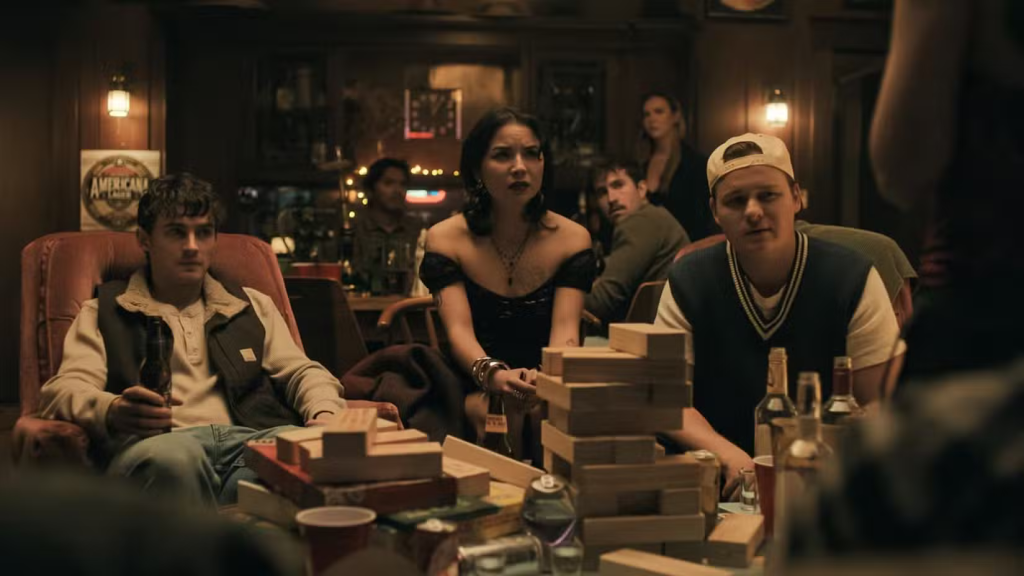
The film, in no uncertain terms, makes it clear that, if operating under her own will and volition, Nikki would not have reciprocated Bear’s feelings. During a party, Nikki recites a deeply disturbing poem about siblings Hansel and Gretel having a sexual relationship, a direct nod to Ian previously telling Bear that Nikki thought of him as a brother. A brother she was now forced to have sex with, forced to be in love with — ‘a love only the branch of a willow tree could conjure‘. The poem is almost the film speaking directly to the audience: this love was conjured, not chosen.
Only when Nikki’s behaviour makes her more difficult to control does it occur to Bear to undo his wish. He calls the helpline number on the One Wish Willow box. He first asks to ‘alter’ his wish, and only when he is told that this is not possible does he ask to cancel it. Despite everything that has transpired, Bear’s priority is to have Nikki be in love with him in a way that benefits him and on his terms. He fails to see Nikki as a victim and a captive of his wish. Bear’s entitlement over Nikki’s body is obvious and explicit.
The film poses a quiet but devastating hypothetical: what would Bear ask for if the wish could, in fact, be altered? Not Nikki’s freedom, but a tamer version of the same wish — a Nikki who was still in love with him, but less visibly unhinged and more manageable.

At no point in the film does Bear demonstrate any recognition that Nikki’s agency and autonomy matter. Despite knowing by this point that Nikki had earlier referred to him as her ‘brother’, Bear shows no inclination to honour her choice or respect her agency. He would rather be with someone who has been coerced into being with him than with someone who genuinely liked him and chose him freely, namely, Sarah, his other co-worker. This betrays something sinister about Bear: he has no interest in being chosen, but only in choosing. That distinction, between a partner and a target, is where the film locates its real horror.
Feminist theory has long held that desire is never simply personal. It is political; it is structured around existing power hierarchies. And when it operates without consent or regard for the subjectivity of its object, it becomes violent.
Which brings us back to the title — who is actually obsessed in Obsession? Is it Nikki, the victim of Bear’s violation? A woman who could exercise no choice, whose feelings for Bear were manufactured without her consent. Or is it Bear? A man so terrified of rejection, so consumed by his desire for a woman, that he took away her autonomy and agency, coerced her into submission, raped her, and called it love.
Feminist theory has long held that desire is never simply personal. It is political; it is structured around existing power hierarchies. And when it operates without consent or regard for the subjectivity of its object, it becomes violent. Nikki never chose Bear; he made a choice for both of them. That is not love. That is obsession in its most dangerous form.
About the author(s)

Kashish is a policy professional currently working with DMEO, NITI Aayog. Her areas of interest are gender, climate, and social justice. She enjoys reading, watching contemporary cinema, and applying a feminist lens to the art she consumes.


Thank you for helping me understand the gender lens in this movie!