At a time when Hindutva’s grip on the country appears stronger than ever, ‘love jihad’ has become an inescapable part of our lexicon. From journalists attempting to dismantle this carefully constructed Hindutva propaganda to mainstream media outlets fanning the flames of Islamophobia whenever sensationalised cases involving the murder of a woman in an interfaith relationship emerge, and from WhatsApp forwards urging people to ‘protect’ Hindu daughters to films built on this very premise, the spectre of love jihad has come to dominate our social and political realities.
At a time when Hindutva’s grip on the country appears stronger than ever, ‘love jihad’ has become an inescapable part of our lexicon.
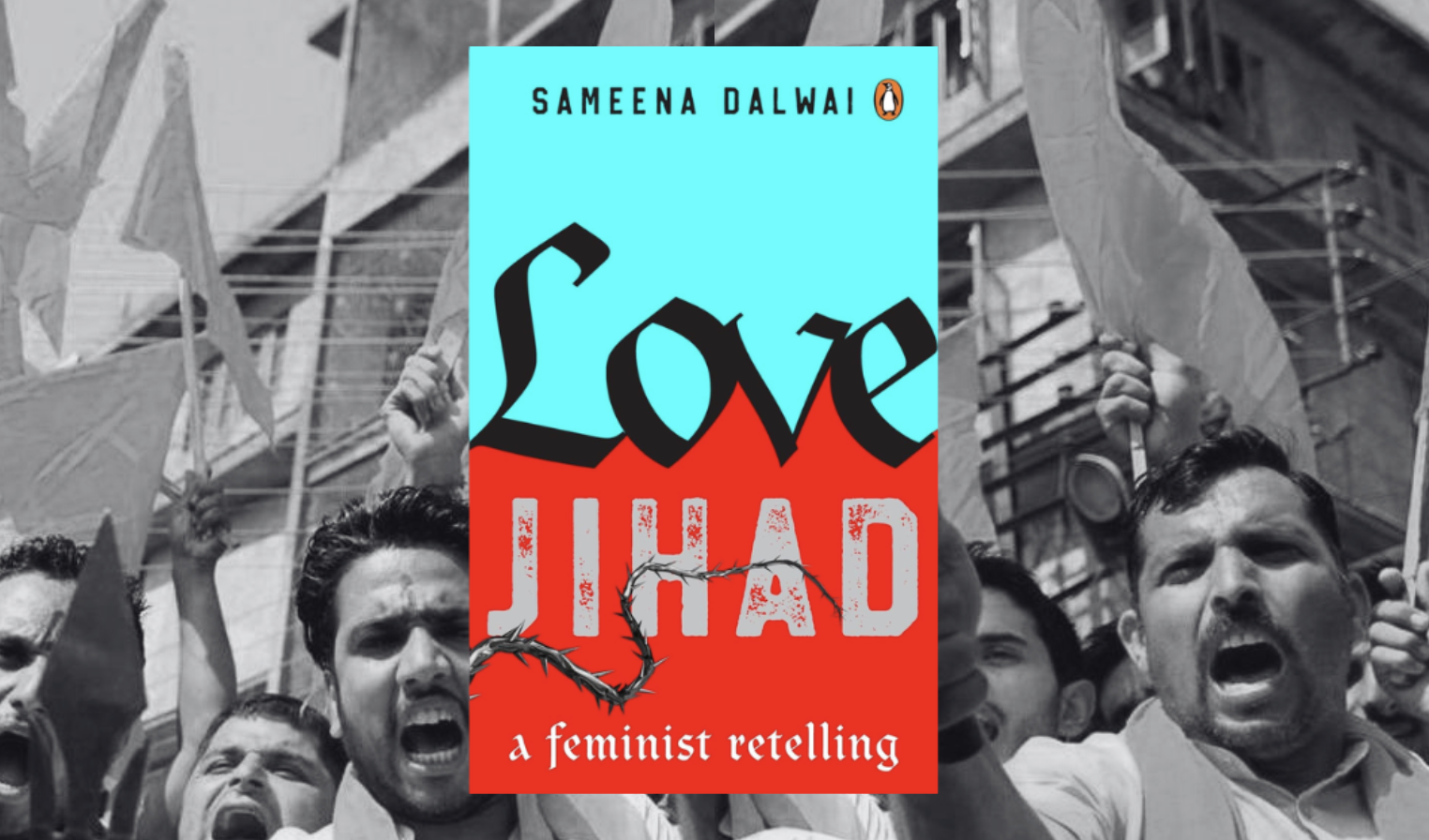
Love Jihad: A Feminist Retelling by Sameena Dalwai attempts to deconstruct this propaganda that has taken hold of a country overrun by Hindutva extremism.
The bogey of love jihad
Love jihad is a Hindutva propaganda that claims Muslim men are ‘luring’ and ‘entrapping’ Hindu women into falling in love with them and marrying them. These women are then allegedly converted to Islam under the pretext of marriage, and any children they have become practitioners of the faith.
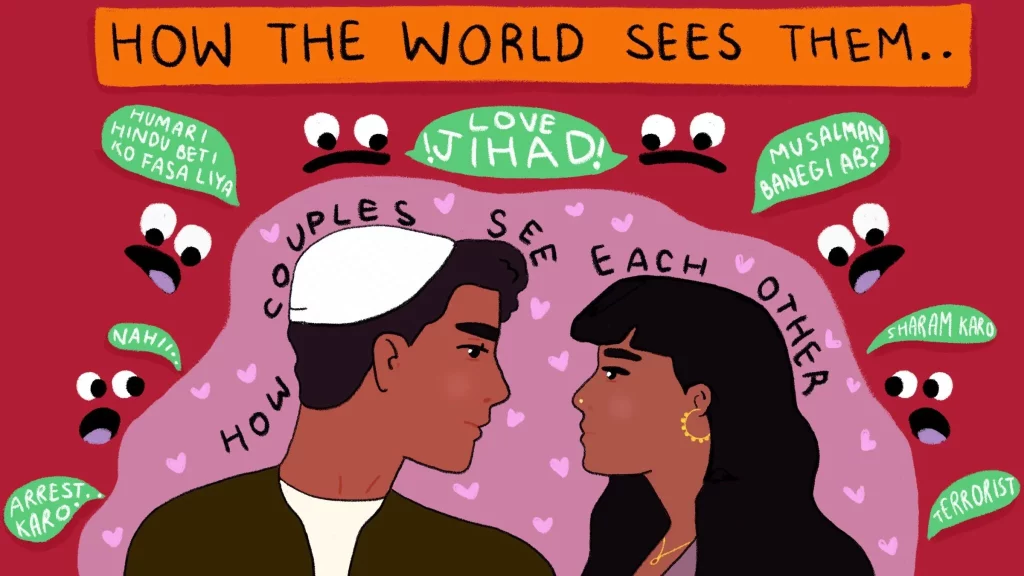
Hindutva proponents claim that this is a planned and systematic effort to replace Hindus as the country’s majority. The notion of love jihad fits neatly into the broader Hindutva conspiracy theory of ‘demographic jihad’, which argues that Muslim citizens and migrants from neighbouring countries are migrating to India and, together with Indian Muslims, are having several children in an effort to alter the country’s demographic composition. According to the Pew Research Centre, India’s religious composition has remained stable since independence. Between 1951 and 2011, the Hindu population went from 84.1 per cent to 79.8 per cent, while the Muslim population only grew by 4.4 per cent from 9.8 per cent to 14.2 per cent.
However, while love jihad feeds into the trope of demographic jihad, the premises on which the two narratives operate are quite different. Demographic jihad operates on the Hindutva rhetoric of ‘Hindu khatre mein hain (the Hindus are in danger)’ by falsely claiming the number of Hindus in India is steadily declining and by positioning this false claim as an outcome of a large-scale conspiracy by Muslims.
Love jihad, on the other hand, is premised on patriarchal anxieties about feminine respectability, family honour, and women’s autonomy, alongside the patriarchal anxiety surrounding the hypersexualised ‘other’, which in this case is the Muslim man.
Love jihad, on the other hand, is premised on patriarchal anxieties about feminine respectability, family honour, and women’s autonomy, alongside the patriarchal anxiety surrounding the hypersexualised ‘other’, which in this case is the Muslim man.
Dalwai’s book aptly recognises that the bogey of love jihad works on two fronts: demonising Muslim men and infantilising Hindu women. The operative principle behind the bogey of love jihad is the construction of the Hindu woman’s body as a site of patriarchal control and the Muslim man’s body as a site of patriarchal terror.
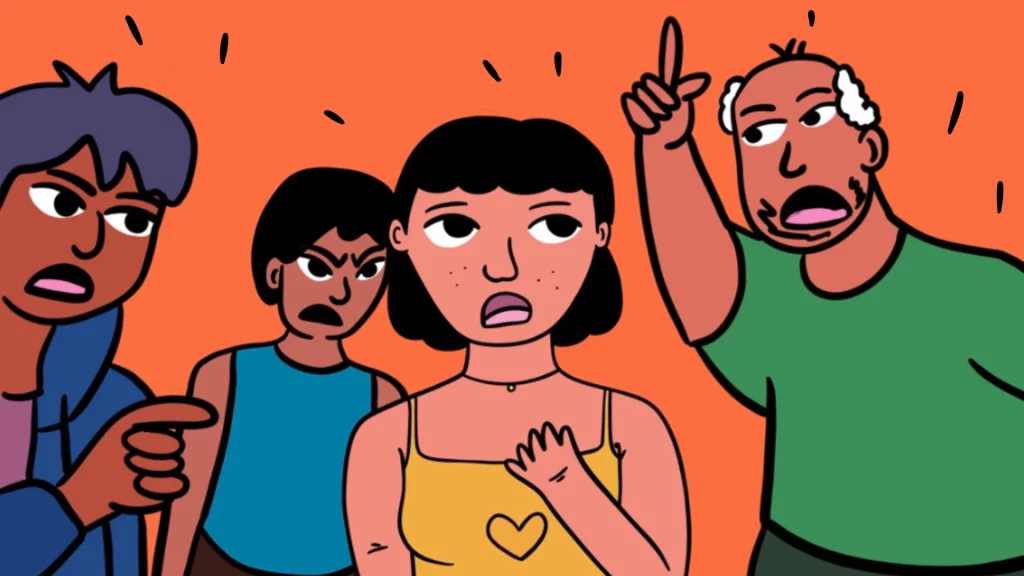
Consequentially, the patriarchal control exerted on Hindu women by families and communities increases, not only to ‘protect’ her from the machinations of the ‘othered’ but also to protect the honour of the community, which is derived from women’s ‘chastity’ and adherence to patriarchal norms of gendered respectability. The Muslim man, on the other hand, is demonised and marginalised, and positioned as a source of dual threat: patriarchal and religious.
A Hindu woman marrying a Muslim man is seen as tarnishing the patriarchal honour of her family, because it suggests that they have failed to keep her in ‘check’ and preserve her ‘chastity’. Such an interfaith relationship is also perceived as a threat to the wider community because it transgresses the rigid, endogamous boundaries that govern relationships, marriage, and sexuality.
Love is un-Indian
Dalwai rightly points out that such patriarchal anxieties do not surround interfaith relationships alone, but love in general. The very act of being in love and choosing one’s own partner, whether within or outside one’s community, is perceived as a threat in a patriarchal society where love is regarded as frivolous at best and immoral at worst.
However, when it comes to women, especially, love is considered a vice. As Dalwai puts it, ‘Love is a forbidden pleasure and an illicit activity in India.’ She further adds, ‘Love is also viewed as a Western export.’
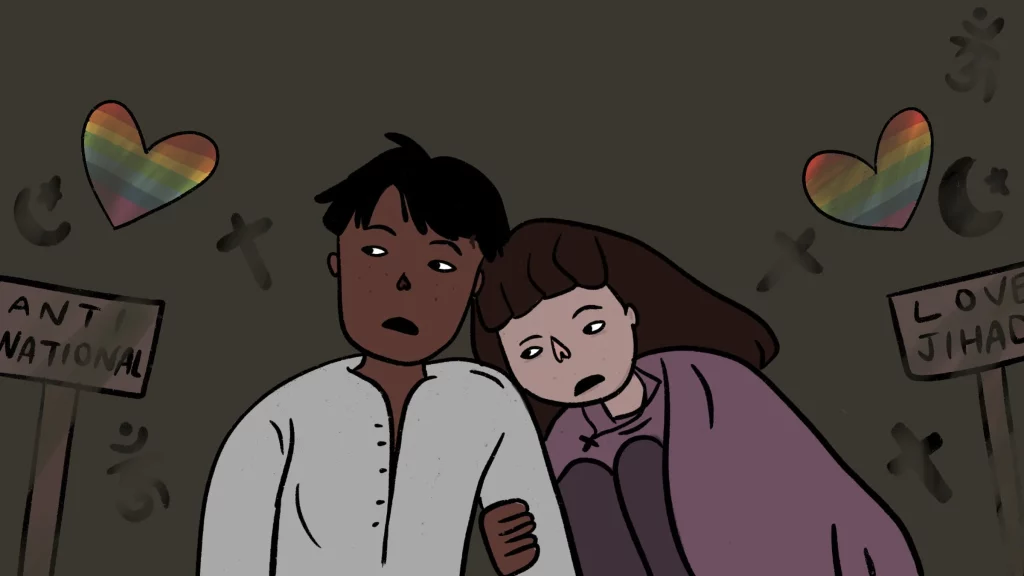
In the 2000s and 2010s, the media often covered Bajrang Dal workers, clad in white with saffron scarves, patrolling parks with sticks in hand to find and harass unsuspecting couples. And then a predictable routine followed: Threats would be issued, parents of adult women would be called, and trite speeches about ‘Indian culture’ would be delivered.
However, this wasn’t a phenomenon reserved for the aughts. In January 2026, a BJP councillor was seen harassing young adults at a Delhi park in a video which surfaced online. Munesh Dhedha carried out an ‘inspection’ after she allegedly received complaints that young adults were visiting a local park at night and doing drugs. A close aide told the media, ‘Some boys and girls were found in the park late at night. They were warned and later handed over to their parents.’ And this is not an isolated incident.
Furthermore, such moral policing and surveillance have also taken increasingly digital forms, with Hindutva accounts with large followings emerging on social media platforms with the stated intent of preventing love jihad. BhagwaLens on X (formerly Twitter), for instance, is an account dedicated to gathering details about interfaith couples and amplifying them. However, as of June 2026, the account appears to have been suspended.
However, Dalwai goes on to point out that ‘love marriages’, or interfaith ‘love marriages’, are not a new phenomenon, despite familial and community opposition. As much as Hindutva forces would like us to believe that interfaith marriages have only begun taking place in the last decade or so because Hindu women have ‘too much freedom’ and Muslim men have organised themselves efficiently to exploit that freedom, they have long existed.
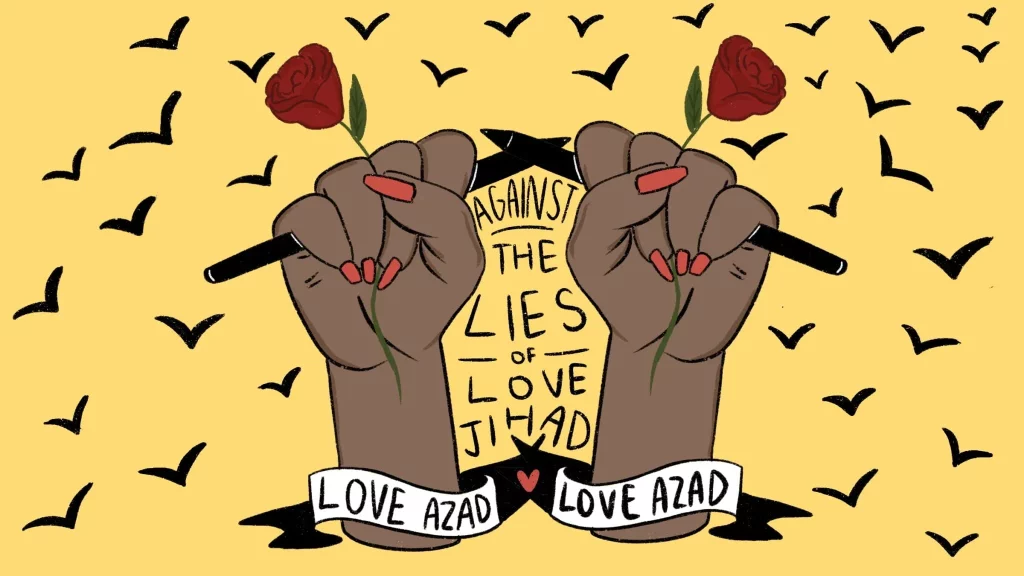
Using her own family as an example, including her parents’ interfaith marriage, Dalwai paints a picture of the rich socio-cultural life possible within syncretic families, thereby dismantling contemporary Islamophobic narratives surrounding interfaith marriages.
Where the book falls short
While Love Jihad: A Feminist Retelling starts out strong and situates the early roots of the love jihad propaganda within history, contemporary society, and politics, the book soon loses steam and all but abandons its initial focus on love jihad. Beyond the introduction, it reads like a collection of standalone essays on patriarchy, Islamophobia, and casteism.
The book is a lost opportunity to take a deep dive into how the propaganda actively shapes our political reality and the socio-cultural realities of the Hindu woman, the vilified Muslim man, and other marginalised castes and communities who are invisibilised in this discourse.
The book is a lost opportunity to take a deep dive into how the propaganda actively shapes our political reality and the socio-cultural realities of the Hindu woman, the vilified Muslim man, and other marginalised castes and communities who are invisibilised in this discourse.
However, the book deserves credit for attempting to bring caste into the conversation on love jihad. Dalwai points out that the seeds of today’s anti-conversion legislation in several BJP-ruled states — laws that are effectively anti-love jihad laws — can be traced back to the moral panic over interfaith marriages in the first half of the twentieth century in the United Provinces (present-day Uttar Pradesh and Uttarakhand), particularly involving Dalit women and Muslim men.
She goes on to outline how many advocated for the better treatment of ‘outcaste’ women to prevent such religious conversions, and how Hindutva organisations such as the Hindu Mahasabha even conducted marriages between Dalit women and ‘upper’-caste men to prevent such interfaith marriages.
Dalwai traces this tendency to the present day, where Hindutva claims of Hindu unity are not premised on the dismantling of caste but on merely ‘tolerating’ marginalised communities in order to further the Islamophobic ‘us versus them’ narrative and position Muslims as a common enemy, while still upholding caste hierarchies.
Dalwai traces this tendency to the present day, where Hindutva claims of Hindu unity are not premised on the dismantling of caste but on merely ‘tolerating’ marginalised communities in order to further the Islamophobic ‘us versus them’ narrative and position Muslims as a common enemy, while still upholding caste hierarchies.
Dalwai thus argues that caste is pivotal to any conversation surrounding love jihad; however, by the time the book reaches its dedicated section on caste, its focus on love jihad is all but lost. The section reads like a collection of isolated essays on caste and its everyday manifestations, with the author failing to tie caste into the broader discussion of the policing of women’s sexuality and the vilification of the ‘other’.
Another point in the book’s favour is that it discusses the idea of the hapless, helpless Muslim woman who, in the Hindutva imagination, requires ‘saving’. The author attempts to dismantle this Islamophobic and sexist construction, which views Muslim women as a monolith and solely as mute victims of oppression.
She also questions the untrue but routinely parroted Hindutva notion that ‘Muslim patriarchy’ is somehow more oppressive than ‘Hindu patriarchy’. Hindutva also falsely claims that the latter has largely been done away with.
She also questions the untrue but routinely parroted Hindutva notion that ‘Muslim patriarchy’ is somehow more oppressive than ‘Hindu patriarchy’. Hindutva also falsely claims that the latter has largely been done away with.
The book works as a collection of essays; however, it does not deliver on its promise of a feminist retelling of love jihad. While Dalwai appears to have adopted an approach that highlights the realities of each of these groups of people, realities that are conveniently buried and subject to revisionism beneath the love jihad propaganda, the approach ultimately causes the book to abandon its central theme.
About the author(s)

Akshita Prasad is a journalist and FII's Assistant Editor. She primarily writes about politics, law and policy, socio-institutional justice, gender, women’s health, and culture. Her work engages critically with how power structures and institutional norms affect marginalised groups and public discourse, and she highlights structural inequalities through her reporting. Her work has appeared in various national publications, and she is the recipient of a Jury Appreciation Citation at the Laadli Media and Advertising Awards for Gender Sensitivity 2025. Akshita is also a Laadli Media Fellow.